
Pellet heat built for Delta's mild, damp winters.
With winter lows hovering around 0.9°C and Delta sitting just 4 metres above sea level, this isn't a climate that demands survival heat. It's one where a clean-burning, low-maintenance pellet stove makes practical sense. I'll match you with a trusted local dealer and a free plan for your project.
Every Project Starts From One of These Five Situations
A climate that rewards convenience, not survival heat.
Delta's marine climate is genuinely mild by Canadian standards—an average winter low near 0.9°C and a heating season that's short and wet rather than long and brutal. Compare that to Prince George a few hundred kilometres up the interior, where homeowners need a stove that can hold a fire through deep, dry cold for days at a stretch. Delta doesn't need that. What local homeowners want instead is steady, automated heat they don't have to babysit, glass that stays clean, and none of the splitting and stacking that a cordwood setup demands on a small suburban lot.
Pellet fuel is easy to source here through regional producers like Pinnacle Premium and Princeton Fuel Pellets, typically running $400 to $575 a tonne, and most Delta homes can store a season's supply in a garage or shed without much trouble. Air quality matters too—Metro Vancouver's airshed rules and the wider push toward CSA and EPA-certified appliances mean a pellet stove's clean, consistent burn is an easy sell next to an older wood stove, especially in a region where several districts run stove exchange programs. Installation runs $6,000 to $10,000 CAD, and your municipal building department will want CSA B365 compliance documented, plus a WETT inspection is commonly required before an insurer will sign off on the appliance.
Three steps. No salesperson until you're ready.
Tell us about your project
Your postal code, your situation, and the fuel you're leaning toward—or let the answers point you to one.
See what's actually available
The brands dealers within 100 miles genuinely carry—real options, never a catalog mirage.
Get your dealer & Project Guide
A trusted local dealer, plus the free Project Guide & Parts List that names every component of the job.
Frequently Asked Questions
How much does a pellet stove installation cost in Delta?
Most Delta installations land between $6,000 and $10,000 CAD. An insert going into an existing masonry firebox with a straightforward pellet vent run through an exterior wall sits toward the lower end. A freestanding stove in a home with no existing hearth, needing a new hearth pad and a longer vent run, pushes toward the top. Because Delta's older housing stock includes plenty of homes without a working chimney, a fresh vent-kit install is common here, and that's usually the line item that moves the estimate around most.
Why choose pellet over natural gas when Delta already has gas service?
FortisBC Gas covers most of Delta, and gas fireplaces are genuinely popular here for their instant on-demand flame. Pellet still holds its own for homeowners who want a wood-look fire with real heat output and don't want a monthly gas bill tied to it—pellet fuel from suppliers like Pinnacle Premium or Princeton Fuel Pellets is bought upfront by the tonne, which some households prefer for budgeting. Pellet also appeals to anyone replacing an old, uncertified wood stove who still wants that solid-fuel feel without the splitting, stacking, and creosote maintenance that cordwood requires.
Do I need a permit to install a pellet stove in Delta?
Yes. Your municipal building department needs to sign off on the installation, and it has to meet the CSA B365 installation code. On top of that, most insurers in the Lower Mainland won't cover a solid-fuel appliance without a WETT inspection on file, even for pellet units, so budget that step into your timeline. A dealer who installs regularly in Delta will typically handle the permit paperwork and coordinate the WETT inspection as part of the job.
What's the difference between a pellet stove and a pellet insert?
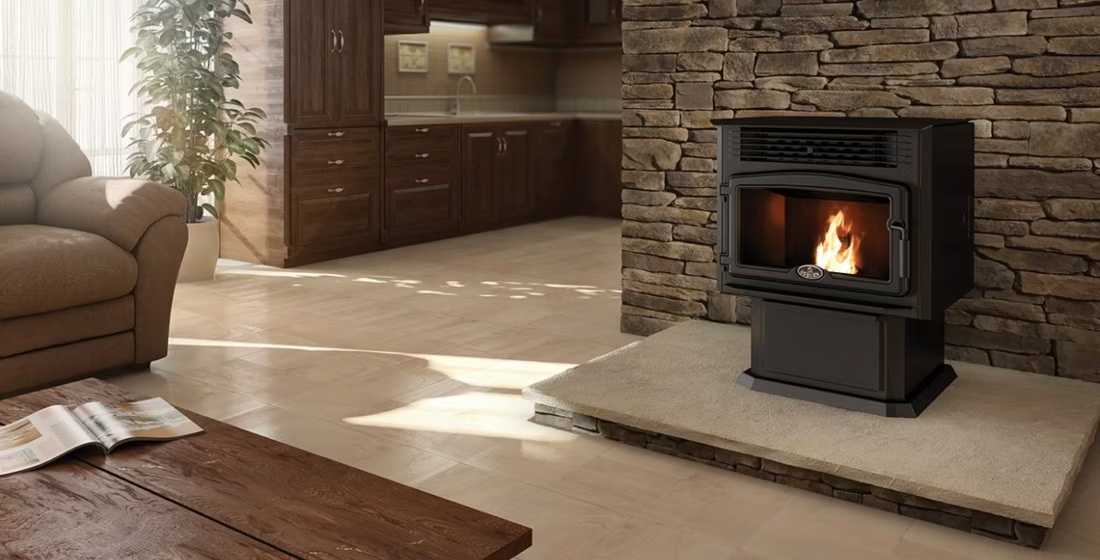
A pellet stove is a freestanding unit on its own hearth pad, which suits Delta homes that don't already have a masonry fireplace—common in newer construction around Tsawwassen and North Delta. A pellet insert slides into an existing wood-burning fireplace opening and reuses much of the surrounding masonry, which is the more common retrofit in older homes near Ladner or the North Delta core that were built with a traditional wood fireplace decades ago. Inserts generally land toward the lower end of the $6,000-$10,000 range since less new structure needs to be built.
Where do I buy pellet fuel near Delta, and how much should I budget?
Pinnacle Premium and Princeton Fuel Pellets are the two regional brands most commonly stocked by dealers and hearth retailers serving Metro Vancouver, typically priced between $400 and $575 a tonne depending on the season and how far ahead you buy. Most households burning pellet as a primary or heavy supplemental heat source use two to three tonnes over a Delta winter, which is a mild season compared to the interior, so storage is rarely the challenge it is in colder parts of the province. A dry corner of a garage or a small shed is usually enough.
What size pellet stove do I actually need in a mild climate like Delta's?
Because winter lows here rarely drop far below freezing, most Delta homes do fine with a small to mid-size pellet stove rated for 1,000 to 1,800 square feet, even for a primary living space. That's noticeably smaller than what a dealer would spec for the same square footage in a colder interior city like Prince George, where sustained sub-zero nights call for a larger hopper and higher BTU output. A local dealer will still walk your specific floor plan and insulation before recommending a model, but oversizing is more often the mistake here than undersizing.
How much maintenance does a pellet stove need in a coastal climate like Delta's?
Pellet stoves need more routine attention than a gas unit but less than a wood stove. Plan on emptying the ash pan every few days during regular use, cleaning the burn pot weekly, and having the unit professionally serviced once a year—ideally in early fall before the damp season sets in. Delta's humidity can make pellets more prone to absorbing moisture if stored improperly, so keeping bags sealed and off a concrete floor matters more here than it would in a drier interior climate.
Will a pellet stove still work during a power outage in Delta?
Not without backup power. Pellet stoves rely on an electric auger and blower to feed fuel and distribute heat, so a standard unit goes cold the moment the power does. That's a real consideration in Delta, where winter windstorms off the Strait of Georgia periodically knock out BC Hydro service for hours or longer. Some pellet stove models accept a small battery backup or generator connection, which is worth asking your dealer about if outage resilience matters to your household; otherwise, a lot of homeowners here pair pellet heat with a wood stove or gas fireplace as an outage-proof backup.
Does a pellet stove help with Metro Vancouver's air quality rules?
Generally, yes. Pellet appliances burn cleaner and more consistently than older wood stoves, which is part of why several regional districts in the area run wood-stove exchange programs encouraging homeowners to swap out uncertified units. Any pellet stove sold and installed in Delta today needs to be CSA or EPA certified, and that certification is exactly what keeps it compliant with the airshed rules Metro Vancouver enforces during winter inversion advisories. If you're replacing an old smoky wood stove, a certified pellet unit is one of the more straightforward upgrades from an air-quality standpoint.
Why do fireplace quotes vary so much?
Because a fireplace is an iceberg—there's more behind the wall than in front of it. A low quote often covers only the unit; the full scope includes vent pipe, gas line or electrical, framing, and the tile or stone that has to come off and go back on. Make every bidder price the whole job. If a dealer can't speak to the full scope with confidence, that's your signal to keep looking.
Is it worth replacing an old fireplace that still sort of works?
Ask three questions: Is it ugly? Is it drafty? Does it actually work? Most old fireplaces fail at least two. Beyond looks, an old unit leaks air around the damper year-round and—if it's gas with a standing pilot—quietly burns a couple hundred dollars a year. A modern replacement seals the wall, heats the room, and changes how the whole space gets used.
Why is my open fireplace making my house colder?
Open fireplaces suck—literally. As the fire burns, it consumes air your furnace already paid to heat and pulls it out through the chimney, so the house is actually colder after the fire goes out than before you lit it. An insert fixes this: it seals the chimney, puts fixed glass across the front, and turns that hole in your house into a real heat source.
What's the difference between an insert and a zero-clearance fireplace?
An insert is a fireplace that slides into a pre-existing wood-burning fireplace—if you don't have one, there's nothing to insert it into. A zero-clearance fireplace is built into a framed wall, which makes it the answer for remodels and new construction. Simple test: existing masonry fireplace means insert; blank or framed wall means zero-clearance.
Nearby Dealers
Hearth shops serving Delta and the surrounding area. Every listing shows whether it is a WhyFire partner, a dealer we have verified as authorized for the brands we recommend, or a local business carrying hearth products. No manufacturer pays for placement. How we verify dealers →
The Fireplace Warehouse
Real Fireplaces
Western Natural Gas
Evershine Fireplace Surrey
Gas Guys Outdoor Designs
Oray Fireplaces
Vancouver Gas Fireplaces
Home Makeover Centre
Fdm Manufacturing Ltd
Pellet Brands Stocked Around Delta
Typical price runs $400-$575 per ton—buy early-season for the best rates. Manufacturers will point you to the nearest stocking dealer.
Pinnacle Premium
Princeton Fuel Pellets
Get your free Delta pellet stove Project Guide & Parts List.
Tell me about your home and I'll match you with a trusted local dealer and send a free Project Guide & Parts List—sized for Delta's mild coastal winters, with the vent kit and parts specified so there's no guesswork.
Find Your Fireplace →