
Instant heat for Clayburn's mild, damp winters.
Clayburn sits at just 33 metres in the Fraser Valley, where winter lows hover around 0.4°C but the rain and grey skies stretch on for months. I'll match you with a local dealer who knows FortisBC's gas network here and what's actually workable on your street.
Every Project Starts From One of These Five Situations
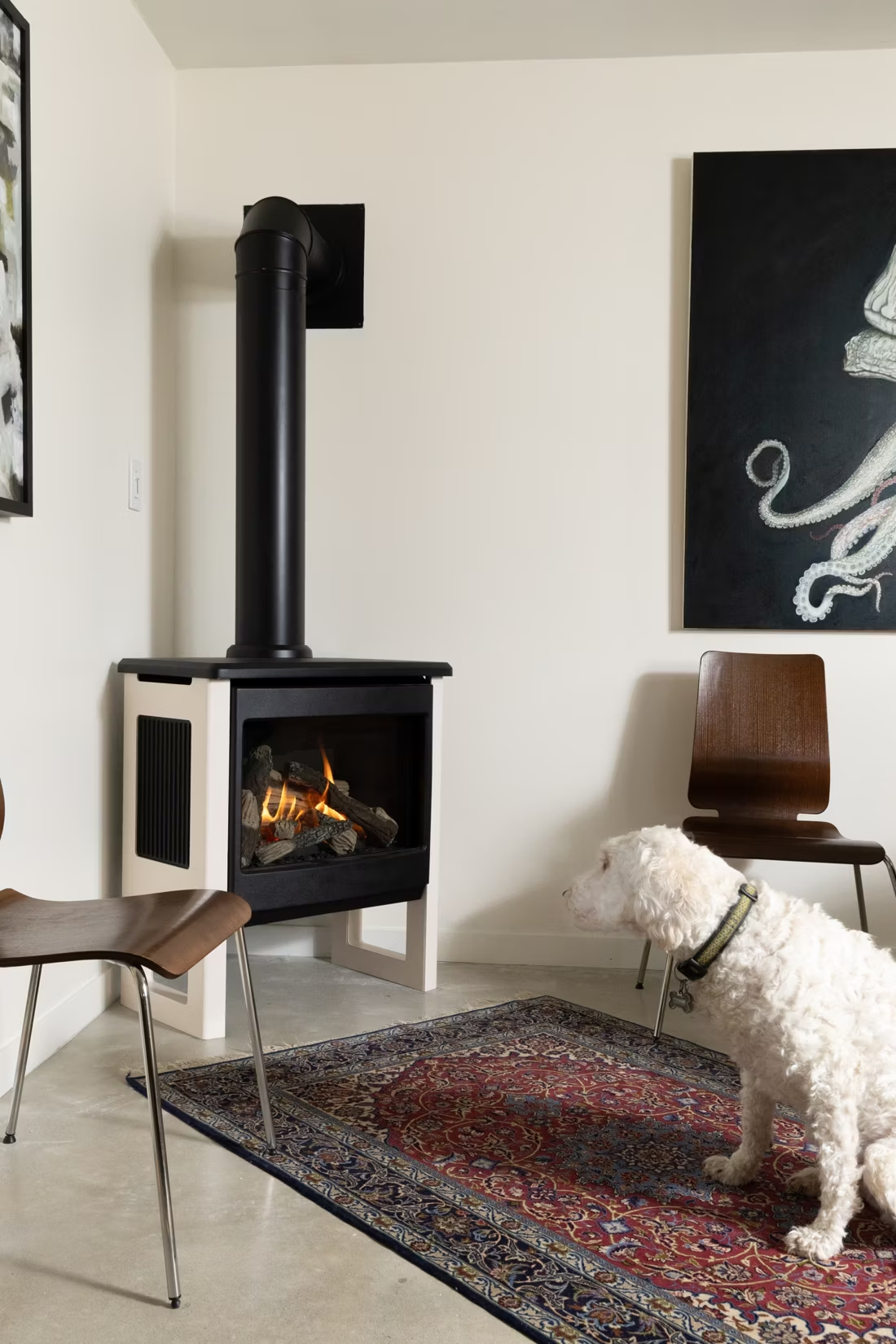
Gas fits the Fraser Valley's wet, mild climate.
Clayburn's winters are nothing like Prince George's snow or a prairie cold snap—the average winter low sits around 0.4°C, and the ground rarely freezes hard for long. But BC's climate zone 4C brings months of persistent Pacific rain and short, grey days, and that steady dampness keeps real heating demand up even when the thermometer stays mild. A gas fireplace answers that need without a woodpile to split, stack, or keep dry under a tarp all winter.
The Fraser Valley also deals with winter inversions that trap smoke in the low ground between the mountains, triggering advisories that limit older wood stoves and have pushed several regional districts to run stove-exchange programs requiring CSA or EPA-certified appliances. Gas sidesteps that entirely—no smoke, no burn restrictions, no certification paperwork. FortisBC runs natural gas service through most of Clayburn and greater Abbotsford, so a direct-vent fireplace or insert is usually a straightforward tie-in for homes already on the grid; properties on the rural edges of the valley sometimes rely on propane instead.
Three steps. No salesperson until you're ready.
Tell us about your project
Your postal code, your situation, and the fuel you're leaning toward—or let the answers point you to one.
See what's actually available
The brands dealers within 100 miles genuinely carry—real options, never a catalog mirage.
Get your dealer & Project Guide
A trusted local dealer, plus the free Project Guide & Parts List that names every component of the job.
Frequently Asked Questions
How much does a gas fireplace installation cost in Clayburn?
Most gas fireplace projects in Clayburn run $6,000 to $15,000 CAD, with the swing driven by whether you're dropping a direct-vent insert into an existing masonry firebox or framing a new built-in unit into a wall for a remodel or addition. An insert tied into a gas line that's already close to the chimney chase—common in the older character homes around the Clayburn Village core—lands near the bottom of that range. A project needing a longer gas line run from the meter, plus fresh venting through an exterior wall, pushes toward the top.
Can I convert my wood-burning fireplace to gas in Clayburn?
Yes, and it's a common upgrade among Clayburn's older homes with a working masonry firebox. A direct-vent gas insert typically slides into the existing opening with a liner run up the current chimney, generally landing in the lower half of the $6,000-$15,000 range. Switching also sidesteps the stove-exchange requirements some Fraser Valley regional districts run during smoke advisories—since gas appliances aren't subject to those burn restrictions or the CSA/EPA-certification rules that apply to solid-fuel stoves.
Is natural gas service available at my Clayburn address?
Most of Clayburn and the surrounding Abbotsford area sits within FortisBC's Fraser Valley gas network, so tying a new fireplace into an existing gas line is usually straightforward if your home already runs gas for a furnace, water heater, or range. Homes on the rural fringes of the valley, or newer acreages set back from the main distribution lines, sometimes fall outside easy reach and run on propane instead—a local dealer can confirm which side of that line your property falls on before you buy.
Will a gas fireplace still work during a power outage in Clayburn?
Most will. Fraser Valley windstorms off the Strait of Georgia knock out BC Hydro service here more often than the mild winter temperatures might suggest, so ignition type matters. Units with intermittent pilot ignition run on a AA battery backup that kicks in automatically when the power drops. A handful of models, including some Valor fireplaces, use a self-powered thermocouple pilot that needs no battery at all. Ask your dealer which system is on any unit you're considering.
What's the difference between a gas fireplace, insert, and stove for my home?
A gas fireplace is a built-in unit framed into a wall, common in Clayburn's newer subdivisions. A gas insert fits into an existing masonry firebox, which suits the older homes near Clayburn Village and downtown Abbotsford that already have a working chimney. A gas stove is freestanding on a hearth pad, similar footprint to a wood stove but fed by a gas line or propane tank instead of split Douglas fir or birch. For a home with an existing fireplace opening, an insert is usually the least disruptive route.
Do I need a permit for a gas fireplace install in Clayburn?
Yes. You'll need a building permit through the municipal building department, plus a separate gas permit tied to work performed by a licensed gas fitter—British Columbia requires that regardless of address. Most hearth dealers who take on projects in the Fraser Valley coordinate both permits and the final inspection as part of the process, so you're not managing two separate approvals yourself.
Should I choose a vented or vent-free gas fireplace in Clayburn?
Direct-vent is the standard recommendation here. It draws combustion air from outside and exhausts it back outside through sealed venting, which matters in a climate where damp Pacific air already keeps indoor humidity higher through the winter months. Vent-free units burn into the room and carry strict square-footage limits under the code; most dealers serving the Fraser Valley steer homeowners toward direct-vent for daily use, reserving vent-free for narrow retrofit cases where venting simply isn't possible.
How often does a gas fireplace need servicing in a Clayburn home?
Plan on an annual check, ideally in early fall before the wet season sets in and technicians book up. A technician inspects the burner, pilot assembly, gas connections, and venting, and cleans the glass. It's a lighter job than a wood chimney sweep, but skipping it on a unit that runs most evenings through Clayburn's long, damp heating season is how a pilot or ignition fault turns up on the coldest, wettest night of the year.
Gas vs. wood—which makes more sense for a Clayburn home?
Wood still has a following here, with Douglas fir, western larch, and paper birch cut under free FrontCounter BC permits on nearby Ministry of Forests land, but the Fraser Valley's winter inversions bring smoke advisories that put real limits on when older stoves can burn, and several regional districts now run stove-exchange programs pushing toward CSA/EPA-certified units. Gas sidesteps all of that: no burn bans, no certification requirements, and instant heat at the flip of a switch or a phone app. Most Clayburn households on the FortisBC network end up choosing gas for the main living space and, if they keep a wood appliance at all, treat it as backup for extended outages.
Can a gas fireplace run on a thermostat?
Most modern gas fireplaces can—turn it on and off from the couch with a remote, or set a room temperature and let the fireplace hold the comfort zone for you. If low maintenance matters to your family, this is the feature set that makes gas the convenience pick over wood and pellet.
Why do fireplace quotes vary so much?
Because a fireplace is an iceberg—there's more behind the wall than in front of it. A low quote often covers only the unit; the full scope includes vent pipe, gas line or electrical, framing, and the tile or stone that has to come off and go back on. Make every bidder price the whole job. If a dealer can't speak to the full scope with confidence, that's your signal to keep looking.
Why is a fireplace insert so efficient?
An insert does two things: it seals the chimney completely, so you stop losing air you already paid to heat, and it radiates warmth into the room through the firebox and glass. Most add a heat-exchange fan that pulls cool room air underneath, wraps it around the hot firebox, and pushes it back out warm. Your home is more efficient before you've even lit the first fire.
Louvered or clean face—which fireplace front is better?
Louvered fronts have grill work above and below the glass for airflow, move heat a little better with a fan, and suit traditional mantels. Clean face designs drop the louvers entirely so finish work runs to the fire's edge—they fit both modern and traditional rooms. When we did our own home we chose clean face: a big viewing area beat a little extra airflow. It depends on your room, not on a rulebook.
Nearby Dealers
Hearth shops serving Clayburn and the surrounding area. Every listing shows whether it is a WhyFire partner, a dealer we have verified as authorized for the brands we recommend, or a local business carrying hearth products. No manufacturer pays for placement. How we verify dealers →
Dagg's Fireplace Shop
Encore Fireplaces
Fdm Manufacturing Ltd
Method Homes
Northwest Energy Systems
Berry Garage Door Company
Oray Fireplaces
Natural Gas Service in Clayburn
Confirm service at your address before planning a gas fireplace—a quick call settles it.
FortisBC (Gas)
Pacific Northern Gas
Get your free Project Guide & Parts List for a Clayburn gas fireplace.
Tell me about your home and whether you're on FortisBC gas or propane, and I'll match you with a local dealer and send a free Project Guide & Parts List with the exact parts—including the vent kit—your project needs.
Find Your Fireplace →