
Ambiance and easy heat for Mid-South winters.
West Memphis winters are mild by national standards, which makes electric the simplest, lowest-cost way to add a fireplace to almost any room. I'll match you with a trusted local dealer who can size the right unit for your space.
Every Project Starts From One of These Five Situations
A mild Delta climate favors simple, flexible heat.
West Memphis sits in climate zone 3A on the Arkansas side of the Mississippi River, at just 213 feet of elevation, where winter lows average a manageable 31°F and the whole heating season adds up to around 3,210 degree days—a fraction of what a place like Fargo, ND or Duluth, MN sees. That's mild enough that homeowners here rarely need a fireplace to carry the heating load; they want one that adds visual warmth to a living room or bedroom without the venting, chimney, or fuel storage that wood or gas demand.
That's exactly the gap an electric fireplace fills. There's no chimney to build, no gas line to run, and no combustion byproducts to vent—just a unit that plugs into a standard outlet and runs on power from Entergy Arkansas or the City of West Memphis municipal utility, whichever serves your address. With residential rates in the 8 to 13 cents per kWh range locally, running an electric insert or freestanding unit costs only pennies per hour for the flame effect, with the heater kicking on only when you actually want supplemental warmth.
Three steps. No salesperson until you're ready.
Tell us about your project
Your zip code, your situation, and the fuel you're leaning toward—or let the answers point you to one.
See what's actually available
The brands dealers within 100 miles genuinely carry—real options, never a catalog mirage.
Get your dealer & Project Guide
A trusted local dealer, plus the free Project Guide & Parts List that names every component of the job.
Frequently Asked Questions
How much does an electric fireplace installation cost in West Memphis?
Most electric fireplace and insert installations in West Memphis run $400 to $1,200, and that range covers nearly everything—a plug-in freestanding unit, a wall-mounted model, or an insert set into an existing masonry fireplace opening. Because there's no venting or gas line involved, the bulk of the cost is the unit itself and any electrical work, such as adding a dedicated 120V outlet inside the firebox. Built-in wall units that require framing or a recessed opening land toward the higher end of that range; drop-in inserts for an existing fireplace surround are usually the cheapest and fastest to install.
Is an electric fireplace enough heat for a West Memphis home?
For most rooms, yes. With winter lows averaging around 31°F and a mild, short heating season, West Memphis doesn't see the kind of sustained deep cold that demands a whole-home wood or gas heat source. Most electric fireplaces are rated to supplement heat in a single room of 400 to 1,000 square feet, which comfortably covers a living room or bedroom here. If you're heating a larger open floor plan or a drafty older home near downtown, ask your local dealer about a higher-wattage insert or a second unit rather than relying on one fireplace for the whole house.
Do I need a permit to install an electric fireplace in West Memphis?
Usually not for a plug-in unit—if it simply plugs into an existing outlet, it's treated like any other appliance. If your installation requires adding a new dedicated circuit or outlet, Crittenden County or City of West Memwork Memphis building code requires that work be done by a licensed electrician, and larger built-in installations that involve framing a niche or altering a wall may require a building permit. A local dealer or licensed electrician can tell you within a few minutes on-site whether your specific setup crosses that threshold.
Which electric utility will power my fireplace, and does the rate matter?
Most West Memphis addresses are served by either Entergy Arkansas or the City of West Memphis municipal electric utility, and the two have noticeably different residential rates—roughly 13 cents per kWh with Entergy versus around 8 cents per kWh through the city utility. For an electric fireplace, the practical difference is small either way: a typical unit draws about 1,500 watts on the heater setting, so running it a few hours a night costs a few dollars a month even at the higher rate. The rate matters more if you plan to run the unit as a primary heat source for a room for long stretches each day.
What's the difference between an electric fireplace insert and a freestanding electric stove?
An insert is built to drop into an existing fireplace opening—mantel, surround, and all—and is the most common choice for West Memphis homes with an old wood-burning masonry fireplace that's no longer used. A freestanding electric stove or media-console-style unit sits anywhere in a room with access to an outlet, which works well for homes without an existing fireplace opening, like many of the newer builds and ranch-style homes common around West Memphis. Wall-mounted linear units are a third option, popular for a more modern look above a TV or in a remodeled space.
Can an electric fireplace replace my old wood-burning fireplace?
Often, yes, and it's a common upgrade in older West Memphis homes with a masonry fireplace that's rarely used for a real wood fire. An electric insert sized to the existing opening covers the firebox, gives you flame effect and supplemental heat at the flip of a switch, and eliminates the need for chimney maintenance, ash cleanup, or worrying about drafts pulling heat out of the room when the fireplace sits cold and unused most of the year. Dealers can measure your existing opening and recommend an insert that fits without any masonry work.
Are wood or pellet stoves common in West Memphis?
Not really, and it's worth being straightforward about that. With mild winter lows around 31°F and heating needs well below cold-climate cities like Bismarck, ND, wood stoves and pellet stoves are a rare choice here—most homeowners who want supplemental heat and ambiance go with gas or electric instead. Oak, hickory, and pine are all available regionally for anyone who does want a wood-burning setup, but the market for wood and pellet appliances in West Memphis is small, and few local dealers stock or install them heavily compared to gas and electric units.
How does an electric fireplace compare to gas for a West Memphis home?
Gas fireplaces are standard here too, and for a room you want to genuinely heat on cold nights, a direct-vent gas unit puts out more real BTUs than electric. But gas requires venting or a gas line, runs $4,500 to $11,000 installed, and needs annual service. Electric skips all of that—no venting, no gas line, installation often under $1,200—in exchange for a heater that's better suited to supplemental warmth in one room rather than serious whole-room heat on the coldest nights of the year. For most West Memphis living rooms and bedrooms where the fireplace is more about ambiance than survival heat, electric is the lower-cost, lower-hassle choice.
Do electric fireplaces work during a power outage?
No—unlike a battery-backed gas fireplace or a wood stove, an electric fireplace stops working the moment the power drops, since it draws directly from your outlet or circuit with no independent ignition or fuel source. That's a real consideration during Mid-South ice storms, which occasionally knock out power in Crittenden County for a day or more. If backup heat during outages matters to you, plan on a gas or wood option for at least one room and keep the electric unit purely for everyday ambiance and easy supplemental warmth.
Can I put a TV above my fireplace?
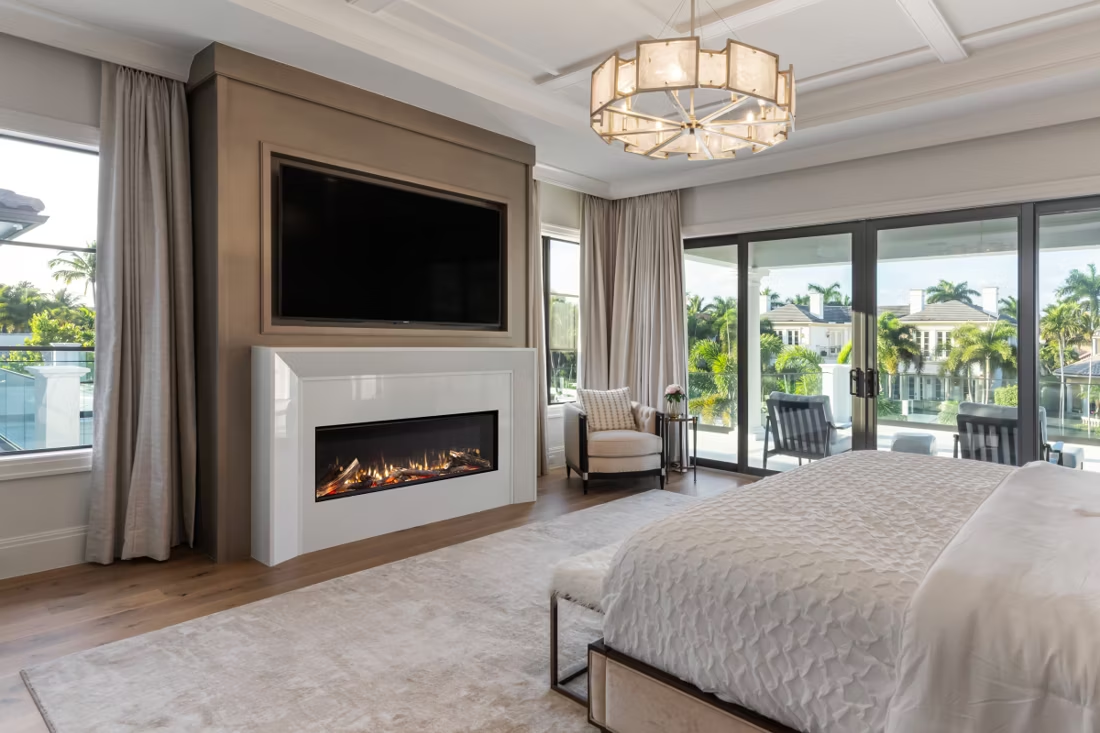
Yes—with an asterisk. Fireplaces are hot and TVs don't like heat. Either put a mantel between them to deflect rising warmth, or choose a fireplace with heat-management technology that creates a cool zone on the wall above—the wall stays around 125 degrees, barely warm, while the room still gets full heat. If you like clean lines and don't want a mantel, heat management is the answer.
Do electric fireplaces actually produce heat?
Yes—most put out around 4,800–5,000 BTUs from a standard outlet, which comfortably warms a bedroom, office, or den as a comfort-zone heater. What they won't do is carry a whole house the way wood, gas, or pellet can. Think of electric as ambiance-first with honest supplemental heat: flames on with no heat in July, flames plus warmth in January.
Can I install a fireplace myself?
If you're putting a fire in your house on purpose, it's best to work with an expert. Unless you're genuinely experienced in framing, gas line, vent pipe, and the national code on clearances to combustibles, have a professional do it—and ideally the same company that sells you the fireplace, so warranty, service, and liability all live under one roof.
Does a fireplace add value to my home?
On average, a fireplace adds back to the home about the same amount you spent installing it. Add the monthly savings from heating the rooms you actually use instead of the whole house—often hundreds of dollars a year—and the value case is strong before you even count what a fire does for how your family uses the room.
Electric Service in West Memphis
An electric fireplace's heater draws about 1,500 watts—pennies per hour at local rates.
Entergy Arkansas LLC
City Of West Memphis - (Ar)
Find your electric fireplace in West Memphis.
Tell me a bit about your room and budget, and I'll match you with a trusted local dealer plus a free Project Guide & Parts List—the exact unit, mounting or insert parts, and electrical requirements for your West Memphis home.
Find Your Fireplace →