
Heat that plugs in—no chimney needed in the Ozark foothills.
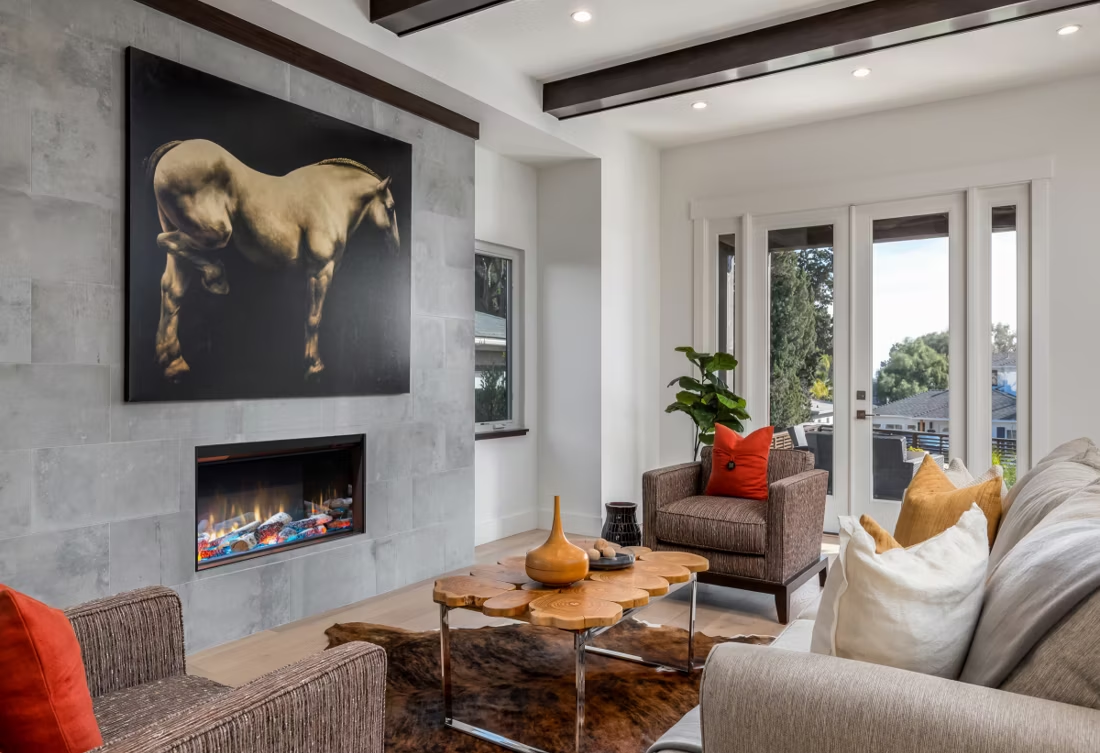
West Fork sees winter lows around 25°F and a moderate winter heating season—real cold, but not extreme. An electric fireplace or insert gives you supplemental zone heat and flame ambiance without a flue, a gas line, or a wood pile to manage.
Every Project Starts From One of These Five Situations
Zone heat for a mild-but-real Ozark winter.
At 1,366 feet in the Ozark foothills, West Fork sits in climate zone 4A with a moderate winter heating season—a fraction of what a place like Duluth or Fargo racks up, but still enough cold-weather stretches, especially with winter lows averaging 25°F, that a family room or bonus room benefits from its own dedicated heat source rather than waiting on the central system to catch up. Oak, hickory, and pine are still split and burned across Washington County, and there's no air quality restriction here pushing anyone away from wood—this is a straightforward convenience call, not a code-driven one. Homeowners choosing electric are usually after a no-maintenance secondary heat source for a den, a converted garage, or a room addition where running gas line or a chimney chase isn't practical.
West Fork is served by a mix of providers depending on exactly where you sit—Ozarks Electric Coop Corp covers much of this stretch of Washington County, with Southwestern Electric Power Co and Southwest Arkansas Electric Cooperative serving nearby areas. Residential rates across those three run roughly 12.96 to 13.46 cents per kWh, which keeps a typical 1,500-watt insert running on a cold evening to well under a dollar. A plug-in insert needs no permit at all; a hardwired built-in unit on a dedicated circuit calls for a standard electrical permit through your local building department, and most installers pull that as part of the job.
Three steps. No salesperson until you're ready.
Tell us about your project
Your zip code, your situation, and the fuel you're leaning toward—or let the answers point you to one.
See what's actually available
The brands dealers within 100 miles genuinely carry—real options, never a catalog mirage.
Get your dealer & Project Guide
A trusted local dealer, plus the free Project Guide & Parts List that names every component of the job.
Frequently Asked Questions
How much does an electric fireplace installation cost in West Fork?
A plug-in insert or mantel unit runs $150 to $600 for the unit itself, and it plugs straight into a standard household outlet—no install cost beyond setting it in place. A built-in wall unit or a full mantel-and-insert combo, wired into a dedicated 120V or 240V circuit, typically lands between $1,500 and $3,000 once you include electrical work, framing, and finish trim. Given West Fork's moderate winters, most homeowners here go with a mid-tier insert sized for supplemental heat in one room rather than a whole-house solution.
Will an electric fireplace actually put out enough heat for an Ozark winter?
For the room it's in, yes. A standard 1,500-watt electric insert puts out roughly 5,100 BTUs, which comfortably heats a 400-to-600 square foot space—plenty for a family room or den on a 25°F morning, which is close to West Fork's average winter low. It's not meant to replace your central heat across West Fork's whole moderate winter season, but as a zone heater for the room you actually live in, it covers the gap well and lets you turn the thermostat down elsewhere.
Do I need a permit to install an electric fireplace in West Fork?
A plug-in insert that uses an existing outlet needs no permit—you're just placing a large appliance. A built-in unit wired to a new dedicated circuit does require a standard electrical permit through your local building department, since it involves new wiring and sometimes a breaker panel upgrade. Most hearth dealers who install built-ins in Washington County handle that permit and the final inspection as part of the project.
Which electric utility affects what my fireplace costs to run?
It depends on your exact address—West Fork sits near the service boundaries of Ozarks Electric Coop Corp, Southwestern Electric Power Co, and Southwest Arkansas Electric Cooperative. Rates across the three run close together, from about 12.96 to 13.46 cents per kWh, so a 1,500-watt insert running four hours an evening costs roughly 55 to 65 cents a day regardless of which co-op serves your meter. That's cheap enough that most owners run theirs freely through the coldest stretches of the season.
Why choose electric over wood when oak and hickory are so common here?
Plenty of West Fork homes still burn oak, hickory, or pine, and there's no air quality restriction in Washington County discouraging it. Electric wins on a different axis: zero chimney maintenance, no wood to split or store, and instant on-off operation from a wall switch or remote. It's also the practical choice for a converted garage, a bonus room over the carport, or any space where running a flue or hauling firewood just isn't realistic. A lot of households here keep a wood stove for the main living area and add an electric insert to a secondary room for exactly that reason.
What type of electric fireplace works best for a West Fork home?
For most rooms here, a built-in insert or wall-mount unit from a brand like Dimplex, Napoleon, or Touchstone covers the range from ambiance-only to full 1,500-watt heat output, and a local dealer can match the unit to your room's square footage and existing wall depth. Mantel packages are popular in living rooms where homeowners want a hearth look without any venting. Since West Fork's cold stretches are real but not prolonged, most owners don't need the largest units on the market—a mid-size insert covers the typical family room comfortably.
How much maintenance does an electric fireplace need?
Very little compared to wood or gas—there's no annual sweep or gas line check required. Wipe the glass front occasionally, keep the intake vents free of dust, and replace the heater's air filter (if it has one) every year or two. LED ember beds and flame effects are solid-state and rarely need service; the heating element is the only component that sees real wear, and most carry a multi-year warranty.
Where should I buy an electric fireplace in West Fork?
Big-box stores sell plug-in units, but for a built-in insert with proper electrical work, a local dealer who knows the wiring requirements and can size the unit to your room matters more than it might seem. Find My Fireplace doesn't sell or ship product—I match West Fork homeowners with a trusted local dealer who carries what's actually installable in Washington County and can pull the electrical permit if the project needs one.
What size electric fireplace do I need for my room?
As a rule of thumb, budget about 10 watts of heating output per square foot for a room with typical insulation, which puts most West Fork family rooms and dens in the 1,000-to-1,500-watt range—the standard output for most inserts on the market. Larger open-concept spaces or rooms with high ceilings may need supplemental heat from more than one unit rather than a single oversized fireplace, since electric heat output is capped by the standard household circuit.
Can I put a TV above my fireplace?
Yes—with an asterisk. Fireplaces are hot and TVs don't like heat. Either put a mantel between them to deflect rising warmth, or choose a fireplace with heat-management technology that creates a cool zone on the wall above—the wall stays around 125 degrees, barely warm, while the room still gets full heat. If you like clean lines and don't want a mantel, heat management is the answer.
What fireplace styles should I know before shopping?
Four cover most of the market: screen-front traditional (mesh front, open feel, fits craftsman homes), traditional door set (the classic look you grew up with), modern linear (wide, low, the statement piece for entertaining), and clean face contemporary (no trim—your tile or stone runs right to the fire's edge). Walk in knowing those four terms and you're ahead of most buyers.
Can a fireplace actually lower my heating bill?
Yes—by creating a comfort zone. A furnace heats every square foot of the house just to warm the one room you're in; a gas fireplace on low burns roughly a sixth of the gas a typical furnace does. Set the furnace around 55–60 degrees as a baseline, then heat the rooms your family actually uses. Families who heat this way commonly save $20–$60 a month.
How much should I budget for a fireplace?
For an average home—covering the fireplace, the vent pipe, and basic installation—a budget between $3,900 and $5,500 gives you a lot of options across wood, gas, and pellet. By the time you add finish work, gas line, and electrical, the average complete installation lands between $5,000 and $12,000 all-in. In a remodel or new build, a good rule is to put about 2.5% of the total project cost toward the fireplace.
Nearby Dealers
Hearth shops serving West Fork and the surrounding area. Every listing shows whether it is a WhyFire partner, a dealer we have verified as authorized for the brands we recommend, or a local business carrying hearth products. No manufacturer pays for placement. How we verify dealers →
Encore Building Products
Titan Propane
Jack Wills
Acme Brick Company
Straight's Lawn & Garden
Godfrey & Black
Brinker's Service
Electric Service in West Fork
An electric fireplace's heater draws about 1,500 watts—pennies per hour at local rates.
Southwestern Electric Power Co
Southwest Arkansas E C C
Ozarks Electric Coop Corp - (Ar)
Get your free Project Guide & Parts List for a West Fork electric fireplace.
Tell me about your room and whether you're on Ozarks Electric Coop, SWEPCO, or Southwest Arkansas EC, and I'll match you with a trusted local dealer and send a free Project Guide & Parts List sized to your space, with the exact unit and circuit requirements spelled out.
Find Your Fireplace →