
Ambiance and Backup Heat for Mild Arkansas Winters.
With winter lows averaging 35°F, Texarkana doesn't need a cast-iron wood stove to stay comfortable. Find the right electric fireplace or insert, and connect with a trusted local dealer.
Every Project Starts From One of These Five Situations
Electric heat fits a mild-winter climate.
Texarkana sits at just 358 feet elevation in climate zone 3A, and its heating season is short by national standards—about 2,578 heating degree days a year, compared to over 10,000 in a place like Duluth, Minnesota. Winter lows average 35°F, so most homes here are built around central HVAC with occasional supplemental heat rather than a wood-burning appliance sized to survive weeks of hard freeze. That's exactly the gap electric fireplaces fill: real flame-look ambiance and a boost of localized warmth in a den, bedroom, or sunroom, without adding load to a system that's already doing most of the work.
Depending on your street address, your home is served by Southwestern Electric Power Company (SWEPCO), Entergy Arkansas, or Southwest Arkansas Electric Cooperative, with residential rates running roughly 12.96 to 13.46 cents per kWh. Because electric units don't need a chimney, gas line, or combustion venting, installation is usually the simplest and fastest hearth project available in Miller County—plug-in inserts can go in the same afternoon, and built-in wall units mainly involve a licensed electrician and, in some cases, a dedicated circuit.
Three steps. No salesperson until you're ready.
Tell us about your project
Your zip code, your situation, and the fuel you're leaning toward—or let the answers point you to one.
See what's actually available
The brands dealers within 100 miles genuinely carry—real options, never a catalog mirage.
Get your dealer & Project Guide
A trusted local dealer, plus the free Project Guide & Parts List that names every component of the job.
Frequently Asked Questions
How much does an electric fireplace installation cost in Texarkana?
Plug-in electric inserts that slide into an existing fireplace opening typically run $300 to $900 installed, since there's no venting or gas line to run. Built-in wall units or linear electric fireplaces set into new framing cost more—usually $1,500 to $2,500—because they involve carpentry, a dedicated 20-amp circuit, and sometimes drywall or mantel work. A local dealer can tell you which category your project falls into after seeing your space, but electric is consistently the least expensive hearth upgrade available in Texarkana.
Does wood or pellet heat make sense in Texarkana, or is electric the better fit?
Wood and pellet stoves are uncommon here, and for good reason—with only about 2,578 heating degree days a year and winter lows averaging 35°F, Texarkana simply doesn't get the sustained cold that makes a full wood-heating setup worth the chimney, clearances, and firewood logistics. Local oak, hickory, and pine are plentiful and plenty of homeowners still enjoy an open wood fireplace on a cold night, but as a dedicated heating appliance, wood and pellet stoves are rare in this market. Electric fireplaces are the standard choice for homeowners who want fire-look ambiance and supplemental warmth without taking on a wood-heating system built for a much colder climate.
Do I need a dedicated circuit for my electric fireplace?
Small plug-in inserts (under 1,500 watts) usually run fine on a standard household outlet shared with other devices, as long as you're not overloading the circuit. Larger built-in units, especially linear models installed into a wall, typically need their own dedicated 15- or 20-amp circuit to run safely and avoid tripping breakers. Whether you're served by SWEPCO, Entergy Arkansas, or Southwest Arkansas Electric Cooperative, the circuit work itself is the same—a licensed electrician pulls a new line from your panel, which most local hearth dealers coordinate directly rather than leaving you to find your own electrician.
Electric vs. gas fireplace—which is right for my Texarkana home?
Gas fireplaces are also standard in this market and produce real, higher-output heat—useful if you want a fireplace that can genuinely warm a room on the rare hard-freeze night. Electric fireplaces produce a realistic flame effect and modest supplemental warmth (roughly 4,000 to 5,000 BTU on most models) without any venting, gas line, or combustion byproducts to manage. For a mild climate like Texarkana's, where heating load is already handled well by central HVAC, electric is often the simpler, cheaper choice for ambiance in a secondary room. Homes wanting a stronger heat source in a primary living space, or a more traditional fireplace look, tend to lean gas instead.
What types of electric fireplaces are available?
Insert-style units are built to slide into an existing masonry or prefab fireplace opening and are the most common retrofit in older Texarkana homes. Wall-mount and linear models hang or recess into drywall like a flat-screen TV, popular in newer construction and remodels. Mantel packages combine a freestanding surround with an electric firebox for homes without an existing fireplace opening at all. A local dealer can walk through which format fits your wall, your framing, and whether you're working with an existing chimney or starting from scratch.
How much does it cost to run an electric fireplace in Texarkana?
Most electric fireplaces draw around 1,500 watts on the heat setting (flame-only mode uses a fraction of that). At Texarkana's residential rates—roughly 12.96 to 13.46 cents per kWh depending on whether you're served by SWEPCO, Entergy Arkansas, or Southwest Arkansas Electric Cooperative—running the heater for an hour costs about 19 to 20 cents. Used a few hours a night through the mild winter months, that's a modest add to your bill compared to running central heat harder, which is part of why electric fireplaces are popular here as supplemental, zone-based warmth rather than a primary heat source.
Do I need a permit to install an electric fireplace in Texarkana?
A simple plug-in insert generally doesn't require a permit since no wiring or structural work is involved. Built-in units that require new electrical circuits or framing changes typically do need an electrical permit, and sometimes a building permit, through the City of Texarkana or Miller County building department. Most local dealers and electricians handle the permit application as part of the installation, so it's worth asking upfront whether that's included in your quote.
Can an electric fireplace actually heat a room, or is it just for looks?
It can genuinely take the chill off a room, just not the way a wood stove or gas insert can. Most units put out 4,000 to 5,000 BTU, enough to noticeably warm a bedroom, den, or sunroom in the 200 to 400 square foot range—which lines up well with Texarkana's mild winters, where the goal is usually comfort in one room rather than heating an entire house. For a whole-home heat source during an ice storm or cold snap, central HVAC or a gas fireplace is a better bet, but for everyday supplemental warmth, electric holds its own here.
How long do electric fireplaces typically last, and what maintenance do they need?
Electric fireplaces are low-maintenance by design—there's no chimney to sweep, no gas line to inspect, and no combustion byproducts. Most units last 8 to 12 years before the heating element or LED flame technology needs replacing, and many manufacturers sell replacement components rather than requiring a full swap. Occasional dusting of the vents and checking that the circuit and plug connections stay secure is about all the upkeep involved, which is part of why electric is often the lowest-hassle hearth option for Texarkana homeowners.
Do electric fireplaces actually produce heat?
Yes—most put out around 4,800–5,000 BTUs from a standard outlet, which comfortably warms a bedroom, office, or den as a comfort-zone heater. What they won't do is carry a whole house the way wood, gas, or pellet can. Think of electric as ambiance-first with honest supplemental heat: flames on with no heat in July, flames plus warmth in January.
Does an electric fireplace need a vent or chimney?
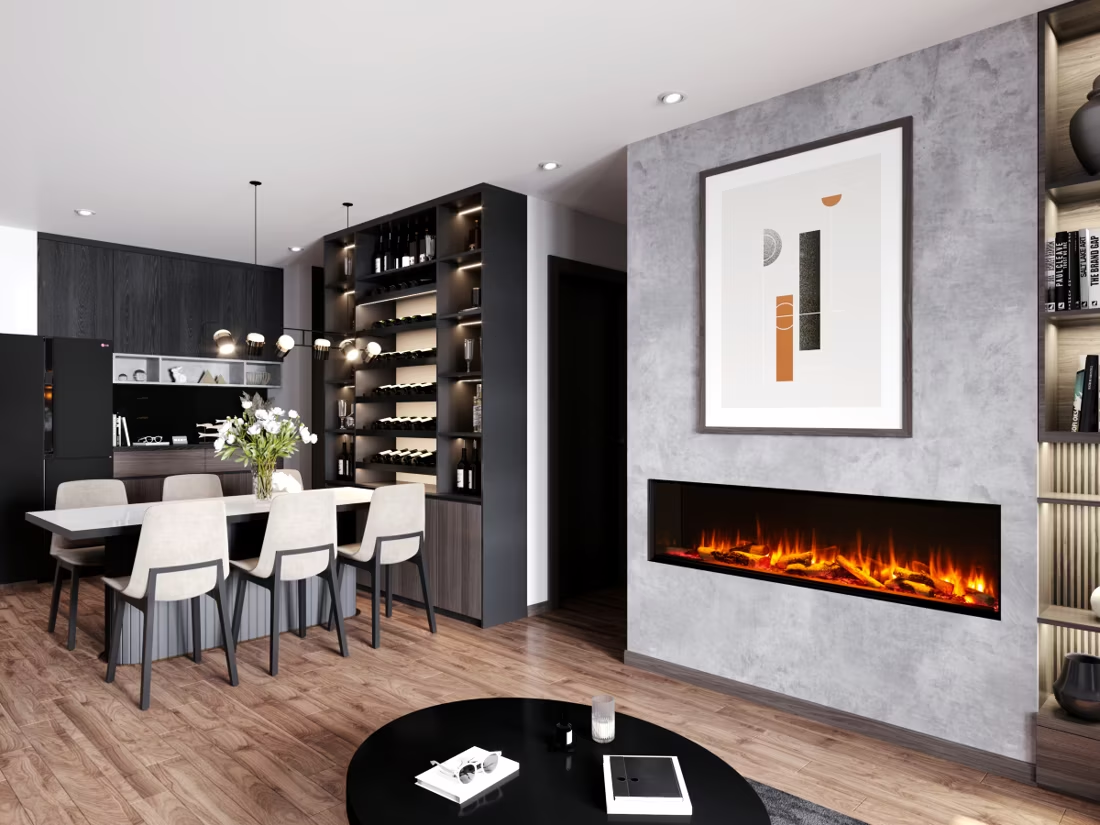
No—that's its superpower. An electric fireplace needs a wall and an outlet, period. No vent pipe, no gas line, no clearances to design around, which is why it works in bedrooms, offices, apartments, and walls where venting a gas or wood unit would be impractical or impossible. Installation is typically the simplest and least expensive of any fireplace type.
How much should I budget for a fireplace?
For an average home—covering the fireplace, the vent pipe, and basic installation—a budget between $3,900 and $5,500 gives you a lot of options across wood, gas, and pellet. By the time you add finish work, gas line, and electrical, the average complete installation lands between $5,000 and $12,000 all-in. In a remodel or new build, a good rule is to put about 2.5% of the total project cost toward the fireplace.
Can a fireplace actually lower my heating bill?
Yes—by creating a comfort zone. A furnace heats every square foot of the house just to warm the one room you're in; a gas fireplace on low burns roughly a sixth of the gas a typical furnace does. Set the furnace around 55–60 degrees as a baseline, then heat the rooms your family actually uses. Families who heat this way commonly save $20–$60 a month.
Nearby Dealers
Hearth shops serving Texarkana and the surrounding area.
Electric Service in Texarkana
An electric fireplace's heater draws about 1,500 watts—pennies per hour at local rates.
Southwestern Electric Power Co
Entergy Arkansas LLC
Southwest Arkansas E C C
Find your electric fireplace in Texarkana.
Tell us a bit about your home and we'll put together a free Project Guide & Parts List—the right electric fireplace or insert for your space, the exact parts you'll need, and a trusted local dealer to install it correctly.
Find Your Fireplace →