
Reliable gas heat for Scott County's Ouachita foothills.
Winter lows in Scott County average around 28°F, with a modest, mild-by-national-standards heating season—enough to make instant gas heat a welcome upgrade from a drafty fireplace. Find the right unit and connect with a trusted local dealer.
Every Project Starts From One of These Five Situations
Propane-powered comfort in the Ouachita foothills.
Scott County sits in the Ouachita Mountains of western Arkansas, wedged between the Ouachita National Forest to the south and the Ozark-St. Francis National Forests to the north. It's a county of about 4,800 people spread across small towns like Waldron and long stretches of rural road, with oak, hickory, and pine covering the ridges. Climate zone 3A means winters here are milder than much of the country, but nights still regularly drop into the high 20s, and older farmhouses and cabins throughout the county rely on more than just central air to stay comfortable through January and February.
Natural gas infrastructure is limited in Scott County outside of Waldron, so propane is the standard fuel for most gas fireplace installations across the county—delivered by regional propane suppliers and stored in a tank on the property. That doesn't slow anything down: a propane-fed direct-vent fireplace lights instantly, runs without tending, and gives a family room the kind of steady, no-hassle warmth that pairs naturally with the wood stoves already common in this part of Arkansas. For homeowners tired of hauling wood every winter—or looking to add heat to a room a wood stove doesn't reach—gas is often the simpler answer.
Three steps. No salesperson until you're ready.
Tell us about your project
Your zip code, your situation, and the fuel you're leaning toward—or let the answers point you to one.
See what's actually available
The brands dealers within 100 miles genuinely carry—real options, never a catalog mirage.
Get your dealer & Project Guide
A trusted local dealer, plus the free Project Guide & Parts List that names every component of the job.
Frequently Asked Questions
How much does a gas fireplace installation cost in Scott County?
A typical gas fireplace or insert installation in Scott County runs roughly $3,200 to $8,000, depending on the unit, the venting path, and whether a new propane line or tank setup is needed. A direct-vent gas insert going into an existing masonry fireplace with propane already on site tends to land on the lower end. A new build-in fireplace with fresh framing, venting, and a first-time propane tank installation runs toward the higher end. Because most of the county relies on propane rather than piped natural gas, your local dealer will typically coordinate with a propane supplier as part of the install quote.
Can I convert my existing wood fireplace to gas?
Yes—it's a common project for homes throughout Scott County with an existing masonry fireplace. A gas insert is fitted into the firebox, using a stainless liner run up your existing chimney as the vent path, and connected to a propane line from an outdoor tank. Costs typically run $4,000 to $7,500 depending on the insert and whether new propane line work is required. The conversion keeps the look of your existing fireplace surround while eliminating ash cleanup and giving you instant, thermostat-controlled heat.
Do I need natural gas, or does propane work?
For most of Scott County, propane is the answer—natural gas lines are limited to parts of Waldron and aren't available across the county's rural stretches. Propane fireplaces perform identically to natural gas units; the burner orifice and regulator are simply set for propane instead. If you don't already have a propane tank on your property, your local dealer coordinates the tank setup with a regional propane supplier as part of the installation, which is standard practice out here.
Will my gas fireplace work during a power outage?
Most modern gas fireplaces are built to keep working when the power goes out. Units with intermittent pilot ignition (IPI) include a battery backup—typically AA batteries in the unit itself—that takes over automatically. Valor fireplaces go a step further: their pilot assembly generates its own electricity through the thermocouple, so there are no batteries to replace at all. For Scott County's rural roads, where an ice storm or downed line can mean a longer wait for power to come back, that kind of self-sufficient ignition is worth asking your local dealer about.
What's the difference between a gas fireplace, gas insert, and gas stove?
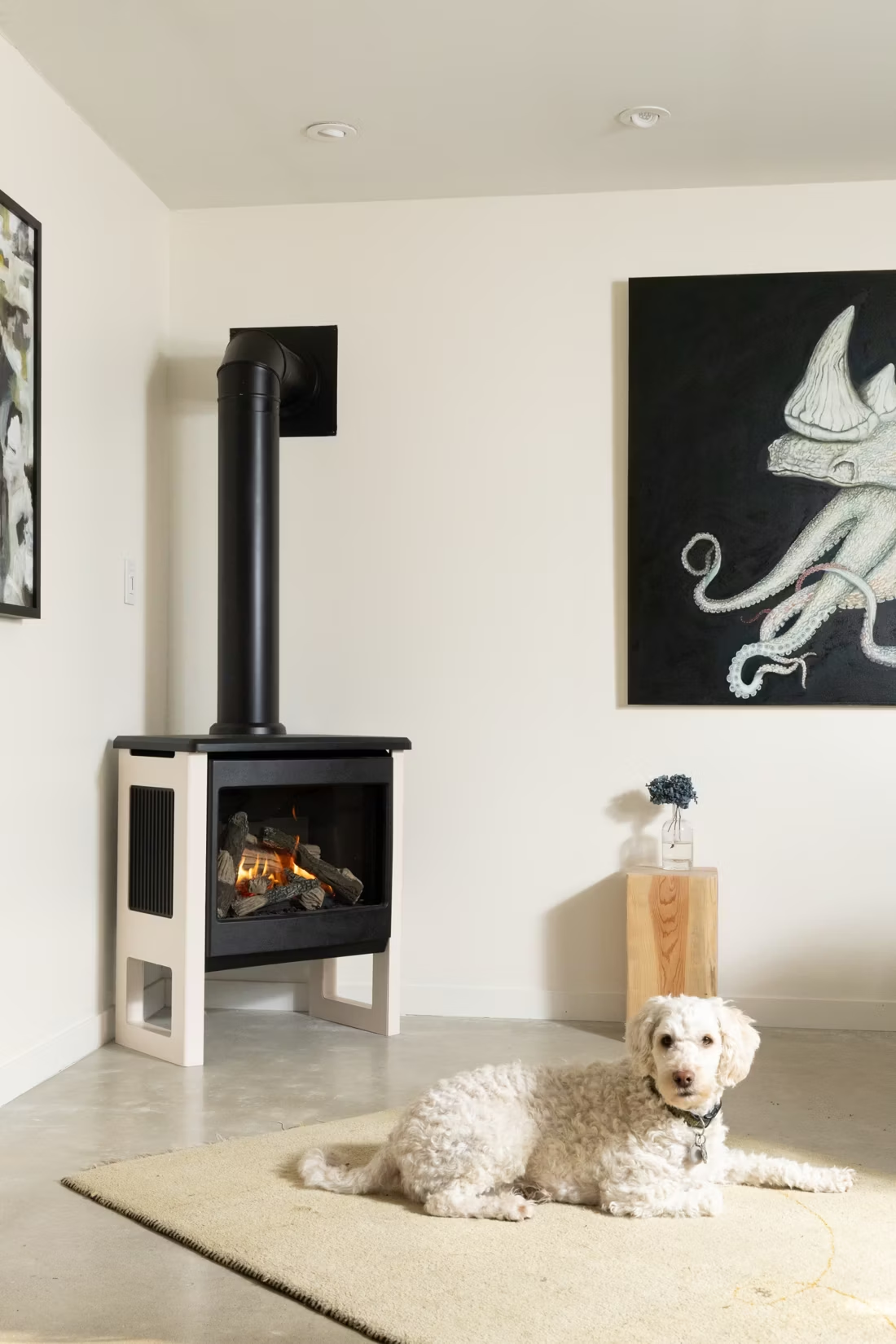
A gas fireplace is a fully built-in unit, framed into a wall—the right choice for new construction or a remodel. A gas insert drops into an existing masonry fireplace opening and uses the existing chimney as its vent chase, which makes it the most common upgrade for the older farmhouses scattered across Scott County. A gas stove is a freestanding cabinet-style unit that sits on the floor, similar in footprint to a wood stove but running on propane. If you already have a fireplace you rarely use, an insert is usually the simplest and most cost-effective path.
Do I need a permit to install a gas fireplace in Scott County?
It depends on where in the county you're building. Within Waldron city limits, a building permit is typically required for new gas line and venting work. In much of unincorporated Scott County, formal building permits for hearth appliances are less commonly enforced, which is typical for rural Arkansas counties—but propane tank placement still needs to follow setback and clearance rules from your propane supplier's fire code guidelines. A reputable local dealer will know exactly what's required for your specific address and handle the paperwork where it applies.
What's the difference between vented and vent-free gas fireplaces?
Vented (direct-vent) gas fireplaces draw in outside combustion air and exhaust the byproducts back outside through a sealed pipe. Vent-free units burn fuel directly into the room without external venting, which makes them cheaper to install but releases some water vapor and combustion byproducts indoors, so they carry stricter room-sizing and oxygen-sensor requirements. Arkansas permits vent-free units, and they show up in some older Scott County homes where running a vent path is difficult. For most installations, though, a direct-vent unit is the safer and more universally recommended choice, and it's what most local dealers will steer you toward first.
How often should my gas fireplace be serviced?
Plan on an annual inspection, ideally before the coldest stretch of winter sets in. A technician checks the burner, pilot assembly, gas connections, and venting, and cleans the glass and interior. This is quick compared to a wood-stove chimney sweep, but it matters just as much for safety—especially on propane systems where a technician will also check the line from the tank. Expect to pay in the range of $125 to $200 for a standard annual service call in this part of Arkansas.
Gas vs. wood—which is right for my home in Scott County?
Wood has deep roots here—Scott County sits between the Ouachita National Forest and the Ozark-St. Francis National Forests, and cutting permits run just $10 to $20 per cord during the May-to-October season, which keeps self-cut oak, hickory, and pine within easy reach for a lot of households. Wood also keeps working without electricity, which matters when an ice storm takes down power lines. Gas, on the other hand, gives you instant on-off heat with no wood handling, no ash, and more consistent output for everyday use in a main living space. Given the county's mild climate zone 3A winters, many homeowners here run gas for daily comfort and keep a wood stove as backup heat for the coldest nights or storm outages—a combination that works well with the terrain and resources of the area.
Why is a fireplace insert so efficient?
An insert does two things: it seals the chimney completely, so you stop losing air you already paid to heat, and it radiates warmth into the room through the firebox and glass. Most add a heat-exchange fan that pulls cool room air underneath, wraps it around the hot firebox, and pushes it back out warm. Your home is more efficient before you've even lit the first fire.
Why is my open fireplace making my house colder?
Open fireplaces suck—literally. As the fire burns, it consumes air your furnace already paid to heat and pulls it out through the chimney, so the house is actually colder after the fire goes out than before you lit it. An insert fixes this: it seals the chimney, puts fixed glass across the front, and turns that hole in your house into a real heat source.
Does a fireplace add value to my home?
On average, a fireplace adds back to the home about the same amount you spent installing it. Add the monthly savings from heating the rooms you actually use instead of the whole house—often hundreds of dollars a year—and the value case is strong before you even count what a fire does for how your family uses the room.
How much should I budget for a fireplace?
For an average home—covering the fireplace, the vent pipe, and basic installation—a budget between $3,900 and $5,500 gives you a lot of options across wood, gas, and pellet. By the time you add finish work, gas line, and electrical, the average complete installation lands between $5,000 and $12,000 all-in. In a remodel or new build, a good rule is to put about 2.5% of the total project cost toward the fireplace.
Stove and Fireplace Dealers in Scott County
Find your gas fireplace in Scott County.
Tell us a bit about your home and heating goals, and we'll match you with a trusted local dealer and send over a free Project Guide & Parts List—the exact parts, including the vent kit, for a gas fireplace project sized for your Scott County home.
Find Your Fireplace →