
Reliable gas heat for Polk County's mild Ouachita winters.
From Mena to Cove, Wickes, and the ridges around Rich Mountain, propane fuels most gas hearth installs in Polk County. Find the right fireplace, insert, or stove, and get matched with a trusted local dealer.
Every Project Starts From One of These Five Situations
Mild winters, real comfort—without the wood-splitting.
Polk County sits in the Ouachita Mountains of west-central Arkansas, anchored by Mena and stretching out toward Rich Mountain—the highest point in the state at 2,681 feet—and the Ouachita National Forest that covers much of the county. At roughly 3,644 heating degree days and an average winter low near 28°F, this is a mixed-humid climate zone 3A county: winters are noticeably cooler at elevation on Rich Mountain than down in the valley around Mena, but nothing like the sustained sub-zero stretches you'd see in a place like Bismarck, ND. Most homes here don't need a furnace-replacement-grade heat source—they need something that takes the chill off a damp, 30-degree morning and looks good doing it.
Natural gas pipeline infrastructure is thin across rural Polk County, so propane is the standard fuel for most gas fireplace, insert, and stove installations, whether you're in town in Mena or out toward Grannis, Hatfield, or Vandervoort. There are no air quality non-attainment issues or winter burn curtailment periods here, so gas appliances run without the seasonal restrictions some Western counties face. Plenty of Polk County households already split time between wood—oak, hickory, and pine are all abundant, with Ouachita National Forest cutting permits running $10 to $20 per cord from May through October—and a gas unit for the room where convenience matters most. A propane fireplace or insert gives you instant, thermostat-controlled heat in the living room or den, with the woodpile still doing duty in the shop or the back room.
Three steps. No salesperson until you're ready.
Tell us about your project
Your zip code, your situation, and the fuel you're leaning toward—or let the answers point you to one.
See what's actually available
The brands dealers within 100 miles genuinely carry—real options, never a catalog mirage.
Get your dealer & Project Guide
A trusted local dealer, plus the free Project Guide & Parts List that names every component of the job.
Frequently Asked Questions
How much does a gas fireplace installation cost in Polk County?
Most gas fireplace and insert installations in Polk County run between $3,500 and $9,000, depending on the unit, whether a propane tank and line already exist, and whether you're converting an existing masonry fireplace or building new. A propane insert dropped into an existing chimney with a tank already on the property tends to land on the lower end. New construction or a full built-in fireplace with fresh gas line runs to a new or upgraded propane tank sits toward the higher end. Because natural gas lines don't reach much of the county outside Mena, expect your installer to price in propane tank setup or an upgrade to an existing tank as part of the quote.
Can I convert my existing wood fireplace to gas?
Yes, and it's a common request from homeowners in Mena and the surrounding county who want to keep the look of their fireplace without hauling wood every day. A propane gas insert typically installs into the existing masonry opening, using a stainless liner run through the current chimney for venting. Costs generally fall in the $3,500 to $7,500 range locally, with the main variables being the insert model and whether a propane tank needs to be installed or upgraded to handle the fireplace's demand alongside any existing propane appliances like a water heater or range.
Do I need natural gas, or is propane the standard here?
Propane is the standard fuel for gas fireplaces across nearly all of Polk County. Natural gas pipeline service is limited even within Mena, so the vast majority of installations in Cove, Wickes, Vandervoort, Hatfield, and the rural county are propane-fueled from the start. Most gas fireplace models are built to run on either fuel with the right orifice and regulator, so the appliance selection isn't limited—what changes is whether you're tying into an existing propane tank or having a supplier set a new one, which your local installer will coordinate.
Will my gas fireplace work during a power outage?
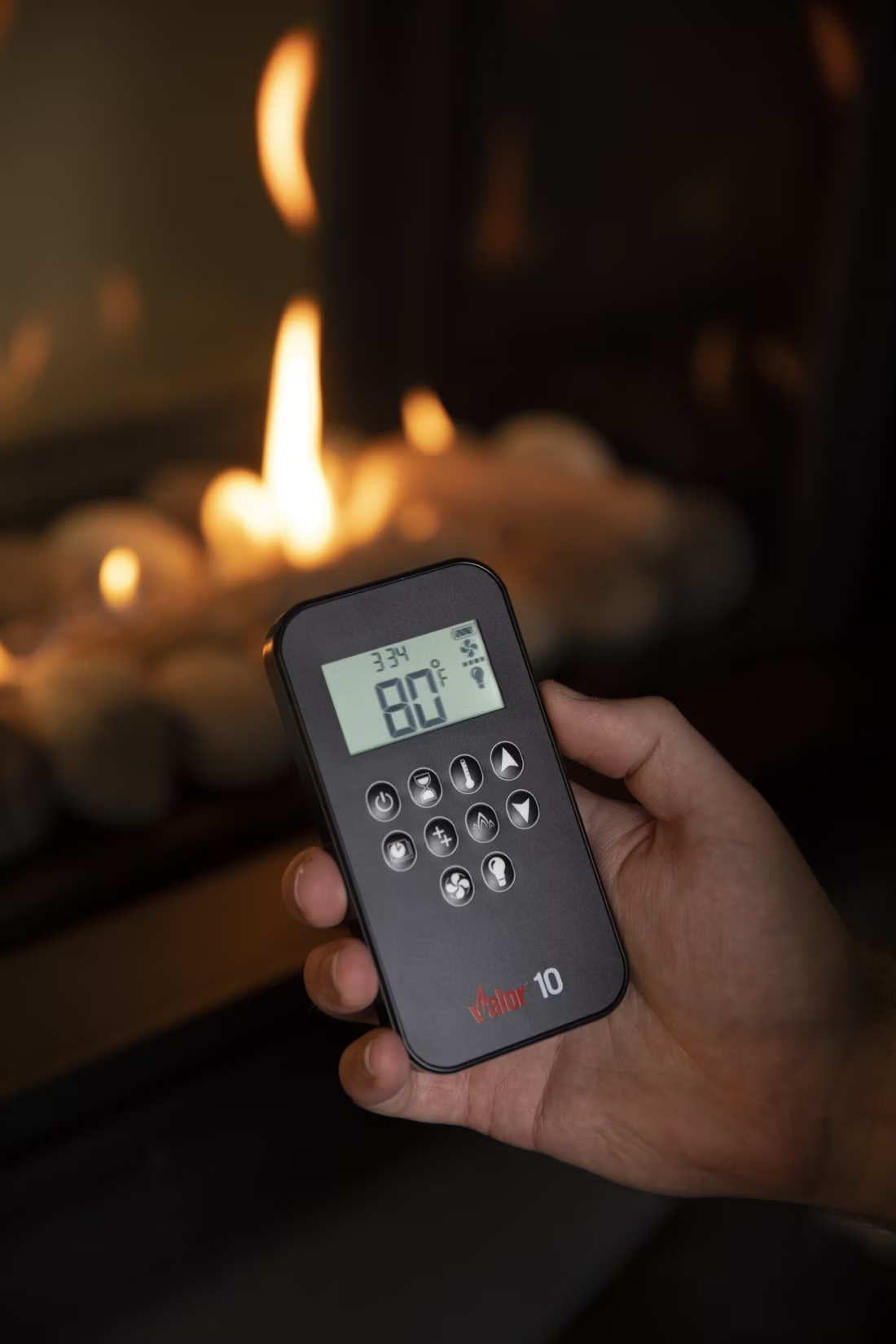
Most modern gas fireplaces will, which matters in a county where ice storms occasionally take down power lines across the Ouachita ridgelines for days at a time. Units with intermittent pilot ignition (IPI) run on a small battery backup that kicks in when the power drops, so the fireplace lights and operates normally off batteries. Valor fireplaces go a step further—their pilot assembly generates its own electricity through the thermocouple, so there's no battery to remember or replace. Either way, ask your local dealer which ignition system is on the unit you're considering if outage performance matters to you.
What's the difference between a gas fireplace, gas insert, and gas stove?
A gas fireplace is a fully built-in unit framed into a wall, typically used in new construction or a remodel. A gas insert is sized to slide into an existing masonry fireplace opening, sealing it up and venting through the original chimney with a liner—the common upgrade for older Polk County farmhouses with an open hearth that's more decorative than functional. A gas stove is a freestanding, cabinet-style unit that sits on a hearth pad like a wood stove but burns propane. For most homeowners here with an existing fireplace, an insert is the simplest path; a stove is often the better fit for a room that never had a chimney to begin with.
Do I need a permit to install a gas fireplace in Polk County?
Yes—new gas fireplace installations require a building permit, and any propane line work needs to be handled by a licensed gas-fitter as part of the job. Most local hearth dealers coordinate the permitting, the propane tank setup or hookup, and the final inspection together, so you're not left managing separate trades. If you're just swapping an insert into an already-permitted, already-plumbed fireplace, the process is typically faster—but it's worth confirming with your installer before work starts.
What's the difference between vented and vent-free gas fireplaces?
Vented gas fireplaces draw combustion air from outside and exhaust it back outside through a sealed flue—they burn cleaner from a room-air standpoint and are the most widely recommended option everywhere, including Polk County. Vent-free (ventless) units burn fuel directly into the room without exterior venting; they're legal in Arkansas and often chosen for rooms without an existing chimney or vent path, but they require correct room sizing and an oxygen depletion sensor, and they add some humidity and combustion byproducts to indoor air. With no air quality restrictions in Polk County either way, the choice mostly comes down to your room's venting options and how you want the unit to perform—a local dealer can walk through both for your specific space.
How often should my gas fireplace be serviced?
Plan on an annual inspection, ideally before the first cool snap of the season. A technician checks the burner, pilot assembly, venting, and gas connections, and cleans the glass and interior—a much shorter visit than a wood chimney sweep, but just as important for safe operation, especially on propane systems where a technician can also check tank connections and regulator function. Local hearth dealers who sell and install these units typically offer this service directly.
Gas vs. wood—which is right for my home?
With oak, hickory, and pine readily available and Ouachita National Forest cutting permits running $10 to $20 per cord, wood remains a genuinely low-cost heat source for Polk County homes willing to do the cutting, splitting, and stacking—and it works without electricity, which matters when ice storms roll through the mountains. Gas, almost always propane here, trades that self-sufficiency for instant, thermostat-controlled heat with no ash, no chimney creosote buildup, and no wood handling. Given the county's relatively mild 3,644 heating degree days, many households find a single gas unit in the main living space covers day-to-day comfort just fine, while a wood stove or fireplace elsewhere in the house handles backup heat or the occasional cold snap on Rich Mountain.
Is my gas fireplace wasting gas?
If it was installed more than 15 years ago, probably. Older gas fireplaces keep a standing pilot light burning all the time, and that little flame can cost a couple hundred dollars a year. Newer models use pilot-on-demand ignition—the pilot lights only when you use the fireplace and goes out when you turn it off.
Why is my open fireplace making my house colder?
Open fireplaces suck—literally. As the fire burns, it consumes air your furnace already paid to heat and pulls it out through the chimney, so the house is actually colder after the fire goes out than before you lit it. An insert fixes this: it seals the chimney, puts fixed glass across the front, and turns that hole in your house into a real heat source.
Can a fireplace actually lower my heating bill?
Yes—by creating a comfort zone. A furnace heats every square foot of the house just to warm the one room you're in; a gas fireplace on low burns roughly a sixth of the gas a typical furnace does. Set the furnace around 55–60 degrees as a baseline, then heat the rooms your family actually uses. Families who heat this way commonly save $20–$60 a month.
What is an in-home preview and do I need one?
It's a visit where a hearth professional measures your space, confirms the model you picked actually works in your home, and walks the specs—framing, gas line, venting, finish work—before anything is ordered. Some details you just can't know until you see the house. Never make a down payment without one; it's the single most-skipped step that burns buyers.
Stove and Fireplace Dealers in Polk County
Find your gas fireplace in Polk County.
Tell us a bit about your home in Polk County and we'll match you with a trusted local dealer and send over a free Project Guide & Parts List—the exact parts, including the vent kit, for your gas fireplace project.
Find Your Fireplace →