
Warm the Room You're In—Not the Whole House.
No chimney, no gas line, no permit headaches - just plug-in or hardwired zone heat sized for Pea Ridge's mild Ozark winters. Get matched with a trusted local dealer.
Every Project Starts From One of These Five Situations
Electric heat built for the Ozark foothills' mild winters.
Pea Ridge sits in the Ozark foothills of Benton County at 1,310 feet, just northeast of Rogers and Bentonville in fast-growing northwest Arkansas. Winters here are genuinely mild by national standards: climate zone 4A, an average winter low around 26°F, and a winter heating season that's about half as demanding as a colder climate like Fargo, ND logs in an average winter. Most Pea Ridge homes don't need a whole-house wood or gas system to stay comfortable; they need targeted heat for the rooms that actually get cold, like a bonus room over the garage, a sunroom, or a finished basement.
Electric service in Pea Ridge is split among three providers - Southwestern Electric Power Co. (SWEPCO), Empire District Electric, and Southwest Arkansas Electric Cooperative - a common overlap in this part of Benton County. Residential rates run roughly 13 to 15 cents per kWh depending on which one serves your address, which is moderate enough to make an electric fireplace a practical, low-commitment way to add zone heat. Plenty of local homes still burn oak and hickory as primary heat, but electric wins out where running a chimney isn't practical: rentals, additions, condos, and rooms where the goal is comfort, not a full heating retrofit.
Three steps. No salesperson until you're ready.
Tell us about your project
Your zip code, your situation, and the fuel you're leaning toward—or let the answers point you to one.
See what's actually available
The brands dealers within 100 miles genuinely carry—real options, never a catalog mirage.
Get your dealer & Project Guide
A trusted local dealer, plus the free Project Guide & Parts List that names every component of the job.
Frequently Asked Questions
How much does an electric fireplace installation cost in Pea Ridge?
Electric fireplace projects in Pea Ridge typically run from about $300 for a plug-in insert or freestanding unit that uses an existing outlet, up to $1,500-$2,500 for a built-in wall unit or mantel package that needs a dedicated 240V circuit run by a licensed electrician. Because there's no chimney, gas line, or venting involved, electric is consistently the least expensive hearth option in Benton County, and most local dealers can complete a straightforward insert swap in a single afternoon.
Do I need a permit for an electric fireplace in Pea Ridge?
Freestanding or plug-in electric fireplaces generally don't require a building permit since there's no venting or combustion involved. If you're installing a built-in unit that needs a new dedicated circuit, an electrical permit through the City of Pea Ridge (or Benton County if you're outside city limits) may apply, and your electrician typically pulls it as part of the job. None of the wood-burning curtailment or air-quality rules that apply elsewhere come into play here, which is moot anyway since Benton County currently reports no air quality non-attainment concerns.
How much does it cost to run an electric fireplace in Pea Ridge?
A typical 1,500-watt electric fireplace draws about 1.5 kWh per hour of use. At Pea Ridge-area rates - roughly 12.96 to 14.99 cents per kWh depending on whether SWEPCO, Empire District Electric, or Southwest Arkansas Electric Cooperative serves your home - that works out to around 20 cents an hour, or about $10 to $12 a month for a few hours of evening use in a bonus room or sunroom. It's inexpensive for supplemental warmth but not a cheap way to heat an entire house full-time.
Which electric utility serves my home, and does it matter?
Coverage in Pea Ridge is split among three providers depending on exactly where your home sits: Southwestern Electric Power Co. (SWEPCO), Empire District Electric, and Southwest Arkansas Electric Cooperative. Rates differ - Empire District runs closest to 15 cents per kWh, SWEPCO around 13.5 cents, and Southwest Arkansas EC nearer 13 cents - so it's worth checking a recent bill before assuming a monthly operating cost. A local dealer can help translate a unit's wattage into a real running-cost estimate once you know your provider.
Electric vs. wood - which makes more sense for my Pea Ridge home?
Benton County is oak and hickory country, and plenty of Pea Ridge homes still burn wood as primary or supplemental heat, especially on larger rural lots outside town. Electric makes more sense for specific spaces: a converted garage bonus room, a finished basement, a rental property, or anywhere running a chimney isn't practical. With winter lows averaging only 26°F and a winter heating load that's modest compared to a colder climate like Duluth, MN, electric zone heating comfortably covers the coldest stretches of January and February without the commitment of a wood-burning system.
What size or type of electric fireplace fits Pea Ridge's climate?
Given the area's mild-to-moderate winters, most Pea Ridge homeowners don't need a whole-home electric heating setup - a 1,500-watt insert or wall-mount unit is usually enough to take the chill off a single room during the coldest weeks of the year. Larger open floor plans, or converted spaces without central heat, may do better with a mid-size built-in unit for more consistent coverage. A local dealer can size the right unit to your square footage during a walkthrough.
What's the difference between an electric insert, built-in, and mantel package?
An electric insert is designed to slide into an existing masonry fireplace opening, giving an old wood-burning fireplace a clean, no-mess upgrade. A built-in electric fireplace is installed into a wall or framed enclosure, often as part of a remodel, and usually needs a dedicated circuit. A mantel package pairs a freestanding or wall-mount unit with a surrounding mantel and typically just needs a standard outlet. For most Pea Ridge homes with an existing fireplace opening, an insert is the simplest upgrade; new construction or rooms without a fireplace usually call for a built-in or mantel setup.
Can an electric fireplace be my primary heat source?
Electric resistance heat costs more per BTU than wood, gas, or a heat pump, so it's rarely the right choice as whole-home primary heat in Pea Ridge - at 13 to 15 cents per kWh, heating an entire house electrically adds up fast over an Ozark winter. Where electric fireplaces earn their keep is zone heating: warming the specific room you're using so you're not running a furnace or heat pump for the whole house just to keep one room comfortable.
How long does an electric fireplace installation take?
Plug-in inserts and freestanding units need nothing more than a standard 120V outlet, so many local dealers can deliver and set one up the same day. Built-in wall units or mantel packages that call for a dedicated 240V circuit require a licensed electrician to run new wiring, which typically adds a half-day to a full day. Either way, there's no masonry, chimney, or venting work to schedule around, which makes electric the fastest hearth project to complete in Pea Ridge.
Can I put a TV above my fireplace?
Yes—with an asterisk. Fireplaces are hot and TVs don't like heat. Either put a mantel between them to deflect rising warmth, or choose a fireplace with heat-management technology that creates a cool zone on the wall above—the wall stays around 125 degrees, barely warm, while the room still gets full heat. If you like clean lines and don't want a mantel, heat management is the answer.
Does an electric fireplace need a vent or chimney?
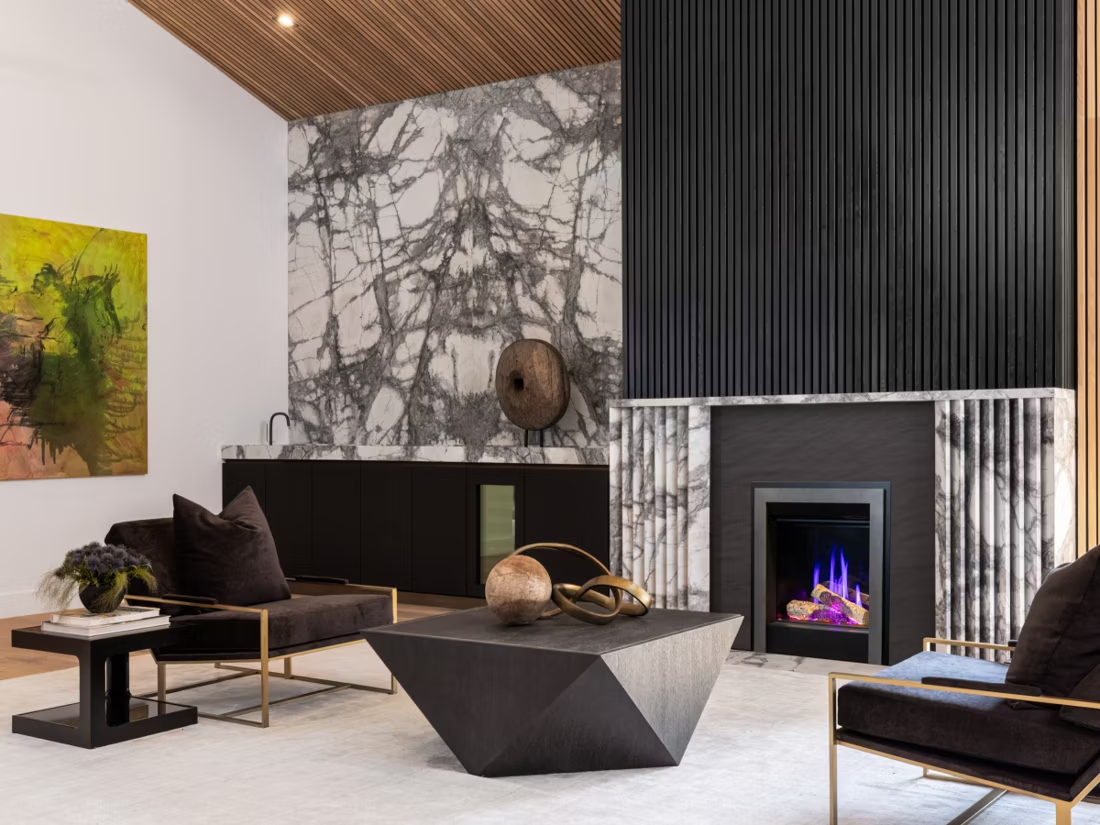
No—that's its superpower. An electric fireplace needs a wall and an outlet, period. No vent pipe, no gas line, no clearances to design around, which is why it works in bedrooms, offices, apartments, and walls where venting a gas or wood unit would be impractical or impossible. Installation is typically the simplest and least expensive of any fireplace type.
Can a fireplace actually lower my heating bill?
Yes—by creating a comfort zone. A furnace heats every square foot of the house just to warm the one room you're in; a gas fireplace on low burns roughly a sixth of the gas a typical furnace does. Set the furnace around 55–60 degrees as a baseline, then heat the rooms your family actually uses. Families who heat this way commonly save $20–$60 a month.
Does a fireplace add value to my home?
On average, a fireplace adds back to the home about the same amount you spent installing it. Add the monthly savings from heating the rooms you actually use instead of the whole house—often hundreds of dollars a year—and the value case is strong before you even count what a fire does for how your family uses the room.
Nearby Dealers
Hearth shops serving Pea Ridge and the surrounding area. Every listing shows whether it is a WhyFire partner, a dealer we have verified as authorized for the brands we recommend, or a local business carrying hearth products. No manufacturer pays for placement. How we verify dealers →
Nwa Fireworld LLC
Godfrey & Black
JT's Fireplace
Straight's Lawn & Garden
Acme Brick Company
Titan Propane
Jack Wills
Encore Building Products
SureGlow Stove & Chimney
Simmons Chimney Sweep
Spavinaw Stove Company
Electric Service in Pea Ridge
An electric fireplace's heater draws about 1,500 watts—pennies per hour at local rates.
Southwestern Electric Power Co
Empire District Electric Co
Southwest Arkansas E C C
Find your electric fireplace in Pea Ridge.
Tell us about your space and we'll match you with a trusted local Pea Ridge dealer and send a free Project Guide & Parts List - sized to your room, your circuit, and your budget.
Find Your Fireplace →