
Find the right gas fireplace for your Marion County home.
Propane-powered warmth for the Ozark hill country around Yellville, Flippin, Bull Shoals, and Summit—including the lake homes ringing Bull Shoals and Norfork. Find the right unit and connect with a trusted local dealer.
Every Project Starts From One of These Five Situations
Propane-powered comfort for the Ozark hills.
Marion County sits in the Arkansas Ozarks, wrapped around Bull Shoals Lake and Norfork Lake, with a year-round population of just over 5,000 spread across Yellville, Flippin, Bull Shoals, Summit, and Pyatt. Winters here are moderate by national standards—average lows near 28°F and roughly 3,815 heating degree days—but the hollows and lake-facing homes still see enough cold nights that a dependable secondary heat source matters, especially for the weekend and retirement homes that make up a large share of housing stock around the lakes.
Natural gas mains don't reach most of Marion County—this is propane country, with tanks serving homes in Yellville and Flippin city limits and scattered across the rural county alike. That makes gas fireplaces here almost always a propane install: a tank (owned or leased through a local supplier), a gas line run to the appliance, and a direct-vent unit sized for the room. For lake houses that sit empty for stretches of the week, a propane fireplace with reliable ignition is often the difference between a warm arrival and a cold one—no ash to shovel, no wood to haul up from the dock.
Three steps. No salesperson until you're ready.
Tell us about your project
Your zip code, your situation, and the fuel you're leaning toward—or let the answers point you to one.
See what's actually available
The brands dealers within 100 miles genuinely carry—real options, never a catalog mirage.
Get your dealer & Project Guide
A trusted local dealer, plus the free Project Guide & Parts List that names every component of the job.
Frequently Asked Questions
How much does a gas fireplace installation cost in Marion County?
Most gas fireplace and insert installations in Marion County run in the $3,500 to $8,500 range, with the spread driven mainly by propane setup—whether you already have a tank and regulator sized for the appliance, or need a new tank installed by a local propane supplier. A direct-vent insert going into an existing masonry fireplace with propane already on site sits at the lower end. A new built-in unit in a lake-house remodel, with fresh gas line run and venting through an exterior wall, runs higher. Because there's no natural gas main to tap into almost anywhere in the county, budget for the propane infrastructure as part of the project, not as an afterthought.
Can I convert my existing wood fireplace to gas?
Yes, and it's a common request for older homes around Yellville and the lake communities that were built with a wood-burning masonry fireplace. A propane gas insert typically drops into the existing firebox, using a stainless liner run up the current chimney for venting. In Marion County this usually runs $4,000 to $7,500, with the gas line and any propane tank work factored in separately if you don't already have propane service to the house. The result keeps the original masonry look but trades hauling oak and hickory for a switch or remote.
Do I need natural gas, or does everyone here use propane?
Propane is the standard fuel for gas fireplaces throughout Marion County. Natural gas distribution lines don't reach the vast majority of the county, including most of the housing around Bull Shoals Lake and Norfork Lake, so nearly every gas fireplace installed here runs on propane from a local supplier's tank. Almost every gas fireplace model sold today can be configured for propane at the factory or in the field—your installer sets the correct orifice and regulator for propane pressure, which is a different setup than a natural-gas configuration.
Will my gas fireplace work during a power outage?
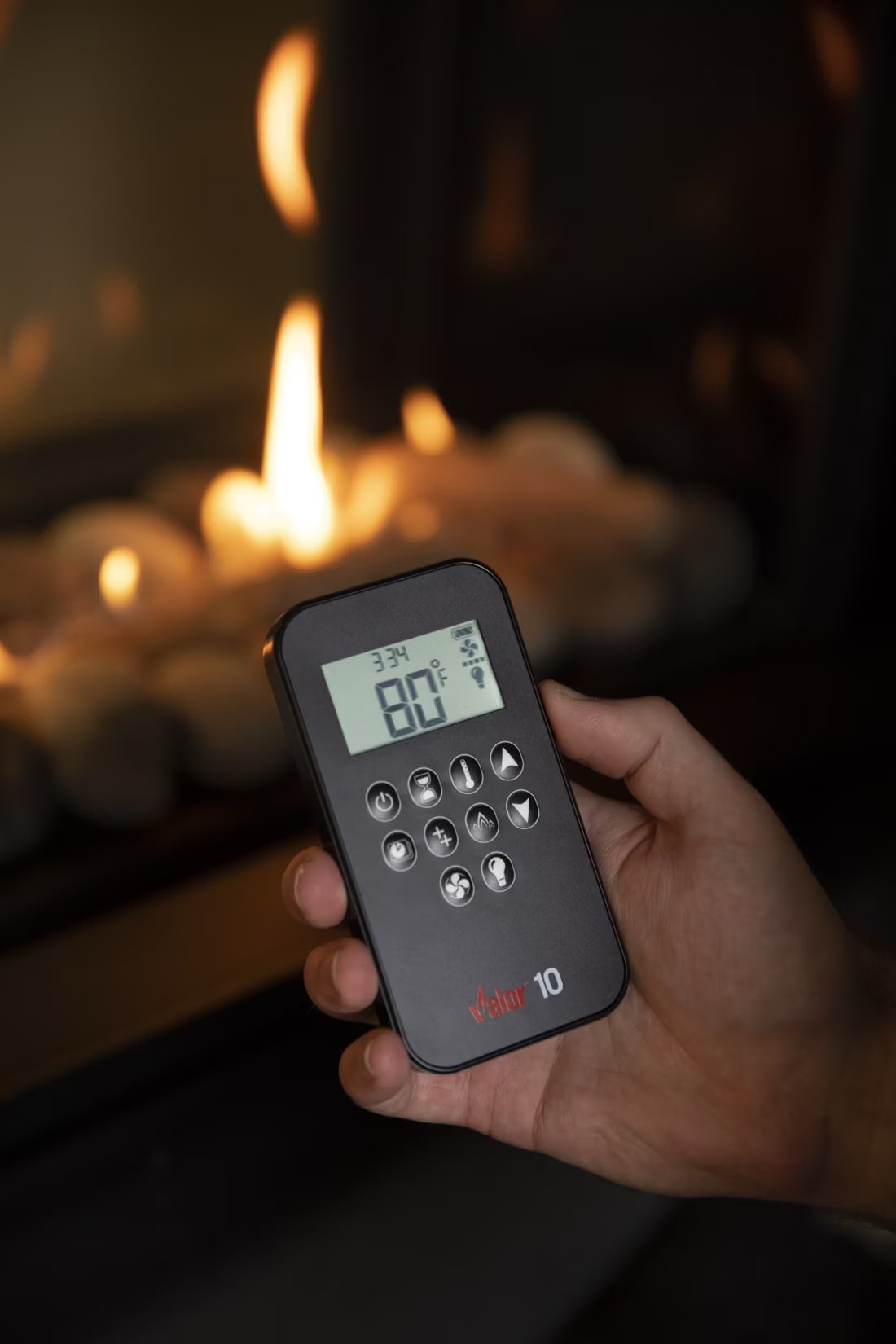
Most will, which matters in a county where ice storms can take down power in the hollows for days at a time. Units with intermittent pilot ignition (IPI) run on a small battery backup that kicks in the moment the power drops, so the fireplace still lights on demand. Valor fireplaces skip the battery question entirely—their pilot's thermocouple generates the small amount of electricity the valve needs, so the unit works with or without batteries or grid power. For a lake house that may sit unattended for stretches, that kind of no-maintenance reliability is worth asking your local dealer about directly.
What's the difference between a gas fireplace, gas insert, and gas stove?
A gas fireplace is a built-in unit framed into a wall—the right call for new construction or a full remodel of a lake house great room. A gas insert slides into an existing masonry firebox and uses the current chimney as its vent path, which suits the older homes scattered through Yellville and Flippin. A gas stove is a freestanding cabinet unit, often chosen for cabins or smaller rooms where a full fireplace surround doesn't make sense. Most Marion County homeowners with an existing wood fireplace start with an insert; new builds or additions usually go with a built-in unit.
Do I need a permit to install a gas fireplace in Marion County?
Marion County itself doesn't run a countywide building permit office for unincorporated areas, so most rural and lakefront installs move forward without a county-issued permit. Inside city limits—Yellville, Flippin, or Bull Shoals—check with the city office, since some require a permit for gas line work. Regardless of jurisdiction, the propane line itself should be run and pressure-tested by an Arkansas-licensed gas fitter or HVACR contractor; that licensing requirement is state law, not a local option, and it's the piece most homeowners skip at their own risk.
What's the difference between vented and vent-free gas fireplaces?
Vented (direct-vent) fireplaces pull combustion air from outside and exhaust the byproducts back outside through a sealed pipe—they're the safest option and the one most local dealers install by default. Vent-free units burn propane directly into the room air without external venting; they're legal in Arkansas but come with strict room-size and ventilation requirements, and they release some moisture and combustion byproducts indoors. For a lake house or cabin that gets closed up for weeks at a time, a direct-vent unit is generally the better call—you're not depending on someone remembering to crack a window when they arrive. Ask your local dealer to walk through both if you're weighing a smaller cabin install.
How often should my gas fireplace be serviced?
Plan on an annual inspection, ideally in late summer or early fall before the first cold snap off the lake. A technician checks the burner, pilot assembly, gas connections, and venting, and cleans the glass and interior—a much smaller job than a wood chimney sweep, but just as important since a fouled pilot or blocked vent is a real safety issue. For seasonal lake homes that sit idle much of the year, it's worth having the unit checked before the first weekend you plan to use it, not just on a calendar schedule.
Gas vs. wood—which is right for my home?
Marion County has plenty of oak, hickory, and pine on hand, and wood heat remains popular for full-time residences and hunting cabins where cutting your own firewood is part of the lifestyle. Gas wins on convenience: no hauling wood up from the dock or the truck, no ash, and instant heat when you walk in from the cold—which matters most for the seasonal and weekend homes that make up a big share of the county's housing around Bull Shoals and Norfork Lakes. If you're at the house full-time and enjoy tending a fire, wood still has a strong case, especially with hardwood as accessible locally as it is here. Many owners end up with both—gas for the main living space, a wood stove or fireplace elsewhere for backup and ambiance.
Can I put a TV above my fireplace?
Yes—with an asterisk. Fireplaces are hot and TVs don't like heat. Either put a mantel between them to deflect rising warmth, or choose a fireplace with heat-management technology that creates a cool zone on the wall above—the wall stays around 125 degrees, barely warm, while the room still gets full heat. If you like clean lines and don't want a mantel, heat management is the answer.
Why is my open fireplace making my house colder?
Open fireplaces suck—literally. As the fire burns, it consumes air your furnace already paid to heat and pulls it out through the chimney, so the house is actually colder after the fire goes out than before you lit it. An insert fixes this: it seals the chimney, puts fixed glass across the front, and turns that hole in your house into a real heat source.
Can I install a fireplace myself?
If you're putting a fire in your house on purpose, it's best to work with an expert. Unless you're genuinely experienced in framing, gas line, vent pipe, and the national code on clearances to combustibles, have a professional do it—and ideally the same company that sells you the fireplace, so warranty, service, and liability all live under one roof.
Can a fireplace actually lower my heating bill?
Yes—by creating a comfort zone. A furnace heats every square foot of the house just to warm the one room you're in; a gas fireplace on low burns roughly a sixth of the gas a typical furnace does. Set the furnace around 55–60 degrees as a baseline, then heat the rooms your family actually uses. Families who heat this way commonly save $20–$60 a month.
Stove and Fireplace Dealers in Marion County
Find your gas fireplace in Marion County.
Tell us about your home—full-time residence or lake house—and we'll match you with a trusted local dealer and send over a free Project Guide & Parts List for your Marion County gas fireplace, insert, or stove.
Find Your Fireplace →