
Effortless Warmth for Every Room in Lincoln.
Zone heat for the mild Ozark foothills winters around Lincoln—no chimney, no gas line, and some of the lowest electric rates in the region. Find the right unit and connect with a trusted local dealer.
Every Project Starts From One of These Five Situations
Mild Winters, Modest Bills, and Maximum Flexibility.
Lincoln sits in the rolling Ozark foothills of Washington County at about 1,450 feet, in climate zone 4A. Winters here are moderate by national standards—the average winter low is 27°F and the town logs a comparatively short, mild heating season, a fraction of what a place like Fargo, ND or Duluth, MN sees in a single cold snap. That milder profile is exactly why electric fireplaces and inserts show up so often in Lincoln homes: most families don't need a full cordwood operation or a whole-house gas furnace running around the clock, they need a way to take the edge off a chilly living room or bedroom without much fuss.
Both Southwest Arkansas Electric Cooperative Corporation and Ozarks Electric Cooperative Corporation serve homes in and around Lincoln, and residential rates here run about 12.96 to 13.03 cents per kWh—noticeably below the national average. That makes plug-in or hardwired electric units an easy way to zone-heat the rooms you actually use, without opening a chimney, running a gas line, or pulling a stack permit. No venting, no combustion byproducts, and installation is often as simple as a licensed electrician adding a dedicated circuit—which matters in a county where a lot of the housing stock is older farmhouses and manufactured homes that weren't built with masonry chimneys in mind.
Three steps. No salesperson until you're ready.
Tell us about your project
Your zip code, your situation, and the fuel you're leaning toward—or let the answers point you to one.
See what's actually available
The brands dealers within 100 miles genuinely carry—real options, never a catalog mirage.
Get your dealer & Project Guide
A trusted local dealer, plus the free Project Guide & Parts List that names every component of the job.
Frequently Asked Questions
How much does it cost to install an electric fireplace in Lincoln?
Most electric fireplace projects in Lincoln run $300 to $2,500. A plug-in insert that drops into an existing fireplace opening or a wall-mounted unit on a standard 120-volt outlet sits at the low end—often a same-day job with no electrician needed. Larger built-in units, or any project that requires a dedicated 240-volt circuit or new wiring run from the panel, land in the $1,500 to $2,500 range once a licensed electrician is involved. Full mantel packages with custom surrounds and finish carpentry can reach $3,000 to $6,000. Compare that to the cost of adding a masonry chimney or running a new gas line out here, and it's easy to see why electric is the low-friction option for a lot of Washington County homeowners.
Do I need a permit to install an electric fireplace in Lincoln?
In most cases, no—a plug-in electric fireplace or insert that uses an existing outlet doesn't trigger a permit. If your project requires adding a new dedicated circuit or upgrading your electrical panel to handle a larger built-in unit, that electrical work does need a permit, which your electrician pulls through Washington County Planning & Development on your behalf. Because there's no combustion, no venting, and no chimney involved, electric installations skip nearly all of the inspection steps that wood and gas projects go through in Lincoln.
What size electric fireplace do I need for my home?
Electric fireplaces are rated by both physical size and heater wattage, and in Lincoln's mild climate most homeowners are heating one room at a time rather than the whole house. A 1,500-watt unit—the standard output for most electric inserts and stoves—comfortably heats 400 to 1,000 square feet depending on ceiling height and how well the room is insulated. For a single living room or bedroom, that's plenty. If you're trying to take pressure off a heat pump in a larger open floor plan, talk to a local dealer about a unit with a stronger blower rather than just more visual flame—heat output and glass size are sold separately.
Can an electric fireplace serve as my main source of heat?
For most Lincoln homes, no—it's better used as supplemental, zone heat. With a comparatively short, mild heating season and winter lows averaging in the upper 20s, Lincoln's climate is far milder than the northern Plains or upper Midwest, but a 1,500-watt electric heater still can't economically replace a central heat pump or furnace across an entire house. What it does well is let you turn down the thermostat and heat just the room you're in—the den, a bedroom, a sunroom—which is how most local homeowners actually use them.
What does it cost to run an electric fireplace day to day?
With Southwest Arkansas Electric Cooperative and Ozarks Electric Cooperative both billing residential customers around 13 cents per kWh, a standard 1,500-watt electric fireplace running on high costs roughly 19 to 20 cents an hour. Run it for a few hours in the evening through a Lincoln winter and you're looking at somewhere around $10 to $20 a month in added electricity cost—far less than what most homeowners assume, and one reason electric units remain popular for supplemental heat here even without a strong financial case for whole-house electric heating.
What's the difference between an electric fireplace, insert, and stove?
An electric fireplace is typically a built-in unit set into a wall or framed surround, often as the focal point of a room. An electric insert is sized to slide into an existing fireplace opening—including old wood-burning fireboxes that are no longer used—and it's a popular way to convert a fireplace that's sat cold for years into something functional again. An electric stove is a freestanding cabinet-style unit, styled like a wood stove, that can go almost anywhere near an outlet. For Lincoln homes with an existing fireplace opening, an insert is usually the simplest retrofit; for new construction or a room without a fireplace at all, a built-in or freestanding stove makes more sense.
Why don't more homes in Lincoln use wood heat, given how much oak and hickory grows here?
It's a fair question—Washington County has plenty of oak, hickory, and pine, and some rural properties do keep a wood stove around, mostly as backup heat for ice storms. But Lincoln's climate is genuinely mild by national standards, with an average winter low around 27°F and a much lighter winter heating load than you'd see in Wisconsin or Minnesota, so most homeowners here don't need—or want—the year-round work of a wood-burning setup: splitting, stacking, chimney maintenance, and daily tending. Electric heat covers the occasional cold snap without any of that upkeep, which is a big part of why it's become the default choice for supplemental heat in this part of Arkansas.
How much maintenance does an electric fireplace need?
Very little compared to wood or gas. There's no chimney to sweep, no gas lines to inspect, and no combustion byproducts to worry about. Basic upkeep is dusting the unit, occasionally cleaning the glass front, and replacing the LED light strip or ember bed component every several years as it dims with age—most manufacturers rate these parts for 10,000-plus hours of use. If the blower fan starts making noise, that's usually the only mechanical part that ever needs attention.
Will my electric fireplace work if the power goes out?
No—electric fireplaces need power to run, so during an ice storm outage, a real risk in this part of Arkansas most winters, they'll go dark along with everything else in the house. If backup heat during outages is a priority, some Lincoln homeowners pair an electric fireplace for everyday zone heat with a backup generator, or look at a gas option for at least one room, since gas units with standing pilot or battery-backup ignition can run without grid power. A local dealer can walk you through which setup makes sense for your specific outage risk and budget.
What fireplace styles should I know before shopping?
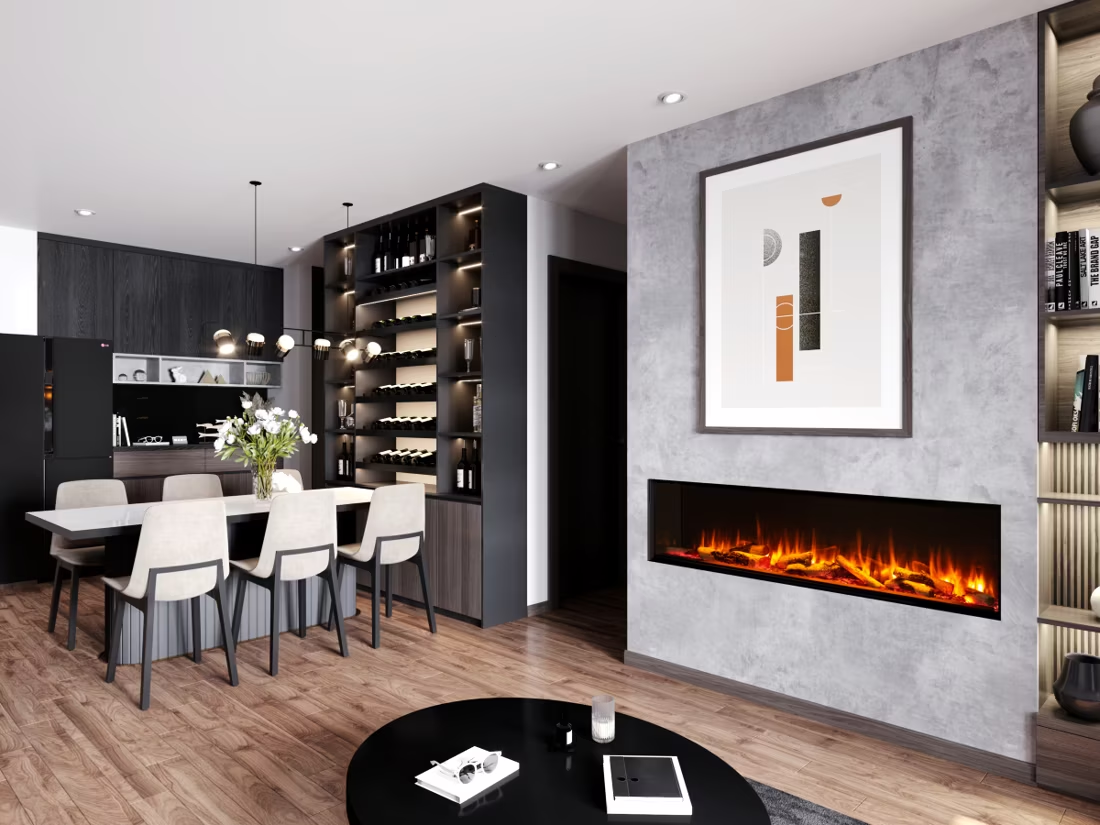
Four cover most of the market: screen-front traditional (mesh front, open feel, fits craftsman homes), traditional door set (the classic look you grew up with), modern linear (wide, low, the statement piece for entertaining), and clean face contemporary (no trim—your tile or stone runs right to the fire's edge). Walk in knowing those four terms and you're ahead of most buyers.
Can I put a TV above my fireplace?
Yes—with an asterisk. Fireplaces are hot and TVs don't like heat. Either put a mantel between them to deflect rising warmth, or choose a fireplace with heat-management technology that creates a cool zone on the wall above—the wall stays around 125 degrees, barely warm, while the room still gets full heat. If you like clean lines and don't want a mantel, heat management is the answer.
Does a fireplace add value to my home?
On average, a fireplace adds back to the home about the same amount you spent installing it. Add the monthly savings from heating the rooms you actually use instead of the whole house—often hundreds of dollars a year—and the value case is strong before you even count what a fire does for how your family uses the room.
What is an in-home preview and do I need one?
It's a visit where a hearth professional measures your space, confirms the model you picked actually works in your home, and walks the specs—framing, gas line, venting, finish work—before anything is ordered. Some details you just can't know until you see the house. Never make a down payment without one; it's the single most-skipped step that burns buyers.
Nearby Dealers
Hearth shops serving Lincoln and the surrounding area. Every listing shows whether it is a WhyFire partner, a dealer we have verified as authorized for the brands we recommend, or a local business carrying hearth products. No manufacturer pays for placement. How we verify dealers →
Jack Wills
Encore Building Products
Spavinaw Stove Company
Simmons Chimney Sweep
Acme Brick Company
Titan Propane
Straight's Lawn & Garden
Brinker's Service
Electric Service in Lincoln
An electric fireplace's heater draws about 1,500 watts—pennies per hour at local rates.
Southwest Arkansas E C C
Ozarks Electric Coop Corp - (Ar)
Find your electric fireplace in Lincoln.
Tell us about your room and we'll match you with a trusted local dealer and send over your free Project Guide & Parts List—a clear plan for your electric fireplace project in Lincoln, including the exact unit and any electrical work needed.
Find Your Fireplace →