
Find your electric fireplace in Jefferson County.
Plug-in warmth and real flame ambiance for Pine Bluff and the rest of Jefferson County—no chimney, no gas line, no permit hassle. Find the right unit and connect with a trusted local dealer.
Every Project Starts From One of These Five Situations
Simple, safe heat for Jefferson County's short winters.
Jefferson County sits in the Arkansas Delta, anchored by Pine Bluff, in climate zone 3A with a winter low average around 33 degrees and a short, mild winter heating season overall. That's a fraction of the heating load a home in Duluth, MN or Fargo, ND has to manage—most Jefferson County winters are short, mild, and punctuated by only a handful of genuinely cold nights. That climate profile is exactly where electric fireplaces do their best work: they're not built to be a home's sole heat source through a brutal season, they're built to add instant, controllable warmth to the rooms where you actually spend your evenings.
Because electric units don't burn fuel, they don't need a flue, a chimney, or a gas line—which matters in a county with plenty of older homes in Pine Bluff, White Hall, and Redfield that were never built with a working fireplace to begin with. Power comes from Entergy Arkansas, the electric utility serving most of the county, and a standard 120-volt insert or freestanding unit plugs into an existing outlet with no electrician required. For homes that already lean on oak and hickory firewood from local land for a traditional wood fire, electric is often the easy second unit—the one that goes in a bedroom, a den, or a rental property where cutting a chimney opening isn't realistic.
Three steps. No salesperson until you're ready.
Tell us about your project
Your zip code, your situation, and the fuel you're leaning toward—or let the answers point you to one.
See what's actually available
The brands dealers within 100 miles genuinely carry—real options, never a catalog mirage.
Get your dealer & Project Guide
A trusted local dealer, plus the free Project Guide & Parts List that names every component of the job.
Frequently Asked Questions
How much does an electric fireplace installation cost in Jefferson County?
A plug-in electric insert or freestanding unit typically runs $200 to $1,000 for the unit itself, with no installation labor required beyond setting it in place—most Jefferson County homeowners handle this themselves. Built-in wall units that require a dedicated 120-volt or 240-volt circuit run higher, generally $1,200 to $3,000 including basic electrical work, especially in older Pine Bluff homes where the existing wiring may need an upgrade to support a dedicated circuit. Because there's no venting, no gas line, and no masonry work involved, electric is consistently the least expensive fireplace category to install in the county.
Do I need a permit to install an electric fireplace in Jefferson County?
In most cases, no. A standard plug-in electric insert or freestanding unit doesn't require a permit because there's no venting, no gas line, and no structural change involved—it's treated like any other plug-in appliance. If you're installing a built-in wall unit that requires a new dedicated electrical circuit, that portion of the work may need an electrical permit depending on the scope, and a licensed electrician should pull it if required. This is one of the simplest fireplace projects to permit in Jefferson County precisely because there's so little to permit.
Will my electric fireplace actually heat a room, or is it just for looks?
Most electric fireplaces are rated for 4,600 to 5,200 BTUs, enough to noticeably warm a single room of 400 to 1,000 square feet, depending on ceiling height and insulation. Given Jefferson County's short, mild winter climate, that output is often enough to serve as the primary heat source for a den or bedroom on all but the coldest nights of the year, when central heat picks up the rest. It's genuine supplemental heat, not just a decorative flame—but it's not designed to replace a furnace in a whole-home sense.
Electric vs. wood—which makes more sense for my Jefferson County home?
Wood offers real heat output, the smell and sound of an actual fire, and independence from the power grid—an advantage during the ice storms that occasionally knock out Entergy Arkansas service in the Delta. Local oak, hickory, and pine are common species, and Ouachita National Forest permits run $10 to $20 per cord during the May-to-October cutting season for homeowners who want to cut their own. Electric skips all of that: no chimney, no ash, no permit, no wood storage, and it can go in nearly any room including apartments and rentals where a wood-burning unit simply isn't an option. For a primary living space in an older Pine Bluff home with an existing chimney, wood or a wood insert is often the better long-term choice. For a bedroom, a rental, or a room without existing venting, electric is usually the practical answer.
Will my electric fireplace work if the power goes out?
No—electric fireplaces require power to run the heater, blower, and flame effect, so they go dark along with the rest of the house during an Entergy Arkansas outage. This matters most during the ice storms that periodically hit the Arkansas Delta and can knock out power for days. If backup heat during outages is a real concern for your household, pair an electric fireplace for daily convenience with a wood stove or insert elsewhere in the home for grid-independent heat.
What size electric fireplace do I need?
For a bedroom or small den under 400 square feet, a compact wall-mount or small insert in the 1,400-watt range is usually enough. For a larger living room, 1,000 square feet or more, look for a unit closer to 1,500 watts (the typical ceiling for a standard 120-volt plug-in) or consider a 240-volt built-in for more heat output. Because Jefferson County's winters are mild, oversizing isn't the concern it is in colder climates—the bigger question is usually whether you want the unit to actually heat the room or serve mainly as ambiance, which changes which model and wattage makes sense.
Are electric fireplaces a good fit for rentals and apartments in Pine Bluff?
Yes—this is one of the strongest use cases for electric. A freestanding electric stove or a plug-in insert requires no venting, no permanent alteration to the unit, and can move with a tenant when they relocate. For rental properties throughout Pine Bluff and Jefferson County where landlords won't approve chimney work or gas line installation, electric is often the only fireplace option that's actually available, and it adds real value for tenants without any construction.
How long do electric fireplaces last, and what maintenance do they need?
A quality electric fireplace typically lasts 10 to 15 years with minimal maintenance—periodic dusting of the vents and an occasional LED light replacement is about all most units need, since there's no combustion, no creosote, and no chimney to sweep. This is a meaningful difference from wood heat in Jefferson County's oak-and-hickory-burning households, where annual chimney inspection is a non-negotiable safety step. Electric units have no equivalent fire-safety maintenance requirement, which is part of why they're popular in secondary rooms.
Electric vs. gas—which is right for my home?
Gas fireplaces deliver more real heat output and a closer approximation of a live flame, but they require either a natural gas line or a propane setup, plus venting for most models—meaningful cost and construction in an older Jefferson County home. Electric skips the venting and fuel line entirely, installs in a fraction of the time, and costs less up front, though it produces less total heat. For a primary living space where you want serious supplemental heat, gas is often worth the extra installation cost. For a bedroom, a rental, or a quick ambiance upgrade, electric is usually the simpler and more cost-effective choice.
Can I put a TV above my fireplace?
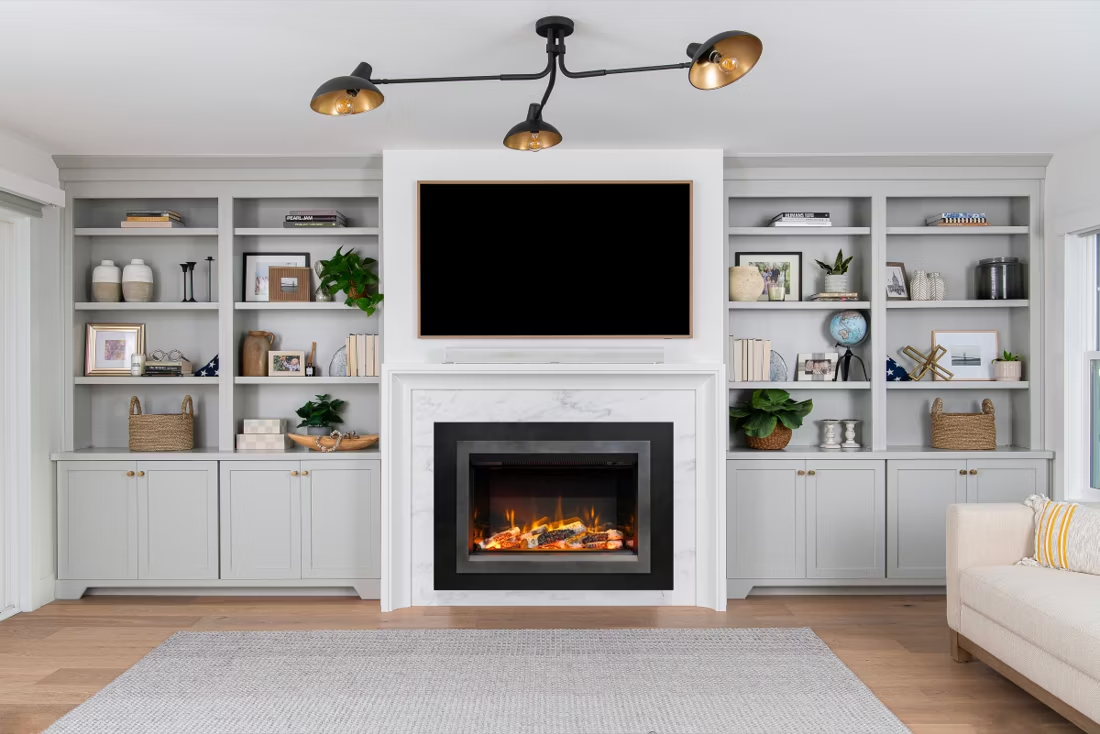
Yes—with an asterisk. Fireplaces are hot and TVs don't like heat. Either put a mantel between them to deflect rising warmth, or choose a fireplace with heat-management technology that creates a cool zone on the wall above—the wall stays around 125 degrees, barely warm, while the room still gets full heat. If you like clean lines and don't want a mantel, heat management is the answer.
Do electric fireplaces actually produce heat?
Yes—most put out around 4,800–5,000 BTUs from a standard outlet, which comfortably warms a bedroom, office, or den as a comfort-zone heater. What they won't do is carry a whole house the way wood, gas, or pellet can. Think of electric as ambiance-first with honest supplemental heat: flames on with no heat in July, flames plus warmth in January.
Can a fireplace actually lower my heating bill?
Yes—by creating a comfort zone. A furnace heats every square foot of the house just to warm the one room you're in; a gas fireplace on low burns roughly a sixth of the gas a typical furnace does. Set the furnace around 55–60 degrees as a baseline, then heat the rooms your family actually uses. Families who heat this way commonly save $20–$60 a month.
Does a fireplace add value to my home?
On average, a fireplace adds back to the home about the same amount you spent installing it. Add the monthly savings from heating the rooms you actually use instead of the whole house—often hundreds of dollars a year—and the value case is strong before you even count what a fire does for how your family uses the room.
Stove and Fireplace Dealers in Jefferson County
Find your electric fireplace in Jefferson County.
Tell us a bit about your home and we'll match you with the right electric fireplace or insert for your space, plus a free Project Guide & Parts List with the exact parts and a recommended local Jefferson County dealer.
Find Your Fireplace →