
Add warmth to any room in Independence County—no chimney required.
From Batesville to Cave City to the White River bottoms, electric fireplaces bring instant zone heat and real ambiance to rooms that don't need a full retrofit. Find the right unit and connect with a trusted local dealer.
Every Project Starts From One of These Five Situations
An easy way to add heat to a room that needs it.
Independence County sits in the Ozark foothills along the White River, with Batesville as the county seat and roughly 20,000 residents spread across smaller communities like Cave City, Sulphur Rock, Newark, and Oil Trough. The climate here is mixed-humid (zone 3A)—winter lows average around 28°F and the county sees a moderate winter heating load compared to the northern tier of the country. Most homes lean on central heat pumps or gas furnaces for whole-house heat, with wood stoves burning local oak and hickory as a traditional backup. Electric fireplaces fit a different niche: supplemental warmth for a sunroom addition, a bonus room over the garage, a primary bedroom without its own duct run, or a rental unit where a wood or gas appliance isn't practical.
The real advantage of electric is what it doesn't require—no chimney, no gas line, no combustion venting. A plug-in insert can go into an existing masonry fireplace opening in an afternoon, and a built-in wall unit typically just needs a dedicated circuit run by a licensed electrician, something local dealers coordinate as part of the install. North Arkansas Electric Cooperative serves much of the county's rural service area, and running an electric fireplace as zone heat costs a fraction of heating the whole house, since you're only warming the room you're actually using. It's a practical fit for the county's mix of older farmhouses, newer builds off Highway 25, and homes near the lake where a full wood or gas retrofit isn't worth the cost.
Three steps. No salesperson until you're ready.
Tell us about your project
Your zip code, your situation, and the fuel you're leaning toward—or let the answers point you to one.
See what's actually available
The brands dealers within 100 miles genuinely carry—real options, never a catalog mirage.
Get your dealer & Project Guide
A trusted local dealer, plus the free Project Guide & Parts List that names every component of the job.
Frequently Asked Questions
How much does an electric fireplace installation cost in Independence County?
A plug-in electric insert or freestanding unit typically runs $300 to $1,200 installed, since it just needs an existing standard outlet and no venting or gas work. A built-in wall unit or a linear electric fireplace set into new framing runs higher, generally $1,200 to $2,500, once you factor in a dedicated 120V or 240V circuit and an electrician's time. Homes in more rural parts of the county—out toward Oil Trough or Sulphur Rock—may see a modest travel charge added by installers, but the core cost drivers are the unit itself and the electrical work, not permitting or masonry.
Do I need a permit to install an electric fireplace in Independence County?
In most cases, no—a plug-in electric fireplace or insert doesn't require a permit since it uses an existing outlet and involves no structural or venting changes. If you're adding a built-in unit that requires a new dedicated circuit, that electrical work should be done to National Electrical Code standards and, within Batesville city limits, typically needs an electrical permit through the city's building department. In unincorporated parts of Independence County, permitting requirements are lighter, but it's still worth having a licensed electrician pull the necessary permit if one applies—it protects you on insurance and resale.
Can an electric fireplace heat my whole home in Independence County's winters?
Not on its own. With winter lows averaging around 28°F and a moderate winter heating load overall, Independence County has a moderate heating season—most homes here rely on a central heat pump or gas furnace to carry the whole house. Electric fireplaces are built for zone heating: they'll comfortably warm a single room of 300 to 400 square feet, which makes them a strong supplement for a den, bedroom, or converted porch, but they're not sized or intended to replace your primary heat source on a cold January night along the White River.
What's the difference between an electric fireplace, an electric insert, and a built-in wall unit?
An electric fireplace is typically a freestanding or mantel-style unit you can place almost anywhere near an outlet. An electric insert is sized to slide into an existing masonry fireplace opening, which makes it a popular choice for older Batesville homes with a wood-burning fireplace that's rarely used. A built-in wall unit is installed into new or existing framing, similar to a flat-screen TV mount, and usually delivers the most polished, custom look but requires more electrical work up front. For a straightforward supplemental heat source, the freestanding or insert options are usually the fastest and least expensive route.
What brands do local dealers in Independence County typically carry?
Hearth dealers serving north-central Arkansas commonly stock electric lines from Dimplex, Napoleon, and Amantii, along with a range of freestanding and insert models at different price points. Availability shifts from dealer to dealer, which is part of why matching with a local shop matters more than browsing online—a dealer in Batesville can tell you what they actually stock, service, and can get installed quickly, rather than what's simply listed on a manufacturer's website.
How much does it cost to run an electric fireplace with North Arkansas Electric Cooperative rates?
Most electric fireplaces draw around 1,500 watts on the heat setting, which at typical North Arkansas Electric Cooperative residential rates works out to roughly 15 to 20 cents an hour of heater use. Run several hours an evening in a bedroom or den, that's a modest addition to a monthly bill—far cheaper than raising the thermostat for the whole house through a heat pump. It's one of the reasons electric fireplaces work well as a supplemental option in a county where most homes already lean on electric heat pumps for primary heating.
Wood vs. electric—which makes sense for my Independence County home?
Wood heat has deep roots here, with plenty of oak and hickory available locally and a long tradition of wood stoves as backup heat during winter storms and power outages. But wood requires a chimney, fuel storage, and regular cleaning, and it can't go into a bedroom or a rental unit as easily. Electric fireplaces trade that authenticity for convenience—no ash, no chimney maintenance, no permitting hassle, and they work in spaces where a wood or gas appliance simply isn't practical, like an apartment above a garage or a manufactured home. If you want backup heat during an outage, wood still wins; if you want easy, install-anywhere ambiance and zone warmth, electric is the better fit.
What size electric fireplace do I need for my room?
Most electric fireplace heaters are rated to comfortably warm 300 to 400 square feet, which covers a typical bedroom, den, or sunroom addition common in Independence County homes. Larger linear units built into a great room wall can push closer to 1,000 square feet of ambient warmth, though at that size they're providing supplemental comfort rather than functioning as a primary heat source. A local dealer can walk through your room's dimensions, ceiling height, and insulation to recommend a specific model rather than relying on a general square-footage rule of thumb.
Is there a best time of year to install an electric fireplace in Independence County?
Unlike wood or gas installs, which often get scheduled around burn season or permit timelines, electric fireplace installs can happen any time of year since there's no chimney, venting, or gas line to coordinate. That said, many Independence County homeowners install in early fall ahead of the first cold snaps off the White River, which also means local electricians and hearth dealers can book up in September and October. Scheduling in summer often gets you a faster install date if you want the unit in place before the weather turns.
Can I put a TV above my fireplace?
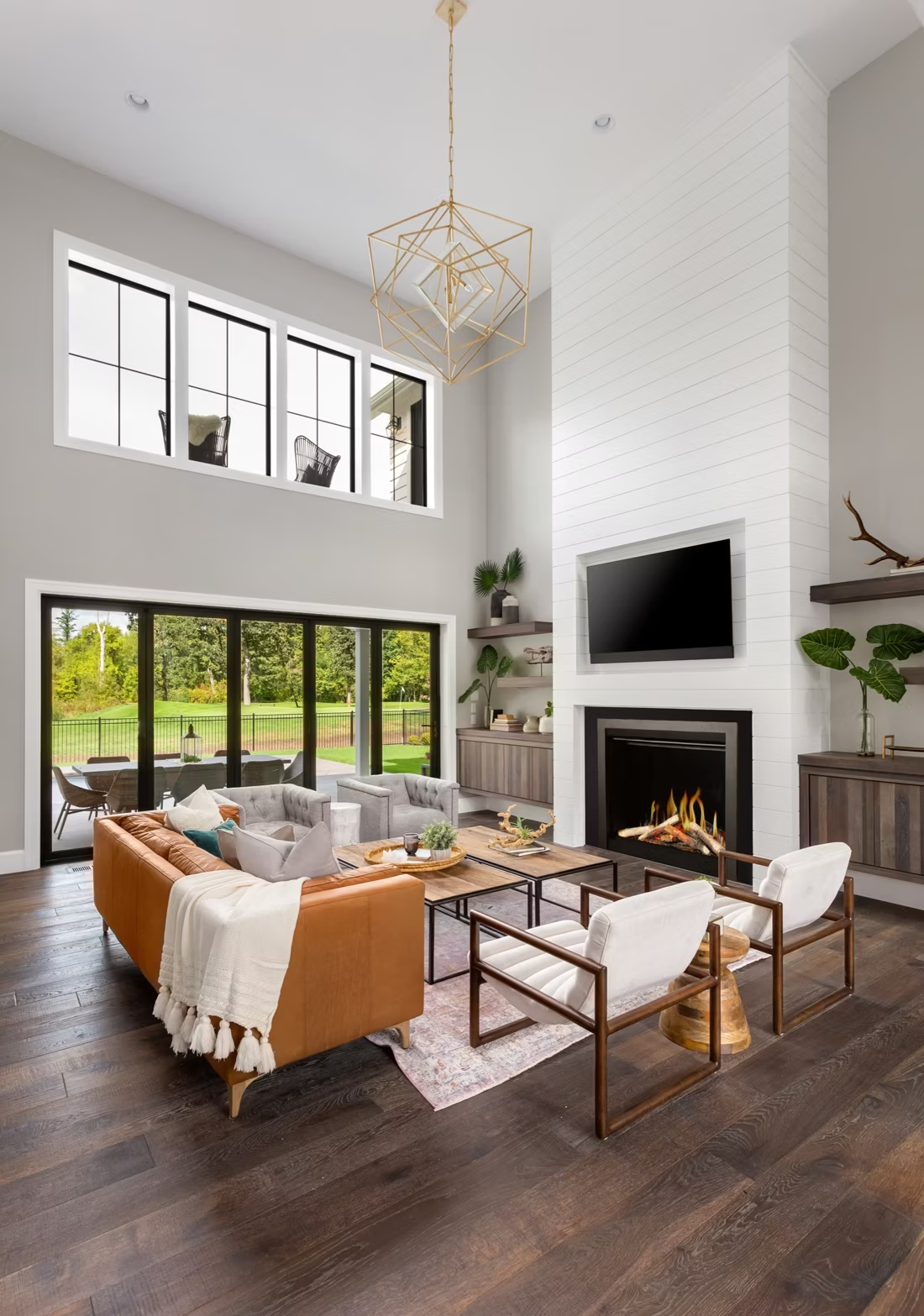
Yes—with an asterisk. Fireplaces are hot and TVs don't like heat. Either put a mantel between them to deflect rising warmth, or choose a fireplace with heat-management technology that creates a cool zone on the wall above—the wall stays around 125 degrees, barely warm, while the room still gets full heat. If you like clean lines and don't want a mantel, heat management is the answer.
Does an electric fireplace need a vent or chimney?
No—that's its superpower. An electric fireplace needs a wall and an outlet, period. No vent pipe, no gas line, no clearances to design around, which is why it works in bedrooms, offices, apartments, and walls where venting a gas or wood unit would be impractical or impossible. Installation is typically the simplest and least expensive of any fireplace type.
Can a fireplace actually lower my heating bill?
Yes—by creating a comfort zone. A furnace heats every square foot of the house just to warm the one room you're in; a gas fireplace on low burns roughly a sixth of the gas a typical furnace does. Set the furnace around 55–60 degrees as a baseline, then heat the rooms your family actually uses. Families who heat this way commonly save $20–$60 a month.
Can I install a fireplace myself?
If you're putting a fire in your house on purpose, it's best to work with an expert. Unless you're genuinely experienced in framing, gas line, vent pipe, and the national code on clearances to combustibles, have a professional do it—and ideally the same company that sells you the fireplace, so warranty, service, and liability all live under one roof.
Find your electric fireplace in Independence County.
Tell us a bit about your home and we'll match you with the right electric fireplace or insert, plus a free Project Guide & Parts List and a trusted local dealer who can install it.
Find Your Fireplace →