
Real fireplace warmth. Zero chimney, zero mess.
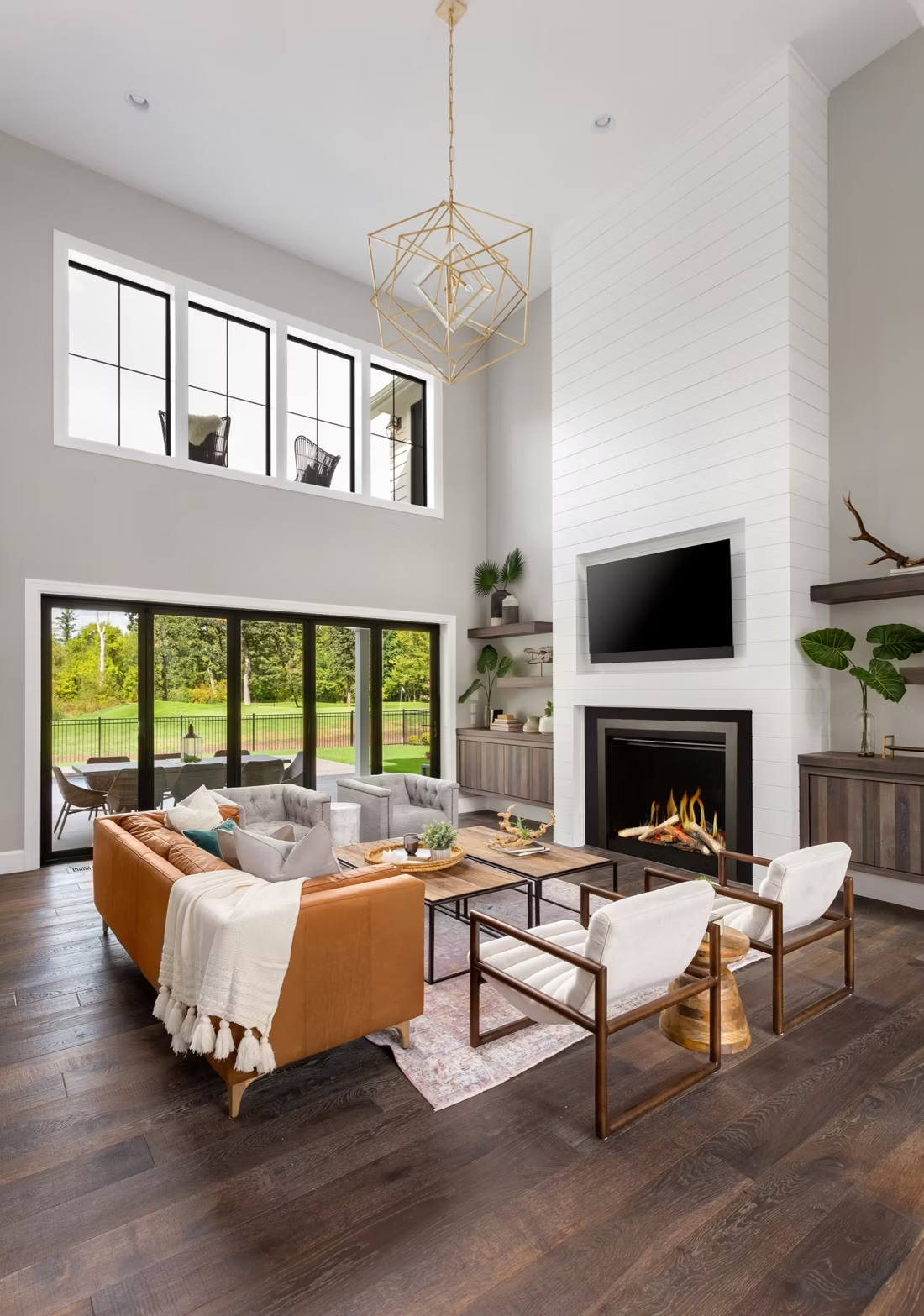
With winter lows averaging around 32°F and roughly 2,952 heating degree days a year, Hempstead County doesn't need a full wood-burning heating system in every room—it needs clean, instant warmth where you actually spend time. Find the right electric fireplace or insert and connect with a trusted local dealer serving Hope and the surrounding county.
Every Project Starts From One of These Five Situations
Mild winters, modern convenience.
Hempstead County sits in climate zone 3A—mixed-humid, with an average winter low around 32°F and about 2,952 heating degree days per year. Compare that to a place like Duluth, MN, which racks up more than three times that heating load, and it's clear why a full-house wood or gas heating system isn't the default requirement here. Homes around Hope, Blevins, Fulton, McCaskill, Ozan, and Patmos still get cold snaps and the occasional ice event common to southwest Arkansas, but the deep, sustained cold that drives northern households toward big cordwood stoves just isn't the norm. That makes electric fireplaces a genuinely practical fit—supplemental zone heat and real ambiance without sizing a whole-home system around a handful of cold weeks.
A lot of Hempstead County's housing stock—manufactured homes, older farmhouses without a working chimney, additions and bonus rooms—doesn't have a masonry flue to work with, and that's exactly where electric fireplaces earn their keep. There's no venting, no gas line, and in most cases no structural work: a wall-mounted unit or a plug-in insert can go into an existing fireplace opening in an afternoon. That doesn't mean wood has disappeared from the county—oak, hickory, and pine are all common locally, and Ouachita National Forest cutting permits ($10–$20 per cord, May through October) still bring a lot of families out for firewood. But for a bedroom, den, sunroom, or rental property where you want real heat and a real flame look without the upkeep, electric is often the simpler answer, and SWEPCO service across most of the county keeps it a straightforward, low-friction install.
Three steps. No salesperson until you're ready.
Tell us about your project
Your zip code, your situation, and the fuel you're leaning toward—or let the answers point you to one.
See what's actually available
The brands dealers within 100 miles genuinely carry—real options, never a catalog mirage.
Get your dealer & Project Guide
A trusted local dealer, plus the free Project Guide & Parts List that names every component of the job.
Frequently Asked Questions
How much does an electric fireplace installation cost in Hempstead County?
Electric fireplace projects run a wide range because the units themselves vary so much. A plug-in insert or wall-mounted unit that drops into an existing fireplace opening or mounts to a wall on a standard outlet is typically the least expensive and quickest option. A built-in electric fireplace framed into a wall, or a unit that needs a dedicated 240V circuit run by an electrician, costs more once you factor in wiring and finish work. Because there's no chimney, flue, or gas line involved, electric installations are almost always cheaper and faster than a comparable wood or gas project—a local dealer can give you a firm number once they know the unit and whether new wiring is needed.
Do I need a permit to install an electric fireplace in Hempstead County?
In most cases, no. A plug-in electric fireplace or insert that uses a standard household outlet doesn't require a permit—it's treated like any other appliance. If you're having a dedicated circuit run for a larger built-in unit, that electrical work typically does require a permit through the local building department, and it should be pulled by a licensed electrician regardless of whether the county requires paperwork. Unlike wood stoves, there's no EPA certification or chimney inspection to worry about, which is one of the reasons electric projects move faster than wood or gas installs.
Will an electric fireplace actually heat a room, or is it just for looks?
Most electric fireplaces put out somewhere in the 4,000–9,000 BTU range on the heat setting, which is enough to noticeably warm a bedroom, den, or living area—especially in a climate like Hempstead County's, where winter lows average around 32°F rather than the single-digit nights you'd see farther north. Many owners run the flame effect year-round for ambiance and only switch on the heater during actual cold spells. It's not designed to replace your central HVAC or heat pump on the coldest nights of the year, but as supplemental heat for the room you're actually sitting in, it performs well and costs less to run than heating an entire house to the same comfort level.
Electric vs. wood vs. gas—which fireplace makes sense for my Hempstead County home?
Wood remains a strong option here given how much oak, hickory, and pine are locally available and the low-cost Ouachita National Forest cutting permits ($10–$20 per cord, May through October)—but it means chimney maintenance, ash cleanup, and physical wood handling. Gas offers instant, consistent heat but requires either a natural gas line or propane tank and venting work. Electric skips both of those trade-offs entirely: no fuel to store, no venting, no combustion byproducts, and the simplest install of the three. For a mild-winter county like this one, where the goal is often ambiance plus supplemental warmth rather than whole-home heating, electric is frequently the lowest-hassle choice—particularly for rentals, additions, and homes without an existing chimney.
How much does it cost to run an electric fireplace in Hempstead County?
Running cost depends on your electric rate and how many hours a day you use the heater setting, but electric fireplaces are generally inexpensive to operate for the amount of heat they provide to a single room—most cost a small fraction of what it takes to raise the whole house's thermostat by the same amount. Since most of the county is served by Southwestern Electric Power Company (SWEPCO), a local dealer can help you estimate real operating cost based on the specific unit's wattage and your typical usage pattern.
Are electric fireplaces a good fit for manufactured or mobile homes?
Yes—and it's one of the more common installs across rural Hempstead County. Manufactured homes generally can't support a masonry chimney or the clearances a wood stove needs, and running new gas line can be impractical. A wall-mounted or freestanding electric unit avoids both problems: no venting, no structural changes, and simple electrical requirements that most manufactured homes can already handle. It's a straightforward way to add real heat and a fireplace look to a home that wouldn't otherwise be a candidate for wood or gas.
Will my electric fireplace work during a power outage?
No—electric fireplaces require power to run both the flame effect and the heater, so they'll go dark along with everything else during an outage. Southwest Arkansas sees occasional winter ice events that can knock out power for a day or more, and if backup heat during an outage is a real concern for your household, a wood stove or a battery-backed gas unit is a better primary choice. Many Hempstead County homeowners actually run both: an electric fireplace for everyday ambiance and easy supplemental heat, with a wood stove or fireplace as the fallback for storm season.
Can I put an electric insert into my existing fireplace, or do I need a new unit?
If you have an existing wood-burning fireplace you no longer use, an electric insert is often the simplest upgrade—it slides into the existing opening, plugs into a nearby outlet (or a new dedicated circuit for larger units), and gives you a working flame effect and supplemental heat without touching the chimney. If you don't have an existing fireplace, a wall-mounted or freestanding electric unit works just as well and can go almost anywhere there's an outlet. A local dealer can look at your fireplace opening or the room you're targeting and tell you which approach fits best.
Electric vs. pellet stove—which is right for my home?
Pellet stoves burn compressed wood pellets (regional brands like Lignetics are available in the area) and can put out more sustained heat, but they need a hopper refilled regularly, produce ash, and still require electricity to run the auger and blower—so they're not a backup option during outages either. Electric fireplaces skip the fuel entirely: no pellets to store or load, no ash, and less maintenance overall, but generally lower maximum heat output than a pellet stove. For a mild-climate county like Hempstead where a fireplace is often about ambiance plus light supplemental heat rather than carrying the full heating load, electric tends to be the lower-maintenance pick; for homes wanting more serious secondary heat output, pellet is worth a look.
Can I put a TV above my fireplace?
Yes—with an asterisk. Fireplaces are hot and TVs don't like heat. Either put a mantel between them to deflect rising warmth, or choose a fireplace with heat-management technology that creates a cool zone on the wall above—the wall stays around 125 degrees, barely warm, while the room still gets full heat. If you like clean lines and don't want a mantel, heat management is the answer.
Does an electric fireplace need a vent or chimney?
No—that's its superpower. An electric fireplace needs a wall and an outlet, period. No vent pipe, no gas line, no clearances to design around, which is why it works in bedrooms, offices, apartments, and walls where venting a gas or wood unit would be impractical or impossible. Installation is typically the simplest and least expensive of any fireplace type.
Does a fireplace add value to my home?
On average, a fireplace adds back to the home about the same amount you spent installing it. Add the monthly savings from heating the rooms you actually use instead of the whole house—often hundreds of dollars a year—and the value case is strong before you even count what a fire does for how your family uses the room.
Can a fireplace actually lower my heating bill?
Yes—by creating a comfort zone. A furnace heats every square foot of the house just to warm the one room you're in; a gas fireplace on low burns roughly a sixth of the gas a typical furnace does. Set the furnace around 55–60 degrees as a baseline, then heat the rooms your family actually uses. Families who heat this way commonly save $20–$60 a month.
Stove and Fireplace Dealers in Hempstead County
Find your electric fireplace in Hempstead County.
Tell us a bit about your home and we'll put together a free Project Guide & Parts List—the right electric fireplace or insert for your space, plus a match with a trusted local dealer in Hempstead County.
Find Your Fireplace →