
Comfortable, Efficient Heat for Faulkner County Winters.
Reliable, on-demand warmth for Greenbrier homes—most of it running on propane rather than piped gas. Find the right unit and connect with a trusted local dealer.
Every Project Starts From One of These Five Situations
Steady heat without the hassle of wood.
Greenbrier sits at 358 feet in the Arkansas River Valley, in climate zone 3A, with average winter lows near 28°F and a winter heating season that's just a fraction of the heating load carried by places like Fargo, ND or Bismarck, MN. That mild profile is a big part of why wood and pellet heat see little use here, while gas fireplaces have become a common way to add real, controllable warmth to a living room or den without committing a whole home to primary wood heat.
Greenbrier itself has limited piped natural gas infrastructure, so most gas fireplace installations in town and across rural Faulkner County run on propane stored in a tank on the property. That's a simple, well-understood setup for local installers—any direct-vent gas fireplace, insert, or stove can be configured for propane—and it has a practical upside: a properly equipped gas fireplace keeps working when winter ice storms knock out power from Entergy Arkansas, which happens in this part of the river valley most years.
Three steps. No salesperson until you're ready.
Tell us about your project
Your zip code, your situation, and the fuel you're leaning toward—or let the answers point you to one.
See what's actually available
The brands dealers within 100 miles genuinely carry—real options, never a catalog mirage.
Get your dealer & Project Guide
A trusted local dealer, plus the free Project Guide & Parts List that names every component of the job.
Frequently Asked Questions
How much does a gas fireplace installation cost in Greenbrier?
Costs vary with the unit and whether you're extending propane service or already have a tank in place, but a typical direct-vent gas fireplace or insert installation in the Greenbrier area runs roughly $3,500 to $9,000. Because most of Faulkner County outside city limits runs on propane rather than piped natural gas, tank placement and the delivery line to the house can represent a real chunk of that budget if you're starting from scratch. Homes with an existing propane tank and gas appliances land on the lower end; a full masonry-to-gas insert conversion with new propane service sits toward the higher end. A local hearth dealer will give you a firm number after an in-home visit.
Can I convert my wood-burning fireplace to gas?
Yes, and it's a common upgrade for older Greenbrier homes built around a traditional masonry fireplace that burned oak or hickory. A gas insert slides into the existing firebox and vents up your current chimney through a stainless liner, so you keep the fireplace opening you already have while gaining instant on/off heat and losing the ash and creosote upkeep entirely. Since most homes in town run on propane rather than natural gas, the installer will typically also size and place a tank as part of the job unless you're already set up with one.
Do I need natural gas, or does propane work for a gas fireplace?
Propane is the standard fuel for gas fireplaces in Greenbrier and the rest of rural Faulkner County—there isn't broad municipal natural gas service reaching the area the way there is in larger Arkansas cities like Conway or Little Rock. Nearly every gas fireplace, insert, or stove on the market can be set up to run on propane; the installer just configures the correct orifice and regulator for it. If you're already on propane for a water heater or range, adding a fireplace is usually a straightforward tie-in to the existing tank and line.
Will my gas fireplace still work if the power goes out?
Most will, and that matters here—ice storms move through the Arkansas River Valley most winters and can knock out power from Entergy Arkansas for days. Gas fireplaces with a millivolt or IPI (intermittent pilot ignition) system run on a small battery backup that keeps the unit firing even with the grid down. Valor units take it further, generating their own electricity off the pilot's thermocouple, so there's no battery to remember at all. If storm-driven outages are a real concern for your household, ask your local dealer specifically about the ignition system before you buy.
Gas fireplace, insert, or stove—what's the difference?
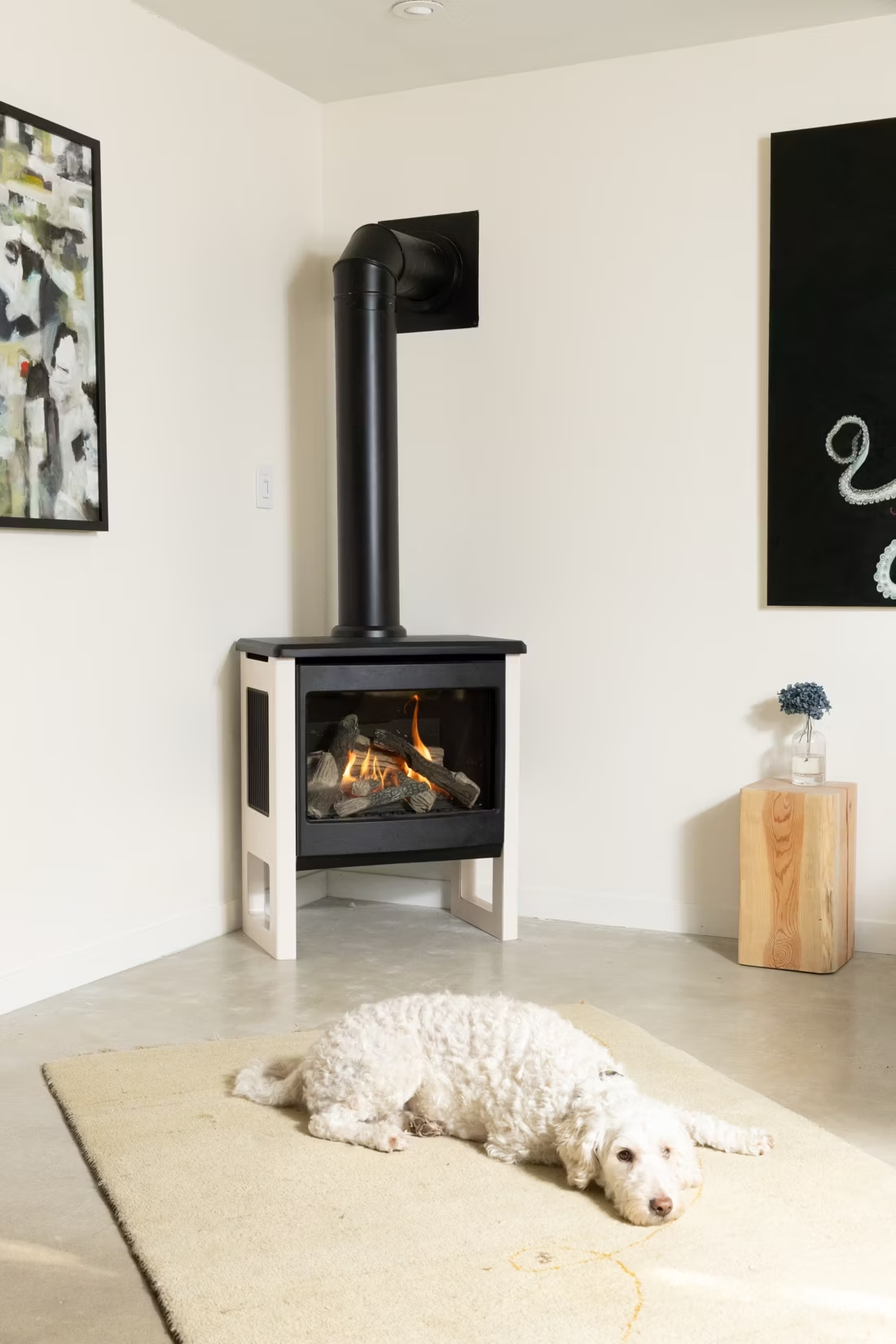
A gas fireplace is a built-in unit framed into a wall, best suited to new construction or a remodel. A gas insert drops into an existing masonry firebox and uses your current chimney as the vent chase—the more common route for older Greenbrier homes that already have a traditional wood fireplace. A gas stove is a freestanding cabinet-style unit that sits out in the room like a wood stove but burns propane, which works well if you don't have an existing fireplace opening to build around.
Do I need a permit to install a gas fireplace in Greenbrier?
Most gas fireplace installations require a building permit, and any propane line or tank hookup needs to be run by a licensed gas-fitter under Arkansas code. Check with the City of Greenbrier or Faulkner County if you're outside city limits before work starts. A reputable local dealer handles this coordination routinely and pulls the permit as part of the installation rather than leaving you to sort it out separately with the propane supplier and the building department.
Vented vs. vent-free gas fireplaces—which should I choose?
Vented (direct-vent) units draw combustion air from outside and exhaust it back outside through sealed pipe, making them the cleanest and most universally accepted option. Vent-free units burn fuel directly into the room with no outside venting at all—they're legal in Arkansas and popular in smaller homes here because they skip any exterior wall or roof penetration, but they come with strict room-sizing rules and release some moisture and combustion byproducts indoors. Given Greenbrier's mild climate zone 3A winters, either can work technically; direct-vent remains the safer, more commonly recommended default for a primary living space.
How often does a gas fireplace need to be serviced?
Plan on an annual inspection, ideally in early fall before the first cold snap moves through the river valley. A technician checks the burner, pilot assembly, gas connections, and venting, and cleans the glass—typically $150 to $250. This matters even in a mild-winter climate like Greenbrier's, because units that only run occasionally for ambiance or supplemental heat can develop pilot or ignition issues from sitting idle most of the year.
Gas vs. electric fireplace—which makes more sense in Greenbrier?
Both are common here since wood and pellet heat see little practical use in this climate zone. Gas delivers real flame and genuine heat output, and—with the right ignition system—keeps working during a power outage, which counts for something given the area's ice storm risk. Electric fireplaces plug into a standard outlet, need no propane tank or venting, and run cheaply off Entergy Arkansas power at around 13 cents per kWh, but they put out no heat during an outage and the flame is a visual effect rather than combustion. For a primary living space where authentic warmth and backup capability matter, gas is usually the better fit; for a bedroom, rental, or secondary room, electric is often simpler and cheaper to install.
What's the difference between an insert and a zero-clearance fireplace?
An insert is a fireplace that slides into a pre-existing wood-burning fireplace—if you don't have one, there's nothing to insert it into. A zero-clearance fireplace is built into a framed wall, which makes it the answer for remodels and new construction. Simple test: existing masonry fireplace means insert; blank or framed wall means zero-clearance.
Why is a fireplace insert so efficient?
An insert does two things: it seals the chimney completely, so you stop losing air you already paid to heat, and it radiates warmth into the room through the firebox and glass. Most add a heat-exchange fan that pulls cool room air underneath, wraps it around the hot firebox, and pushes it back out warm. Your home is more efficient before you've even lit the first fire.
How much should I budget for a fireplace?
For an average home—covering the fireplace, the vent pipe, and basic installation—a budget between $3,900 and $5,500 gives you a lot of options across wood, gas, and pellet. By the time you add finish work, gas line, and electrical, the average complete installation lands between $5,000 and $12,000 all-in. In a remodel or new build, a good rule is to put about 2.5% of the total project cost toward the fireplace.
Can I install a fireplace myself?
If you're putting a fire in your house on purpose, it's best to work with an expert. Unless you're genuinely experienced in framing, gas line, vent pipe, and the national code on clearances to combustibles, have a professional do it—and ideally the same company that sells you the fireplace, so warranty, service, and liability all live under one roof.
Nearby Dealers
Hearth shops serving Greenbrier and the surrounding area. Every listing shows whether it is a WhyFire partner, a dealer we have verified as authorized for the brands we recommend, or a local business carrying hearth products. No manufacturer pays for placement. How we verify dealers →
Synergy Gas
Find your gas fireplace in Greenbrier.
Tell us a bit about your home and we'll match you with the right gas fireplace, insert, or stove—and connect you with a trusted local dealer who can walk you through propane setup and permitting.
Find Your Fireplace →