
Instant heat for the Ozark foothills of Goshen.
Clean, on-demand warmth for Washington County homes—most of it running on propane, not municipal gas. Find the right unit and get matched with a trusted local dealer.
Every Project Starts From One of These Five Situations
Propane, not a gas main, is what actually heats most homes here.
Goshen sits in the Ozark foothills of Washington County at just over 1,100 feet, with winter lows averaging around 27°F and a solid, season-long heating workload each year—cold enough for regular season-long heating, but nowhere near the extremes of places like Fargo or Duluth. Power in the area comes from Ozarks Electric Cooperative and Southwest Arkansas Electric Cooperative, and there's no municipal natural gas main reaching most of Goshen's rural addresses. That's the detail that shapes almost every gas fireplace decision out here: when people say 'gas fireplace' in Goshen, they usually mean propane.
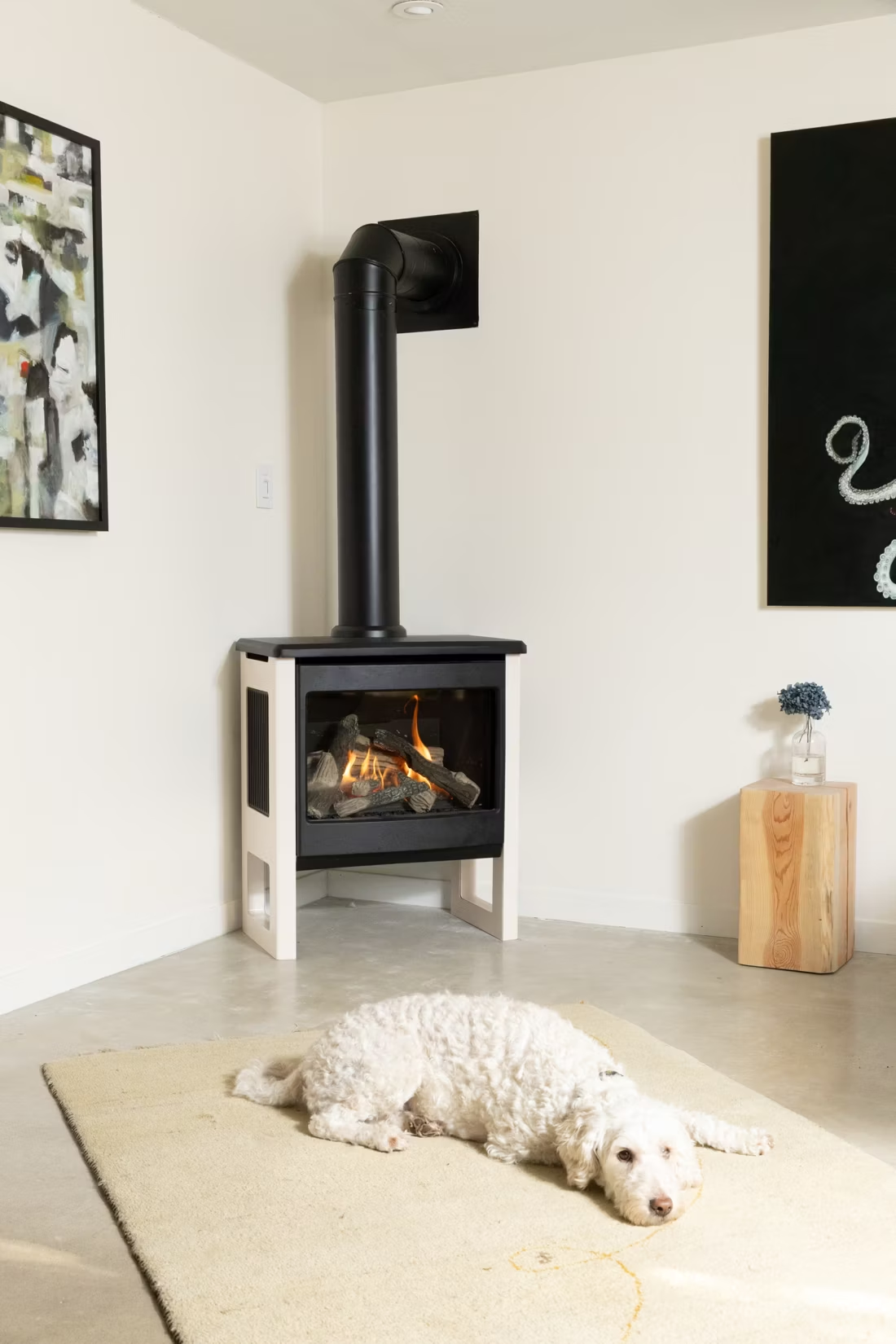
A propane fireplace or insert gives Goshen homeowners instant, thermostatically controlled heat without splitting or hauling wood—useful for the many properties out here that already burn oak and hickory in a wood stove but want a lower-maintenance option in the main living space. It also matters during winter ice storms, which periodically take down co-op power lines in this part of the Ozarks: a propane unit with the right ignition system can keep running on battery backup when the grid can't.
Three steps. No salesperson until you're ready.
Tell us about your project
Your zip code, your situation, and the fuel you're leaning toward—or let the answers point you to one.
See what's actually available
The brands dealers within 100 miles genuinely carry—real options, never a catalog mirage.
Get your dealer & Project Guide
A trusted local dealer, plus the free Project Guide & Parts List that names every component of the job.
Frequently Asked Questions
How much does a gas fireplace installation cost in Goshen?
Most propane fireplace and insert installations in the Goshen area run roughly $3,500 to $8,500, depending on the unit, whether you're installing into an existing masonry fireplace, and whether a propane tank is already in place. If you need a new propane tank set and line run from a supplier, add $600 to $1,500 to that range. Homes that already have a propane tank for a water heater or range are typically on the lower end since the fuel infrastructure is already there.
Can I convert my existing wood fireplace to gas in Goshen?
Yes—this is a common project for homes around Goshen that have an older wood-burning fireplace and want less maintenance. A propane insert typically installs into the existing masonry firebox using a stainless liner run up the chimney, and runs $4,000 to $7,500 installed depending on the model and whether new gas line work is needed. Since there's no natural gas main in the area, the insert will be set up to run on propane, either from an existing tank or a new tank supplied by a local propane company.
Is natural gas available in Goshen, or do I need propane?
There's no municipal natural gas service reaching most of Goshen and the surrounding parts of Washington County, so propane is the standard fuel for gas fireplaces here. Regional suppliers like AmeriGas and Ferrellgas serve this part of the Ozarks and can set up a tank—either buried, above-ground, or leased—specifically for a fireplace or as part of a whole-home propane setup that also feeds a water heater or range. Your local hearth dealer will size the unit's orifices for propane specifically; it's not simply the same fireplace as a natural-gas model.
Will my gas fireplace work if the power goes out?
Most propane fireplaces with IPI (intermittent pilot ignition) run on battery backup and will still light and operate when Ozarks Electric or Southwest Arkansas Electric Cooperative lines go down—which happens periodically during winter ice storms in this part of the Ozarks. Just keep fresh batteries in the unit. Valor's gas fireplaces take a different approach: the pilot's thermocouple generates its own electricity, so there's no battery to maintain at all. Either way, ask your local dealer about the ignition system before you buy if outage backup matters to you.
What's the difference between a gas fireplace, insert, and stove?
A gas fireplace is a built-in unit framed into a wall—the right choice for new construction or a remodel without an existing hearth. A gas insert slides into an existing masonry fireplace opening and uses the chimney as a chase for venting, which is the common route for older Goshen-area homes with a wood fireplace they want to upgrade. A gas stove is a freestanding cabinet-style unit that sits on a hearth pad like a wood stove but burns propane. For most existing homes in the area, an insert is the simplest retrofit.
Do I need a permit for a gas fireplace in Goshen?
Building permit requirements for Goshen and the surrounding unincorporated parts of Washington County run through Washington County's Planning & Building Safety office, and propane tank placement also has to meet NFPA 58 clearance rules—setbacks from the house, property line, and any ignition sources. Most local hearth dealers and propane suppliers coordinate this paperwork as part of the install, so you typically aren't filing anything yourself, but it's worth confirming with your installer before the tank goes in the ground.
Vented vs. vent-free gas fireplaces—what's the difference?
Vented (direct-vent) units draw combustion air from outside and exhaust it back outside through sealed venting—they're the cleanest and most universally recommended option, and what most Goshen-area installers default to. Vent-free propane units burn fuel directly into the room air; they're legal in Arkansas but come with strict room-sizing and ventilation rules, and they add moisture and combustion byproducts to indoor air. For a well-sealed modern home, direct-vent is usually the better call—ask your local dealer to walk through both if you're weighing the tradeoff.
How often does a propane fireplace need servicing?
Plan on an annual inspection, ideally in early fall before the coldest stretch hits. A technician checks the burner, pilot assembly, venting, and gas connections, and cleans the glass and interior—usually $150 to $250. This matters even more with propane than natural gas since regulator and line issues from an outdoor tank can affect performance, and it's a quick check most local propane suppliers or hearth dealers can bundle with a tank inspection.
Gas vs. wood—which makes more sense for a Goshen home?
With Washington County's oak and hickory forests right outside town, wood heat is genuinely practical here and plenty of homes still burn it as a primary or backup source, especially given how often ice storms interrupt cooperative power. Propane gas wins on convenience—no splitting or hauling, instant on-off heat, and a clean appearance with no ash. Given Goshen's relatively moderate winters (a 27°F average low, well short of Ozark-adjacent record cold), many homeowners here run gas in the main living space and keep a wood stove elsewhere as backup. Both fuels are well suited to the area; it comes down to how hands-on you want the daily upkeep to be.
Can I put a TV above my fireplace?
Yes—with an asterisk. Fireplaces are hot and TVs don't like heat. Either put a mantel between them to deflect rising warmth, or choose a fireplace with heat-management technology that creates a cool zone on the wall above—the wall stays around 125 degrees, barely warm, while the room still gets full heat. If you like clean lines and don't want a mantel, heat management is the answer.
What's the difference between an insert and a zero-clearance fireplace?
An insert is a fireplace that slides into a pre-existing wood-burning fireplace—if you don't have one, there's nothing to insert it into. A zero-clearance fireplace is built into a framed wall, which makes it the answer for remodels and new construction. Simple test: existing masonry fireplace means insert; blank or framed wall means zero-clearance.
Can a fireplace actually lower my heating bill?
Yes—by creating a comfort zone. A furnace heats every square foot of the house just to warm the one room you're in; a gas fireplace on low burns roughly a sixth of the gas a typical furnace does. Set the furnace around 55–60 degrees as a baseline, then heat the rooms your family actually uses. Families who heat this way commonly save $20–$60 a month.
What is an in-home preview and do I need one?
It's a visit where a hearth professional measures your space, confirms the model you picked actually works in your home, and walks the specs—framing, gas line, venting, finish work—before anything is ordered. Some details you just can't know until you see the house. Never make a down payment without one; it's the single most-skipped step that burns buyers.
Nearby Dealers
Hearth shops serving Goshen and the surrounding area. Every listing shows whether it is a WhyFire partner, a dealer we have verified as authorized for the brands we recommend, or a local business carrying hearth products. No manufacturer pays for placement. How we verify dealers →
Titan Propane
Encore Building Products
Acme Brick Company
Straight's Lawn & Garden
Jack Wills
Godfrey & Black
Nwa Fireworld LLC
Brinker's Service
Find your gas fireplace in Goshen, AR.
Tell us about your home and we'll put together a free Project Guide & Parts List—the right propane fireplace or insert, the vent kit and tank setup you'll need, and a match with a trusted local dealer who can install it.
Find Your Fireplace →