
Zone heat without the chimney, anywhere in Fulton County.
From Salem to Mammoth Spring to the cabins along the Spring River and Norfork Lake, electric fireplaces bring instant heat and ambiance to homes without a flue, a gas line, or a wall to knock through. Find the right unit and connect with a trusted local dealer.
Every Project Starts From One of These Five Situations
Simple heat for the Ozark foothills.
Fulton County sits along the Arkansas-Missouri line in the Ozark foothills, a rural stretch of hardwood ridges and hollows anchored by Salem, Mammoth Spring, and Viola, with the Spring River and Norfork Lake drawing seasonal cabin owners throughout the county. With roughly 1,400 residents spread across a mostly unincorporated landscape, a lot of the county's housing stock is older farmhouses, manufactured homes, and part-time lake cabins—exactly the kind of structures where running new chimney or gas-line infrastructure is impractical or unnecessary. Zone 4A here means cold snaps do arrive most winters, but the season is moderate compared to the northern Plains, so a full whole-home wood or gas retrofit isn't always the right call for a room that just needs supplemental warmth.
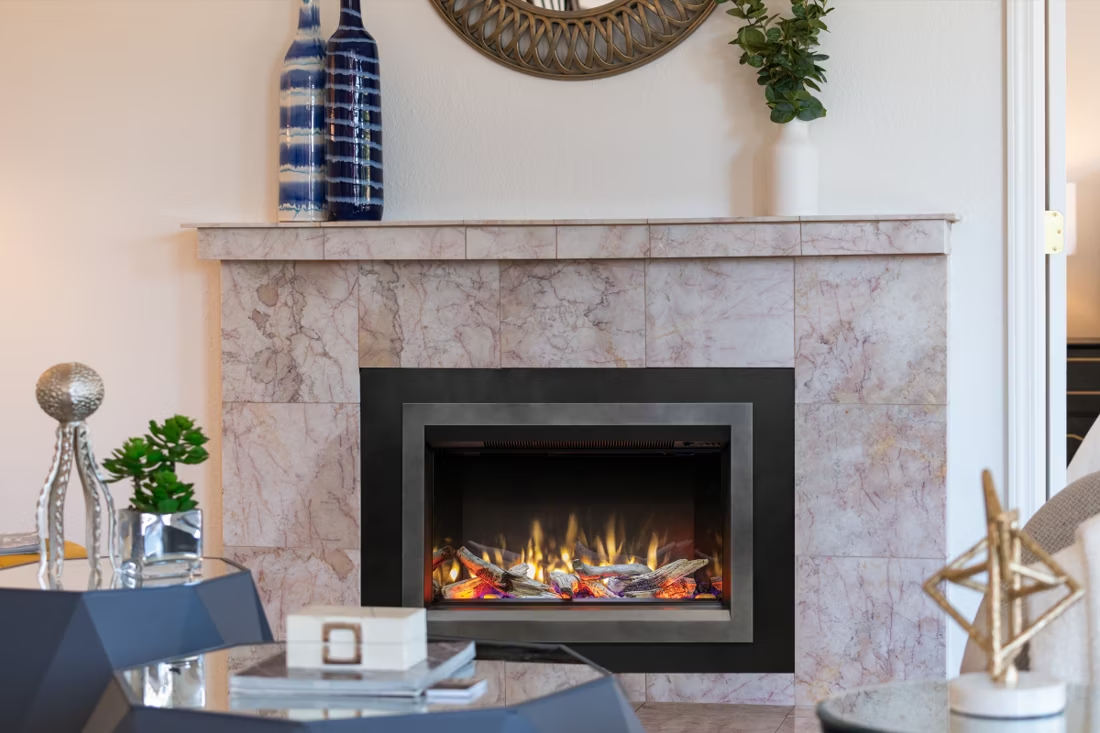
Electric fireplaces fit that gap well. A plug-in insert or wall-mounted unit needs no chimney, no gas line, and no combustion venting—just an outlet or, for larger built-ins, a dedicated circuit that a local electrician can run in an afternoon. That makes electric heat especially practical in manufactured homes, seasonal cabins near Norfork Lake that sit empty for stretches, and rental properties where landlords want ambiance and backup warmth without the maintenance of a wood stove. Power comes through North Arkansas Electric Cooperative lines across most of the county, and while outages do happen during ice storms in the hollows, electric fireplaces remain the simplest, lowest-maintenance way to add heat to a room that doesn't already have one.
Three steps. No salesperson until you're ready.
Tell us about your project
Your zip code, your situation, and the fuel you're leaning toward—or let the answers point you to one.
See what's actually available
The brands dealers within 100 miles genuinely carry—real options, never a catalog mirage.
Get your dealer & Project Guide
A trusted local dealer, plus the free Project Guide & Parts List that names every component of the job.
Frequently Asked Questions
How much does an electric fireplace installation cost in Fulton County?
Plug-in electric fireplaces and stove-style units are the least expensive option—the unit itself typically runs $300 to $1,500 and there's no installation cost beyond plugging it in, since it draws from a standard 120V outlet. Built-in wall units and larger linear fireplaces that require a dedicated 240V circuit run $800 to $2,500 once you factor in the unit and an electrician's time to run new wiring. Because Fulton County is largely rural and unincorporated, most homeowners here go the built-in route for a fixed room and the plug-in route for cabins or manufactured homes where flexibility matters more than a finished, framed-in look.
Do I need a permit to install an electric fireplace in Fulton County?
A plug-in electric fireplace that uses an existing outlet generally doesn't require any permit—there's no venting, no gas line, and no structural change involved. If you're installing a built-in wall unit that needs a new dedicated circuit, an electrical permit may be required depending on whether you're inside city limits (Salem, Mammoth Spring, Viola) or in unincorporated Fulton County, where code enforcement is lighter. Local electricians who do this work regularly can tell you exactly what's needed for your address, and most handle any paperwork as part of the job.
What size electric fireplace do I need for my home?
Electric fireplaces are rated for square footage of supplemental heat, typically 400 to 1,000 square feet per unit depending on the model's wattage. For a single living room in a farmhouse or manufactured home, a mid-size wall-mounted unit or insert (1,500 watts) is usually enough. For open-concept spaces or larger rooms, look at higher-wattage models or consider two smaller units in different zones rather than one oversized unit. Since electric fireplaces heat by convection and radiant coils rather than combustion, sizing is more forgiving than with wood or gas—there's no risk of an oversized unit smoldering or creating a safety issue, just diminishing returns on heat output for the space.
What's the difference between an electric insert, a wall-mounted unit, and a freestanding electric stove?
An electric insert is designed to slot into an existing masonry fireplace opening, giving an old wood-burning fireplace a flame-effect makeover and some heat output without any chimney work. A wall-mounted or built-in linear unit is framed into a wall like a TV, popular in newer construction or remodels around Salem and the lake communities. A freestanding electric stove sits on the floor like a traditional wood stove and can be moved from room to room, which makes it a good fit for cabins near Norfork Lake or Spring River that see seasonal use and need portable heat rather than a permanent installation.
Can an electric fireplace be my primary heat source in Fulton County?
Not reliably. Zone 4A winters in Fulton County are moderate most of the season, but cold snaps do bring nights into the teens and single digits, and an electric fireplace is built for zone heating a single room, not whole-home heating. Most homeowners here pair an electric unit with existing propane furnace or heat pump service for the coldest stretches, using the electric fireplace to take the edge off a living room or bedroom without running the central system as hard. For a home that genuinely needs off-grid or outage-proof heat, a wood stove burning local oak or hickory is the more realistic backup—electric units go dark the moment the co-op line goes down.
What are good electric fireplace brands for Fulton County homes?
For wall-mounted and linear units, Dimplex and Napoleon are widely available through hearth retailers and offer reliable flame-effect technology with real heat output rather than just visual effect. Touchstone makes a popular budget-friendly recessed option that fits well in manufactured homes and cabins where a slim profile matters. For insert conversions into an existing masonry fireplace, look for a model sized to your firebox opening—a local dealer can measure and match rather than guessing from an online listing.
Electric vs. wood—which makes more sense for my Fulton County home?
Wood stoves burning local oak, hickory, or pine give you real heat that keeps working when the power lines go down—a real consideration on the ridges and hollows around Salem and Viola where ice storms occasionally knock out North Arkansas Electric Cooperative service for days. Wood also costs less to run if you're cutting or buying local hardwood. Electric fireplaces win on simplicity: no chimney, no ash, no annual sweep, and instant on-off operation that works well for a living room that just needs ambiance and light supplemental warmth. Many county homeowners use both—a wood stove or propane furnace for real winter heat, and an electric unit in a bedroom or den where convenience matters more than backup capability.
How much does it cost to run an electric fireplace?
A typical 1,500-watt electric fireplace costs roughly 15 to 20 cents per hour to run on heat setting, depending on North Arkansas Electric Cooperative's current rate—cheaper if you only run the flame effect without heat. Running one for a few hours a night through a moderate Fulton County winter adds a modest amount to a monthly electric bill, far less than heating an entire home electrically. That efficiency is part of why electric fireplaces work well as supplemental heat rather than a whole-home solution—you're heating the room you're in, not the whole house.
Electric vs. propane fireplace—which is right for my home?
Since Fulton County has no natural gas utility infrastructure, the real comparison here is electric versus propane, not electric versus natural gas. Propane fireplaces and inserts require a tank (owned or leased from a regional supplier) and periodic refills, but deliver more consistent heat output and can often run during a power outage with a battery-backup ignition. Electric fireplaces need no fuel deliveries and no tank, install in an afternoon, and cost less upfront—but they're dependent entirely on grid power and better suited to supplemental warmth than serious winter heat. For a seasonal cabin near Norfork Lake that sits empty much of the year, electric's simplicity often wins; for a year-round home relying on zone heat through real cold snaps, propane usually has the edge.
Can I put a TV above my fireplace?
Yes—with an asterisk. Fireplaces are hot and TVs don't like heat. Either put a mantel between them to deflect rising warmth, or choose a fireplace with heat-management technology that creates a cool zone on the wall above—the wall stays around 125 degrees, barely warm, while the room still gets full heat. If you like clean lines and don't want a mantel, heat management is the answer.
Do electric fireplaces actually produce heat?
Yes—most put out around 4,800–5,000 BTUs from a standard outlet, which comfortably warms a bedroom, office, or den as a comfort-zone heater. What they won't do is carry a whole house the way wood, gas, or pellet can. Think of electric as ambiance-first with honest supplemental heat: flames on with no heat in July, flames plus warmth in January.
What is an in-home preview and do I need one?
It's a visit where a hearth professional measures your space, confirms the model you picked actually works in your home, and walks the specs—framing, gas line, venting, finish work—before anything is ordered. Some details you just can't know until you see the house. Never make a down payment without one; it's the single most-skipped step that burns buyers.
Can a fireplace actually lower my heating bill?
Yes—by creating a comfort zone. A furnace heats every square foot of the house just to warm the one room you're in; a gas fireplace on low burns roughly a sixth of the gas a typical furnace does. Set the furnace around 55–60 degrees as a baseline, then heat the rooms your family actually uses. Families who heat this way commonly save $20–$60 a month.
Find your electric fireplace in Fulton County.
Tell us a bit about your home and we'll match you with the right electric fireplace, insert, or stove—plus a free Project Guide & Parts List with the exact parts and a trusted local dealer recommendation for your Fulton County project.
Find Your Fireplace →