
Warm Up Any Room in Fayetteville—No Venting Required.
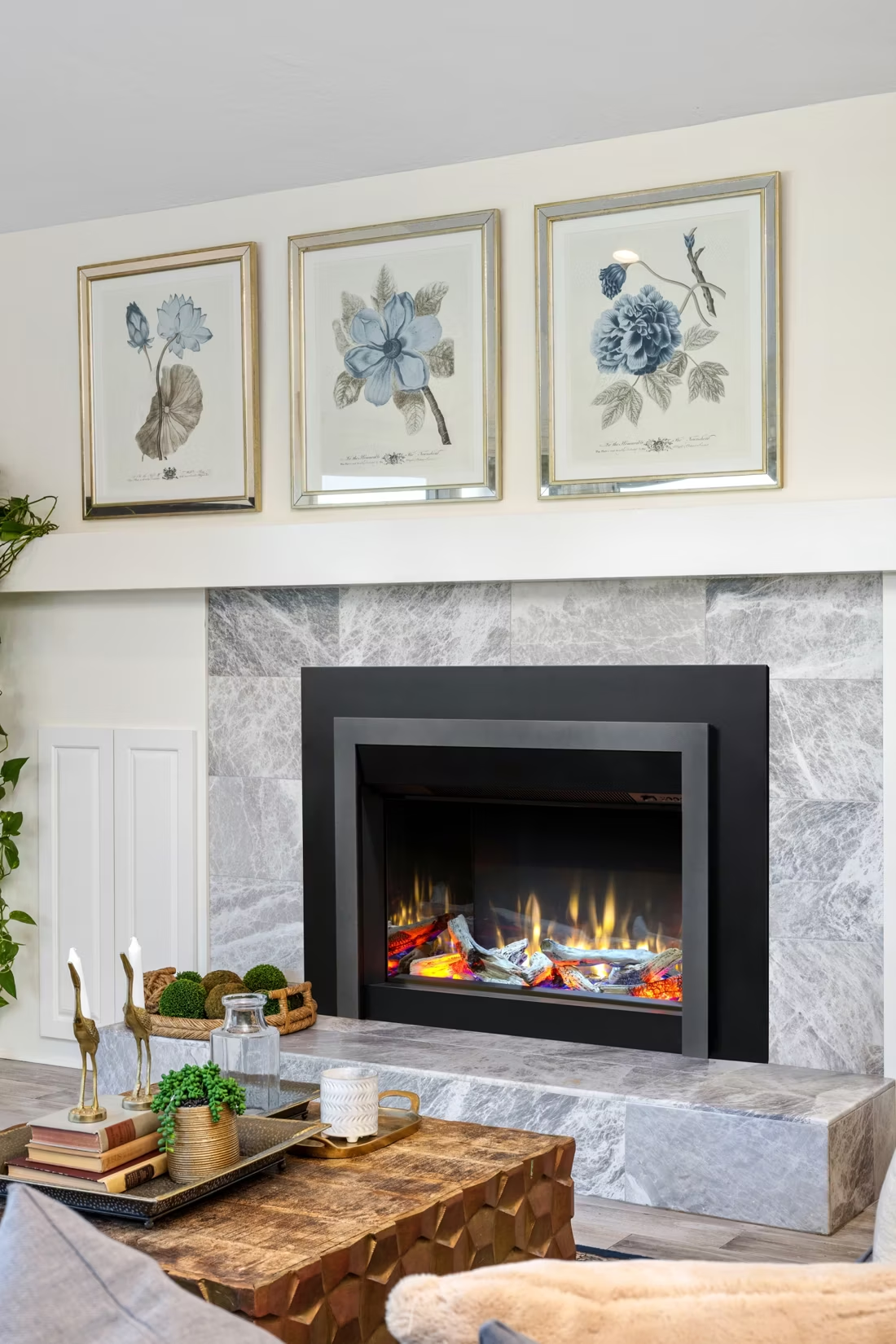
Zone heat and real ambiance for Ozark Plateau homes, apartments, and additions—no chimney, no gas line, no flue. Find the right unit and connect with a trusted local dealer.
Every Project Starts From One of These Five Situations
Zone heat that fits Ozark living without a flue.
Fayetteville sits in climate zone 4A at about 1,379 feet on the Ozark Plateau, where winters are mixed but rarely brutal—average winter lows hover around 27°F and the city has a moderate winter heating season, a fraction of what a place like Minneapolis or Duluth deals with. That milder profile is a big part of why wood and pellet appliances see limited demand here, while electric fireplaces have become a go-to for supplemental warmth in living rooms, primary bedrooms, sunrooms, and finished basements throughout Washington County.
Fayetteville's rental and University of Arkansas housing market also plays a role. A large share of the city's homes and apartments are electric-only or lack a usable chimney, and electric fireplaces solve that cleanly—plug into a standard outlet, and you're done, no gas line or masonry work required. Whether you're on Ozarks Electric Coop Corp, Southwestern Electric Power Co, or Southwest Arkansas ECC service, residential rates across the area run about $0.13 to $0.135 per kWh, which keeps the operating cost of a typical 1,500-watt unit around 15 to 20 cents an hour—cheap enough that most homeowners don't think twice about running one daily.
Three steps. No salesperson until you're ready.
Tell us about your project
Your zip code, your situation, and the fuel you're leaning toward—or let the answers point you to one.
See what's actually available
The brands dealers within 100 miles genuinely carry—real options, never a catalog mirage.
Get your dealer & Project Guide
A trusted local dealer, plus the free Project Guide & Parts List that names every component of the job.
Frequently Asked Questions
How much does an electric fireplace installation cost in Fayetteville?
Plug-in electric stoves, mantels, and freestanding units typically run $150 to $600 for the unit itself, with no installation labor required since they run off a standard 120V outlet. Built-in wall units or mantel-surround installations that require a dedicated 20-amp circuit and carpentry trim work run higher—typically $1,500 to $4,500 in Fayetteville, depending on whether you're working with drywall, a masonry surround, or a full custom mantel build. If new wiring from the panel is needed, factor in an electrician's time on top of the unit cost.
Do electric fireplaces need venting or a chimney?
No. Electric fireplaces produce heat with a resistive element or infrared quartz heater and don't burn any fuel, so there's no combustion byproduct to vent—no chimney, no flue, no gas line, and no clearance-to-combustible rules like you'd see with a wood or gas unit. Most small and mid-size units plug into an existing 120V, 15-amp outlet. Larger built-ins are often wired to a dedicated 20-amp circuit, which is the one case where you'd need an electrician and a permit through the City of Fayetteville's Development Services building safety division.
Will an electric fireplace actually heat my room in Fayetteville winters?
For supplemental heat, yes. A typical 1,500-watt electric fireplace puts out around 5,000 BTUs, enough to comfortably heat a single room in the 300 to 400 square foot range—which covers most living rooms and bedrooms in Fayetteville homes. Given the area's relatively mild winter profile (average lows around 27°F and a moderate winter heating season, well below a harsher climate like Bismarck or Fargo), an electric fireplace works well as zone heat that lets you turn down the central heat pump in the room you're using. It's not designed to replace whole-house heating on its own.
What's the difference between a plug-in electric fireplace and a built-in electric insert?
A plug-in unit—freestanding stove, mantel package, or tabletop model—runs off a standard outlet and needs no modification to your home, which makes it the default choice for renters and apartment dwellers around the University of Arkansas. A built-in electric insert is designed to slide into an existing masonry fireplace opening or a framed wall cavity, giving a more seamless, flush look, but it usually calls for a dedicated circuit and sometimes minor carpentry. For Fayetteville homeowners converting an old wood-burning fireplace that's no longer in use, an electric insert is a popular no-venting way to reactivate that space.
Which electric utility serves my home in Fayetteville, and does it matter for a fireplace?
Depending on your address, you may be served by Ozarks Electric Coop Corp, Southwestern Electric Power Co (SWEPCO), or Southwest Arkansas ECC—coverage varies by zip code within the 72701–72704 range. Rates across all three run close together, roughly $0.13 to $0.135 per kWh, so the utility you're on won't meaningfully change your fireplace's operating cost. A 1,500-watt unit run a few hours a night adds only a few dollars to a monthly bill regardless of provider.
Can I install an electric fireplace in an apartment or rental in Fayetteville?
Yes, and it's one of the most common uses for electric fireplaces in a college town like Fayetteville. Plug-in freestanding stoves and mantel units require no permanent modification—no drilling into walls, no new wiring, no landlord approval typically needed—making them a practical option for downtown apartments, student housing near campus, and short-term rentals where a wood or gas installation would be off the table.
Electric vs. gas—which is right for my Fayetteville home?
Natural gas service is well established in Fayetteville, and gas fireplaces remain a common choice for homeowners who want real flame, higher heat output, and a focal-point built-in look—typically alongside central heating rather than as a replacement. Electric fireplaces trade the real flame for safety (cool-touch glass, no combustion, no gas line), a lower upfront cost, and installation flexibility that works in rentals, condos, and additions where running gas line isn't practical. If you want ambiance and zone heat with minimal installation hassle, electric is usually the simpler path; if you want a true heat source with the look and feel of a real fire, a local dealer can walk you through gas options as well.
Do electric fireplaces work during a power outage?
No—since they run entirely on electricity, an electric fireplace goes dark the moment the power does, which matters during the occasional Ozark ice storm that knocks out lines in Washington County. Homeowners who want daily ambiance from an electric unit but also want backup heat for outages often pair the electric fireplace with a separate propane or gas heater, or make sure their home has another non-electric heat source, rather than relying on the electric fireplace for emergency warmth.
What size electric fireplace do I need for my room?
Most electric fireplaces are rated around 4,600 to 5,200 BTUs (roughly 1,500 watts), which comfortably heats a room in the 300 to 400 square foot range—enough for a typical Fayetteville living room or bedroom. Larger open-concept spaces may need a bigger unit or a model with dual heaters, while smaller rooms or units meant purely for ambiance can go with a lower-wattage insert. Because Fayetteville's winters are relatively mild, oversizing for worst-case cold isn't usually necessary the way it would be in a harsher climate—a local dealer can confirm the right fit based on your room's dimensions and insulation.
Can I put a TV above my fireplace?
Yes—with an asterisk. Fireplaces are hot and TVs don't like heat. Either put a mantel between them to deflect rising warmth, or choose a fireplace with heat-management technology that creates a cool zone on the wall above—the wall stays around 125 degrees, barely warm, while the room still gets full heat. If you like clean lines and don't want a mantel, heat management is the answer.
Does an electric fireplace need a vent or chimney?
No—that's its superpower. An electric fireplace needs a wall and an outlet, period. No vent pipe, no gas line, no clearances to design around, which is why it works in bedrooms, offices, apartments, and walls where venting a gas or wood unit would be impractical or impossible. Installation is typically the simplest and least expensive of any fireplace type.
What is an in-home preview and do I need one?
It's a visit where a hearth professional measures your space, confirms the model you picked actually works in your home, and walks the specs—framing, gas line, venting, finish work—before anything is ordered. Some details you just can't know until you see the house. Never make a down payment without one; it's the single most-skipped step that burns buyers.
How much should I budget for a fireplace?
For an average home—covering the fireplace, the vent pipe, and basic installation—a budget between $3,900 and $5,500 gives you a lot of options across wood, gas, and pellet. By the time you add finish work, gas line, and electrical, the average complete installation lands between $5,000 and $12,000 all-in. In a remodel or new build, a good rule is to put about 2.5% of the total project cost toward the fireplace.
Nearby Dealers
Hearth shops serving Fayetteville and the surrounding area. Every listing shows whether it is a WhyFire partner, a dealer we have verified as authorized for the brands we recommend, or a local business carrying hearth products. No manufacturer pays for placement. How we verify dealers →
Encore Building Products
Titan Propane
Jack Wills
Acme Brick Company
Straight's Lawn & Garden
Godfrey & Black
Nwa Fireworld LLC
Simmons Chimney Sweep
Spavinaw Stove Company
Brinker's Service
Electric Service in Fayetteville
An electric fireplace's heater draws about 1,500 watts—pennies per hour at local rates.
Southwestern Electric Power Co
Southwest Arkansas E C C
Ozarks Electric Coop Corp - (Ar)
Find your electric fireplace in Fayetteville.
Tell us a bit about your home and we'll match you with a trusted local Fayetteville dealer and send over a free Project Guide & Parts List—the exact parts and a recommended installer for your electric fireplace project.
Find Your Fireplace →