
Warm up your England home without a single wood log.
Mild Delta winters mean most England homes just need supplemental zone heat, not a wood-burning workhorse. Find the right electric unit and connect with a trusted local dealer.
Every Project Starts From One of These Five Situations
Mild winters, modest bills, minimal hassle.
England sits low in the Arkansas Delta at about 231 feet elevation, in a 3A climate zone where winter lows average only 31 degrees and the heating season is short and mild overall—nowhere near what a place like Fargo, ND or Bismarck, ND sees. That's mild enough that most Lonoke County homes don't need a wood stove's overnight burn time or a gas unit's high BTU output just to stay comfortable. An electric fireplace fits the actual climate here: supplemental warmth for a cool morning or a January cold front, not a survival heater.
Entergy Arkansas serves electric accounts throughout England, with residential rates running around 12.97 cents per kWh—cheap enough that running a 1,500-watt unit for a few hours in the evening costs pocket change. No chimney, no gas line, no venting to plan around, which matters in a small town where not every home was built with a masonry fireplace or an easy path for one. Plug-in and hardwired electric units both install in a fraction of the time a wood or gas project takes, which is a big part of why they're a popular add for renters, older homes, and anyone who wants a fireplace look without touching the roofline.
Three steps. No salesperson until you're ready.
Tell us about your project
Your zip code, your situation, and the fuel you're leaning toward—or let the answers point you to one.
See what's actually available
The brands dealers within 100 miles genuinely carry—real options, never a catalog mirage.
Get your dealer & Project Guide
A trusted local dealer, plus the free Project Guide & Parts List that names every component of the job.
Frequently Asked Questions
How much does an electric fireplace installation cost in England?
Plug-in electric fireplaces and inserts start under $1,000 installed since they just need a standard outlet—no permit, no electrician required in most cases. Built-in wall units or larger inserts that need a dedicated 120V or 240V circuit typically run $1,200 to $2,500 once an electrician runs new wiring and a local installer handles the mounting and trim. Because there's no chimney, gas line, or venting to build around, electric installs in England tend to land well below what a wood or gas project would cost for a comparable footprint.
What size electric fireplace do I need for my home?
Most electric fireplaces top out around 1,500 watts (roughly 5,100 BTUs), which is enough to comfortably heat a single room of 400 to 500 square feet—plenty for the living rooms and dens common in England's older single-story homes. Given how mild the winters run here (average lows in the low 30s), most homeowners are using electric units for zone heat in one room rather than trying to heat an entire house. If you're looking to warm a larger open floor plan, talk to a local dealer about pairing two smaller units or stepping up to a higher-wattage insert.
Do I need a licensed electrician to install an electric fireplace?
Plug-in units don't require an electrician—they run on a standard 120V outlet like any appliance. Built-in or wall-mounted units wired directly into your home's electrical panel do need a licensed electrician, especially if the unit calls for a dedicated circuit. There's no chimney sweep or venting contractor to hire either way, which is one of the simplest parts of going electric in England. Any local hearth dealer can tell you which category your chosen unit falls into before you buy.
What's the difference between an electric insert, a freestanding stove, and a wall-mounted unit?
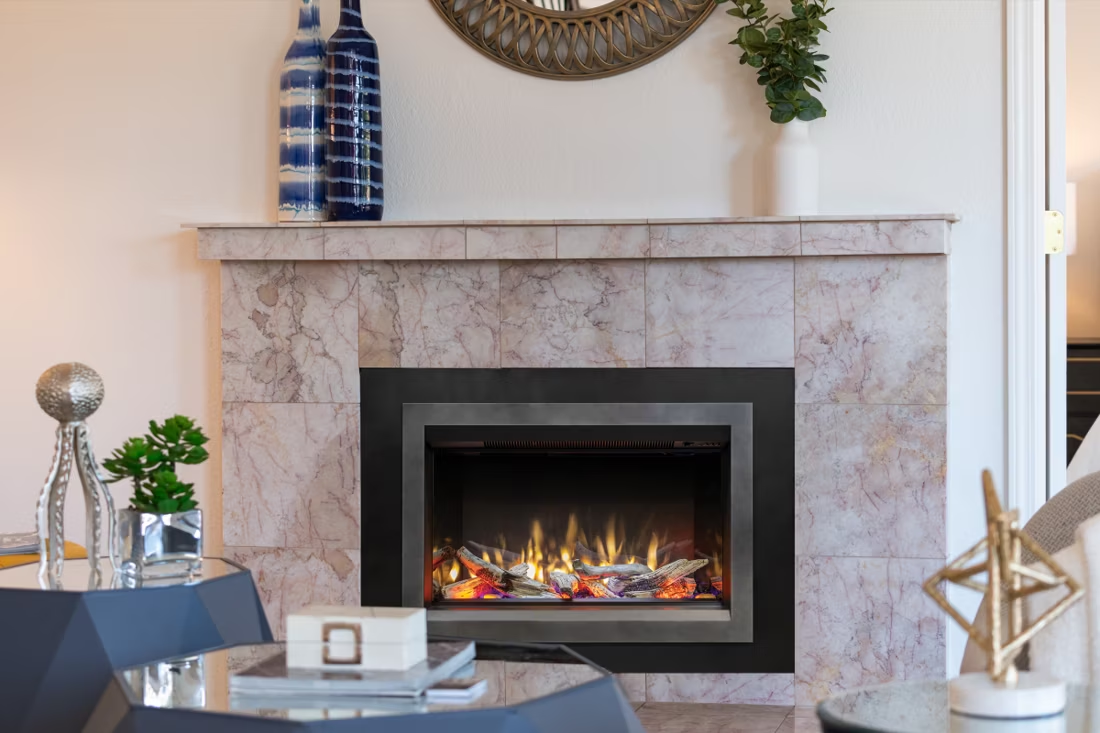
An electric insert is built to slide into an existing masonry fireplace opening, giving an old, unused fireplace a working heat source again without touching the chimney. A freestanding electric stove sits on the floor like a wood stove and can go almost anywhere with an outlet nearby. A wall-mounted or built-in unit is framed into a wall like a flat-screen TV, which is popular in newer construction or remodels where there's no existing fireplace to work with. For England homes with an old brick fireplace that's just decorative, an insert is usually the fastest, least invasive upgrade.
Do I need a permit to install an electric fireplace in England?
A plug-in unit generally doesn't require any permit since it's just an appliance on an existing outlet. If you're adding a new dedicated circuit for a built-in or wall-mounted unit, that electrical work typically needs a permit through Lonoke County, and it should be pulled by whoever does the wiring. There's no building or fire code review for venting or clearances the way there is with wood or gas—electric is by far the lightest-touch option from a permitting standpoint.
What's the best electric fireplace for England's climate?
Given how mild winters run in this part of the Delta, most England homeowners do well with an infrared or fan-forced unit sized for a single room—enough to take the edge off a 30-degree morning without the expense of heating a whole house electrically. Infrared models tend to feel warmer at lower wattage because they heat objects and people directly rather than just circulating air, which is a good match for a supplemental-heat climate like this one. If ambiance matters as much as heat, a realistic flame-effect insert without a heater running is also common here for homes that already have central HVAC handling the real heating load.
What does it cost to run an electric fireplace with Entergy Arkansas rates?
At Entergy Arkansas's residential rate of about 12.97 cents per kWh, a typical 1,500-watt electric fireplace costs roughly 19 cents per hour to run on the heater setting. Running it three or four hours a night through a cold spell adds up to less than $25 a month—much cheaper than most people assume, and one reason electric units are popular as everyday supplemental heat rather than an occasional-use fireplace. Running the flame effect alone without the heater draws only a small fraction of that, often just a few watts.
Electric vs. wood—which makes more sense for my home?
Wood offers real heat output, works without electricity during outages, and is genuinely inexpensive in this area—Forest Service cutting permits through the Ozark-St. Francis National Forests or Ouachita National Forest run $10 to $20 per cord, and oak, hickory, and pine are all common locally. But wood means hauling, splitting, ash cleanup, and annual chimney sweeps. Electric skips all of that: no fuel to manage, no smoke, no maintenance beyond an occasional dusting. For England's mild winters, where a fireplace is more about ambiance and taking the chill off than survival heat, electric is often the lower-hassle choice—while wood remains the better backup-heat option if losing power during a storm is a real concern.
Electric vs. gas—which is right for my home?
Natural gas service is limited in a lot of Lonoke County outside the larger cities, so many England homes relying on gas heat are on propane, which means a tank and delivery contract. Electric sidesteps that entirely—no fuel supplier, no gas line, no venting through an exterior wall. Gas still wins on raw heat output and the ability to run during a power outage if you choose a battery-backed unit, but for a supplemental fireplace in a mild-winter town like England, electric is usually the simpler, cheaper-to-install option, especially in a home that doesn't already have gas plumbed to it.
Can I put a TV above my fireplace?
Yes—with an asterisk. Fireplaces are hot and TVs don't like heat. Either put a mantel between them to deflect rising warmth, or choose a fireplace with heat-management technology that creates a cool zone on the wall above—the wall stays around 125 degrees, barely warm, while the room still gets full heat. If you like clean lines and don't want a mantel, heat management is the answer.
Does an electric fireplace need a vent or chimney?
No—that's its superpower. An electric fireplace needs a wall and an outlet, period. No vent pipe, no gas line, no clearances to design around, which is why it works in bedrooms, offices, apartments, and walls where venting a gas or wood unit would be impractical or impossible. Installation is typically the simplest and least expensive of any fireplace type.
Does a fireplace add value to my home?
On average, a fireplace adds back to the home about the same amount you spent installing it. Add the monthly savings from heating the rooms you actually use instead of the whole house—often hundreds of dollars a year—and the value case is strong before you even count what a fire does for how your family uses the room.
How much should I budget for a fireplace?
For an average home—covering the fireplace, the vent pipe, and basic installation—a budget between $3,900 and $5,500 gives you a lot of options across wood, gas, and pellet. By the time you add finish work, gas line, and electrical, the average complete installation lands between $5,000 and $12,000 all-in. In a remodel or new build, a good rule is to put about 2.5% of the total project cost toward the fireplace.
Nearby Dealers
Hearth shops serving England and the surrounding area. Every listing shows whether it is a WhyFire partner, a dealer we have verified as authorized for the brands we recommend, or a local business carrying hearth products. No manufacturer pays for placement. How we verify dealers →
Dale's Camping Center
Abc Block And Brick
G&S Insulating And Fireplace
Electric Service in England
An electric fireplace's heater draws about 1,500 watts—pennies per hour at local rates.
Entergy Arkansas LLC
Find your electric fireplace in England.
Tell us a bit about your home and we'll put together a free Project Guide & Parts List—the right electric fireplace or insert, the wiring it needs, and a trusted local dealer to install it.
Find Your Fireplace →