
Effortless Warmth for East End's Short Winters.
No chimney, no gas line, no wood to stack—just plug in or wire up and go. Find the right electric fireplace or insert for your Saline County home and connect with a trusted local dealer.
Every Project Starts From One of These Five Situations
Electric fits Saline County's mild winters perfectly.
East End sits at just 320 feet in the Arkansas River Valley, with a short, mild winter heating season and winter lows that average 31°F—a fraction of what a place like Fargo, ND or Duluth, MN sees each winter. That short, mild heating season means most East End homes lean on central HVAC for the bulk of the winter, with a fireplace serving as zone heat for the room people actually live in, plus a fire's worth of ambiance on the handful of genuinely cold nights each year.
Entergy Arkansas LLC serves East End at a residential rate of about 12.97 cents per kWh, which keeps running an electric fireplace for a few hours each evening inexpensive compared to heating the whole house. There's no chimney to build, no gas line to run, and no wildfire smoke or air-quality restrictions to navigate—Saline County has none of the winter inversion or non-attainment concerns that complicate wood burning elsewhere. For a rental, a room addition without existing venting, or a homeowner who wants real-looking flame without the maintenance of wood or gas, electric is a genuinely practical fit here, not a compromise.
Three steps. No salesperson until you're ready.
Tell us about your project
Your zip code, your situation, and the fuel you're leaning toward—or let the answers point you to one.
See what's actually available
The brands dealers within 100 miles genuinely carry—real options, never a catalog mirage.
Get your dealer & Project Guide
A trusted local dealer, plus the free Project Guide & Parts List that names every component of the job.
Frequently Asked Questions
How much does an electric fireplace installation cost in East End?
Plug-in electric fireplace inserts or freestanding stoves typically run $150 to $600 for the unit itself and need nothing more than a standard 120V outlet—many East End homeowners install these themselves in an afternoon. Built-in wall-mounted or recessed units that require a dedicated 120V or 240V circuit run $800 to $2,500 installed, depending on whether an electrician needs to run new wiring from the panel. Because there's no venting or masonry work involved, electric is consistently the least expensive fireplace category to install in Saline County.
What size electric fireplace do I need for my East End home?
Most electric fireplaces are rated around 1,500 watts and are designed to heat a single room of 400 to 1,000 square feet—plenty for zone heating a living room or den given East End's mild, short winter heating season. Since central HVAC is doing most of the work here, sizing is less about matching total square footage and more about matching the room: a 26–30 inch insert suits a small den, while a 50-inch linear unit can anchor a larger open-concept living space. A local dealer can walk your room and confirm wattage and clearance before you buy.
Do I need a permit for an electric fireplace in East End?
Usually not. A plug-in electric fireplace or insert that runs off an existing outlet doesn't typically require a permit. If you're adding a built-in unit that needs a new dedicated circuit, the electrical work itself may require a permit through the Saline County Building Department, which most licensed electricians handle as part of the job. This is a much lighter permitting lift than wood stoves, which require inspection and code compliance for chimney clearances.
Can an electric fireplace actually keep a room warm in East End?
Yes, for the climate here. With winter lows averaging 31°F and a relatively short heating season, a 1,500-watt electric fireplace can comfortably offset central heat in the room it's installed in, especially on the cool-but-not-frigid evenings that make up most of East End's winter. It won't replace a furnace on the rare hard freeze, but as supplemental zone heat for a den, bedroom, or living room, it does real work here in a way it couldn't in a colder climate like Bismarck, ND, where electric resistance heat alone would struggle to keep up.
What's the difference between an electric insert, a built-in, and an electric stove?
An electric insert is sized to slide into an existing fireplace opening—a common upgrade for East End homes with an old, unused wood-burning fireplace that no one wants to maintain anymore. A built-in or wall-mounted unit is recessed into a wall or mounted flush for a modern, linear look in new construction or remodels. An electric stove is a freestanding cabinet-style unit that mimics a wood stove's shape and can be placed almost anywhere there's an outlet. All three use the same resistance-heating technology; the choice comes down to whether you're converting an existing fireplace opening or starting from scratch.
How much does it cost to run an electric fireplace in East End?
At Entergy Arkansas's residential rate of about 12.97 cents per kWh, a typical 1,500-watt electric fireplace costs roughly 19 to 20 cents per hour to run on full heat. Used for three to four hours on a cool evening, that's under a dollar a night—and most units let you run the flame effect alone, with the heater off, for pennies. Given East End's mild winters, many homeowners run the heat setting only on the coldest nights and enjoy the flame effect year-round.
Do I need central air conditioning or gas service to add an electric fireplace?
No—that's part of the appeal. An electric fireplace doesn't depend on your home having natural gas or propane service, and it doesn't interact with your HVAC system at all beyond sharing the same electrical panel. That makes it a straightforward option for East End homes on Entergy Arkansas power regardless of what heating fuel the rest of the house uses, and a simple retrofit for a home with an old, disused wood fireplace that was never hooked up to gas.
Electric vs. wood—which is right for my East End home?
Wood offers real radiant heat and works during power outages—a genuine consideration with Entergy Arkansas service, and Saline County sits within easy reach of the Ouachita National Forest, where cutting permits run $10 to $20 per cord for oak, hickory, and pine during the May-to-October season. But wood means chimney maintenance, ash cleanup, and stacking cordwood. Electric skips all of that: no permits, no venting, no smoke, and instant on-off operation. For East End's mild winters, where a fireplace is more about ambiance and zone heat than survival heat, electric is often the simpler, lower-maintenance choice—especially for a room without an existing chimney.
Electric vs. pellet—which is right for my East End home?
Pellet stoves, using regional brands like Lignetics or Indeck Energy Services, burn hotter and can serve as a legitimate primary heat source, but they require a hopper to be loaded, periodic ash removal, and electricity to run the auger and blower—so they still go dark in an outage. Electric fireplaces need no fuel handling at all and can be installed almost anywhere with an outlet, but they generate meaningfully less total heat output than a pellet stove. For East End's short heating season, electric is usually the better fit for a supplemental den or living-room fireplace, while pellet makes more sense for a household wanting one appliance to meaningfully cut whole-home heating costs.
Can I put a TV above my fireplace?
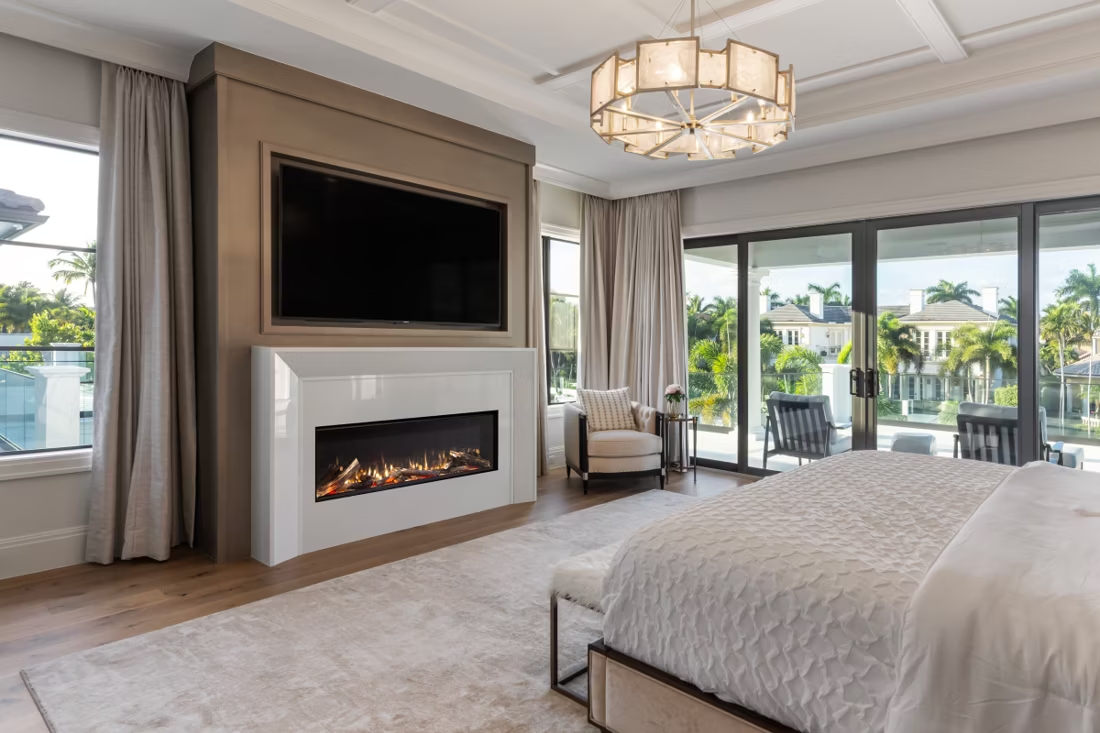
Yes—with an asterisk. Fireplaces are hot and TVs don't like heat. Either put a mantel between them to deflect rising warmth, or choose a fireplace with heat-management technology that creates a cool zone on the wall above—the wall stays around 125 degrees, barely warm, while the room still gets full heat. If you like clean lines and don't want a mantel, heat management is the answer.
How much does an electric fireplace cost to run?
With the heater on, a typical unit draws about 1,500 watts—at average electric rates that's roughly 20 cents an hour. Run the flame effect alone and it costs pennies; the flames are LED-driven and use about as much power as a light bulb. There's no pilot light, no fuel delivery, and essentially no maintenance.
What is an in-home preview and do I need one?
It's a visit where a hearth professional measures your space, confirms the model you picked actually works in your home, and walks the specs—framing, gas line, venting, finish work—before anything is ordered. Some details you just can't know until you see the house. Never make a down payment without one; it's the single most-skipped step that burns buyers.
Does a fireplace add value to my home?
On average, a fireplace adds back to the home about the same amount you spent installing it. Add the monthly savings from heating the rooms you actually use instead of the whole house—often hundreds of dollars a year—and the value case is strong before you even count what a fire does for how your family uses the room.
Nearby Dealers
Hearth shops serving East End and the surrounding area. Every listing shows whether it is a WhyFire partner, a dealer we have verified as authorized for the brands we recommend, or a local business carrying hearth products. No manufacturer pays for placement. How we verify dealers →
Royal Overhead Door Co Inc
Abc Block And Brick
G&S Insulating And Fireplace
Congo Stove Works
Acme Brick Company
Electric Service in East End
An electric fireplace's heater draws about 1,500 watts—pennies per hour at local rates.
Entergy Arkansas LLC
Find your electric fireplace in East End.
Tell us a bit about your home and we'll put together a free Project Guide & Parts List for your East End electric fireplace project, then match you with a trusted local dealer who can install it right.
Find Your Fireplace →