
Heat that keeps running when a Delta ice storm takes the power out.
With only about 3,163 heating degree days and winter lows averaging in the low 30s, Cross County doesn't need a furnace running all season—but eastern Arkansas ice storms can knock out power for days. I'll match you with a trusted local dealer who can size a gas fireplace or insert that heats reliably whether you're on natural gas in Wynne or propane out toward Parkin and Cherry Valley.
Every Project Starts From One of These Five Situations
A mild, short heating season with a real ice storm risk.
Cross County sits in the Arkansas Delta, with Wynne as the county seat and roughly 10,400 residents spread across Wynne, Parkin, Cherry Valley, and Vanndale. In climate zone 3A, the heating season here is short and mild by national standards—3,163 heating degree days and a winter low average around 32°F, closer to Memphis than to the Upper Midwest. Oak, hickory, and pine from the county's bottomland timber have heated homes here for generations, and plenty of older Wynne houses still have a wood-burning fireplace as the original heat source. But for day-to-day comfort in a climate where the cold snap might last a week rather than five months, gas has become the default for a primary living space: flip a switch, get heat, no wood to split or ash to haul.
The bigger factor driving gas fireplace decisions in Cross County isn't deep cold—it's grid reliability. Eastern Arkansas sees ice storms most winters that can down lines for days at a time, and a direct-vent gas fireplace with intermittent pilot ignition and battery backup keeps producing real heat with the power out, something a wood fireplace without a working chimney can't always match on short notice. Since air quality isn't a local concern here the way it is in some Western counties, homeowners have real flexibility between direct-vent and vent-free units. Most of Wynne is served by natural gas through CenterPoint Energy's local distribution lines, while outlying areas around Parkin, Cherry Valley, and Vanndale typically run on propane from a tank a local supplier sets and fills.
Three steps. No salesperson until you're ready.
Tell us about your project
Your zip code, your situation, and the fuel you're leaning toward—or let the answers point you to one.
See what's actually available
The brands dealers within 100 miles genuinely carry—real options, never a catalog mirage.
Get your dealer & Project Guide
A trusted local dealer, plus the free Project Guide & Parts List that names every component of the job.
Frequently Asked Questions
How much does a gas fireplace installation cost in Cross County?
Most gas fireplace and insert projects in this part of Arkansas run somewhere between $3,000 and $8,000. A direct-vent insert dropped into an existing masonry firebox in an older Wynne home—especially one already plumbed for gas—sits toward the lower end. A new direct-vent fireplace built into a wall for a remodel, or a rural install that needs a new propane tank set and a longer gas line run out to a home near Parkin or Cherry Valley, pushes toward the higher end. A local dealer will walk the space and give you a firm number.
Can I convert my existing wood fireplace to gas?
Yes, and it's one of the most common projects in Cross County's older housing stock, much of which was built with a wood-burning masonry fireplace as the original heat source. A gas insert goes into that existing firebox and vents through a liner run up the current chimney, so you keep the mantel and opening you already have while gaining thermostatic, on-demand heat. Homes in Wynne already tied into the local gas line tend to land on the lower end of cost; homes that need a new propane hookup or tank cost more.
Do I need natural gas, or can I run a fireplace on propane?
Either works fine—most gas fireplace models can be set up for natural gas or propane with the right orifice kit. Wynne's more built-up areas have access to natural gas service through the local utility, so if your home already has a gas water heater or furnace on that line, adding a fireplace is straightforward. Out in Parkin, Cherry Valley, Vanndale, and the more rural stretches of the county, propane from a local bulk supplier is the standard fuel, either off an existing tank or a new one your propane company sets on the property.
Will my gas fireplace still work if the power goes out?
This is one of the biggest reasons homeowners in Cross County choose gas: ice storms are a genuine winter risk in eastern Arkansas, and a modern gas fireplace with intermittent pilot ignition runs on a small battery backup that kicks in automatically when the grid drops, so the unit still lights and heats on demand. Some models, like Valor's pilot assembly, generate their own electricity off the thermocouple and don't need batteries at all. Either way, it's worth asking your local dealer about the ignition system on any unit you're considering—it's the difference between a fireplace that's decorative-only during an outage and one that actually keeps a room warm.
What's the difference between a gas fireplace, gas insert, and gas stove?
A gas fireplace is a fully framed-in unit, usually chosen for new construction or a full remodel. A gas insert slides into an existing masonry firebox—the common route for Wynne's older wood-fireplace homes—and uses a liner run up the current chimney as its vent path. A gas stove is a freestanding cabinet unit that sits on the floor, which works well in a room without any existing chimney, including manufactured and modular homes common in the more rural parts of the county. A local dealer can look at your space and tell you which configuration actually fits.
Do I need a permit to install a gas fireplace in Cross County?
Yes, generally. New gas fireplace installations require both a building permit and a gas line permit, whether you're working through Wynne, Parkin, Cherry Valley, or unincorporated Cross County—check with your local city hall or the county for the exact process. The gas line work itself has to be done by a licensed gas-fitter, which is one good reason to go through a full-service hearth dealer rather than a handyman install: a certified dealer coordinates the gas hookup, venting, and inspection as one job instead of leaving you to schedule separate trades.
Should I get a vented or vent-free gas fireplace?
Vented (direct-vent) units pull combustion air from outside and exhaust it back outside through a sealed pipe, keeping combustion byproducts completely out of the room. Vent-free units burn directly into the living space and are legal in Arkansas with proper room-sizing and an oxygen depletion sensor. Since Cross County has no local air quality restrictions to work around, both options are realistic here—vent-free is often the simpler retrofit for a room with no existing chimney, while direct-vent tends to be the better call for a primary living space that runs daily through the winter.
How often should a gas fireplace be serviced?
Plan on an annual inspection, ideally in October or November before the coldest stretch of the Delta winter arrives. A technician checks the burner, pilot or ignition system, gas connections, and venting, and cleans the glass—a quick visit, typically $150 to $250 locally, but worth it given how many Cross County homeowners lean on the fireplace as backup heat during winter storm outages, not just for ambiance.
Gas vs. wood—which makes more sense for a Cross County home?
Wood has deep roots here—oak, hickory, and pine from the county's bottomland forests are affordable and often available from private land or a local sawmill, and a wood fireplace works with zero electricity, which matters when an ice storm takes the grid down. Gas trades that self-sufficiency for convenience: instant, thermostat-controlled heat with no splitting, stacking, or ash cleanup, plus battery-backup ignition that still works in an outage. Given how short and mild the heating season is here—a few hard cold snaps rather than a five-month winter—most Cross County homeowners find gas is the better fit for daily use, with a wood-burning fireplace or stove kept as backup in older homes that already have the chimney for it.
What does it take to replace an existing fireplace?
Fireplaces are like icebergs—bigger behind the wall than in front of it. Replacement means removing the surrounding tile or stone (the finish material laps onto the fireplace face), pulling the old unit, setting the new one in the same enclosure, and re-finishing the wall. A hearth professional can determine what's behind your wall without demolition during an in-home preview.
Can I put a TV above my fireplace?
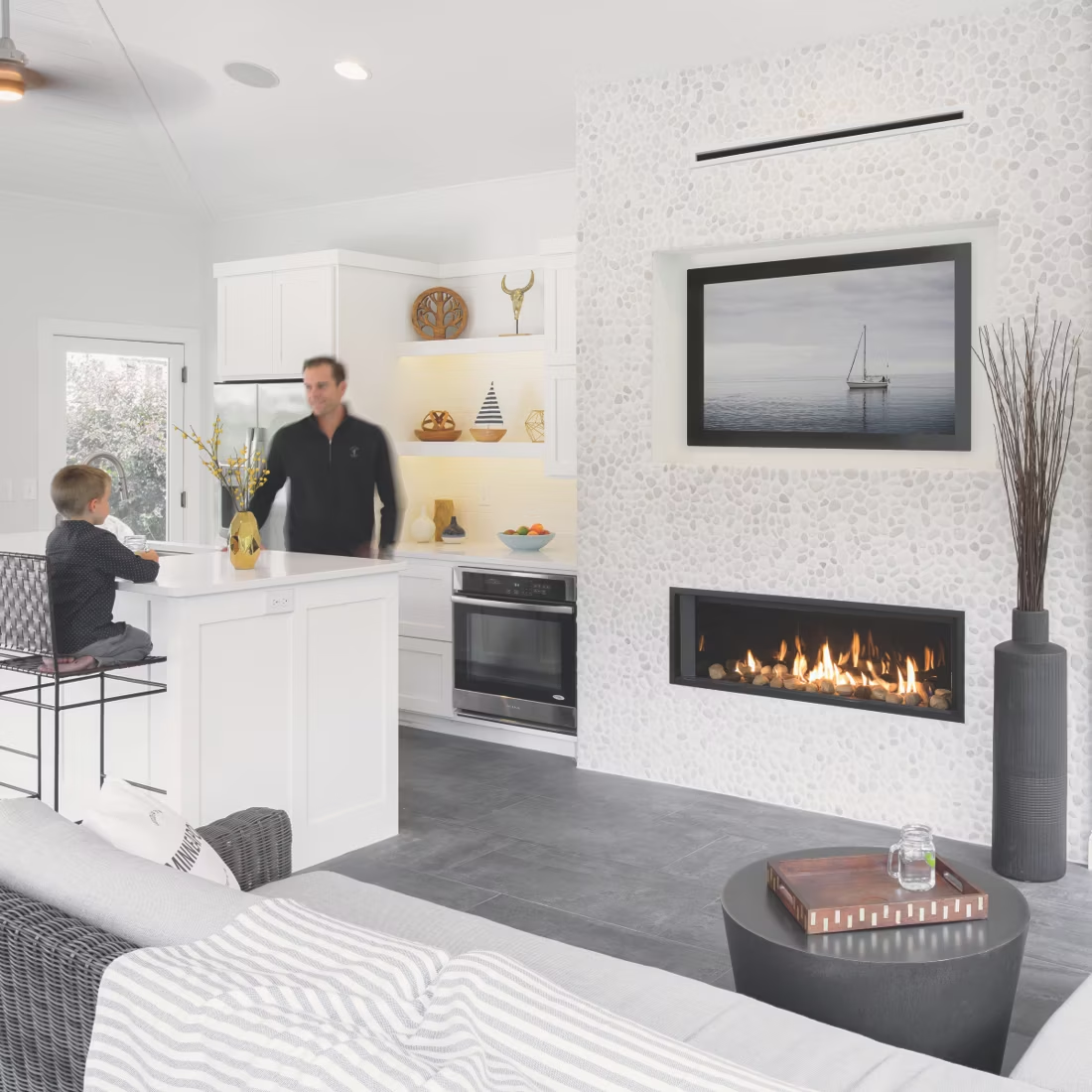
Yes—with an asterisk. Fireplaces are hot and TVs don't like heat. Either put a mantel between them to deflect rising warmth, or choose a fireplace with heat-management technology that creates a cool zone on the wall above—the wall stays around 125 degrees, barely warm, while the room still gets full heat. If you like clean lines and don't want a mantel, heat management is the answer.
Does a fireplace add value to my home?
On average, a fireplace adds back to the home about the same amount you spent installing it. Add the monthly savings from heating the rooms you actually use instead of the whole house—often hundreds of dollars a year—and the value case is strong before you even count what a fire does for how your family uses the room.
Should the dealer who sells my fireplace also install it?
Ideally, yes. A fireplace project involves vent pipe, gas line, electrical, and often tile or stone. Hire three or four separate trades and you own the liability and the game of telephone between them. One company selling and installing means one accountable party, start to finish—ask about factory training, on-time completion records, and what happens if an inspection fails.
Get your free Project Guide & Parts List for a gas fireplace in Cross County.
Tell me about your home, whether you're on natural gas in Wynne or propane out toward Parkin or Cherry Valley, and I'll match you with a trusted local dealer and send over a free Project Guide & Parts List—the exact equipment, vent kit, and recommended installer for your gas project, no big-box guesswork.
Find Your Fireplace →