
Add warmth and ambiance to your Craighead County home.
No chimney, no gas line, no masonry work—just real heat and a realistic flame for homes and apartments from Jonesboro to Bono, Brookland, and Lake City. Find the right unit and connect with a trusted local dealer.
Every Project Starts From One of These Five Situations
The easiest way to add real heat and ambiance.
Craighead County sits in the flat Delta farmland of northeast Arkansas, where Jonesboro rises up along Crowley's Ridge. Winters here are mild by national standards—an average low around 30°F and roughly 3,451 heating degree days, less than half what a place like Bismarck, ND or Duluth, MN sees in a typical season. That's not a climate that demands a dedicated wood-burning heat source, and it shows: wood stoves and pellet stoves are genuinely uncommon in this county outside a handful of rural properties, and there are no air-quality non-attainment concerns driving anyone toward or away from a particular fuel. What Craighead County homes do want is heat on the occasional cold snap and a good-looking fireplace the rest of the year—which is exactly the gap electric fills.
Between Arkansas State University's rental market, newer construction on Jonesboro's east side, and the brick ranch homes common throughout Bono, Brookland, and Monette, a lot of local housing stock was built without a chimney or gas line and isn't about to get one retrofitted. An electric fireplace insert, wall-mount unit, or built-in mantel solves that instantly—no venting, no combustion byproducts, and in most cases no structural work. Power comes from City Water & Light within Jonesboro city limits or Craighead Electric Cooperative Corporation across the county's rural service area, and either one can run a modern electric unit without any special upgrades in most homes. The result is a fireplace that looks and feels real, adds supplemental heat to a bonus room or living area, and installs in an afternoon rather than a week.
Three steps. No salesperson until you're ready.
Tell us about your project
Your zip code, your situation, and the fuel you're leaning toward—or let the answers point you to one.
See what's actually available
The brands dealers within 100 miles genuinely carry—real options, never a catalog mirage.
Get your dealer & Project Guide
A trusted local dealer, plus the free Project Guide & Parts List that names every component of the job.
Frequently Asked Questions
How much does an electric fireplace installation cost in Craighead County?
Plug-in electric fireplaces—freestanding cabinet units, mantel packages, or TV-stand combos—typically run $300 to $1,500 installed, since they just need an existing 120V outlet and take an hour or two to set in place. Built-in electric inserts or wall-mounted units that require a dedicated 20-amp circuit run higher, usually $1,500 to $4,000 depending on the unit size, whether an electrician needs to run new wire, and whether you're building out a surround or mantel. Homes near Jonesboro with newer wiring tend to land on the lower end; older farmhouses in the rural parts of the county sometimes need panel work first, which adds to the bill.
Do I need a permit to install an electric fireplace in Craighead County?
A plug-in electric fireplace that runs off an existing outlet doesn't require a permit—it's treated like any other appliance. If you're installing a built-in insert or wall-mount unit that needs a new dedicated circuit, an electrical permit is typically required, either through the City of Jonesboro's building codes office if you're within city limits or through Craighead County if you're in an unincorporated area. Most licensed electricians who handle these installs pull the permit as part of the job, so it's rarely something the homeowner has to manage directly.
Electric vs. gas fireplace—which is right for my Craighead County home?
Gas fireplaces put out more real heat and are the better choice if you want a fireplace to genuinely carry a room during a cold snap—natural gas is available through CenterPoint Energy in much of Jonesboro, and propane covers the rest of the county. But gas installations involve a gas line, venting, and typically a bigger project and bigger budget. Electric fireplaces cost less to install, work in any room with an outlet or simple circuit, and don't require any gas infrastructure at all—a real advantage for apartments near ASU or older homes without existing gas service. Given how mild Craighead County winters run, a lot of homeowners find electric gives them all the ambiance and enough supplemental heat without the added cost and complexity of a gas line.
Will an electric fireplace actually heat a room, or is it just for looks?
Most electric fireplaces put out around 5,000 BTUs (roughly 1,500 watts), which is enough to comfortably heat 150 to 400 square feet depending on insulation and ceiling height—plenty for a bonus room, den, or bedroom in a typical Jonesboro or Brookland home. It won't replace your central HVAC system, but given that Craighead County's heating season is relatively short and mild, an electric fireplace can genuinely take the edge off on most cold days and serve as a supplemental zone heater in the room you actually spend time in, without running the furnace for the whole house.
What are the different types of electric fireplaces?
Electric inserts are built to slide into an existing fireplace opening or a custom-framed cavity, giving you a built-in look. Wall-mount units hang flush against a wall like a large TV and work well in modern living rooms. Freestanding or mantel-style units come as a complete cabinet package with the heater built in—no installation beyond plugging it in. For rental properties or apartments common around the ASU campus, a freestanding or wall-mount unit is usually the practical choice since it doesn't require any modification to the space.
How much does it cost to run an electric fireplace in Craighead County?
Running an electric fireplace on its highest heat setting (roughly 1,500 watts) for several hours a day costs a few dollars a week at typical residential electric rates from City Water & Light or Craighead Electric Cooperative Corporation. Since most owners only run the heater function during actual cold spells and use the flame-only mode (which draws very little power) the rest of the time, electric fireplaces are inexpensive to operate compared to running central heat for the same effect—especially given how short Craighead County's real heating season is.
Are electric fireplaces a good option for apartments and rentals near ASU?
Yes—this is one of the most common uses in the county. A plug-in electric fireplace needs no venting, no gas line, and no permanent modification to the unit, which makes it compatible with most rental agreements and apartment complexes around Arkansas State University. Renters can bring the unit with them when they move, and property owners don't have to worry about chimney maintenance, combustion safety, or code issues that come with wood or gas appliances.
Do electric fireplaces actually look realistic?
Modern electric fireplaces have come a long way from the orange-plastic flicker of older models. Current LED flame technology from brands widely carried by local dealers produces layered, three-dimensional flame effects over a real-looking log or crystal media bed, with adjustable brightness and color settings. At night or from across a room, a good mid-range or higher unit is genuinely difficult to distinguish from a gas flame. It's worth seeing a few models in person before you buy, since flame quality varies noticeably between budget and premium units.
Electric vs. wood stove—why don't more Craighead County homes burn wood?
Wood stoves are uncommon in Craighead County, and for good reason—with an average winter low around 30°F and roughly 3,451 heating degree days, the county simply doesn't see the sustained deep cold that makes a wood-burning primary heat source worth the chimney, permitting, and firewood handling it requires. A handful of rural properties on larger acreage still keep a wood stove for backup heat or homestead use, and oak, hickory, and pine are all available locally if someone wants to burn. But for the vast majority of Craighead County homeowners, an electric fireplace delivers the ambiance and supplemental warmth people actually want without any of the maintenance wood heat demands.
Can I put a TV above my fireplace?
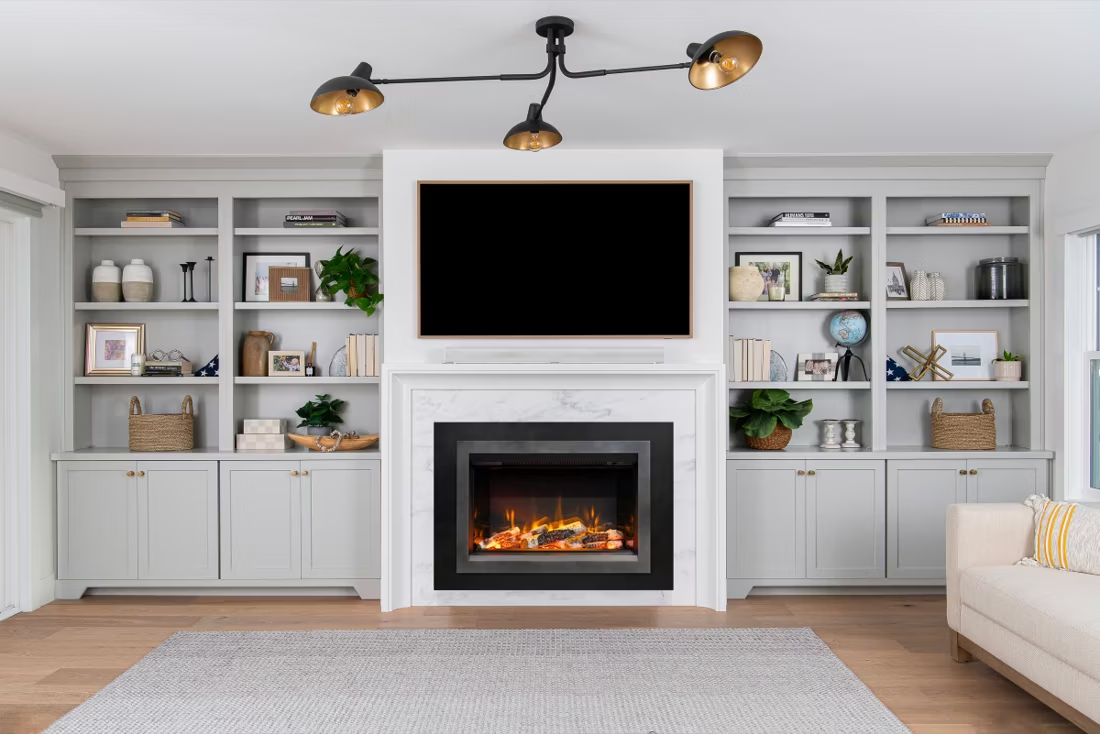
Yes—with an asterisk. Fireplaces are hot and TVs don't like heat. Either put a mantel between them to deflect rising warmth, or choose a fireplace with heat-management technology that creates a cool zone on the wall above—the wall stays around 125 degrees, barely warm, while the room still gets full heat. If you like clean lines and don't want a mantel, heat management is the answer.
Do electric fireplaces actually produce heat?
Yes—most put out around 4,800–5,000 BTUs from a standard outlet, which comfortably warms a bedroom, office, or den as a comfort-zone heater. What they won't do is carry a whole house the way wood, gas, or pellet can. Think of electric as ambiance-first with honest supplemental heat: flames on with no heat in July, flames plus warmth in January.
Does a fireplace add value to my home?
On average, a fireplace adds back to the home about the same amount you spent installing it. Add the monthly savings from heating the rooms you actually use instead of the whole house—often hundreds of dollars a year—and the value case is strong before you even count what a fire does for how your family uses the room.
Can a fireplace actually lower my heating bill?
Yes—by creating a comfort zone. A furnace heats every square foot of the house just to warm the one room you're in; a gas fireplace on low burns roughly a sixth of the gas a typical furnace does. Set the furnace around 55–60 degrees as a baseline, then heat the rooms your family actually uses. Families who heat this way commonly save $20–$60 a month.
Stove and Fireplace Dealers in Craighead County
Find your electric fireplace in Craighead County.
Tell us a bit about your home and we'll match you with the right electric fireplace, insert, or wall-mount unit—plus a free Project Guide & Parts List and a trusted local dealer to handle the install.
Find Your Fireplace →