
Warmth on demand, no chimney required.
From the lake homes around Greers Ferry to the cabins in Fairfield Bay, electric heat fits Cleburne County's mild Ozark-foothills winters without venting, wood stacking, or gas lines. Find the right unit and connect with a trusted local dealer.
Every Project Starts From One of These Five Situations
A mild climate that rewards simple, flexible heat.
Cleburne County sits in climate zone 3A in the Ozark foothills, with an average winter low around 30 degrees and roughly 3,287 heating degree days a year—noticeably milder than the northern Arkansas counties near the Missouri line, let alone a true cold-climate market like Duluth or Fargo. Most homes here need heat for supplemental warmth and a handful of genuinely cold nights each winter, not a 24/7 primary heat source. That's exactly the situation where an electric fireplace earns its keep.
Plenty of Cleburne County households already burn oak, hickory, and pine cut under permit from the Ozark-St. Francis National Forests, and wood and gas remain popular choices for full-time heat. But for lake houses around Greers Ferry, second homes and rental cabins in Fairfield Bay, and manufactured or modular homes throughout the county where a masonry chimney or gas line isn't practical, an electric fireplace or insert delivers real ambiance and real zone heat with a standard 120V or 240V circuit—no venting, no combustion byproducts, and no permit hassle for a simple plug-in unit.
Three steps. No salesperson until you're ready.
Tell us about your project
Your zip code, your situation, and the fuel you're leaning toward—or let the answers point you to one.
See what's actually available
The brands dealers within 100 miles genuinely carry—real options, never a catalog mirage.
Get your dealer & Project Guide
A trusted local dealer, plus the free Project Guide & Parts List that names every component of the job.
Frequently Asked Questions
How much does an electric fireplace installation cost in Cleburne County?
A plug-in electric insert or freestanding unit typically runs $300 to $1,500 installed, since most just need an existing 120V outlet and a properly sized opening. A built-in wall unit or a linear electric fireplace that requires new wiring, a dedicated 240V circuit, or wall framing runs higher—generally $1,500 to $3,500 in Cleburne County, depending on the unit and whether an electrician needs to run new circuits. Local dealers serving Heber Springs and the surrounding lake communities can give a firm number after seeing your space and your home's existing electrical panel capacity.
Will an electric fireplace actually heat my home in Cleburne County?
Most electric fireplaces are built for zone heating—warming a single room rather than an entire house—which lines up well with Cleburne County's mild winter profile of roughly 3,287 heating degree days and an average low near 30 degrees. A 1,500-watt unit can comfortably supplement a living room or bonus room on the coldest nights of the year without needing to carry the whole heat load, the way it might in a colder Ozark county or a true northern climate. For homes that want a true primary heat source, we'll typically point you toward a properly sized system alongside the fireplace rather than asking the electric unit to do everything.
Do I need a permit to install an electric fireplace in Cleburne County?
A simple plug-in electric insert or freestanding unit that uses an existing outlet generally doesn't require a permit. If your installation needs new wiring—a dedicated circuit, a new outlet behind a mantel, or a hardwired built-in unit—that electrical work typically needs to be pulled and inspected as an electrical permit, whether the home is in Heber Springs city limits or unincorporated Cleburne County. Most local dealers either handle licensed electricians directly or can refer you to one, so the wiring and inspection get coordinated as part of the project.
What's the best type of electric fireplace for a lake house or cabin around Greers Ferry?
For seasonal or rental properties around Greers Ferry Lake and Fairfield Bay, a wall-mounted linear electric fireplace or a simple insert into an existing fireplace opening is usually the easiest fit—no chimney maintenance to worry about between visits, no combustion byproducts to ventilate, and most units can be run on a timer or app so the space feels warm and welcoming the moment guests arrive. For cabins with an existing masonry fireplace that's no longer used for wood, an electric insert is often the simplest upgrade since it drops into the opening with minimal modification.
How much does it cost to run an electric fireplace in Cleburne County?
A typical electric fireplace draws 1,500 watts on the heat setting, which costs roughly 15 to 20 cents an hour to run at typical rural Arkansas electric cooperative rates. Used a few hours an evening during the coldest stretches of a Cleburne County winter, that adds up to a modest monthly cost—far less than heating an entire home with electric resistance heat. Running the flame effect alone, without the heater engaged, uses only a few watts and costs next to nothing, which is why many homeowners run the ambiance year-round and only switch on the heat when it's actually cold.
Electric vs. wood vs. gas—which is right for my Cleburne County home?
Wood remains a strong choice for full-time heat and self-sufficiency, especially with cutting permits available through the Ozark-St. Francis National Forests and abundant local oak and hickory. Gas offers instant, consistent heat without wood handling, provided a propane tank or gas line is already in place. Electric is the simplest and least expensive to install of the three, requires no venting or fuel storage, and is the practical choice for secondary rooms, rental cabins, manufactured homes, and any space where running a chimney or gas line isn't realistic. Many Cleburne County homes end up with wood or gas as primary heat and electric in a bedroom, den, or lake-house living room for convenience.
Can I install an electric fireplace in a manufactured or modular home?
Yes—electric fireplaces are one of the few hearth options that install cleanly in manufactured and modular homes, which are common throughout rural Cleburne County. Because there's no venting, no combustion, and no clearance-to-combustible requirements like a wood or gas unit, most models can be installed with basic framing and a standard outlet or a licensed electrician's new circuit. Always confirm the unit is rated for mobile home use and check your home's electrical panel capacity before adding a hardwired unit, since some older manufactured homes have limited available amperage.
Do electric fireplaces need any maintenance?
Very little. There's no chimney to sweep, no ash to clean, and no annual gas line inspection required. Most upkeep is limited to occasionally dusting the heating element and vents, and replacing the LED lights in the flame effect after several years of use—most units are rated for 15,000 to 20,000 hours of LED life. This low-maintenance profile is part of why electric units are popular for vacation and rental properties around Fairfield Bay and Greers Ferry, where nobody's checking on the unit between visits.
Can an electric fireplace go into an existing fireplace opening?
In many cases, yes. If you have an existing wood-burning fireplace you no longer use, an electric insert can often drop into that opening, using the existing mantel and surround while eliminating the chimney maintenance and draft issues of an unused masonry fireplace. Sizing matters—inserts are made in a range of standard widths, and a local dealer can measure your opening and confirm whether a straightforward insert will fit or whether the opening needs minor modification.
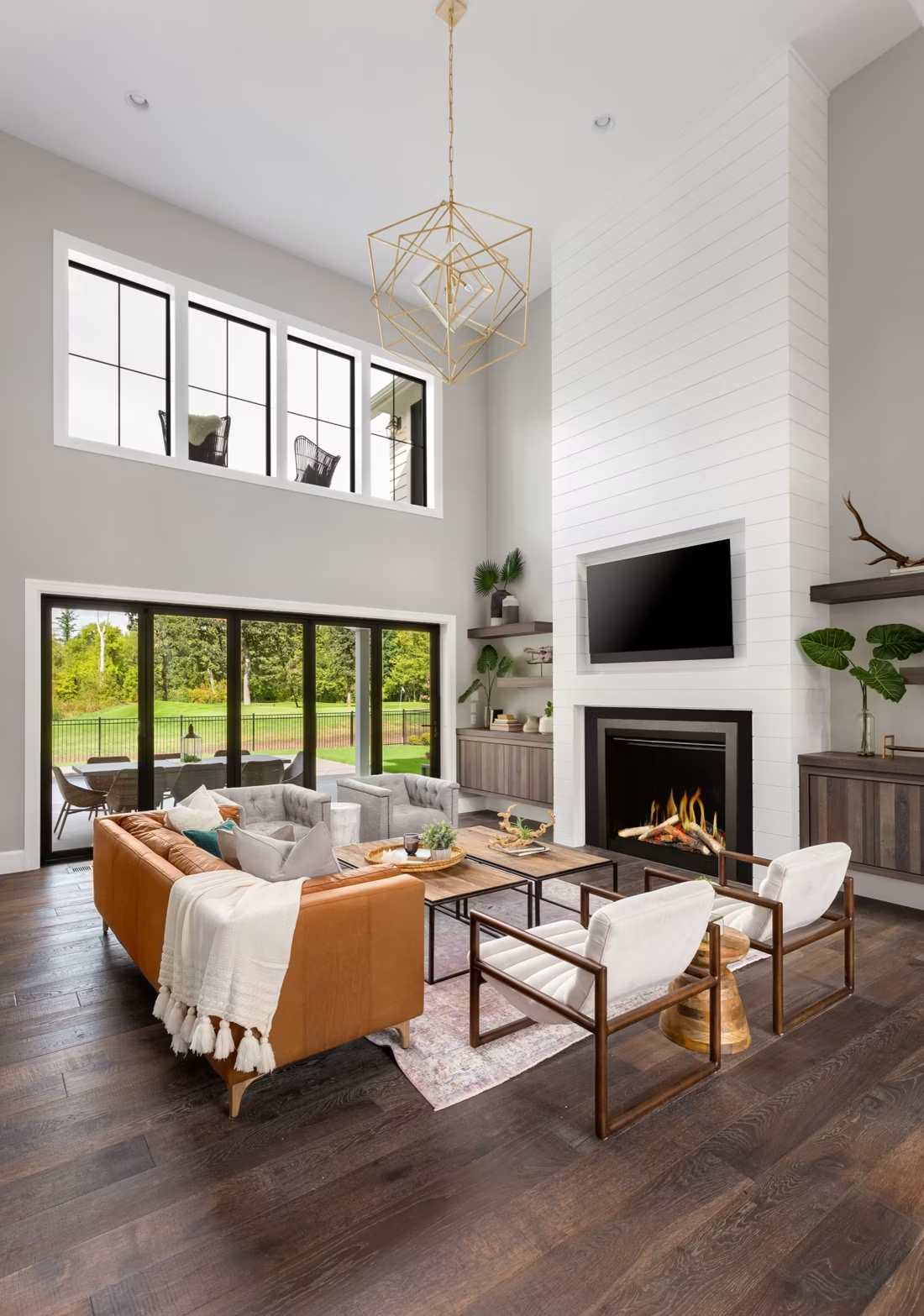
Can I put a TV above my fireplace?
Yes—with an asterisk. Fireplaces are hot and TVs don't like heat. Either put a mantel between them to deflect rising warmth, or choose a fireplace with heat-management technology that creates a cool zone on the wall above—the wall stays around 125 degrees, barely warm, while the room still gets full heat. If you like clean lines and don't want a mantel, heat management is the answer.
Do electric fireplaces actually produce heat?
Yes—most put out around 4,800–5,000 BTUs from a standard outlet, which comfortably warms a bedroom, office, or den as a comfort-zone heater. What they won't do is carry a whole house the way wood, gas, or pellet can. Think of electric as ambiance-first with honest supplemental heat: flames on with no heat in July, flames plus warmth in January.
How much should I budget for a fireplace?
For an average home—covering the fireplace, the vent pipe, and basic installation—a budget between $3,900 and $5,500 gives you a lot of options across wood, gas, and pellet. By the time you add finish work, gas line, and electrical, the average complete installation lands between $5,000 and $12,000 all-in. In a remodel or new build, a good rule is to put about 2.5% of the total project cost toward the fireplace.
What is an in-home preview and do I need one?
It's a visit where a hearth professional measures your space, confirms the model you picked actually works in your home, and walks the specs—framing, gas line, venting, finish work—before anything is ordered. Some details you just can't know until you see the house. Never make a down payment without one; it's the single most-skipped step that burns buyers.
Stove and Fireplace Dealers in Cleburne County
Find your electric fireplace in Cleburne County.
Tell us a bit about your home and we'll put together a free Project Guide & Parts List for your electric fireplace project—the right unit, the electrical requirements, and a trusted local dealer in Cleburne County to install it.
Find Your Fireplace →