
Bring cozy heat to your Carroll County home—no chimney required.
Mild Ozark winters (a short, mild heating season, average lows near 30°F) mean an electric fireplace can carry a room on its own or back up a wood stove elsewhere in the house. Find the right unit and connect with a trusted local dealer serving Eureka Springs, Berryville, and Green Forest.
Every Project Starts From One of These Five Situations
Mild winters, historic homes, and a fuel that asks for nothing but an outlet.
Carroll County sits in the Ozark foothills of northwest Arkansas, split between the tourist-heavy hills of Eureka Springs, the county seat of Berryville, and the ranching country around Green Forest. At climate zone 4A with an average winter low near 30°F and a short, mild heating season, this isn't a place that needs a stove running around the clock—the heating season is real but short, and most homes only need supplemental heat for a handful of genuinely cold weeks each winter.
That's exactly the niche electric fireplaces fill well here. Eureka Springs' downtown is a National Historic Landmark district full of Victorian-era homes and bed-and-breakfasts where owners are often reluctant to cut new flue penetrations into a 19th-century roofline—an electric insert or built-in unit delivers the look of a fire with zero venting and no masonry work. Around Berryville and Green Forest, where Carroll Electric Cooperative Corporation serves most rural accounts, electric fireplaces are a common add for a bonus room, guest suite, or short-term rental where a wood stove (common in the oak-hickory-pine forests here) or a gas line just isn't practical.
Three steps. No salesperson until you're ready.
Tell us about your project
Your zip code, your situation, and the fuel you're leaning toward—or let the answers point you to one.
See what's actually available
The brands dealers within 100 miles genuinely carry—real options, never a catalog mirage.
Get your dealer & Project Guide
A trusted local dealer, plus the free Project Guide & Parts List that names every component of the job.
Frequently Asked Questions
How much does an electric fireplace installation cost in Carroll County?
Most electric fireplace projects in Carroll County fall into two categories: plug-in units, which need nothing more than a standard outlet and typically run $300 to $900 installed, and built-in or wall-mounted units on a dedicated circuit, which run $800 to $2,500 once an electrician adds the circuit and a local dealer handles the surround or mantel finish work. Because there's no combustion and no venting, electric installs in Carroll County skip the permitting and inspection steps that wood and gas projects require—the main cost driver is the finish carpentry, not the appliance itself.
What size electric fireplace do I need for my home?
Electric units are rated by heater wattage rather than BTU output the way wood or gas is, and in Carroll County's milder climate (average winter lows near 30°F, with a short, mild heating season) most homeowners are supplementing an existing heat source rather than replacing it. A 1,500-watt insert or wall-mount comfortably takes the chill off a 300–400 sq ft room—a bedroom, sunroom, or den. Larger open-concept living areas usually do better with two smaller units or a linear built-in paired with the home's central system rather than one oversized unit, since electric heaters lose effectiveness at longer throw distances.
Do I need an electrician to install an electric fireplace in Carroll County?
A basic plug-in electric fireplace or stove doesn't require an electrician—it runs off a standard 120V outlet like any other appliance. A built-in or wall-mounted unit wired to a dedicated 20-amp circuit does need a licensed electrician, both for safety and so the circuit is sized correctly for the unit's full heater load. Local hearth dealers in Carroll County generally coordinate this as part of the installation, bringing in an electrician for the wiring while they handle the surround, mantel, or built-in framing.
What's the difference between an electric fireplace, insert, and stove?
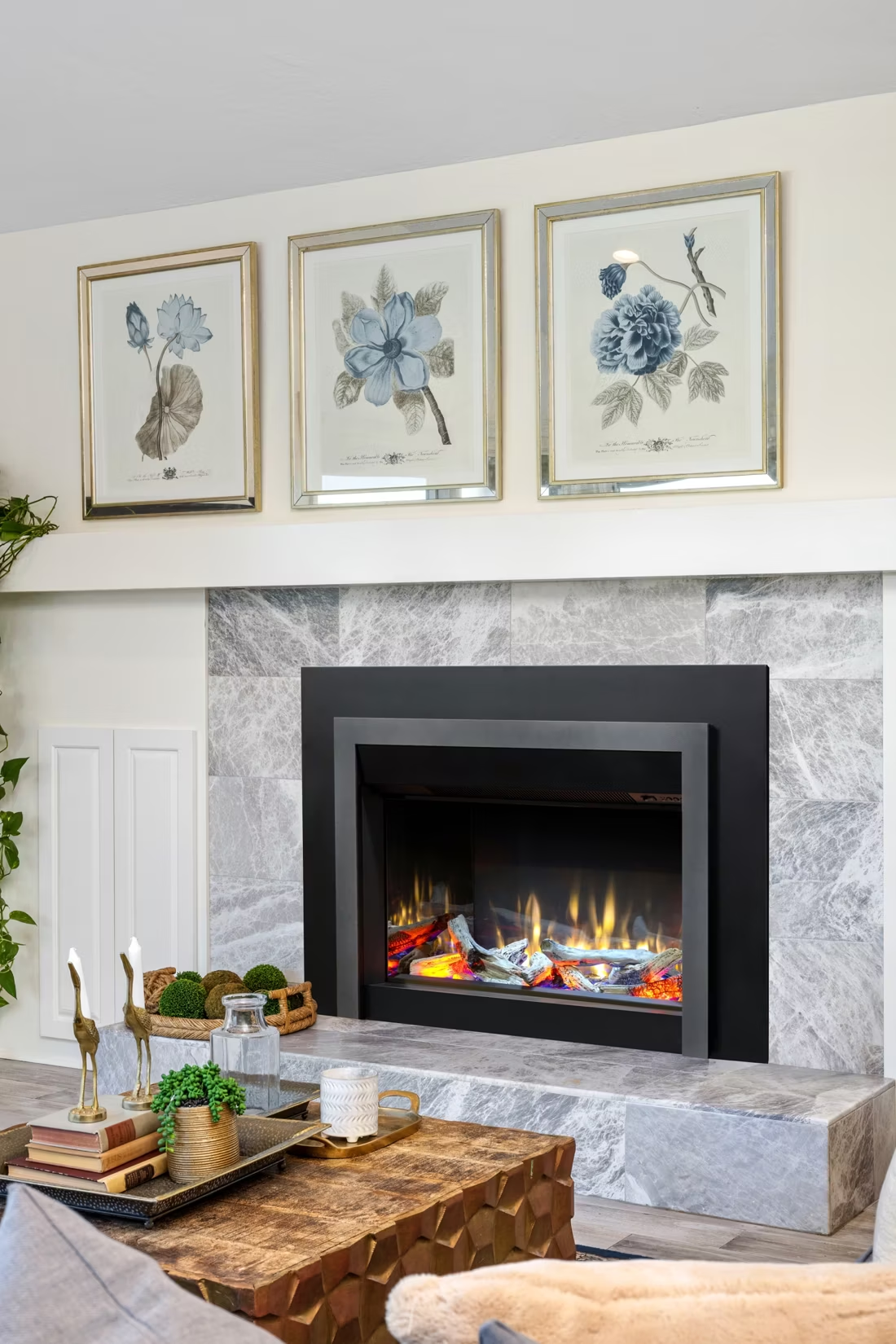
An electric fireplace is typically a built-in unit set into a wall, framed enclosure, or mantel surround, often with a realistic flame effect and log or crystal media. An electric insert is sized to slide into an existing masonry or wood-burning firebox, letting a Carroll County homeowner keep the look of an old fireplace while removing the need to burn wood in it. An electric stove is a freestanding cabinet-style unit, popular in the historic homes around Eureka Springs where the look of a period stove matters but running a flue isn't practical. All three plug in or wire to a dedicated circuit—none require a chimney.
Do I need a permit for an electric fireplace in Carroll County?
No building permit is required for a plug-in electric fireplace, since there's no venting, gas line, or structural chimney work involved. If a built-in unit requires a new dedicated circuit, the electrical work itself should be done by a licensed electrician, but this is handled as routine wiring rather than a formal fireplace permit. This is one of the real advantages of electric in a county like Carroll—you skip the inspection timeline that wood stoves and gas fireplaces go through under county building code.
What's the best electric fireplace for Carroll County's climate?
Because Carroll County's winters are relatively mild—an average low around 30°F and a short, mild heating season—homeowners here rarely need an electric unit to serve as sole heat for a whole house. Most do well with a mid-size insert or wall-mount in the 1,400 to 1,500-watt range for a supplemental room, or a linear built-in for ambiance in a main living area that's already served by central heat or a wood stove. In the historic homes around Eureka Springs, low-profile inserts that slide into an existing firebox tend to fit best without disturbing original woodwork or masonry.
How much maintenance does an electric fireplace need?
Very little compared to wood or gas. There's no chimney to sweep, no gas line to inspect, and no combustion byproducts to worry about. Maintenance is mostly dusting the unit, occasionally cleaning or replacing the LED light strip in the flame effect, and checking that the heater fan isn't clogged with dust or pet hair. Most units last 10+ years with essentially no service calls, which is part of why they're popular for rental properties and bed-and-breakfasts around Eureka Springs where owners don't want an annual maintenance obligation.
How much does it cost to run an electric fireplace in Carroll County?
Running cost depends on the heater setting and your rate from Carroll Electric Cooperative Corporation, which serves most of the county outside city limits. A typical 1,500-watt heater running on high costs somewhere in the range of 15 to 25 cents per hour depending on current rates—meaningfully cheaper per hour than running a whole-house furnace, but not free heat. Most homeowners use the flame effect without the heater running for a good part of the year and switch the heater on only during the genuinely cold stretches, which keeps typical seasonal running costs modest given the county's short heating season.
Electric vs. wood—which is right for my Carroll County home?
Carroll County's oak, hickory, and pine forests make wood a practical, low-cost heat source for anyone willing to handle a stove and firewood—and with no local air quality restrictions, wood burning here is unrestricted compared to non-attainment counties elsewhere. Electric doesn't compete with wood on raw heat output or resistance to power outages, since an electric fireplace stops working the moment the power does. But for a historic home in Eureka Springs where you can't run a new flue, a rental property where low maintenance matters more than ambiance, or simply a bonus room that needs a little supplemental warmth without a chimney, electric is usually the more practical and less expensive path. Many Carroll County homes run both—a wood stove for real heat, electric for rooms where a wood install doesn't make sense.
Can I put a TV above my fireplace?
Yes—with an asterisk. Fireplaces are hot and TVs don't like heat. Either put a mantel between them to deflect rising warmth, or choose a fireplace with heat-management technology that creates a cool zone on the wall above—the wall stays around 125 degrees, barely warm, while the room still gets full heat. If you like clean lines and don't want a mantel, heat management is the answer.
Does an electric fireplace need a vent or chimney?
No—that's its superpower. An electric fireplace needs a wall and an outlet, period. No vent pipe, no gas line, no clearances to design around, which is why it works in bedrooms, offices, apartments, and walls where venting a gas or wood unit would be impractical or impossible. Installation is typically the simplest and least expensive of any fireplace type.
Does a fireplace add value to my home?
On average, a fireplace adds back to the home about the same amount you spent installing it. Add the monthly savings from heating the rooms you actually use instead of the whole house—often hundreds of dollars a year—and the value case is strong before you even count what a fire does for how your family uses the room.
Can I install a fireplace myself?
If you're putting a fire in your house on purpose, it's best to work with an expert. Unless you're genuinely experienced in framing, gas line, vent pipe, and the national code on clearances to combustibles, have a professional do it—and ideally the same company that sells you the fireplace, so warranty, service, and liability all live under one roof.
Find your electric fireplace in Carroll County.
Tell us a bit about your home and we'll match you with the right electric fireplace, insert, or stove—plus a free Project Guide & Parts List with your recommended local dealer in Carroll County.
Find Your Fireplace →