
Real Flame, Zero Hassle—Even in Yuma County's Mild Winters.
With winter lows averaging 48°F and just 679 heating degree days a year, Yuma County doesn't need a furnace-grade fireplace—it needs a good-looking, instant-on gas unit for the handful of genuinely cool evenings. Find the right one and connect with a trusted local dealer.
Every Project Starts From One of These Five Situations
Ambiance most nights, real warmth when a cold front rolls through.
Yuma County sits in climate zone 2B at roughly 140 feet of elevation, and it's one of the mildest heating climates in the country—679 heating degree days a year, compared to 6,000-plus in a place like Bozeman, Montana. Wood and pellet stoves are essentially nonexistent here for a reason: there simply aren't enough cold days to justify hauling mesquite or running a hopper, and the county's PM2.5 non-attainment status plus periodic wildfire smoke make open wood burning something local air districts actively discourage. Gas is a different story. A direct-vent gas fireplace or insert gives Yuma County homeowners real flame and genuine warmth on the nights that dip into the 30s and 40s, without any of the smoke, ash, or fuel-supply hassle wood requires.
Southwest Gas Corporation serves natural gas throughout the city of Yuma and the incorporated areas of Somerton and San Luis, while propane remains the standard fuel in more rural stretches of the county—Wellton, Roll, Tacna, and outlying agricultural land along the Gila and Colorado River valleys. Gas fireplaces are especially popular in Yuma County's large seasonal population: snowbirds and winter residents who want a cozy focal point for a great room without committing to a wood-burning setup they'll only use a few weeks a year. New-construction homes and remodels across the county increasingly spec a direct-vent gas fireplace or linear unit as the default living-room feature.
Three steps. No salesperson until you're ready.
Tell us about your project
Your zip code, your situation, and the fuel you're leaning toward—or let the answers point you to one.
See what's actually available
The brands dealers within 100 miles genuinely carry—real options, never a catalog mirage.
Get your dealer & Project Guide
A trusted local dealer, plus the free Project Guide & Parts List that names every component of the job.
Frequently Asked Questions
How much does a gas fireplace installation cost in Yuma County?
Most direct-vent gas fireplace or insert installations in Yuma County run between roughly $3,500 and $9,000, with the lower end covering a straightforward insert into an existing masonry opening where a gas line is already nearby, and the higher end covering new construction or remodels that need fresh gas line runs and full venting through an exterior wall. Because Yuma County winters are mild, many homeowners here choose a smaller-BTU unit sized more for visual impact and occasional warmth than for whole-room heating, which can trim cost versus a high-output model built for a colder climate. A local dealer will give you a firm number after seeing your gas line access and venting path.
Do I need natural gas, or can I run a fireplace on propane?
Either works, and which one you use mostly comes down to where you live in the county. Inside Yuma, Somerton, and San Luis, Southwest Gas Corporation provides natural gas service to most homes, so if you already cook or heat water with gas, adding a fireplace is a simple tap-in. Outside those city limits—in Wellton, Roll, Tacna, and the unincorporated agricultural areas—propane is the standard, either from an existing tank or a new tank installed by a local propane supplier. Nearly every direct-vent gas fireplace on the market can be configured for either fuel; your installer sets the correct orifice and regulator for whichever you have.
Will my gas fireplace still work if the power goes out?
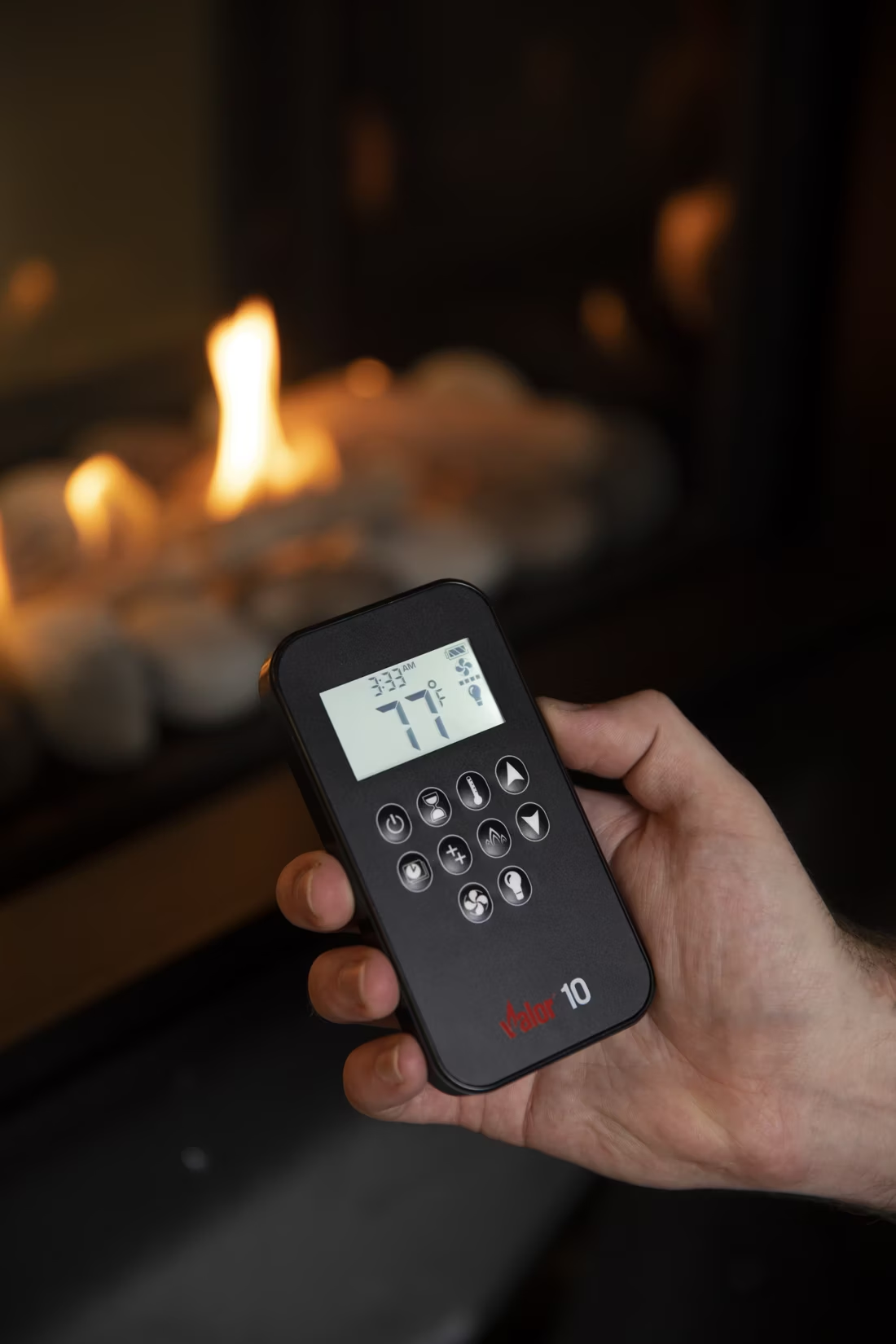
Most modern gas fireplaces will, yes. Units with intermittent pilot ignition (IPI) run on a battery backup—typically standard AA batteries inside the unit—that kicks in the moment power drops, so the fireplace lights on demand just like normal. Valor fireplaces take a slightly different approach: their pilot assembly generates its own electricity through the thermocouple, so there's no battery to remember at all. Yuma County doesn't see the multi-day winter outages that colder regions do, but summer monsoon storms and grid strain during peak cooling season can knock out power for hours at a time, and a gas fireplace with reliable battery backup is one of the few heat sources that keeps working regardless.
What's the difference between a gas fireplace, a gas insert, and a gas stove?
A gas fireplace is a fully built-in unit framed into a wall—the common choice for new construction and major remodels across Yuma County's newer subdivisions. A gas insert is sized to slot into an existing masonry fireplace opening, converting it to a sealed, high-efficiency unit that vents out through the existing chimney with a liner. A gas stove is a freestanding cabinet-style unit that sits on the floor, useful in rooms with no existing fireplace or chimney at all. For the county's older homes with a traditional wood-burning fireplace shell that's rarely used, an insert is typically the cleanest upgrade; for a bare wall in a great room, a built-in fireplace or linear unit is more common.
Do I need a permit to install a gas fireplace in Yuma County?
Yes. Inside the city of Yuma, permits go through the City of Yuma Building Safety Division; in Somerton and San Luis, each city's building department handles it; and in unincorporated areas of the county, Yuma County Community Development issues the building and gas line permits. A licensed gas-fitter is required for the gas line work regardless of jurisdiction. Most established hearth dealers in the area handle the permitting and inspection scheduling as part of the installation, so you're not coordinating separate trades yourself.
Are vent-free gas fireplaces allowed in Yuma County?
Yes—Arizona permits vent-free (ventless) gas fireplaces, and they show up in some Yuma County homes, particularly as retrofits where running venting to an exterior wall isn't practical. That said, vent-free units release combustion byproducts directly into the room and come with strict rules on room size and oxygen-depletion sensors. Direct-vent units, which draw combustion air from outside and exhaust it back outside through a sealed pipe, are the more common recommendation from local dealers because they don't require any tradeoff on indoor air quality—worth factoring in given the county's existing non-attainment status for particulate matter.
How often does a gas fireplace need to be serviced?
An annual inspection is standard for any gas fireplace or insert, even in a mild climate like Yuma County's where the unit might only run a few dozen hours a year. A technician checks the burner, pilot assembly, gas connections, and venting, and cleans the glass and firebox interior. Local gas appliance service providers typically charge $150 to $250 for this visit. Because usage is lighter here than in colder parts of the country, some homeowners stretch to every other year, but annual service is still the safer call, particularly for units that sit unused most of the summer and get fired up again each winter.
Gas fireplace or electric fireplace—which makes more sense in Yuma County?
Both are legitimate options given how mild the county's winters are. A gas fireplace delivers a real flame, genuine radiant heat for the occasional cold front, and the option to keep running during a power outage—but it requires a gas line (or propane tank) and venting work, putting installation in the $3,500-$9,000 range. An electric fireplace or insert plugs into a standard outlet, costs a fraction to install (often $400-$1,200), and can be added to almost any room with zero venting—but the flame is simulated and the heat output is modest. For a primary living space where you want a real fire on the handful of chilly nights, gas usually wins. For a bedroom, den, or secondary room where ambiance matters more than heat output, electric is often the simpler, cheaper call.
Why don't more homes in Yuma County have wood-burning fireplaces?
With only about 679 heating degree days a year and winter lows averaging 48°F, there just aren't enough genuinely cold days to make wood heat practical here the way it is in a place like Duluth or Fargo. Add in the county's PM2.5 non-attainment designation and periodic wildfire smoke, and local air quality guidance leans away from open wood burning. Gas fireplaces solve for the same craving—real flame, a warm focal point—without the smoke, ash, or firewood logistics, which is why they're the dominant choice for homeowners in Yuma County who want more than an electric unit but don't need a cold-climate heating appliance.
What's the difference between an insert and a zero-clearance fireplace?
An insert is a fireplace that slides into a pre-existing wood-burning fireplace—if you don't have one, there's nothing to insert it into. A zero-clearance fireplace is built into a framed wall, which makes it the answer for remodels and new construction. Simple test: existing masonry fireplace means insert; blank or framed wall means zero-clearance.
Is my gas fireplace wasting gas?
If it was installed more than 15 years ago, probably. Older gas fireplaces keep a standing pilot light burning all the time, and that little flame can cost a couple hundred dollars a year. Newer models use pilot-on-demand ignition—the pilot lights only when you use the fireplace and goes out when you turn it off.
Can I install a fireplace myself?
If you're putting a fire in your house on purpose, it's best to work with an expert. Unless you're genuinely experienced in framing, gas line, vent pipe, and the national code on clearances to combustibles, have a professional do it—and ideally the same company that sells you the fireplace, so warranty, service, and liability all live under one roof.
Does a fireplace add value to my home?
On average, a fireplace adds back to the home about the same amount you spent installing it. Add the monthly savings from heating the rooms you actually use instead of the whole house—often hundreds of dollars a year—and the value case is strong before you even count what a fire does for how your family uses the room.
Stove and Fireplace Dealers in Yuma County
Find your gas fireplace in Yuma County.
Tell us a bit about your home and we'll match you with the right gas fireplace, insert, or stove for Yuma County's mild winters—plus a free Project Guide & Parts List and a trusted local dealer to install it.
Find Your Fireplace →