
Propane heat built for Tsaile's 7,000-foot winters.
At 7,044 feet on the Navajo Nation, Tsaile winters run cold and long. Find the right propane fireplace or insert, and get matched with a trusted local dealer who can actually get parts and a tank set up out here.
Every Project Starts From One of These Five Situations
No natural gas line reaches Tsaile—propane fills that gap.
Tsaile sits at 7,044 feet in the Chuska Mountains on the Navajo Nation, with average winter lows around 18°F and a heating season cold enough to sit alongside places like Helena, Montana, for a typical winter. There's no natural gas main serving this part of Apache County, so when people here say they want a "gas fireplace," what they almost always mean is a propane-fueled unit, delivered by tank rather than pipeline.
That distinction matters for planning. A propane fireplace still gives you the instant-on convenience and clean burn of gas heat, but the install has to account for a tank (owned or leased through a regional propane supplier), correct orifice sizing for propane instead of natural gas, and delivery logistics that matter more out here than in a city with a gas utility on every block. Electric service comes from the Navajo Tribal Utility Authority, at roughly 16.6 cents per kWh, which is one reason a propane unit that can run without grid power has real appeal during winter outages in the Chuska Mountains.
Three steps. No salesperson until you're ready.
Tell us about your project
Your zip code, your situation, and the fuel you're leaning toward—or let the answers point you to one.
See what's actually available
The brands dealers within 100 miles genuinely carry—real options, never a catalog mirage.
Get your dealer & Project Guide
A trusted local dealer, plus the free Project Guide & Parts List that names every component of the job.
Frequently Asked Questions
How much does a gas fireplace installation cost in Tsaile?
Because Tsaile runs on propane rather than piped natural gas, a typical installation runs roughly $4,500 to $10,000, with the wider range driven by whether you already have a propane tank on the property, how far the gas line has to run inside the home, and whether the unit is going into an existing masonry fireplace or a new framed opening. Homes with an existing tank and a straightforward direct-vent insert land on the lower end; new construction needing a fresh tank set and longer line runs push toward the higher end. A local dealer will confirm the number after seeing your home and tank situation.
Can I convert my existing wood fireplace to propane?
Yes, and it's a common upgrade in homes around Tsaile that were originally built with a masonry wood fireplace burning ponderosa pine, pinyon, or juniper. A propane insert typically reuses the existing chimney with a stainless liner, so you keep the look of the original fireplace while gaining instant heat and no wood handling. The main added step compared to a natural-gas conversion elsewhere is arranging a propane tank and line if one isn't already on site—your installer will size the tank and run based on the insert's BTU output.
Do I need natural gas, or is propane the only option here?
Propane is effectively the only option for gas-style heat in Tsaile—there is no natural gas utility serving this part of Apache County or the surrounding Navajo Nation communities. Regional propane suppliers deliver and service tanks throughout the area, and most gas fireplace models sold nationally can be configured for propane with the correct orifice kit. If you're comparing quotes, make sure the unit and installer are set up for propane specifically, not assuming a natural gas hookup that doesn't exist here.
Will my propane fireplace work if the power goes out?
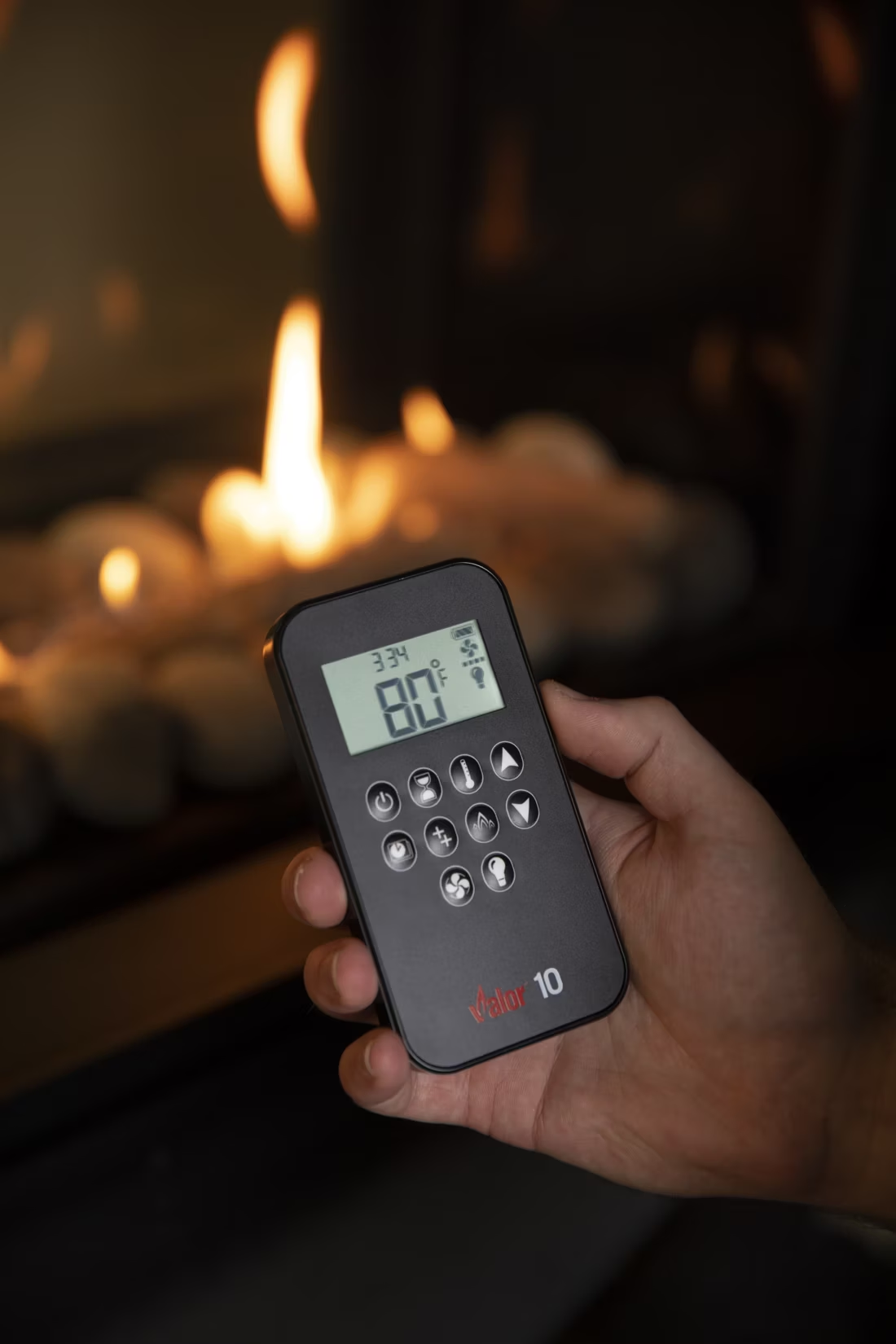
In most cases, yes. Units with intermittent pilot ignition (IPI) run on battery backup—typically AA batteries built into the unit—so they'll light and run during a power outage from Navajo Tribal Utility Authority service interruptions, which do happen in winter storms at this elevation. Valor fireplaces take a different approach: their pilot assembly generates its own electricity through the thermocouple, so there are no batteries to remember at all. Given how remote Tsaile is from utility crews, a fireplace that keeps working without grid power is worth asking about specifically.
What's the difference between a gas fireplace, gas insert, and gas stove?
A gas fireplace is a built-in unit, usually installed during new construction or a remodel, framed into a wall. A gas insert is sized to slide into an existing masonry fireplace opening and uses the existing chimney (relined) as its vent path—the most common propane upgrade for older Tsaile homes with a wood fireplace already in place. A gas stove is a freestanding cabinet-style unit that sits on the floor like a wood stove but burns propane. For most homes here with an existing fireplace, an insert is the simplest and least invasive option.
Do I need a permit to install a propane fireplace in Tsaile?
Because Tsaile sits on Navajo Nation trust land, permitting doesn't run through a typical Arizona county building department the way it would off-reservation. Check with the Tsaile Chapter house or the Navajo Nation Division of Community Development before installing a gas line or setting a propane tank, since requirements can vary by chapter and by whether the home is on tribal trust land or fee land. A reputable local dealer who has installed in the area before will usually know exactly what's required.
Should I get a vented or vent-free propane fireplace?
For a home at 7,044 feet with winter lows around 18°F, a vented direct-vent unit is the better choice. Direct-vent fireplaces draw combustion air from outside and exhaust it back outside through a sealed vent, so they perform consistently at elevation and don't add moisture or combustion byproducts to already-dry high-desert indoor air. Vent-free units are legal in Arizona but come with strict room-size and ventilation rules, and they lose some efficiency at higher elevations. Most dealers serving this area default to direct-vent for exactly these reasons.
How often should my propane fireplace be serviced?
Plan on an annual inspection, ideally before the heating season starts. A technician checks the burner, pilot assembly, gas connections, and venting, and cleans the glass and interior. Because Tsaile is a fair drive from larger service centers around Window Rock or Farmington, it's worth scheduling this in late summer rather than waiting until the first cold snap, when technicians are booked solid across the reservation.
Propane vs. wood—which makes more sense for a Tsaile home?
Wood is deeply practical here: ponderosa pine, pinyon, and juniper are all available locally, Apache-Sitgreaves National Forest cutting permits run $5 to $20 per cord during the May-to-October season, and a wood stove keeps working with zero electricity or propane deliveries—a real advantage given how remote Tsaile is from both the grid and fuel suppliers. Propane offers push-button convenience, no ash or creosote, and steadier heat output, but it depends on tank deliveries reaching a fairly isolated community. Many households here end up with both: propane for daily convenience, wood as the fallback when a winter storm closes the roads.
What's the difference between an insert and a zero-clearance fireplace?
An insert is a fireplace that slides into a pre-existing wood-burning fireplace—if you don't have one, there's nothing to insert it into. A zero-clearance fireplace is built into a framed wall, which makes it the answer for remodels and new construction. Simple test: existing masonry fireplace means insert; blank or framed wall means zero-clearance.
Why is a fireplace insert so efficient?
An insert does two things: it seals the chimney completely, so you stop losing air you already paid to heat, and it radiates warmth into the room through the firebox and glass. Most add a heat-exchange fan that pulls cool room air underneath, wraps it around the hot firebox, and pushes it back out warm. Your home is more efficient before you've even lit the first fire.
How much should I budget for a fireplace?
For an average home—covering the fireplace, the vent pipe, and basic installation—a budget between $3,900 and $5,500 gives you a lot of options across wood, gas, and pellet. By the time you add finish work, gas line, and electrical, the average complete installation lands between $5,000 and $12,000 all-in. In a remodel or new build, a good rule is to put about 2.5% of the total project cost toward the fireplace.
Does a fireplace add value to my home?
On average, a fireplace adds back to the home about the same amount you spent installing it. Add the monthly savings from heating the rooms you actually use instead of the whole house—often hundreds of dollars a year—and the value case is strong before you even count what a fire does for how your family uses the room.
Nearby Dealers
Hearth shops serving Tsaile and the surrounding area. Every listing shows whether it is a WhyFire partner, a dealer we have verified as authorized for the brands we recommend, or a local business carrying hearth products. No manufacturer pays for placement. How we verify dealers →
Navajo Tractor Sales Inc
Castle Furniture
Bob's Fireplace
Slavens True Value Hardware
Choice Building Supply
Woodland Building Center
Find your propane fireplace in Tsaile.
Tell us about your home and your propane setup, and we'll match you with a trusted local dealer and send a free Project Guide & Parts List—the exact parts, vent kit, and recommended installer for your Tsaile home.
Find Your Fireplace →