
Clean, Instant Warmth for Timberline-Fernwood's Cold Nights.
At 6,778 feet in the Coconino ponderosa pine belt, winter lows here average 13°F. Find the right electric fireplace or insert for your cabin or home, and connect with a trusted local installer.
Every Project Starts From One of These Five Situations
High-country cold, without the smoke or chimney.
Timberline-Fernwood sits at 6,778 feet in the ponderosa pine, pinyon, and juniper forest just outside Flagstaff, where a long, cold heating season and winter lows averaging 13°F put this community in the same cold-climate range as Madison, Wisconsin. Wood heat is common here—Coconino, Kaibab, and Prescott National Forest all sell cutting permits for $5 to $20 per cord—but this is also wildfire country, and Red Flag warnings and seasonal burn restrictions on national forest land periodically take wood and pellet stoves off the table. Electric fireplaces produce zero combustion byproducts and no smoke, which makes them one of the few heat sources that keep working, safely, no matter what the air quality advisory says.
This is a small, largely cabin-and-second-home community of under 3,000 residents, and a lot of the housing stock here is exactly the kind of A-frame or rustic mountain cabin where a wall-mounted or built-in electric fireplace makes sense—no chimney, no venting, no gas line, just a dedicated circuit and a finished opening. Arizona Public Service serves the area at a residential rate around 16.45 cents per kWh, a bit above the state average, so most local homeowners use electric fireplaces as zone heat for a single room or as backup and ambiance alongside a propane furnace or wood stove, rather than as the sole heat source for the whole home.
Three steps. No salesperson until you're ready.
Tell us about your project
Your zip code, your situation, and the fuel you're leaning toward—or let the answers point you to one.
See what's actually available
The brands dealers within 100 miles genuinely carry—real options, never a catalog mirage.
Get your dealer & Project Guide
A trusted local dealer, plus the free Project Guide & Parts List that names every component of the job.
Frequently Asked Questions
How much does it cost to install an electric fireplace in Timberline-Fernwood?
Costs vary a lot by style. A simple plug-in insert or freestanding electric stove that drops into an existing wood mantel or opening runs $400 to $1,200 installed, since there's no venting or gas line to run—just a standard outlet. A hardwired, built-in wall unit or a linear electric fireplace set into new framing typically runs $1,500 to $3,500, mostly labor for the electrician to run a dedicated 120V or 240V circuit and finish the surround. Cabin and second-home owners in the area often go with the plug-in route specifically because it avoids electrical work entirely.
Can an electric fireplace actually heat my home at this elevation?
Most electric fireplaces are built as zone heaters—typically 4,600 to 5,100 BTU equivalent, enough to comfortably warm a 400 to 600 square foot room. At 6,778 feet with winter lows averaging 13°F and a long, cold heating season each year, an electric fireplace alone won't keep a whole Timberline-Fernwood home warm through a cold January night. Most local homeowners pair one with a propane furnace, ductless heat pump, or wood stove for whole-house heat, and use the electric unit to take the chill off a living room or bedroom without running the central system harder than it needs to.
Do I need a permit to install an electric fireplace here?
A plug-in electric fireplace or insert that runs off a standard household outlet doesn't require any permit. A hardwired built-in unit—especially one on a new 240V circuit—does require an electrical permit, which your installer typically pulls through Coconino County. Because this is unincorporated Coconino County, there's no separate city building department to deal with; the county handles all electrical and building permitting for Timberline-Fernwood.
What kind of electric fireplace works best for a mountain cabin like mine?
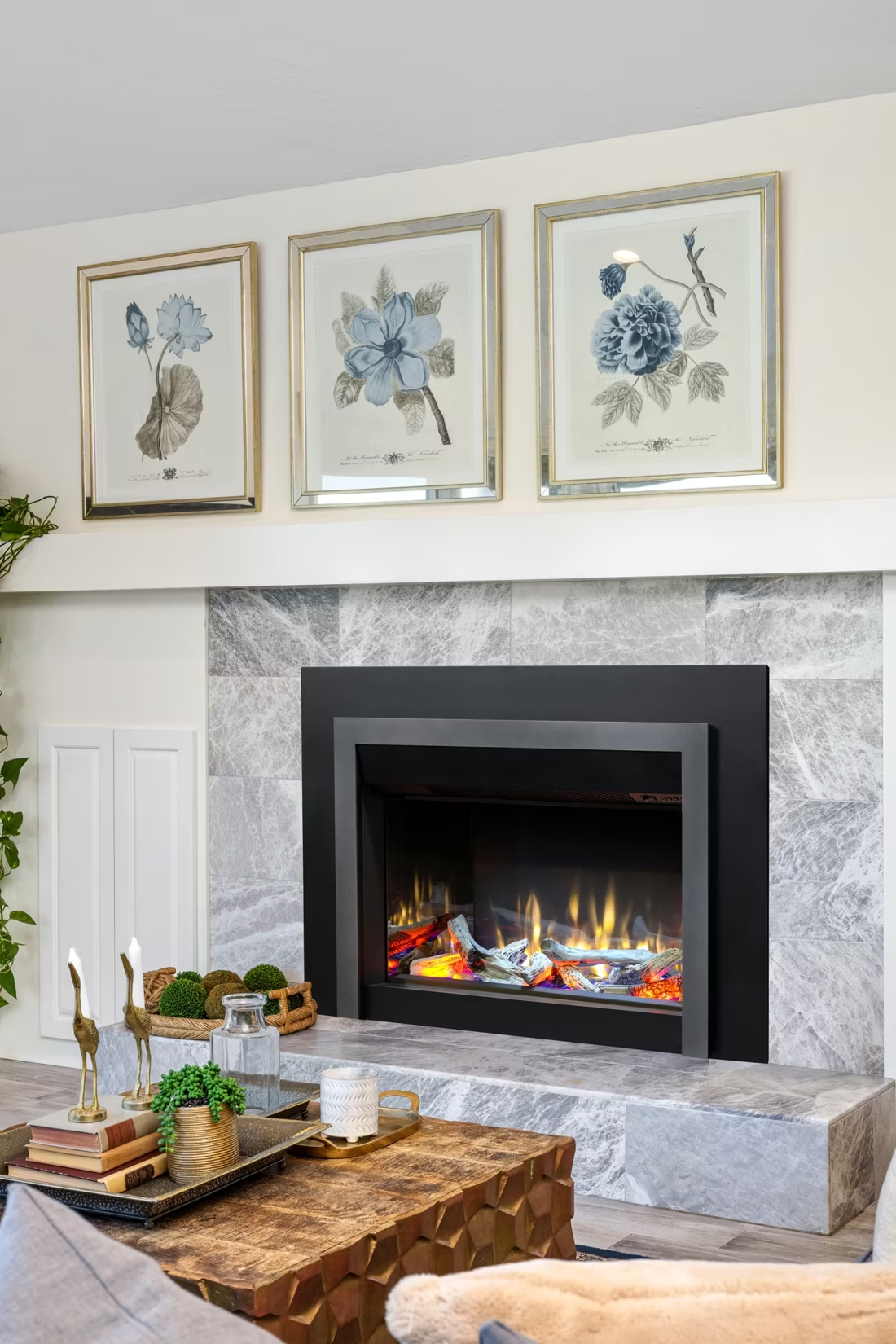
For the A-frame and log-style cabins common in Timberline-Fernwood, a wall-mounted linear electric fireplace or a stove-style insert that fits an existing masonry opening tends to look most at home. Because there's no venting requirement, you can install one on almost any interior wall—including a knotty pine or log wall where running a chimney or gas line would be impractical. Many cabin owners choose a model with a realistic flame effect and no-heat mode, since ambiance during the shoulder seasons matters as much as actual heat output in winter.
What does it cost to run an electric fireplace with APS rates?
Arizona Public Service bills residential customers here around 16.45 cents per kWh. A typical 1,500-watt electric fireplace running on high costs roughly 25 cents an hour to operate—about $6 for a full 24-hour day, though most people run theirs a few hours in the evening rather than continuously. Compared to running a whole-house propane furnace to heat just one occupied room, that's usually the cheaper option, which is part of why electric fireplaces are popular for zone heating rooms that don't need to stay warm all day.
Will my electric fireplace work during a power outage?
No—unlike a wood stove, an electric fireplace has no function without grid power or a generator. Winter storms occasionally knock out power in this part of Coconino County, so if backup heat during an outage matters to you, plan on pairing your electric fireplace with a wood stove, propane heater, or a generator large enough to run it. A lot of Timberline-Fernwood homeowners keep a wood stove for genuine emergency heat and use an electric fireplace day-to-day for convenience and ambiance.
Electric vs. wood—which makes more sense for my home?
Wood is deeply practical here: ponderosa pine, pinyon, and juniper are all abundant locally, and Coconino, Kaibab, and Prescott National Forest all sell cutting permits for $5 to $20 per cord during the May-to-October season. Wood also keeps working during a power outage, which matters in a mountain community like this. But wood smoke is a real concern during dry, high-fire-danger stretches, and cutting, hauling, and tending a fire isn't for everyone—especially in a part-time cabin. Electric fireplaces need no fuel storage, produce no emissions, and can be run remotely or on a timer, which makes them a better fit for second homes and short-term rentals where nobody's around to feed a stove.
Are electric fireplaces a better option during wildfire season?
Yes. Wildfire smoke is the primary air quality concern in this part of Coconino County, and during Red Flag conditions or active fire activity, burning wood outdoors—and sometimes even in stoves—can be discouraged or restricted on adjacent national forest land. An electric fireplace produces no smoke, no particulate matter, and no indoor combustion byproducts, so it keeps providing heat and ambiance regardless of outdoor air quality advisories, which is a real advantage for a home in a fire-prone forest setting like Timberline-Fernwood.
What are good electric fireplace brands to look for?
Dimplex and Napoleon both make well-regarded built-in and wall-mounted linear units with realistic flame technology and simple zone-heating thermostats. Touchstone is a common choice for smaller cabins because of its lower-profile linear models that fit into tighter wall spaces. For a stove-style insert that mimics a traditional wood stove look, brands like ClassicFlame and Duraflame make units sized to slide into an existing masonry opening. A local installer can tell you which models are actually stocked and serviceable in the Flagstaff area, since availability varies dealer to dealer.
Can I put a TV above my fireplace?
Yes—with an asterisk. Fireplaces are hot and TVs don't like heat. Either put a mantel between them to deflect rising warmth, or choose a fireplace with heat-management technology that creates a cool zone on the wall above—the wall stays around 125 degrees, barely warm, while the room still gets full heat. If you like clean lines and don't want a mantel, heat management is the answer.
Do electric fireplaces actually produce heat?
Yes—most put out around 4,800–5,000 BTUs from a standard outlet, which comfortably warms a bedroom, office, or den as a comfort-zone heater. What they won't do is carry a whole house the way wood, gas, or pellet can. Think of electric as ambiance-first with honest supplemental heat: flames on with no heat in July, flames plus warmth in January.
Can I install a fireplace myself?
If you're putting a fire in your house on purpose, it's best to work with an expert. Unless you're genuinely experienced in framing, gas line, vent pipe, and the national code on clearances to combustibles, have a professional do it—and ideally the same company that sells you the fireplace, so warranty, service, and liability all live under one roof.
Does a fireplace add value to my home?
On average, a fireplace adds back to the home about the same amount you spent installing it. Add the monthly savings from heating the rooms you actually use instead of the whole house—often hundreds of dollars a year—and the value case is strong before you even count what a fire does for how your family uses the room.
Nearby Dealers
Hearth shops serving Timberline-Fernwood and the surrounding area. Every listing shows whether it is a WhyFire partner, a dealer we have verified as authorized for the brands we recommend, or a local business carrying hearth products. No manufacturer pays for placement. How we verify dealers →
Wizard's Hearth & Home
Flagstaff Hearth & Home
HomCo
Banker Insulation - Flagstaff
Page Fast Glass
Electric Service in Timberline-Fernwood
An electric fireplace's heater draws about 1,500 watts—pennies per hour at local rates.
Arizona Public Service Co
Find your electric fireplace in Timberline-Fernwood.
Tell us about your home or cabin and we'll match you with a trusted local dealer and send over a free Project Guide & Parts List—the exact parts and recommended dealer for your electric fireplace project in Timberline-Fernwood.
Find Your Fireplace →