
Desert Evenings Deserve a Real Flame.
Scottsdale winters rarely demand heat, but the cool nights on a patio or in a great room still call for one. Find the right gas fireplace or fire feature, and get matched with a trusted local dealer.
Every Project Starts From One of These Five Situations
Ambiance-First Heat for a Mild Desert Climate.
Scottsdale sits at about 2,170 feet in the Sonoran Desert, where the average winter low hovers around 43°F and the city has a very light heating season—a fraction of the heating a place like Bismarck, ND racks up in a single month. Wood and pellet stoves are essentially absent here for good reason: Maricopa County's ozone and particulate non-attainment status, combined with winter inversion episodes that trap smoke over the valley, make solid-fuel burning both impractical and, on No-Burn days, restricted outright. Gas doesn't carry that baggage. It burns clean, draws no objections from the county, and lights on demand for the handful of genuinely cold mornings each year.
What gas is really doing in Scottsdale is powering the indoor-outdoor lifestyle the city is known for. North Scottsdale communities like DC Ranch, Silverleaf, and Desert Mountain routinely pair a great-room gas fireplace with an outdoor gas fire feature on the patio or pool deck, stretching backyard evenings well into what would otherwise be a chilly December night. Homes inside city limits are typically plumbed for natural gas through Southwest Gas; homes further out toward Rio Verde or unincorporated north county often run on propane instead. Either way, sizing the gas line, venting, and unit correctly is where a local installer earns their fee—it's not a step to leave to a general contractor mid-remodel.
Three steps. No salesperson until you're ready.
Tell us about your project
Your zip code, your situation, and the fuel you're leaning toward—or let the answers point you to one.
See what's actually available
The brands dealers within 100 miles genuinely carry—real options, never a catalog mirage.
Get your dealer & Project Guide
A trusted local dealer, plus the free Project Guide & Parts List that names every component of the job.
Frequently Asked Questions
How much does a gas fireplace installation cost in Scottsdale?
An indoor direct-vent gas fireplace or insert in Scottsdale typically runs $4,000 to $9,500 installed, with the wide range coming down to whether a new gas line has to be trenched or run through an existing slab—common in the ranch-style and Santa Barbara-style homes built here in the 1980s and '90s. Outdoor gas fire features, which are extremely popular on Scottsdale patios and pool decks, run more modestly at $2,500 to $6,000 for a built-in fire pit or linear fireplace, since venting requirements are simpler outdoors. Propane setups for homes outside the natural gas footprint, like parts of Rio Verde and Pinnacle Peak, add the cost of a tank installation on top of the unit itself.
Can I convert my existing wood-burning fireplace to gas?
Yes, and it's one of the more common projects local dealers handle in Scottsdale. Many homes built here in the 1970s through '90s came standard with a masonry wood-burning fireplace that owners rarely use—between the mild climate and Maricopa County's air quality restrictions, an open wood fire just doesn't make sense most of the year. A gas log set or full gas insert converts that fireplace into something you'll actually light, using the existing chimney or flue as the vent path in most cases. Straightforward conversions with a gas line already nearby run $2,500 to $5,000; homes needing new gas service to the fireplace location cost more.
Do I need natural gas, or should I plan on propane?
Most of Scottsdale inside the loop—south of Bell Road and through the central corridor—is served by Southwest Gas, so if your home already has a gas water heater or range, extending service to a fireplace is usually a manageable add-on. Once you get into the lower-density areas of north Scottsdale—Rio Verde, parts of Pinnacle Peak, and unincorporated Maricopa County near the Tonto National Forest boundary—natural gas mains often don't reach, and propane is the standard fallback, either from a buried tank or an above-ground unit. Almost every gas fireplace on the market can be configured for either fuel; your dealer sets the orifice and regulator to match.
Will my gas fireplace still work if the power goes out?
Most modern gas fireplaces will, which matters during Scottsdale's summer monsoon storms when APS outages can hit neighborhoods for hours. Units with IPI (intermittent pilot ignition) run on a small battery backup that kicks in automatically and lights the fireplace on demand, just like normal, until utility power returns—you just need to remember to keep those batteries fresh. Valor fireplaces take a different approach: their pilot generates its own electricity through the thermocouple, so there's no battery to maintain at all. It's a smaller concern here than in a place with harsh winter storms, but for a hot summer night without air conditioning, at least you'll have light and hot food from the cooktop if your range is gas too.
What's the difference between a gas fireplace, insert, and stove?
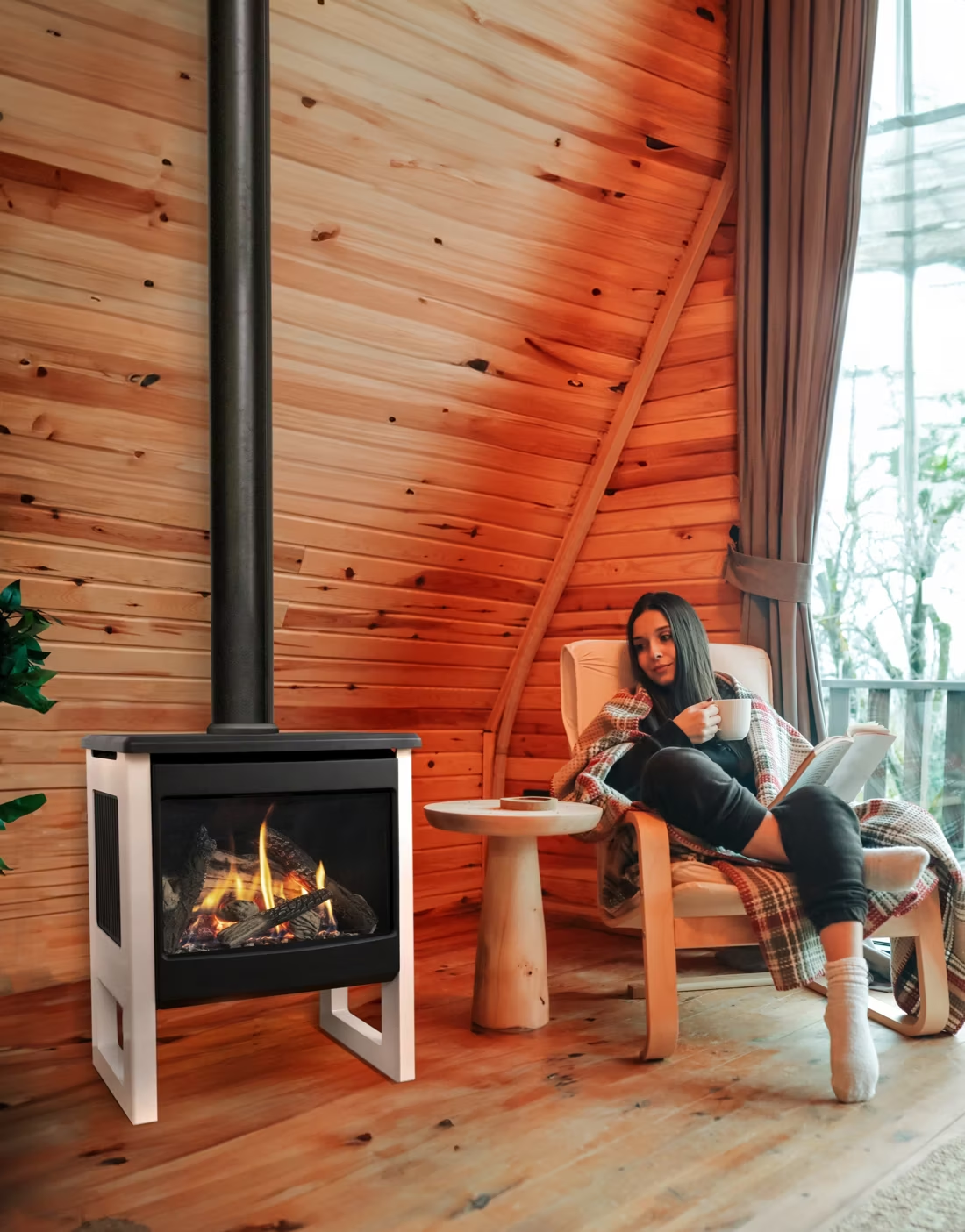
A gas fireplace is a fully built-in unit framed into a wall—the standard choice for new construction and the great rooms common in Scottsdale's larger custom homes. A gas insert drops into an existing masonry fireplace opening, which fits the corner and kiva-style fireplaces found in a lot of Southwestern and Santa Fe-influenced homes around town. A gas stove is a freestanding cabinet-style unit that sits out from the wall—less common here than in colder climates, but occasionally used in casitas or guest houses. For most Scottsdale homeowners upgrading an existing wood-burning fireplace, an insert is the natural fit.
Do I need a permit to install a gas fireplace in Scottsdale?
Yes. Inside city limits, gas fireplace and gas line work requires a permit through the City of Scottsdale's Building Development Services, and the gas piping specifically has to be done by a licensed gas-fitter. If your property is in an unincorporated pocket of north Scottsdale or Rio Verde, permitting instead runs through Maricopa County Planning and Development. A reputable local hearth dealer coordinates the permit, the gas line, and the final inspection as one package, which is worth paying for versus splitting the job between separate trades.
Should I get a vented or vent-free gas fireplace?
Vented (direct-vent) gas fireplaces pull combustion air from outside and exhaust it back outside through a sealed pipe—they're the safer, more universally recommended choice and the standard for new installs. Vent-free units burn fuel directly into the room and are legal in Arizona, but they release some moisture and combustion byproducts indoors, which is a real consideration in Scottsdale's tightly sealed, air-conditioning-optimized homes where indoor air doesn't cycle out as fast as in an older, leakier house. Given Maricopa County's non-attainment status for air quality, most local dealers steer homeowners toward direct-vent units, and they're just as attractive and far less fussy about room sizing rules.
How often does a gas fireplace need to be serviced in Scottsdale?
Plan on an annual inspection, same as anywhere—a technician checks the burner, pilot assembly, gas connections, and venting, and cleans the glass. In Scottsdale, the extra variable is dust: fine desert dust and the occasional haboob can work into outdoor fire features and even indoor units over a hot, dry summer when the fireplace sits unused for months. A pre-season check in October or November, before you start using it regularly, catches clogged orifices or pilot issues before they become a service call on a cool evening when you actually want the fire lit. Expect to pay $150 to $250 for a standard annual visit.
Should I get an indoor gas fireplace or an outdoor gas fire feature?
For Scottsdale's climate, this is often the more relevant question than gas versus any other fuel. An indoor direct-vent fireplace makes sense for the great room and the genuinely cold nights each winter when you want real heat and don't want to leave a door open to the patio. An outdoor gas fire pit, fire bowl, or linear fireplace fits the way most Scottsdale homeowners actually use their backyards—extending pool and patio evenings from October through April without the mess or restrictions of wood. Many homes here end up with both: one indoors for the rare cold snap, one outside for the eight months of the year when the backyard is the real living room.
What's the difference between an insert and a zero-clearance fireplace?
An insert is a fireplace that slides into a pre-existing wood-burning fireplace—if you don't have one, there's nothing to insert it into. A zero-clearance fireplace is built into a framed wall, which makes it the answer for remodels and new construction. Simple test: existing masonry fireplace means insert; blank or framed wall means zero-clearance.
Why is a fireplace insert so efficient?
An insert does two things: it seals the chimney completely, so you stop losing air you already paid to heat, and it radiates warmth into the room through the firebox and glass. Most add a heat-exchange fan that pulls cool room air underneath, wraps it around the hot firebox, and pushes it back out warm. Your home is more efficient before you've even lit the first fire.
Should the dealer who sells my fireplace also install it?
Ideally, yes. A fireplace project involves vent pipe, gas line, electrical, and often tile or stone. Hire three or four separate trades and you own the liability and the game of telephone between them. One company selling and installing means one accountable party, start to finish—ask about factory training, on-time completion records, and what happens if an inspection fails.
Does a fireplace add value to my home?
On average, a fireplace adds back to the home about the same amount you spent installing it. Add the monthly savings from heating the rooms you actually use instead of the whole house—often hundreds of dollars a year—and the value case is strong before you even count what a fire does for how your family uses the room.
Nearby Dealers
Hearth shops serving Scottsdale and the surrounding area. Every listing shows whether it is a WhyFire partner, a dealer we have verified as authorized for the brands we recommend, or a local business carrying hearth products. No manufacturer pays for placement. How we verify dealers →
Best BBQ’s & Islands
Southwest Builders & Design, LLC
Green Goddess
Carefree Outdoor Living
Apache Stone - Phoenix
EarthCore Industries
All American Outdoor Living
Arizona Fire Features
Valley Stone
Diversified Builder Supply
Bbq Island
Gilbert Fireplaces & BBQ’s
Fire By James
All American Outdoor Living
Brooksies Propane
Find your gas fireplace in Scottsdale.
Tell us about your home and we'll match you with the right gas fireplace, insert, or outdoor fire feature—plus a free Project Guide & Parts List and a trusted local dealer to install it.
Find Your Fireplace →