
A Fireplace That Fits the Desert Lifestyle.
Maricopa winters rarely dip much below the 30s, but a gas fireplace still adds the ambiance, resale value, and quick backup heat that Pinal County homeowners want. Find the right unit and connect with a trusted local dealer.
Every Project Starts From One of These Five Situations
Ambiance first, heat second—and that's the point.
Maricopa sits at 1,195 feet in the Sonoran Desert south of Phoenix, where the average winter low hovers around 37°F and the entire heating season is so short and mild it adds up to a fraction of the heating a place like Bozeman, MT needs in a single month. Wood heat has never made sense here, and it doesn't now: mesquite, pinyon, and juniper are common locally for smokers and fire pits, but the city's non-attainment air quality status and its fast-growing subdivisions of stucco tract homes make wood-burning appliances rare to nonexistent. Gas is the fuel that actually fits how people live here.
Piped natural gas hasn't reached most of Maricopa the way it has in older Phoenix-metro neighborhoods—electric service here runs through GRICUA, Electrical District No. 2, or Electrical District No. 3 depending on where you sit, and most homes rely on electricity or propane rather than a gas main. That means most 'gas' fireplaces installed in Maricopa are actually propane units, fed by a leased or owned tank rather than a utility line. It's a small distinction that changes your install cost and your ongoing fuel logistics, and it's worth understanding before you pick a unit.
Three steps. No salesperson until you're ready.
Tell us about your project
Your zip code, your situation, and the fuel you're leaning toward—or let the answers point you to one.
See what's actually available
The brands dealers within 100 miles genuinely carry—real options, never a catalog mirage.
Get your dealer & Project Guide
A trusted local dealer, plus the free Project Guide & Parts List that names every component of the job.
Frequently Asked Questions
How much does a gas fireplace installation cost in Maricopa?
Most propane fireplace and insert installations in Maricopa run $3,500 to $9,500, depending on the unit, whether you're retrofitting an existing stub wall or framing a new zero-clearance box, and whether you already have a propane tank on the property. Homes with an existing 250- or 500-gallon tank and gas line in place land on the lower end. New construction or homes without a tank yet should budget an additional $500 to $1,800 for tank setup and delivery, on top of the fireplace install itself. A local dealer will give you a firm number after seeing your home.
Does my Maricopa home have natural gas, or will I need propane?
Most likely propane. Maricopa's rapid growth over the last two decades outpaced piped natural gas infrastructure in a lot of the city, so unless your neighborhood specifically has a gas main (check with your builder or HOA documents), you're working with propane. That's not a downside for a fireplace—propane burns hot, is widely available through regional suppliers, and modern propane fireplaces perform identically to natural gas units. It does mean budgeting for a tank, either a small portable cylinder for a low-use decorative unit or a buried residential tank if you're also running a range or water heater on propane.
Do I need a permit to install a gas fireplace in Maricopa?
Yes. New gas fireplace installations go through the City of Maricopa Building Safety Division, and propane tank placement has its own setback requirements from the fire code—typically a minimum distance from windows, doors, and property lines depending on tank size. Most hearth dealers installing propane fireplaces coordinate directly with your propane supplier on tank siting and pull the building permit as part of the job, so you're not stuck managing two separate processes.
Will my gas fireplace still work if the power goes out?
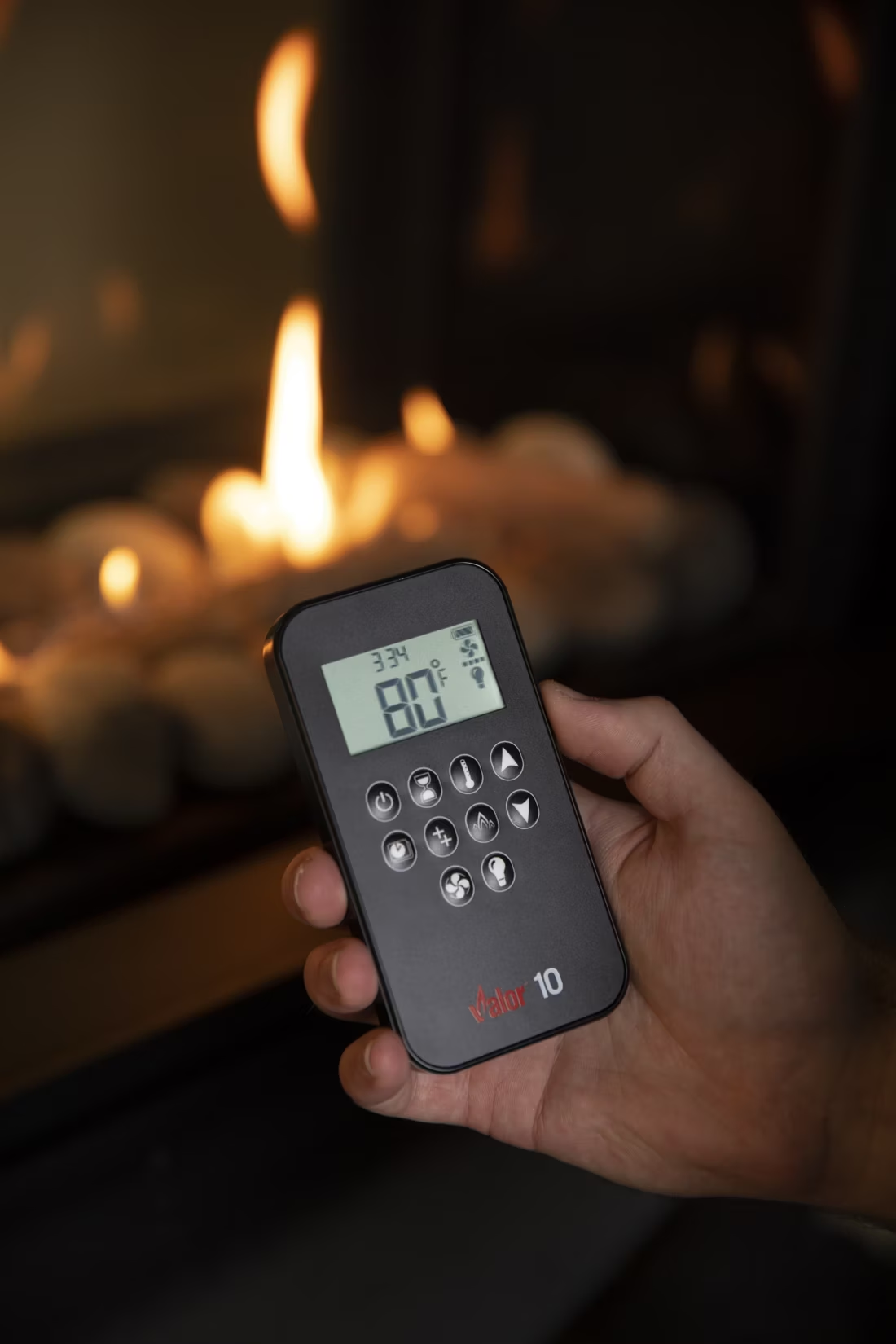
Yes, in most cases. Units with IPI (intermittent pilot ignition) run on a small battery backup that kicks in automatically if the power drops, so the fireplace lights on demand just like normal. Given Maricopa's exposure to summer monsoon storms that occasionally knock out power along Electrical District No. 2 and No. 3 lines, that backup matters more than you'd think even in a mild-winter city. Valor fireplaces take it further—their pilot generates its own electricity through the thermocouple, so there's no battery to remember to replace at all. Ask your dealer about the ignition system on any unit you're considering.
What's the difference between a gas fireplace, insert, and stove for a home like mine?
Most Maricopa homes are newer stucco tract builds from the last two decades, many without any fireplace at all—so installing a gas fireplace here usually means either adding a built-in zero-clearance unit into a framed wall cavity, or dropping a freestanding gas stove onto a hearth pad in a great room. True gas inserts, which slide into an existing masonry firebox, are less common simply because fewer Maricopa homes were built with wood-burning masonry fireplaces to convert. If your home does have one of the older masonry fireplaces from a pre-2000 build, an insert is usually the easiest upgrade. If not, your dealer will likely steer you toward a built-in or freestanding unit.
Are vent-free gas fireplaces allowed in Maricopa?
Arizona doesn't prohibit vent-free, or ventless, gas fireplaces the way California or Washington do, so you'll see them offered, especially as a lower-cost option for homes without existing venting. That said, direct-vent units are still the better recommendation for most homes: they draw combustion air from outside and exhaust it back outside, so they don't add moisture or combustion byproducts to your living space—a real consideration in a tightly sealed, energy-efficient new-construction home like most of what's in Maricopa. If a dealer offers you a vent-free unit, ask specifically about room-sizing rules and oxygen depletion sensors before you commit.
What size gas fireplace do I need if I mostly want ambiance, not heat?
With winter lows averaging around 37°F and mild heating needs overall, most Maricopa buyers are choosing a fireplace for the visual and the resale appeal more than serious heat output. A 20,000–30,000 BTU direct-vent unit is plenty for a great room in a typical Maricopa floor plan, and you can dial output down further with a modulating unit if you want low flame most nights and more heat on the occasional cold snap. Going bigger than that just means running the fan more to avoid overheating a room in a state where the AC bill already dominates your utility spending.
How often does a propane fireplace need service in Maricopa?
Plan on an annual inspection, same as any gas appliance—a technician checks the burner, pilot assembly, venting, and the propane regulator, and cleans the glass and interior. Propane systems specifically benefit from a regulator check since Arizona's summer heat can affect tank pressure and rubber seals over time. Given how little Maricopa fireplaces get used relative to colder climates, an annual once-over before your first cool-weather burn each fall is usually enough.
Should I even consider a wood-burning fireplace instead of gas in Maricopa?
Realistically, no. Wood-burning appliances are rare here for good reason: Pinal County sits within the broader Phoenix-area PM10 non-attainment zone, so wood smoke advisories are a real constraint, and most Maricopa subdivisions were built without chimneys or masonry fireplaces to begin with. Mesquite, pinyon, and juniper are locally available if you want a backyard fire pit or smoker, and a handful of rural properties outside city limits still burn wood the traditional way, but for an actual in-home fireplace, gas—in practice, propane—is the far more practical and commonly installed choice in Maricopa.
Why is my open fireplace making my house colder?
Open fireplaces suck—literally. As the fire burns, it consumes air your furnace already paid to heat and pulls it out through the chimney, so the house is actually colder after the fire goes out than before you lit it. An insert fixes this: it seals the chimney, puts fixed glass across the front, and turns that hole in your house into a real heat source.
Why is a fireplace insert so efficient?
An insert does two things: it seals the chimney completely, so you stop losing air you already paid to heat, and it radiates warmth into the room through the firebox and glass. Most add a heat-exchange fan that pulls cool room air underneath, wraps it around the hot firebox, and pushes it back out warm. Your home is more efficient before you've even lit the first fire.
Does a fireplace add value to my home?
On average, a fireplace adds back to the home about the same amount you spent installing it. Add the monthly savings from heating the rooms you actually use instead of the whole house—often hundreds of dollars a year—and the value case is strong before you even count what a fire does for how your family uses the room.
What is an in-home preview and do I need one?
It's a visit where a hearth professional measures your space, confirms the model you picked actually works in your home, and walks the specs—framing, gas line, venting, finish work—before anything is ordered. Some details you just can't know until you see the house. Never make a down payment without one; it's the single most-skipped step that burns buyers.
Nearby Dealers
Hearth shops serving Maricopa and the surrounding area. Every listing shows whether it is a WhyFire partner, a dealer we have verified as authorized for the brands we recommend, or a local business carrying hearth products. No manufacturer pays for placement. How we verify dealers →
Brooksies Propane
All American Outdoor Living
Fire By James
Bbq Island
Gilbert Fireplaces & BBQ’s
Diversified Builder Supply
Find your gas fireplace in Maricopa.
Tell us about your home and we'll match you with a trusted local dealer and a free Project Guide & Parts List—the exact parts, vent kit, and propane setup your Maricopa gas fireplace project needs.
Find Your Fireplace →