
Electric warmth built for Lukachukai's mountain winters.
Clean, no-vent heat for a high-elevation community where wood smoke advisories and long power lines both matter. Find the right unit and connect with a local dealer who knows the terrain.
Every Project Starts From One of These Five Situations
Clean heat without gas lines or wood smoke.
Lukachukai sits at 6,567 feet in the Chuska Mountains on the Navajo Nation, where winter lows average 18°F and the area logs roughly 5,733 heating degree days a year—cold enough to put it in the same climate territory as Bozeman, Montana. There's no natural gas infrastructure serving this part of Apache County, so households here heat with a mix of wood, propane, and electricity from Navajo Tribal Utility Authority (NTUA). Electric fireplaces fill a specific role in that mix: no chimney, no gas line, no combustion byproducts, and an install that a licensed electrician can usually complete in a day.
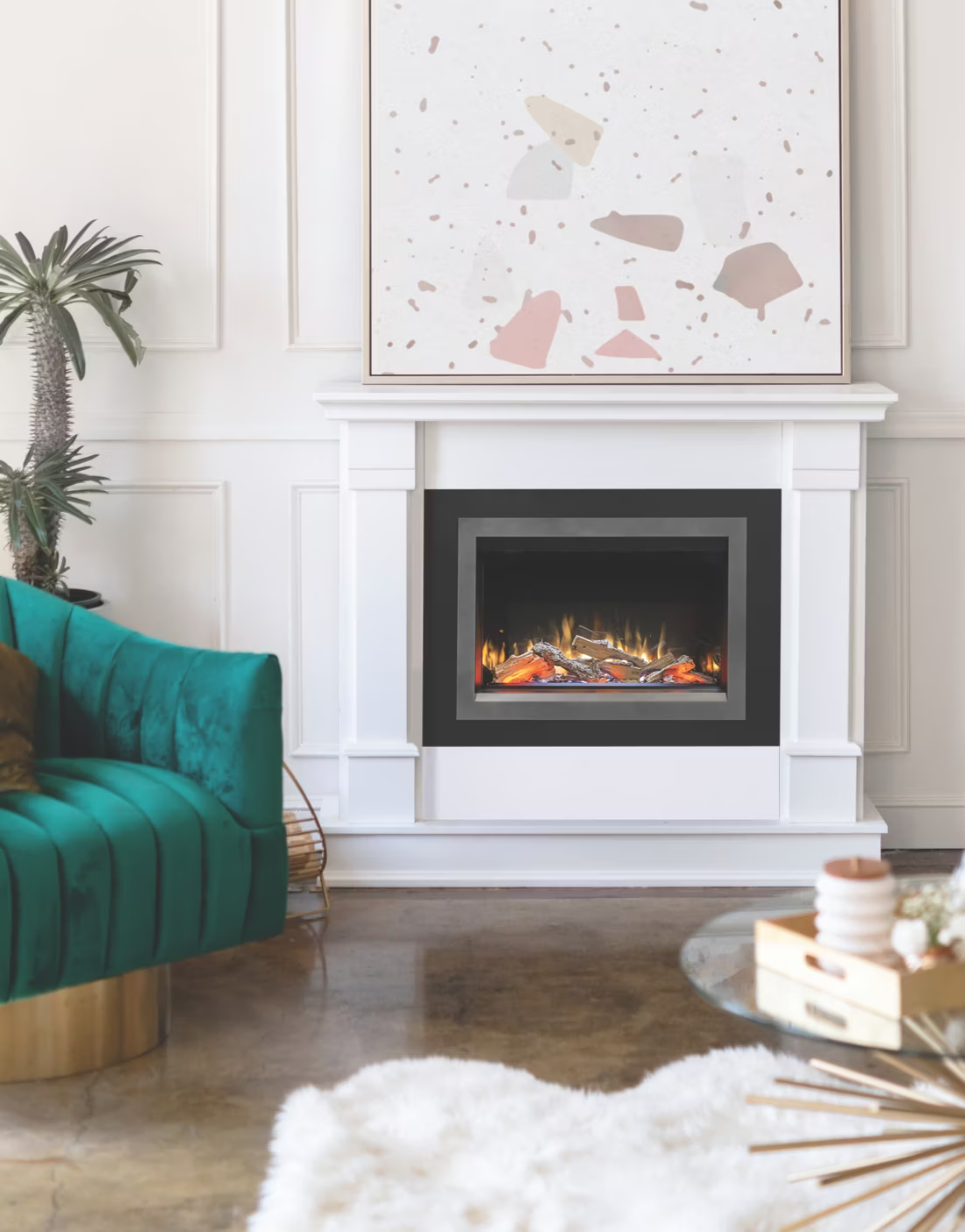
That matters most during the wildfire smoke season, when air quality advisories make heavy wood burning less appealing even though ponderosa pine, pinyon, and juniper are all abundant and locally cut. An electric insert or built-in unit gives a home supplemental warmth and fireplace ambiance in a bedroom, living room, or add-on space without adding another source of smoke to the airshed. At NTUA's residential rate of 16.63 cents per kWh—a bit above the national average—electric heat works best as a zone-heating tool rather than the sole source of warmth for a whole home through a Chuska Mountain winter.
Three steps. No salesperson until you're ready.
Tell us about your project
Your zip code, your situation, and the fuel you're leaning toward—or let the answers point you to one.
See what's actually available
The brands dealers within 100 miles genuinely carry—real options, never a catalog mirage.
Get your dealer & Project Guide
A trusted local dealer, plus the free Project Guide & Parts List that names every component of the job.
Frequently Asked Questions
How much does it cost to install an electric fireplace in Lukachukai?
Plug-in electric inserts and mantel units are the least expensive option, often installable for $400 to $800 since they run on a standard 120V outlet. Built-in linear electric fireplaces or larger units that need a dedicated 240V circuit run higher, typically $1,200 to $2,500 once an electrician wires from the panel. Because Lukachukai is served by NTUA's rural distribution lines and many homes here are older or manufactured housing, it's worth having a licensed electrician confirm your panel has capacity before you commit to a larger built-in unit.
Will an electric fireplace actually keep my home warm through a Chuska Mountain winter?
For a single room or open living area, yes—a 1,500-watt electric insert can comfortably heat 300 to 600 square feet. But with winter lows averaging 18°F and elevation over 6,500 feet, electric heat alone typically isn't enough to carry an entire home the way it might in a milder climate. Most Lukachukai households pair an electric fireplace with a wood stove or propane furnace as the primary heat source, using the electric unit for the room where people spend the most time and for shoulder-season warmth before the harder cold sets in.
Do I need a permit to install an electric fireplace in Lukachukai?
Because Lukachukai sits on Navajo Nation trust land, permitting and electrical inspection for wiring work typically runs through Navajo Nation building and safety review rather than an Apache County office—it's worth checking with your local Chapter house before work begins. A plug-in unit on an existing outlet usually needs no permit at all. Any project that involves running a new dedicated circuit or upgrading your panel should go through a licensed electrician who can confirm what documentation the Nation requires.
What happens to my electric fireplace during a power outage?
It stops working—which is the main tradeoff of electric heat in a place like Lukachukai, where NTUA's lines cover long distances of rural terrain and winter storms occasionally knock out service for hours or longer. For that reason, most local homes treat an electric fireplace as supplemental comfort heat and keep a wood stove as backup. If you're relying on wood for outages, Forest Service cutting permits through the Apache-Sitgreaves National Forests run $5 to $20 per cord during the May-through-October season, and ponderosa pine, pinyon, and juniper are all common locally.
How much will an electric fireplace add to my NTUA bill?
At NTUA's residential rate of 16.63 cents per kWh, a typical 1,500-watt electric insert run for 4 hours a day costs roughly $9 to $10 a month, or about $30 for a full month of daily use. Most electric fireplaces let you run the flame effect without the heater element, which uses only a few watts—useful if you want the look without adding to your bill during milder stretches of the season.
Electric vs. wood—which is right for my home in Lukachukai?
Wood is the more reliable primary heat source here: it works without power, and cutting permits through the Apache-Sitgreaves National Forests keep fuel costs low. But wildfire smoke concerns and periodic air quality advisories make an all-wood approach less appealing for daily comfort heating in every room. Electric fireplaces fill the gap—clean, no venting, and ideal for a bedroom or living room where you want reliable warmth without adding smoke. Many households here run both: wood stove for primary and outage heat, electric fireplace for daily comfort in the main living space.
Electric vs. propane—which fireplace fits my home better?
Lukachukai has no natural gas utility service, so propane is the common gas-fired alternative here, typically delivered by tank to individual homes. A propane fireplace or insert produces more heat output and can run during a power outage with a standing pilot, but it requires a tank, a gas line, and periodic deliveries. An electric fireplace has no fuel cost beyond your NTUA bill and no delivery logistics, but it depends entirely on grid power. For a guest room, addition, or secondary living space, electric is usually the simpler and cheaper install; for primary heat, propane holds up better through extended cold.
What size electric fireplace do I need?
For a bedroom or small living room (up to 400 square feet), a 1,000 to 1,500-watt insert or wall-mounted unit is usually enough. For a larger open living area, a 1,500-watt unit with a strong fan-forced heater or a wider linear built-in will cover up to 600 to 800 square feet. Given Lukachukai's cold winters, don't expect a single unit to heat a whole manufactured home or multi-room layout—a local dealer can walk through your floor plan and recommend placement for the most even heat.
Are there any assistance programs for electric heating costs in Lukachukai?
Home heating assistance and weatherization support are sometimes available through Navajo Nation community development programs and federal LIHEAP funding administered on the reservation—eligibility and availability change year to year, so it's worth checking directly with Navajo Nation Division of Community Development or NTUA's customer service line before budgeting for a purchase. These programs more often apply to weatherization and utility bill assistance than to fireplace purchases themselves, but they can free up budget for the installation.
Can I put a TV above my fireplace?
Yes—with an asterisk. Fireplaces are hot and TVs don't like heat. Either put a mantel between them to deflect rising warmth, or choose a fireplace with heat-management technology that creates a cool zone on the wall above—the wall stays around 125 degrees, barely warm, while the room still gets full heat. If you like clean lines and don't want a mantel, heat management is the answer.
What fireplace styles should I know before shopping?
Four cover most of the market: screen-front traditional (mesh front, open feel, fits craftsman homes), traditional door set (the classic look you grew up with), modern linear (wide, low, the statement piece for entertaining), and clean face contemporary (no trim—your tile or stone runs right to the fire's edge). Walk in knowing those four terms and you're ahead of most buyers.
Can a fireplace actually lower my heating bill?
Yes—by creating a comfort zone. A furnace heats every square foot of the house just to warm the one room you're in; a gas fireplace on low burns roughly a sixth of the gas a typical furnace does. Set the furnace around 55–60 degrees as a baseline, then heat the rooms your family actually uses. Families who heat this way commonly save $20–$60 a month.
What is an in-home preview and do I need one?
It's a visit where a hearth professional measures your space, confirms the model you picked actually works in your home, and walks the specs—framing, gas line, venting, finish work—before anything is ordered. Some details you just can't know until you see the house. Never make a down payment without one; it's the single most-skipped step that burns buyers.
Nearby Dealers
Hearth shops serving Lukachukai and the surrounding area. Every listing shows whether it is a WhyFire partner, a dealer we have verified as authorized for the brands we recommend, or a local business carrying hearth products. No manufacturer pays for placement. How we verify dealers →
Navajo Tractor Sales Inc
Bob's Fireplace
Castle Furniture
Slavens True Value Hardware
Choice Building Supply
Woodland Building Center
Electric Service in Lukachukai
An electric fireplace's heater draws about 1,500 watts—pennies per hour at local rates.
Navajo Tribal Utility Authority
Find your electric fireplace in Lukachukai.
Tell us about your home and we'll put together a free Project Guide & Parts List for your Lukachukai electric fireplace project, including the exact parts and a recommended local dealer who can install it right.
Find Your Fireplace →