
Find the right electric fireplace for your LeChee home.
Clean, no-venting heat for LeChee's high-desert winters—sized right for your home and installed by a trusted local dealer.
Every Project Starts From One of These Five Situations
Simple, reliable heat without venting or fuel storage.
LeChee sits within the Navajo Nation in Coconino County, near Lake Powell and Page, at 4,418 feet on the Colorado Plateau. Winters here are real—lows average 26°F and the area logs about 4,127 heating degree days a season—but that's a fraction of what places like Bismarck, ND or Duluth, MN see. Most LeChee homes are manufactured or modular housing, and electric heat has become a common supplemental or zone-heating choice because it doesn't require a chimney, a gas line, or fuel storage.
Navajo Tribal Utility Authority (NTUA) is the electric provider for LeChee, at a residential rate of about $0.1663 per kWh—a bit above the national average, which is worth factoring into how you plan to use the unit. Because electric fireplaces produce no smoke or combustion byproducts, they're also a practical option in a region where wildfire smoke is a recognized air quality concern during dry summer months. A plug-in unit needs nothing more than a standard outlet; a built-in insert or wall unit may call for a dedicated circuit, which is where a local electrician or hearth dealer comes in.
Three steps. No salesperson until you're ready.
Tell us about your project
Your zip code, your situation, and the fuel you're leaning toward—or let the answers point you to one.
See what's actually available
The brands dealers within 100 miles genuinely carry—real options, never a catalog mirage.
Get your dealer & Project Guide
A trusted local dealer, plus the free Project Guide & Parts List that names every component of the job.
Frequently Asked Questions
How much does an electric fireplace installation cost in LeChee?
A basic plug-in electric fireplace or insert can run as little as $150 to $600 for the unit itself, with no professional installation required beyond plugging it into an existing outlet. A built-in wall unit or a linear electric fireplace that needs a dedicated 20-amp circuit typically runs $1,200 to $2,500 once you factor in an electrician's time—common in newer manufactured homes or when adding heat to a room without existing capacity. Because LeChee is served by Navajo Tribal Utility Authority rather than a larger regional utility, it's worth confirming panel capacity with a local electrician before committing to a higher-draw built-in unit.
Do I need a permit to install an electric fireplace in LeChee?
Plug-in electric fireplaces generally don't require any permit since there's no gas line, venting, or structural work involved. Because LeChee sits on Navajo Nation trust land, permitting for anything more involved—like adding a new circuit or wall-mounted unit—typically runs through Navajo Nation and chapter-level processes rather than Coconino County's building department, which handles permitting off-reservation. A licensed electrician working in the area will know the right process for your specific home and NTUA service connection.
What size electric fireplace do I need for a LeChee home?
With winter lows averaging around 26°F and roughly 4,127 heating degree days per season, LeChee's climate is cold enough to want real supplemental heat in the coldest months but doesn't demand the whole-home heating capacity of a northern-plains winter. For a single room in a manufactured home, a compact 1,500-watt unit (roughly 5,000 BTU) is usually enough. Larger open living areas connecting a kitchen and living room may call for a 30- to 40-inch linear built-in unit. Local dealers can size this based on your square footage and how much of the load you want the fireplace to carry versus your existing heat source.
Will my electric fireplace work if the power goes out?
No—electric fireplaces stop working the moment power drops, since there's no battery backup or combustion involved. NTUA's service area, like much of the rural Navajo Nation, can see winter storm outages that last longer than in denser grid areas. Because of this, some LeChee households pair an electric unit for everyday convenience with a wood stove for backup heat, using ponderosa pine, pinyon, or juniper cut under a Forest Service permit ($5 to $20 per cord through Coconino, Kaibab, or Prescott National Forest, May through October). If backup heat during outages matters to you, it's worth discussing a dual-fuel approach with a local dealer rather than relying on electric alone.
What's the difference between a plug-in electric fireplace and a built-in insert?
A plug-in electric fireplace is a freestanding or wall-mounted unit that runs off a standard outlet—no wiring changes needed, and it can be moved if you relocate. A built-in electric insert or linear wall unit is installed into a wall cavity or existing fireplace opening and usually requires a dedicated circuit run by an electrician, which adds cost but gives a cleaner, more permanent look. For renters or households in older LeChee homes with limited panel capacity, a plug-in unit is often the more practical starting point.
How much does it cost to run an electric fireplace in LeChee?
At NTUA's residential rate of $0.1663 per kWh, a typical 1,500-watt electric fireplace running on high for 5 hours a day uses about 7.5 kWh, which works out to roughly $1.25 a day, or about $37 a month of regular evening use. Most households don't run the heating element continuously—many use the flame effect without heat for ambiance and reserve the heater setting for the coldest stretches—so actual costs are often lower than that estimate.
Is electric heat enough as a primary heat source in LeChee?
It can work for a smaller, well-insulated manufactured home, but most LeChee households use electric fireplaces as supplemental or zone heat rather than a whole-home primary system. At 4,127 heating degree days, the climate is meaningfully colder than most of Arizona but nowhere near the severity of a place like Bismarck, ND, so electric can reasonably cover shoulder-season heating and take pressure off a central system during cold snaps. For homes without existing central heat, a local dealer can help evaluate whether a higher-output built-in unit is realistic or whether wood or propane makes more sense as the primary source.
Does an electric fireplace help with wildfire smoke concerns in the area?
Yes, indirectly. Wildfire smoke is a recognized air quality concern in the Coconino County region during dry months, and electric fireplaces produce zero combustion byproducts—no smoke, no particulate matter, and nothing to vent outdoors. For households that want the look and feel of a fireplace without adding to indoor or outdoor air quality issues during fire season, electric is the cleanest option available, though it doesn't replace the practical need for wood heat that many LeChee households still rely on for backup warmth.
Electric vs. wood—which is right for my LeChee home?
Wood offers heat that keeps working when NTUA power is out, lower fuel cost using ponderosa pine, pinyon, or juniper cut under a Coconino, Kaibab, or Prescott National Forest permit, and a long tradition in the area—but it means chimney maintenance, fuel storage, and smoke that adds to regional air quality concerns. Electric offers instant, smoke-free heat with no venting or wood handling, at the tradeoff of depending entirely on the grid and running at NTUA's $0.1663-per-kWh rate. Many LeChee households land on both: electric for daily convenience and ambiance, wood as the backup that keeps the house warm when the power lines are down.
Can I put a TV above my fireplace?
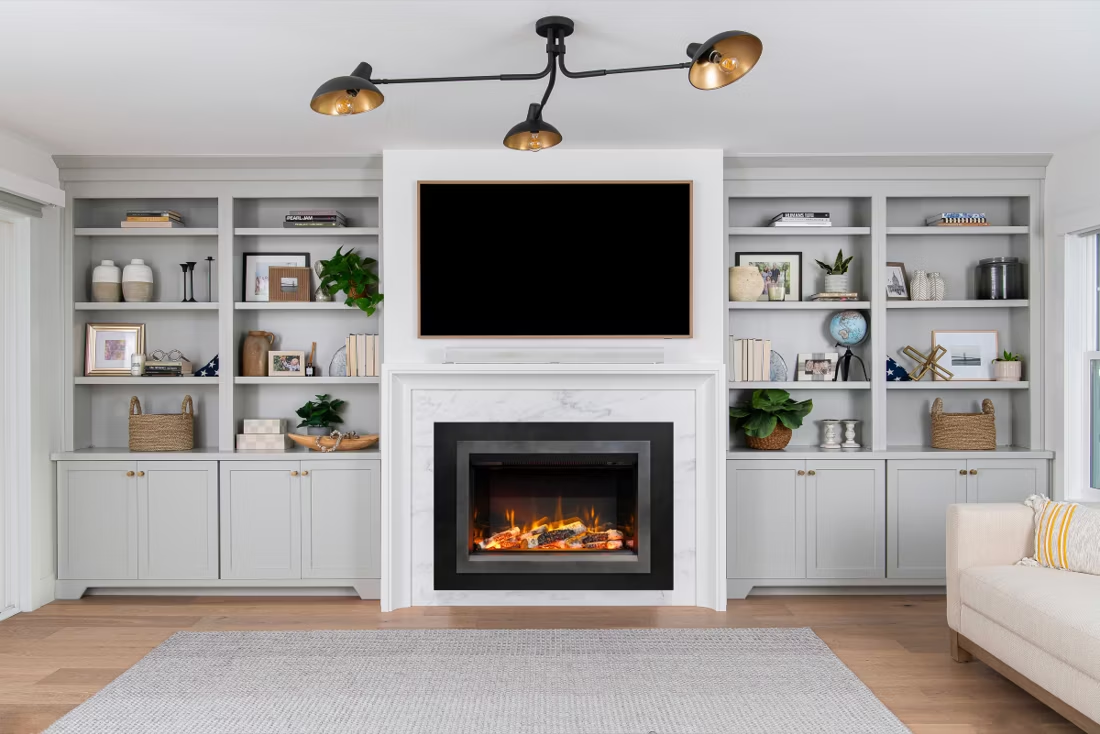
Yes—with an asterisk. Fireplaces are hot and TVs don't like heat. Either put a mantel between them to deflect rising warmth, or choose a fireplace with heat-management technology that creates a cool zone on the wall above—the wall stays around 125 degrees, barely warm, while the room still gets full heat. If you like clean lines and don't want a mantel, heat management is the answer.
Does an electric fireplace need a vent or chimney?
No—that's its superpower. An electric fireplace needs a wall and an outlet, period. No vent pipe, no gas line, no clearances to design around, which is why it works in bedrooms, offices, apartments, and walls where venting a gas or wood unit would be impractical or impossible. Installation is typically the simplest and least expensive of any fireplace type.
Can I install a fireplace myself?
If you're putting a fire in your house on purpose, it's best to work with an expert. Unless you're genuinely experienced in framing, gas line, vent pipe, and the national code on clearances to combustibles, have a professional do it—and ideally the same company that sells you the fireplace, so warranty, service, and liability all live under one roof.
Can a fireplace actually lower my heating bill?
Yes—by creating a comfort zone. A furnace heats every square foot of the house just to warm the one room you're in; a gas fireplace on low burns roughly a sixth of the gas a typical furnace does. Set the furnace around 55–60 degrees as a baseline, then heat the rooms your family actually uses. Families who heat this way commonly save $20–$60 a month.
Nearby Dealers
Hearth shops serving LeChee and the surrounding area. Every listing shows whether it is a WhyFire partner, a dealer we have verified as authorized for the brands we recommend, or a local business carrying hearth products. No manufacturer pays for placement. How we verify dealers →
Page Fast Glass
Wizard's Hearth & Home
Flagstaff Hearth & Home
HomCo
Banker Insulation - Flagstaff
Electric Service in LeChee
An electric fireplace's heater draws about 1,500 watts—pennies per hour at local rates.
Navajo Tribal Utility Authority
Find your electric fireplace in LeChee.
Tell us a bit about your home and we'll match you with the right electric fireplace or insert, plus a free Project Guide & Parts List and a trusted local dealer to install it.
Find Your Fireplace →