
Real Flame for Kearny's Cool Desert Evenings.
Kearny winters rarely bite hard, but a gas fireplace still earns its keep on the chilly nights along the Gila River. Find the right unit and get matched with a trusted local dealer.
Every Project Starts From One of These Five Situations
Ambiance first, backup heat second.
Kearny sits at 1,905 feet along the Gila River in Pinal County, part of the copper mining corridor anchored by the nearby Ray Mine and smelter. Winters here are mild by any measure—average lows around 44°F and a light overall winter heating need, a fraction of what a place like Flagstaff or Bozeman, MT racks up. Most homes don't need a heat source to survive winter; they want one for the handful of genuinely cold nights and for the look and feel of real flame in the living room.
There's no piped natural gas utility serving Kearny—power comes from GRICUA and Pinal County Electrical Districts No. 2 and No. 3, but gas fireplace installs here run almost entirely on propane, supplied by a local tank and delivery service. That's a straightforward setup for most homes, and it means a gas fireplace or insert works the same way it would anywhere else: flip a switch, get instant heat, no ash or smoke. With Kearny listed in a regional non-attainment area and occasional winter inversions trapping smoke and dust from mining operations, a number of local homeowners prefer gas specifically because it doesn't add smoke to the air during those stagnant periods.
Three steps. No salesperson until you're ready.
Tell us about your project
Your zip code, your situation, and the fuel you're leaning toward—or let the answers point you to one.
See what's actually available
The brands dealers within 100 miles genuinely carry—real options, never a catalog mirage.
Get your dealer & Project Guide
A trusted local dealer, plus the free Project Guide & Parts List that names every component of the job.
Frequently Asked Questions
How much does a gas fireplace installation cost in Kearny?
Because Kearny runs on propane rather than piped natural gas, most installations include the cost of a propane tank setup in addition to the fireplace and venting itself. For a direct-vent gas insert or fireplace in a home with an existing propane tank, homeowners in this part of Pinal County typically see costs in the $3,500 to $7,000 range. Add a new propane tank installation and line run, and the total can climb toward $8,000 or more. A local dealer will walk your home and give you a firm number after seeing your existing fireplace, venting path, and propane setup.
Can I convert my existing wood fireplace to gas in Kearny?
Yes, and it's a common upgrade for homes originally built around a wood-burning mesquite or pinyon fire. A gas insert typically slides into the existing masonry opening, using a stainless liner run through your current chimney, and connects to a propane line rather than a buried natural gas main. The conversion keeps the look of your existing hearth while eliminating ash, smoke, and the need to source firewood—a real convenience given how mild Kearny winters usually run, when you want heat on demand rather than a fire you have to tend.
Does Kearny have natural gas, or is it all propane?
Kearny does not have a piped natural gas utility—the town's electric service comes from GRICUA and Pinal County Electrical Districts No. 2 and No. 3, but there's no gas main running to homes. Every gas fireplace, insert, or stove installed here runs on propane, typically supplied from a tank on the property by a regional propane delivery company. Your local hearth dealer will size the fireplace and the line for propane specifically—the appliance itself looks and operates the same as a natural gas model, just tuned with a different orifice and regulator.
Will my gas fireplace work if the power goes out?
Most modern gas fireplaces will, provided they use IPI (intermittent pilot ignition) with a battery backup—a set of AA batteries inside the unit keeps the igniter working when the grid drops, which matters in Kearny given that GRICUA and the Pinal County Electrical Districts serve a fairly spread-out rural service area where outages can run longer than they would in a metro area. Valor fireplaces take a different approach: their pilot generates its own electricity through a thermocouple, so there are no batteries to remember or replace. Ask your local dealer about the ignition system on any unit you're considering.
What's the difference between a gas fireplace, gas insert, and gas stove?
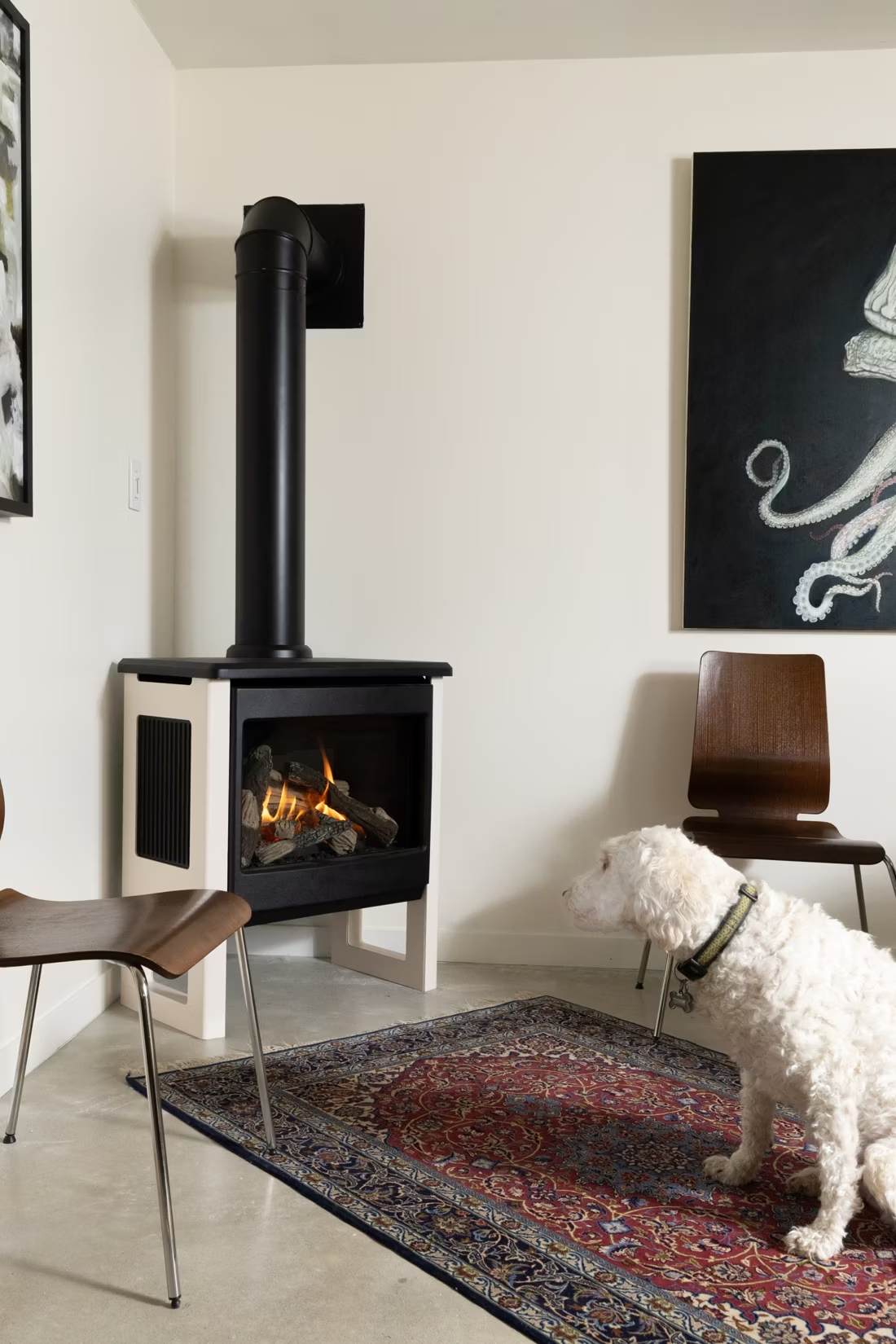
A gas fireplace is a fully built-in unit set into a framed wall or enclosure, typically chosen for new construction or a remodel. A gas insert drops into an existing masonry fireplace opening and uses the chimney as a venting chase, which fits a lot of Kearny's older housing stock built around a traditional wood-burning hearth. A gas stove is a freestanding cabinet-style unit that sits on the floor, similar in footprint to a wood stove but running on propane. For most homes here with an existing fireplace, an insert is the simplest path; homes without one often do better with a freestanding stove.
Do I need a permit to install a gas fireplace in Kearny?
Yes. Gas appliance installations, including the propane line work, require a building permit, and in a town Kearny's size that permitting typically runs through Pinal County's building safety office rather than a dedicated town building department. A licensed gas-fitter has to handle the propane line connection regardless of who pulls the permit. Most local hearth dealers coordinate the permit, the line work, and the final inspection as part of the installation, so you're not left managing separate trades yourself.
Should I get a vented or vent-free gas fireplace in Kearny?
Vented (direct-vent) gas fireplaces pull combustion air from outside and exhaust it back outside through sealed venting—they're the safer, code-compliant choice everywhere, including Arizona. Vent-free units burn directly into the room and are legal here, but they release some moisture and combustion byproducts into indoor air, and they require careful room-size matching. Given that Kearny already sits in a designated non-attainment area with occasional winter inversions trapping particulate from regional mining and smelter activity, most homeowners here lean toward direct-vent units—they don't add anything to indoor air quality, and they deliver more usable heat per unit of propane.
How often does a gas fireplace need to be serviced?
Plan on an annual inspection, ideally before the handful of cold snaps Kearny does get each winter. A technician checks the burner, pilot assembly, propane connections, and venting, and cleans the glass and interior. It's a lighter lift than sweeping a wood chimney, but skipping it is how pilot or ignition problems go unnoticed until the one night you actually need the fireplace to work. Given the propane setup here, it's also worth having the technician check the regulator and tank connection annually.
Gas vs. wood—which makes more sense for a Kearny home?
Wood has deep roots in this part of Pinal County—mesquite, pinyon, and juniper are all common locally, and cutting permits through Tonto or Coronado National Forest run $5 to $20 per cord during the May-to-October season. But with such a light overall winter heating need and average winter lows around 44°F, most Kearny homes don't need wood's high heat output to get through the season. Gas, run on propane since there's no piped natural gas here, gives you instant on-demand heat without smoke—a real advantage during winter inversion periods when the area's non-attainment status makes wood smoke less welcome. Wood still has a following for the ambiance and the mesquite-burning tradition; gas tends to win for daily convenience and cleaner air.
Why is my open fireplace making my house colder?
Open fireplaces suck—literally. As the fire burns, it consumes air your furnace already paid to heat and pulls it out through the chimney, so the house is actually colder after the fire goes out than before you lit it. An insert fixes this: it seals the chimney, puts fixed glass across the front, and turns that hole in your house into a real heat source.
Why is a fireplace insert so efficient?
An insert does two things: it seals the chimney completely, so you stop losing air you already paid to heat, and it radiates warmth into the room through the firebox and glass. Most add a heat-exchange fan that pulls cool room air underneath, wraps it around the hot firebox, and pushes it back out warm. Your home is more efficient before you've even lit the first fire.
Does a fireplace add value to my home?
On average, a fireplace adds back to the home about the same amount you spent installing it. Add the monthly savings from heating the rooms you actually use instead of the whole house—often hundreds of dollars a year—and the value case is strong before you even count what a fire does for how your family uses the room.
Can I install a fireplace myself?
If you're putting a fire in your house on purpose, it's best to work with an expert. Unless you're genuinely experienced in framing, gas line, vent pipe, and the national code on clearances to combustibles, have a professional do it—and ideally the same company that sells you the fireplace, so warranty, service, and liability all live under one roof.
Nearby Dealers
Hearth shops serving Kearny and the surrounding area. Every listing shows whether it is a WhyFire partner, a dealer we have verified as authorized for the brands we recommend, or a local business carrying hearth products. No manufacturer pays for placement. How we verify dealers →
Earth Energy's Hearth & Patio
Gilbert Fireplaces & BBQ’s
Brooksies Propane
Diversified Builder Supply
Valley Stone
All American Outdoor Living
Find your gas fireplace in Kearny.
Tell us about your home and your propane setup, and we'll match you with a trusted local dealer and send over a free Project Guide & Parts List—the exact parts, including the vent kit, for your Kearny gas fireplace project.
Find Your Fireplace →