
Warm up your Fort Valley home without a flue, a woodpile, or a permit.
Clean, zero-emission heat for a ponderosa pine community at 8,377 feet. Find the right electric unit and connect with a trusted local dealer.
Every Project Starts From One of These Five Situations
Zero-clearance warmth for a high-elevation forest community.
Fort Valley sits along Fort Valley Road just northwest of Flagstaff, tucked into the ponderosa pine of the Coconino National Forest at 8,377 feet—one of the highest-elevation residential areas in Arizona. Winter lows here average 17°F and the area logs roughly 6,526 heating degree days a year, a cold-climate load closer to Burlington, VT than to the desert image most people have of Arizona. Wood is abundant and permits are cheap through Coconino, Kaibab, and Prescott National Forest offices, but not every household wants the chimney, the creosote, or the smoke that comes with it.
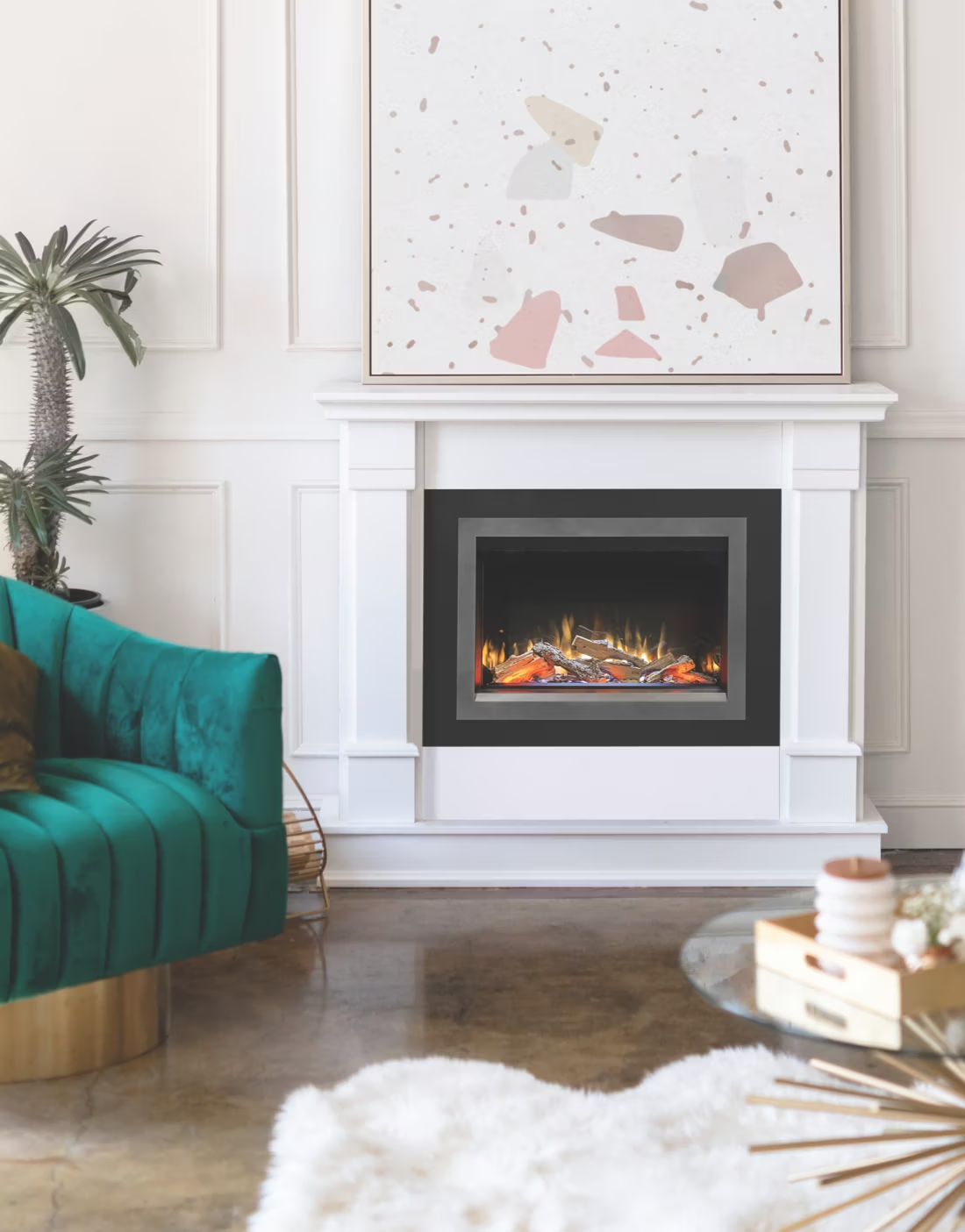
That's where electric fireplaces earn their place here. There's no flue to run through a steep pine-forest roofline, no gas line to trench through granite and cinder soil, and no combustion byproducts to worry about during the wildfire-smoke advisories that periodically blanket the Flagstaff area in late spring and early summer. Arizona Public Service (APS) serves the area, and at 16.45 cents per kWh, an electric fireplace or insert makes sense as supplemental zone heat—warming the room you're actually in—rather than as the sole answer to a 6,500-HDD winter.
Three steps. No salesperson until you're ready.
Tell us about your project
Your zip code, your situation, and the fuel you're leaning toward—or let the answers point you to one.
See what's actually available
The brands dealers within 100 miles genuinely carry—real options, never a catalog mirage.
Get your dealer & Project Guide
A trusted local dealer, plus the free Project Guide & Parts List that names every component of the job.
Frequently Asked Questions
How much does an electric fireplace installation cost in Fort Valley?
Plug-in electric inserts and freestanding units that use a standard 120V outlet typically run $200 to $1,500 installed, with most of that cost being the unit itself since no wiring changes are needed. Built-in wall units or larger inserts that require a dedicated 240V circuit run higher—usually $1,500 to $3,500—because a licensed electrician needs to run new wire, which costs more here than in town given the distances between properties along Fort Valley Road. A local dealer can tell you within minutes which category your project falls into once they know the unit and your panel setup.
Can an electric fireplace be my primary heat source in Fort Valley?
Not on its own. With 6,526 heating degree days and average winter lows around 17°F, Fort Valley's heating load is significant—most electric fireplaces are rated for supplemental or zone heating of a single room, not whole-home heat through a high-elevation winter. Most homes here pair an electric unit with a central furnace, propane system, or wood stove, and use the electric fireplace to take the edge off a specific room without running the whole house's heat overnight.
Do I need a permit to install an electric fireplace in Fort Valley?
A simple plug-in unit typically doesn't require any permit. If your installer needs to add a dedicated 240V circuit or modify your electrical panel for a built-in unit, that work requires an electrical permit through the Coconino County Building Safety Division, since Fort Valley is unincorporated county land. Any licensed electrician doing panel work will pull this automatically—it's worth confirming your installer is licensed before work starts, especially given how spread out properties are here.
Will my electric fireplace work during a power outage?
No—this is the honest trade-off. Electric fireplaces need grid power to run the heating element, fan, and controls, so they go dark the moment the power does. Fort Valley's APS lines run through forested, high-elevation terrain that sees winter storm outages more often than lower-elevation Flagstaff neighborhoods. If backup heat during outages matters to you, pair your electric fireplace with a wood stove or propane heater rather than relying on electric alone—several households here keep both for exactly this reason.
What does it cost to run an electric fireplace in Fort Valley?
At the APS residential rate of 16.45 cents per kWh, a typical 1,500-watt electric fireplace running on high costs about 25 cents per hour to operate. Left running for a full evening (say, 5 hours), that's roughly $1.25—far less than heating an entire room with central heat. Most units also let you run the flame effect with the heater off, which draws only a few watts, so you can enjoy the visual for pennies when you don't need the warmth.
Electric vs. wood—which makes more sense for a Fort Valley home?
Wood is the traditional choice here for good reason: ponderosa pine, pinyon, and juniper are all abundant locally, and Coconino, Kaibab, and Prescott National Forest cutting permits run just $5 to $20 per cord during the May-to-October season. Wood also keeps working when the power doesn't. But wood means chimney maintenance, ash cleanup, and smoke—a real consideration given the wildfire-smoke advisories that hit this part of Coconino County. Electric wins on convenience, cleanliness, and zero emissions, but won't function as backup heat in an outage or replace wood as a true off-grid option. Many Fort Valley households use both: wood or propane for serious cold snaps and outages, electric for everyday ambiance and quick supplemental warmth in a bedroom or living room.
Is electric a good alternative to propane in Fort Valley?
Fort Valley isn't served by natural gas utilities, so propane is the standard alternative fuel for most homes with gas-style fireplaces—which means a propane tank, regular deliveries, and tank maintenance. Electric fireplaces skip all of that: no tank, no delivery schedule, no combustion byproducts venting into the room. For homeowners who don't want to manage a propane account, or who are adding heat to a single room like a home office or guest space, electric is often the simpler answer. The trade-off is the same as always—electric depends on the grid, propane doesn't.
What type of electric fireplace works best for a Fort Valley home?
For supplemental heat in a cold-climate room, look for units rated at the full 1,500-watt heating capacity with a built-in thermostat, rather than decorative-only models. Wall-mounted and built-in units from brands like Dimplex and Napoleon offer real heat output alongside the flame display, and insert-style units can be set into an existing mantel surround if you have one. Given the elevation and the size of most Fort Valley living rooms, a local dealer can confirm whether a single unit will adequately cover the space or whether you'd be better served pairing it with your existing heat source.
Are electric fireplaces a good fit during wildfire smoke season?
Yes—this is one of the strongest local arguments for electric. Wildfire smoke is a recognized air quality concern for the Fort Valley and greater Flagstaff area, and during smoke-heavy stretches, running a wood stove or even an open gas flame adds to indoor air quality problems inside a home that's already sealed up against smoke outside. An electric fireplace produces zero combustion byproducts, so it's a heat and ambiance option you can run without worrying about additional particulates, even on days when outdoor burning isn't advisable.
Does an electric fireplace need a vent or chimney?
No—that's its superpower. An electric fireplace needs a wall and an outlet, period. No vent pipe, no gas line, no clearances to design around, which is why it works in bedrooms, offices, apartments, and walls where venting a gas or wood unit would be impractical or impossible. Installation is typically the simplest and least expensive of any fireplace type.
Can I put a TV above my fireplace?
Yes—with an asterisk. Fireplaces are hot and TVs don't like heat. Either put a mantel between them to deflect rising warmth, or choose a fireplace with heat-management technology that creates a cool zone on the wall above—the wall stays around 125 degrees, barely warm, while the room still gets full heat. If you like clean lines and don't want a mantel, heat management is the answer.
Can a fireplace actually lower my heating bill?
Yes—by creating a comfort zone. A furnace heats every square foot of the house just to warm the one room you're in; a gas fireplace on low burns roughly a sixth of the gas a typical furnace does. Set the furnace around 55–60 degrees as a baseline, then heat the rooms your family actually uses. Families who heat this way commonly save $20–$60 a month.
Can I install a fireplace myself?
If you're putting a fire in your house on purpose, it's best to work with an expert. Unless you're genuinely experienced in framing, gas line, vent pipe, and the national code on clearances to combustibles, have a professional do it—and ideally the same company that sells you the fireplace, so warranty, service, and liability all live under one roof.
Nearby Dealers
Hearth shops serving Fort Valley and the surrounding area. Every listing shows whether it is a WhyFire partner, a dealer we have verified as authorized for the brands we recommend, or a local business carrying hearth products. No manufacturer pays for placement. How we verify dealers →
Banker Insulation - Flagstaff
Flagstaff Hearth & Home
HomCo
Wizard's Hearth & Home
Page Fast Glass
Electric Service in Fort Valley
An electric fireplace's heater draws about 1,500 watts—pennies per hour at local rates.
Arizona Public Service Co
Find your electric fireplace in Fort Valley.
Tell us about your home and we'll put together a free Project Guide & Parts List—the right electric unit, the exact parts, and a trusted local dealer near Fort Valley to install it.
Find Your Fireplace →