
Electric heat that keeps up with Eagar's mountain winters.
At 7,132 feet in the White Mountains, Eagar sees average winter lows of 16°F. An electric fireplace won't replace a wood stove here, but it fills the gaps a primary heat source can't—instantly and without smoke.
Every Project Starts From One of These Five Situations
A practical supplement to Eagar's wood-heavy winters.
Eagar sits at 7,132 feet in Round Valley, sharing the basin with neighboring Springerville in the heart of Arizona's White Mountains. Winters here run cold by any standard—an average low of 16°F and a heating load putting Eagar closer to Bozeman, Montana than to the rest of Arizona in terms of how much heat homes need. Wood has always been the workhorse fuel in this part of Apache County: ponderosa pine, pinyon, and juniper are cut locally under Apache-Sitgreaves National Forest permits. Electric fireplaces aren't trying to replace that tradition—they've become the go-to option for the rooms wood heat doesn't reach well.
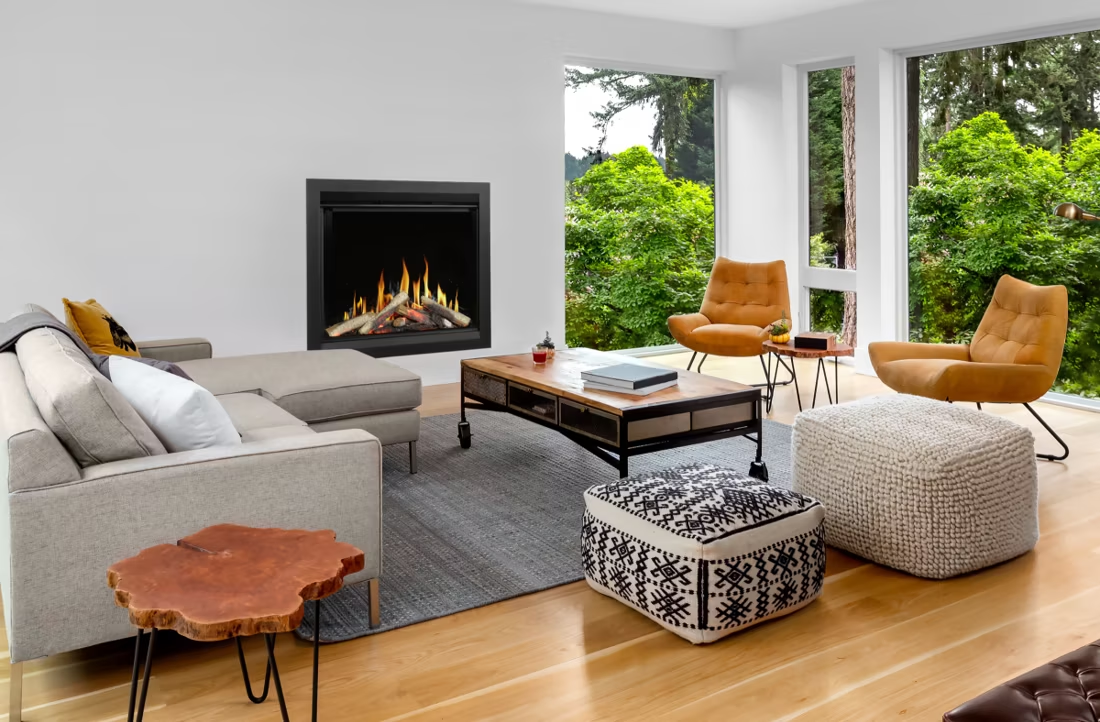
Eagar isn't on a natural gas utility line, which means propane and wood carry most of the primary heating load, and electric service runs through Navopache Electric Cooperative at roughly 13.4 cents per kWh. That combination makes electric fireplaces a smart secondary heat source: a bedroom addition, a converted garage, or a home office that's awkward to heat from the main wood stove or propane furnace. No chimney, no gas line, no venting—just an outlet or a dedicated circuit, and heat on demand. It's also a clean option during the dry-season wildfire smoke advisories that periodically affect this part of Apache County, when burning restrictions can limit wood stove use.
Three steps. No salesperson until you're ready.
Tell us about your project
Your zip code, your situation, and the fuel you're leaning toward—or let the answers point you to one.
See what's actually available
The brands dealers within 100 miles genuinely carry—real options, never a catalog mirage.
Get your dealer & Project Guide
A trusted local dealer, plus the free Project Guide & Parts List that names every component of the job.
Frequently Asked Questions
How much does an electric fireplace installation cost in Eagar?
Electric fireplace costs vary more by unit type than by location. A basic plug-in insert or freestanding stove runs $300 to $1,200 and needs nothing more than an outlet—no permit, no electrician. A built-in wall unit or mantel package that requires a dedicated circuit typically runs $1,500 to $4,000 installed, including any electrical work. Because Eagar sits at 7,132 feet with average winter lows of 16°F, most homeowners here treat electric as a supplemental zone-heat source for a bedroom, sunroom, or addition rather than a whole-house solution—which keeps most projects on the lower end of that range.
What size electric fireplace do I need for my Eagar home?
Most electric fireplaces top out around 5,000 to 6,000 BTUs, or roughly 1,500 watts, of supplemental heat—enough for a single room of 400 to 600 square feet with typical insulation. Eagar's heavy heating load and 16°F average winter low mean electric alone won't carry a whole home through a White Mountain winter—it's best paired with a wood stove, propane furnace, or forced-air system as the primary heat source. For a single bonus room, home office, or a bedroom in an older Round Valley home, a 1,500-watt unit is usually enough.
Electric vs. wood—which makes more sense in Eagar?
Wood has deep roots here—ponderosa pine, pinyon, and juniper are all cut locally under Apache-Sitgreaves National Forest permits, typically $5 to $20 per cord during the May-to-October cutting season, and a wood stove remains the more common primary heat source for Round Valley's cold winters. Electric fireplaces don't replace that, but they fill a real gap: instant heat with no wood-hauling, no ash, and no reliance on burning during summer wildfire smoke advisories when open burning can be restricted. Many Eagar homes run wood as primary heat and add an electric unit in a room that's hard to heat from the main stove, like a converted garage or a bedroom over an unheated crawlspace.
Can an electric fireplace replace propane in Eagar?
Eagar isn't served by a natural gas utility, so most gas-fired hearth appliances here run on propane, delivered and stored in a tank. Electric fireplaces skip that entirely—no tank, no delivery contract, no propane price swings. The tradeoff is heat output: even the strongest electric units cap out around 5,000 BTUs, while a propane insert can put out 20,000 to 30,000 BTUs. For a small, well-insulated room, electric can genuinely stand in for propane. For heating an entire wing of the house, propane or wood will still do more work.
Do I need a permit for an electric fireplace in Eagar?
A plug-in electric fireplace or stove that runs off a standard outlet doesn't require a permit—it's treated like any other appliance. A built-in electric fireplace wired to a dedicated circuit is electrical work, which typically does require a permit through Apache County's building department, and it may need to be coordinated with Navopache Electric Cooperative if it affects your service panel load. Most local dealers or electricians handle that paperwork as part of the installation.
What does an electric fireplace cost to run in Eagar?
At Navopache Electric Cooperative's residential rate of roughly 13.4 cents per kWh, a typical 1,500-watt electric fireplace running on high heat costs about 20 cents an hour, or roughly $1.60 for an 8-hour evening of use. That's inexpensive compared to running a whole-house furnace, but it's supplemental heat, not primary heat—designed to warm the room you're in, not carry a Round Valley home through an entire winter.
Does an electric fireplace need venting or a chimney?
No. Electric fireplaces produce heat with a resistance coil or infrared element and simulate flame with LED or mirror-based light effects—there's no combustion, so there's no chimney, flue, or venting to install or maintain. That's a meaningful difference from the wood stoves and propane units common in Eagar, which need an annual chimney sweep or gas-appliance inspection. Electric units just need an occasional filter check on models with a blower and a dusting of the glass.
Is electric heat a good option during wildfire smoke season?
Yes, and it's one of the more practical reasons Eagar homeowners add one. Apache County periodically sees wildfire smoke advisories during dry summer and fall stretches, and burning restrictions sometimes apply to wood stoves during those periods. An electric fireplace keeps working with zero smoke or particulate output, making it a useful backup for a cool evening when burning wood isn't advisable.
What's a good electric fireplace brand for a mountain climate like Eagar's?
Look for units with a real heating element rated at the full 1,500 watts—some budget models overstate their output. Brands like Dimplex, Napoleon, and Touchstone are commonly stocked by hearth dealers in this part of Arizona and make solid supplemental units for a Round Valley bedroom or den. If you want something that reads more like a real hearth, a linear built-in model with a flush-mount frame handles the room's focal point better than a small freestanding stove-style unit. A local dealer can match the unit to your specific room and circuit.
Can I put a TV above my fireplace?
Yes—with an asterisk. Fireplaces are hot and TVs don't like heat. Either put a mantel between them to deflect rising warmth, or choose a fireplace with heat-management technology that creates a cool zone on the wall above—the wall stays around 125 degrees, barely warm, while the room still gets full heat. If you like clean lines and don't want a mantel, heat management is the answer.
Do electric fireplaces actually produce heat?
Yes—most put out around 4,800–5,000 BTUs from a standard outlet, which comfortably warms a bedroom, office, or den as a comfort-zone heater. What they won't do is carry a whole house the way wood, gas, or pellet can. Think of electric as ambiance-first with honest supplemental heat: flames on with no heat in July, flames plus warmth in January.
Can a fireplace actually lower my heating bill?
Yes—by creating a comfort zone. A furnace heats every square foot of the house just to warm the one room you're in; a gas fireplace on low burns roughly a sixth of the gas a typical furnace does. Set the furnace around 55–60 degrees as a baseline, then heat the rooms your family actually uses. Families who heat this way commonly save $20–$60 a month.
How much should I budget for a fireplace?
For an average home—covering the fireplace, the vent pipe, and basic installation—a budget between $3,900 and $5,500 gives you a lot of options across wood, gas, and pellet. By the time you add finish work, gas line, and electrical, the average complete installation lands between $5,000 and $12,000 all-in. In a remodel or new build, a good rule is to put about 2.5% of the total project cost toward the fireplace.
Nearby Dealers
Hearth shops serving Eagar and the surrounding area. Every listing shows whether it is a WhyFire partner, a dealer we have verified as authorized for the brands we recommend, or a local business carrying hearth products. No manufacturer pays for placement. How we verify dealers →
Woodland Building Center
Mountain Leisure
Banker Insulation
Wizards -Show Low (White Mountain Fireplace & Stove)
Wizard's Hearth & Home
U.s. Insulation & Stove
Electric Service in Eagar
An electric fireplace's heater draws about 1,500 watts—pennies per hour at local rates.
Navopache Electric Coop, Inc
Find your electric fireplace in Eagar.
Tell us a bit about your home and we'll send you a free Project Guide & Parts List—the right electric fireplace or insert for your space, matched with a trusted local Eagar-area dealer.
Find Your Fireplace →