
Warm up the desert evenings without the wood mess.
Instant, clean heat for the cool nights and rare cold snaps of Pinal County. Find the right gas fireplace or insert, and connect with a trusted local dealer.
Every Project Starts From One of These Five Situations
Comfort heat for a climate that rarely needs it.
Arizona City sits at about 1,500 feet in the Sonoran Desert, in a climate zone (2B) built for cooling, not heating. Winter lows average 34°F and the area has a very light, short heating season—compare that to a place like Bismarck, ND, which has a long, brutal one that runs most of the year. That means a gas fireplace here isn't carrying the same load it would in a cold-winter city. It's there for the December and January evenings that dip into the 30s, the occasional hard freeze, and the ambiance factor that a lot of desert homeowners simply enjoy having in the living room.
There's no piped natural gas utility serving the 85193/85123 zip codes—power in the area comes from Arizona Public Service, Gila River Indian Utility Authority, or Electrical District No. 2, depending on where you're located, but gas appliances here run on propane supplied by tank. A local dealer will set your fireplace or insert up for propane specifically, sizing the orifice and regulator accordingly, and can help coordinate tank placement if you don't already have one on the property.
Three steps. No salesperson until you're ready.
Tell us about your project
Your zip code, your situation, and the fuel you're leaning toward—or let the answers point you to one.
See what's actually available
The brands dealers within 100 miles genuinely carry—real options, never a catalog mirage.
Get your dealer & Project Guide
A trusted local dealer, plus the free Project Guide & Parts List that names every component of the job.
Frequently Asked Questions
How much does a gas fireplace installation cost in Arizona City?
Because most homes here run on propane rather than piped natural gas, your total includes the appliance, venting, and often a tank setup. A direct-vent propane fireplace or insert typically runs $3,500 to $7,500 installed, with a propane tank installation adding another $600 to $1,500 depending on tank size and whether it's set above ground or buried. Homes with an existing leased tank from a regional propane supplier land on the lower end of that range.
Do I need natural gas, or does propane work fine?
Propane is the standard choice in Arizona City—there's no natural gas utility listed for either the 85193 or 85123 zip code, so nearly every gas fireplace installed locally runs on propane from a tank rather than a municipal line. Electric service comes from Arizona Public Service, Gila River Indian Utility Authority, or Electrical District No. 2 depending on your address, but none of those provide gas. Your installer will configure the fireplace's orifices and regulator for propane, and can connect you with a regional propane supplier if you need a new tank.
Does a gas fireplace even make sense in a climate this mild?
Arizona City has a very light, short heating season with average winter lows around 34°F—a small fraction of what a cold-climate city like Fargo, ND deals with. Most homeowners here aren't installing a gas fireplace to carry the whole heating load; they're using it for the genuinely chilly evenings in December and January, the occasional overnight freeze, and the ambiance and instant-on convenience it adds to a living room. It's a real, useful heat source for the handful of weeks a year it gets cold—just not a primary furnace replacement.
What's the difference between vented and vent-free gas fireplaces?
Vented (direct-vent) units draw combustion air from outside and exhaust gases back outside through sealed venting—they're the cleanest, safest option and work well whether you're on propane or, eventually, natural gas. Vent-free units burn fuel directly into the room without external venting; they're legal in Arizona but come with room-sizing rules and oxygen depletion sensors, and given how tightly built many newer Arizona City homes are for cooling efficiency, that indoor air consideration matters more than it might in an older, leakier house. For most homeowners here, a direct-vent propane fireplace or insert is the more straightforward, code-friendly choice.
Wood vs. gas—which makes more sense for my home?
Mesquite, pinyon, and juniper are the common local firewood species, and cutting permits are available through Tonto National Forest and Coronado National Forest for $5 to $20 per cord during the May-to-October season. But Pinal County sits in a designated non-attainment area with real dust and particulate concerns, and wood smoke adds to that load. A gas fireplace running on propane produces no smoke or ash, works instantly, and doesn't require hauling or storing cordwood in desert heat. For a secondary heat source used mainly on cool evenings, gas is usually the lower-hassle choice locally.
Do I need a permit to install a gas fireplace in Arizona City?
Most gas fireplace and insert installations require a building permit through Pinal County's Planning & Development Services, since Arizona City is unincorporated. If you're adding a new propane tank, there are also fire-code setback requirements from structures and property lines that your propane supplier and installer will factor into placement. A reputable local dealer handles the permit application and inspection scheduling as part of the installation rather than leaving it to you.
Will my gas fireplace work during a power outage?
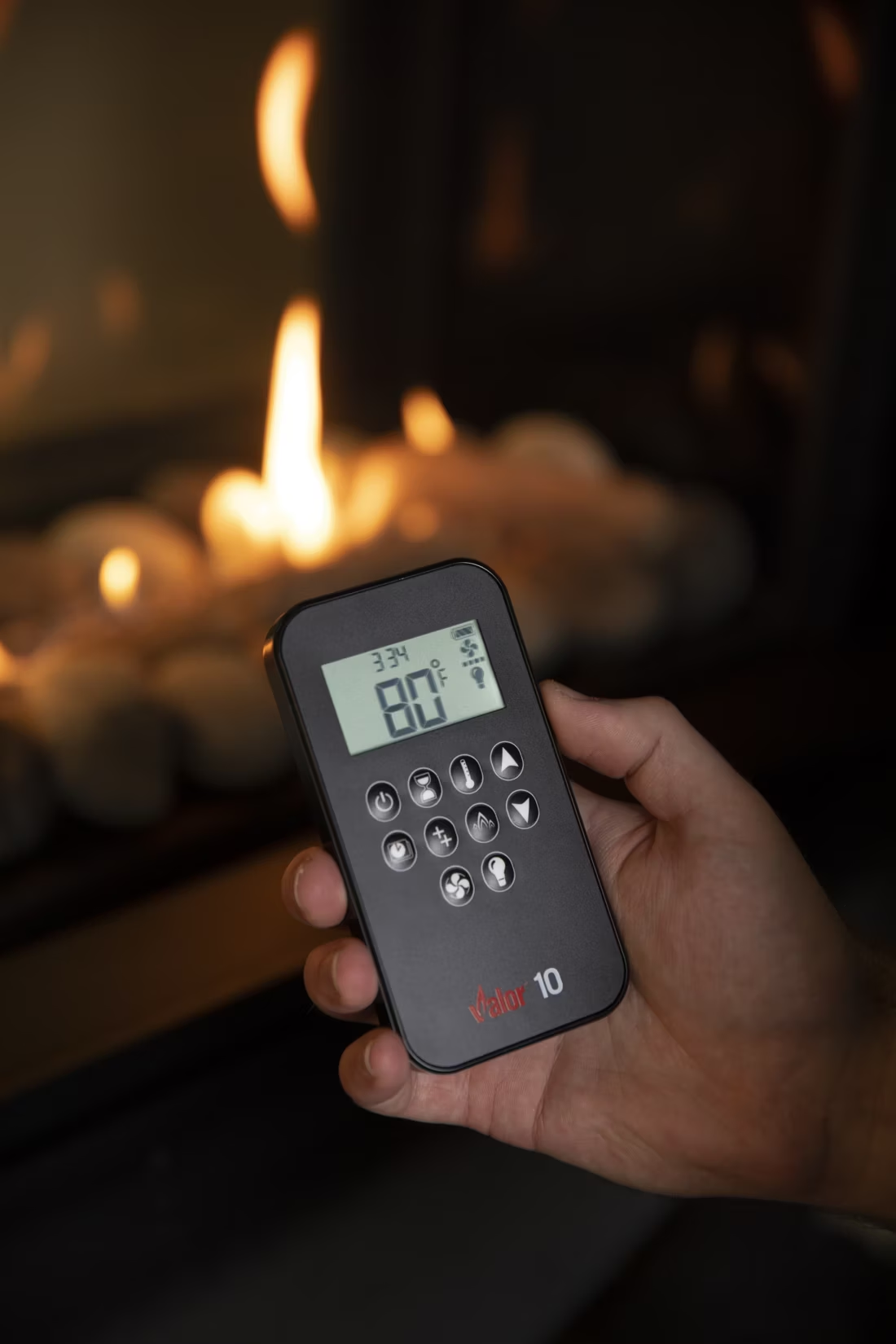
Yes, in most cases. Units with intermittent pilot ignition (IPI) run on a battery backup that kicks in automatically if power drops, which matters in Pinal County given how often summer monsoon storms knock out electric service for stretches at a time. Valor fireplaces take it a step further—their pilot generates its own electricity through the thermocouple, so there's no battery to remember or replace. Ask your local dealer which ignition system is built into any unit you're considering.
How often should a gas fireplace be serviced in Arizona City?
An annual inspection is recommended for any gas appliance, and it's worth scheduling before the cooler months when you'll actually be using the fireplace. Fine desert dust tends to work its way into burner assemblies and venting more than it would in a wetter climate, so technicians here often spend extra time cleaning components that would stay cleaner elsewhere. Expect to pay $150 to $250 for a standard annual service call from a local gas appliance technician.
What's the difference between a gas fireplace, insert, and stove?
A gas fireplace is a built-in unit installed during new construction or a remodel. A gas insert drops into an existing masonry or wood-burning fireplace, using the existing opening while sealing it for efficiency—a common upgrade for older Arizona City homes with a fireplace that rarely gets used. A gas stove is a freestanding cabinet-style unit that sits on the floor, less common locally but available through most dealers on propane. If you already have a fireplace opening, an insert is usually the simplest and most cost-effective path.
Why is my open fireplace making my house colder?
Open fireplaces suck—literally. As the fire burns, it consumes air your furnace already paid to heat and pulls it out through the chimney, so the house is actually colder after the fire goes out than before you lit it. An insert fixes this: it seals the chimney, puts fixed glass across the front, and turns that hole in your house into a real heat source.
Can I put a TV above my fireplace?
Yes—with an asterisk. Fireplaces are hot and TVs don't like heat. Either put a mantel between them to deflect rising warmth, or choose a fireplace with heat-management technology that creates a cool zone on the wall above—the wall stays around 125 degrees, barely warm, while the room still gets full heat. If you like clean lines and don't want a mantel, heat management is the answer.
Can I install a fireplace myself?
If you're putting a fire in your house on purpose, it's best to work with an expert. Unless you're genuinely experienced in framing, gas line, vent pipe, and the national code on clearances to combustibles, have a professional do it—and ideally the same company that sells you the fireplace, so warranty, service, and liability all live under one roof.
Can a fireplace actually lower my heating bill?
Yes—by creating a comfort zone. A furnace heats every square foot of the house just to warm the one room you're in; a gas fireplace on low burns roughly a sixth of the gas a typical furnace does. Set the furnace around 55–60 degrees as a baseline, then heat the rooms your family actually uses. Families who heat this way commonly save $20–$60 a month.
Nearby Dealers
Hearth shops serving Arizona City and the surrounding area. Every listing shows whether it is a WhyFire partner, a dealer we have verified as authorized for the brands we recommend, or a local business carrying hearth products. No manufacturer pays for placement. How we verify dealers →
Brooksies Propane
All American Outdoor Living
Gilbert Fireplaces & BBQ’s
Diversified Builder Supply
Fire By James
Bbq Island
Valley Stone
Earth Energy's Hearth & Patio
Find your gas fireplace in Arizona City.
Tell us about your home and we'll match you with a trusted local dealer and send over a free Project Guide & Parts List—the exact equipment, venting, and propane setup your Arizona City gas fireplace project needs.
Find Your Fireplace →