
Steady heat through Central Alberta's chinook-belt winters.
Viking sits at 688 metres with winter lows averaging -19.7°C, the kind of cold that Edmonton drivers know well an hour up the highway. We'll help you find a trusted local dealer who knows pellet supply, venting, and what actually fits your home.
Every Project Starts From One of These Five Situations
A fuel that skips the woodpile logistics.
Viking's winters run long and genuinely cold, with lows averaging -19.7°C and stretches that rival Edmonton's coldest weeks. What makes local wood-burning trickier than the cold alone is the Chinook-belt freeze-thaw pattern that rolls through Central Alberta most winters—a warm spell can thaw and re-wet a woodpile of aspen poplar, paper birch, lodgepole pine, or white spruce right before the next cold snap, and rural supply here is tight enough that a poorly timed buy can leave you short. Bagged pellets sidestep that problem entirely: they're kiln-dried, moisture-controlled, and stored indoors, so freeze-thaw swings that complicate a woodshed don't touch your fuel.
Two regional brands, La Crete Sawmills and Vanderwell, supply most of the pellets sold in this part of Alberta, typically running $400 to $575 a ton depending on the season and how early you order. ATCO Gas and Apex Utilities both serve Viking with natural gas, and a gas fireplace is a reasonable alternative if you want zero fuel handling at all, but pellet appliances remain popular with households that want a hopper-fed, set-it-and-forget-it burn without hauling cordwood off Crown land every fall. Installed pellet systems here typically run $6,000 to $10,000, and your municipal building department will want the job done to CSA B365 code regardless of which fuel you choose.
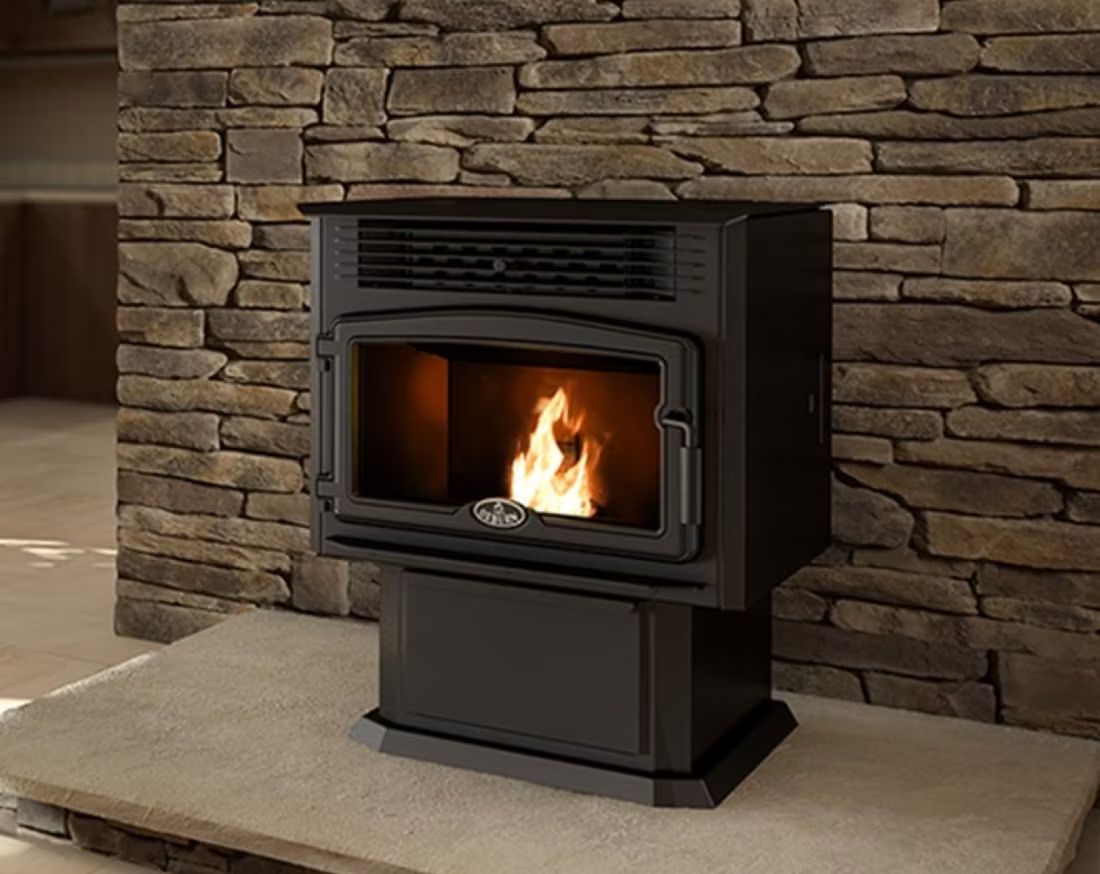
Three steps. No salesperson until you're ready.
Tell us about your project
Your postal code, your situation, and the fuel you're leaning toward—or let the answers point you to one.
See what's actually available
The brands dealers within 100 miles genuinely carry—real options, never a catalog mirage.
Get your dealer & Project Guide
A trusted local dealer, plus the free Project Guide & Parts List that names every component of the job.
Frequently Asked Questions
How much does a pellet stove installation cost in Viking?
Most pellet installs in Viking land between $6,000 and $10,000 CAD, which is a narrower spread than wood ($6,000-$12,000) or gas ($6,000-$15,000) because pellet venting is simpler—a small-diameter exhaust pipe through a wall rather than a full masonry chimney. Costs climb toward the top of that range if you're adding a hearth pad and running new venting through an exterior wall in an older Viking home, and drop toward the bottom for a straightforward insert replacing an existing appliance. Your municipal building department requires a permit either way, and the installation itself needs to meet CSA B365 code.
Where do people in Viking actually buy pellets?
La Crete Sawmills and Vanderwell are the two regional brands most commonly stocked by dealers serving this part of Central Alberta, typically priced $400 to $575 a ton. Given how tight rural supply can get by mid-winter, most local burners order a season's worth—usually 2 to 4 tons for a main-floor stove running most days—in late summer or early fall rather than waiting for a cold snap to shop. A local dealer can tell you which brand is currently in stock and whether bulk delivery or bag pickup makes more sense for your storage space.
Will a pellet stove still work if the power goes out?
Not on its own—the auger, igniter, and combustion blower all run on household electricity from ENMAX, EPCOR, or ATCO Electric depending on your address, and a prairie ice storm or high-wind event can knock that out for hours. A battery backup or small generator will keep most pellet stoves running through a typical outage. Some Viking households split the difference by keeping a wood stove or fireplace as a no-power backup—burning aspen poplar or lodgepole pine cut under a free Alberta Forestry and Parks permit—while running pellet day to day for the convenience.
Do I need a permit to install a pellet stove in Viking?
Yes. New installations go through the municipal building department, and the work needs to meet CSA B365 installation code. It's also worth arranging a WETT inspection even though pellet appliances burn cleaner than cordwood—many insurers in Alberta treat any solid-fuel-burning appliance the same way for coverage purposes, and having that documentation on file avoids a claims headache later. Most dealers who install pellet systems in this area handle the paperwork and can point you to a certified WETT inspector.
Pellet vs. wood—which makes more sense for a Viking home?
Wood has the edge on raw fuel cost if you're willing to cut it yourself—Alberta Forestry and Parks issues free cutting permits valid 30 days, year-round, and aspen poplar, paper birch, lodgepole pine, and white spruce are all common on nearby Crown land. But the region's Chinook-belt freeze-thaw cycles make seasoning firewood properly a real planning exercise, and tight local supply means a late start can leave you scrambling in January. Pellet appliances trade that labour and uncertainty for a $400-$575-a-ton bagged fuel that's already dry and consistent, at the cost of needing electricity to run. Plenty of households here land on wood for backup and pellet for daily convenience.
What size pellet stove do I need for a typical Viking home?
Most Viking homes are older bungalows or modest single-storey builds, and a stove rated for 1,200 to 1,800 square feet comfortably heats the main living area through lows averaging -19.7°C. Hopper size matters as much as heat output here—a 40 to 60 pound hopper gets most homes through an overnight burn without a 3 a.m. refill, which is worth asking your dealer about specifically given how long and cold the season runs this far into Central Alberta.
Gas vs. pellet—how do they compare for a Viking house?
ATCO Gas and Apex Utilities both serve Viking, so a direct-vent gas fireplace is a real option, typically running $6,000 to $15,000 installed depending on venting and whether you're doing new construction or a retrofit. Gas fires instantly with a remote and needs almost no fuel handling, but it depends entirely on the gas line staying intact. Pellet systems cost less to install on average ($6,000-$10,000), give you a fuel you can store on-site, and burn with a visible flame closer to a traditional wood fire—a common reason homeowners here choose pellet even with gas available on their street.
How much maintenance does a pellet stove need through a Viking winter?
Plan on emptying the ash pan every few days during heavy use and a full burn-pot and venting cleaning every one to two months through a season this long and cold. An annual professional service—checking the auger motor, exhaust blower, and gaskets—is worth scheduling in late summer before dealers get booked up for fall installs. It's a lighter lift than sweeping a wood chimney, but skipping it on a stove running daily through a six-month heating season is how you end up with a jammed auger in February.
Are there efficiency incentives for switching to a pellet stove in Alberta?
There's no broad province-wide rebate specifically for residential pellet appliances at the moment, so most Viking homeowners are working off the installed cost alone rather than a rebate offset. Where pellet does pay off is operating cost predictability—$400 to $575 a ton is a known, storable expense compared to variable natural gas or electricity pricing from ATCO Gas, ENMAX, EPCOR, or ATCO Electric. A local dealer can walk you through current numbers and confirm whether any municipal or utility program applies to your specific install.
Why do fireplace quotes vary so much?
Because a fireplace is an iceberg—there's more behind the wall than in front of it. A low quote often covers only the unit; the full scope includes vent pipe, gas line or electrical, framing, and the tile or stone that has to come off and go back on. Make every bidder price the whole job. If a dealer can't speak to the full scope with confidence, that's your signal to keep looking.
Is it worth replacing an old fireplace that still sort of works?
Ask three questions: Is it ugly? Is it drafty? Does it actually work? Most old fireplaces fail at least two. Beyond looks, an old unit leaks air around the damper year-round and—if it's gas with a standing pilot—quietly burns a couple hundred dollars a year. A modern replacement seals the wall, heats the room, and changes how the whole space gets used.
Do I need a permit to install a fireplace?
In most jurisdictions, yes—fireplace and stove installations involve venting, clearances, and often gas or electrical work that gets permitted and inspected. That's a feature, not a hassle: the inspection protects your family and your homeowner's insurance. A professional installer pulls the permit, installs to code, and stands behind the inspection. If someone suggests skipping it, keep looking.
What do I measure to size a fireplace insert?
Four numbers tell you what fits: the front width, the front height, the back width, and the overall depth of your existing fireplace opening. Grab a tape measure, jot those down, and snap a photo of the wall—those two things do more to move your project forward than anything else you can do today.
Nearby Dealers
Hearth shops serving Viking and the surrounding area. Every listing shows whether it is a WhyFire partner, a dealer we have verified as authorized for the brands we recommend, or a local business carrying hearth products. No manufacturer pays for placement. How we verify dealers →
Battle River Landscape
Spark Heating & Air Conditioning
Gemco Fireplaces & Wholesale Heating Products
Bob Jack’s Sheet Metal
Dal-Zan Plumbing Ltd
National Energy Equipment Inc.
Hayduk Lumbert Hardware Ltd
Pellet Brands Stocked Around Viking
Typical price runs $400-$575 per ton—buy early-season for the best rates. Manufacturers will point you to the nearest stocking dealer.
La Crete Sawmills
Vanderwell
Get your free Project Guide & Parts List for a Viking pellet project.
Tell us about your home and how you're currently heating it, and we'll help you find a trusted local dealer and send a free Project Guide & Parts List—sized for Central Alberta's long winters, with the vent kit and parts specified.
Find Your Fireplace →