
Instant heat for winters that settle in and stay.
St. Paul sits at 632 metres in climate zone 7B, where winter lows average -19.5°C and cold snaps run deep and long, closer to a Saskatoon winter than a Calgary one. We'll help you find a trusted local dealer who knows the gas line work, the venting, and what's actually installable on your street.
Every Project Starts From One of These Five Situations
Heat that starts the instant you need it.
St. Paul's winters are the long, dry kind that define the Edmonton Region: an average low of -19.5°C, a heating season that stretches from October into April, and stretches where the mercury doesn't climb above freezing for weeks. Aspen poplar, paper birch, lodgepole pine, and white spruce are the woods most local households still split for a backup stove, and cutting permits from Government of Alberta, Forestry and Parks are free and valid year-round for 30 days. But for the main living space, a lot of St. Paul homeowners have moved to gas simply because it doesn't require hauling, stacking, or seasoning anything.
Natural gas service reaches St. Paul through ATCO Gas and Apex Utilities, which makes a direct-vent gas fireplace or insert a straightforward option for most addresses in town. It fires on demand, doesn't add smoke or particulate during the freeze-thaw stretches that make seasoned wood harder to plan around, and with the right ignition system keeps working through the winter power interruptions that occasionally hit rural feeder lines around town. Wood still earns its place here as an outage-proof backup, but for everyday heat, gas is the low-fuss choice most of our St. Paul matches end up making.
Three steps. No salesperson until you're ready.
Tell us about your project
Your postal code, your situation, and the fuel you're leaning toward—or let the answers point you to one.
See what's actually available
The brands dealers within 100 miles genuinely carry—real options, never a catalog mirage.
Get your dealer & Project Guide
A trusted local dealer, plus the free Project Guide & Parts List that names every component of the job.
Frequently Asked Questions
How much does a gas fireplace installation cost in St. Paul?
Typical installs in St. Paul run $6,000 to $15,000 CAD. A direct-vent insert going into an existing masonry firebox on a home already tied into ATCO Gas or Apex Utilities lands toward the low end. A new built-in unit for a garage conversion, addition, or a home needing a fresh gas line run pushes toward the top, especially on rural properties just outside town where the line has to travel farther from the meter.
Can I convert my existing wood fireplace to gas?
Yes, and it's a common request in St. Paul's older housing stock, where original masonry fireplaces were built to burn aspen poplar or lodgepole pine and the owner is tired of splitting and stacking through a six-month heating season. A gas insert typically slides into the existing firebox with a liner run through the current chimney, generally in the $6,000-$9,500 range depending on the gas line distance from your ATCO or Apex meter. It's a clean way to keep the look of a wood fireplace without the wood.
Does ATCO Gas or Apex Utilities serve my address in St. Paul?
Both utilities operate in the area, and coverage depends on exactly where your property sits relative to the distribution mains. In-town addresses are most often on ATCO Gas, while Apex Utilities serves some surrounding and rural connections around St. Paul. A local dealer can confirm which utility feeds your street before quoting the project, since it affects where the gas fitter ties in and what the line-extension cost looks like if you're on the edge of the service area.
Will a gas fireplace still work if the power goes out?
Most will, which matters given how exposed rural feeder lines around St. Paul are to winter storms and ice loading. Units with intermittent pilot ignition (IPI) run on AA battery backup that kicks in automatically when the power drops. Some models, including several from Valor, skip the battery altogether because their pilot's thermocouple generates its own current. Ask your dealer which ignition system is on any model you're considering—for a town with -19.5°C average winter lows, it's worth building into the decision rather than an afterthought.
What's the difference between a gas fireplace, insert, and stove?
A gas fireplace is a built-in unit framed into a wall, the common choice in new construction or a full remodel. A gas insert fits inside an existing masonry firebox, which is the typical retrofit in St. Paul's older homes that originally burned birch or spruce and still have a working chimney chase. A gas stove is freestanding on a hearth pad, similar footprint to a wood stove but running off the gas line instead of cordwood. For most existing St. Paul homes, an insert is the least disruptive way to upgrade.
Do I need a permit to install a gas fireplace in St. Paul?
Yes. You'll need a building permit through the municipal building department, plus the gas line itself has to be run by a licensed gas fitter under Alberta's Safety Codes Act requirements. Most dealers who work in St. Paul handle both the permit paperwork and the final inspection as part of the job, which keeps you from having to coordinate the building department and the gas trade separately.
Vented vs. vent-free gas fireplaces—what should I know for St. Paul?
Direct-vent units pull combustion air from outside and exhaust it back outside through sealed venting, and they're the standard, code-compliant choice for daily use through a long Alberta winter. Vent-free units burn into the room and come with strict room-sizing rules. Given how many hours a fireplace actually runs here between October and April, most local dealers steer St. Paul homeowners toward direct-vent so indoor air quality isn't a tradeoff during the coldest, most closed-up stretch of the year.
How often does a gas fireplace need to be serviced in St. Paul?
Plan on an annual check, ideally in September before the first real cold snap rather than mid-winter when technicians are booked solid. A technician checks the burner, pilot assembly, gas connections, and venting, and cleans the glass. On a unit running daily through St. Paul's long heating season, skipping that visit is how a pilot or ignition problem shows up on the coldest night rather than a convenient one.
Gas vs. wood vs. pellet—which makes the most sense for a St. Paul home?
Wood, cut from local aspen poplar, birch, lodgepole pine, or spruce under a free cutting permit from Government of Alberta, Forestry and Parks, still wins on fuel cost and keeps working without electricity during an outage. Pellet stoves using regional brands like La Crete Sawmills or Vanderwell, running roughly $400-$575 a ton, burn cleaner and need less daily tending, but rely on power for the auger and blower. Gas wins on convenience, since ATCO Gas or Apex Utilities service means no fuel storage at all. Many St. Paul households run gas in the main living space and keep a wood stove elsewhere in the house as backup for winter outages.
Can a gas fireplace run on a thermostat?
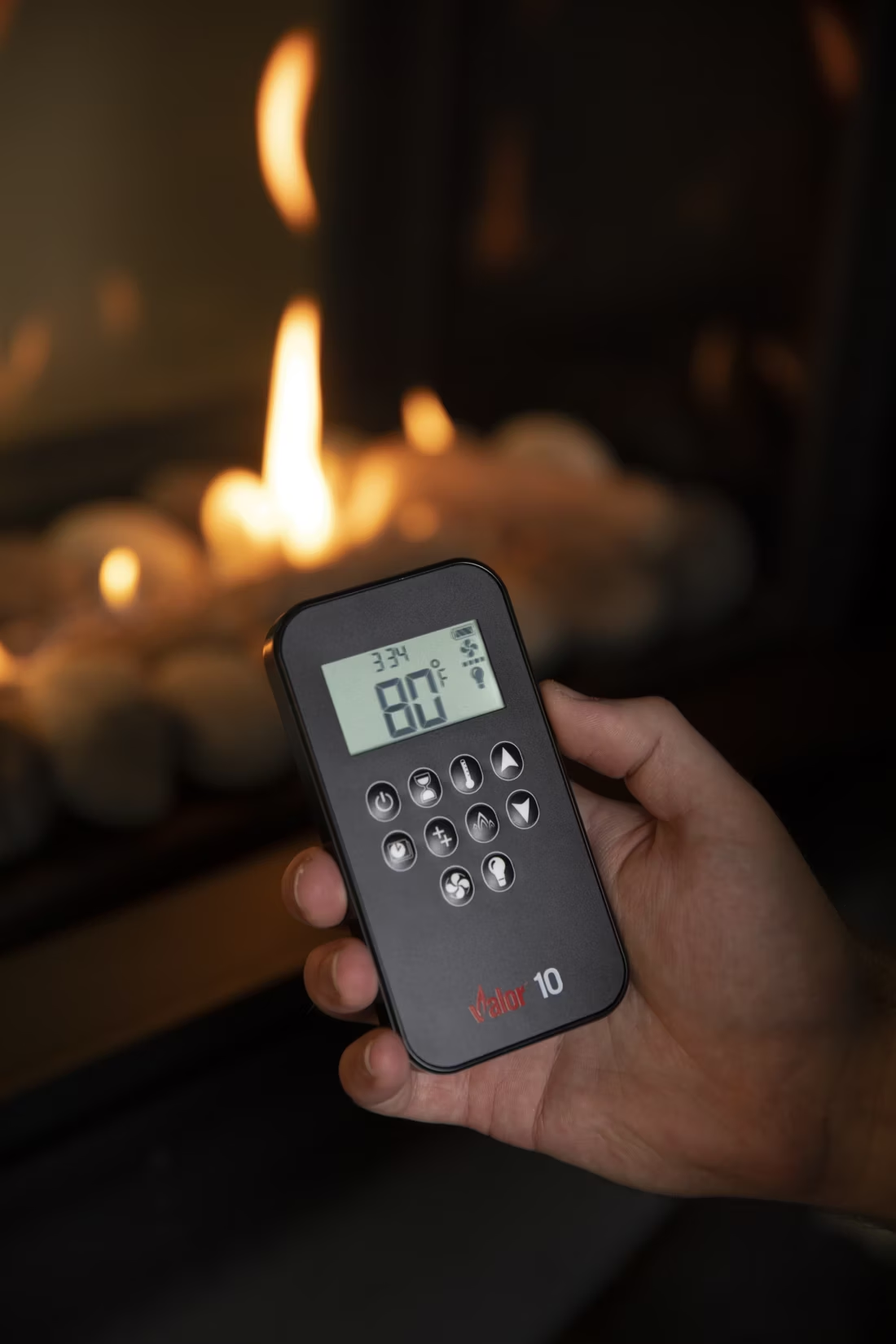
Most modern gas fireplaces can—turn it on and off from the couch with a remote, or set a room temperature and let the fireplace hold the comfort zone for you. If low maintenance matters to your family, this is the feature set that makes gas the convenience pick over wood and pellet.
Why do fireplace quotes vary so much?
Because a fireplace is an iceberg—there's more behind the wall than in front of it. A low quote often covers only the unit; the full scope includes vent pipe, gas line or electrical, framing, and the tile or stone that has to come off and go back on. Make every bidder price the whole job. If a dealer can't speak to the full scope with confidence, that's your signal to keep looking.
Do I need a permit to install a fireplace?
In most jurisdictions, yes—fireplace and stove installations involve venting, clearances, and often gas or electrical work that gets permitted and inspected. That's a feature, not a hassle: the inspection protects your family and your homeowner's insurance. A professional installer pulls the permit, installs to code, and stands behind the inspection. If someone suggests skipping it, keep looking.
What fireplace styles should I know before shopping?
Four cover most of the market: screen-front traditional (mesh front, open feel, fits craftsman homes), traditional door set (the classic look you grew up with), modern linear (wide, low, the statement piece for entertaining), and clean face contemporary (no trim—your tile or stone runs right to the fire's edge). Walk in knowing those four terms and you're ahead of most buyers.
Nearby Dealers
Hearth shops serving St. Paul and the surrounding area. Every listing shows whether it is a WhyFire partner, a dealer we have verified as authorized for the brands we recommend, or a local business carrying hearth products. No manufacturer pays for placement. How we verify dealers →
Bob Jack’s Sheet Metal
Spark Heating & Air Conditioning
Gemco Fireplaces & Wholesale Heating Products
National Energy Equipment Inc.
Midnight Heating
McLeod Home Building Centre
Carriere Enterprises
Hayduk Lumbert Hardware Ltd
Roy’s Plumbing And Heating Ltd
Onoway Tim-Br Mart
Country Homes Inspections
Natural Gas Service in St. Paul
Confirm service at your address before planning a gas fireplace—a quick call settles it.
Atco Gas
Apex Utilities
Get your free Project Guide & Parts List for a St. Paul gas fireplace.
Tell us about your home and whether you're on ATCO Gas or Apex Utilities, and we'll help you find a trusted local dealer and send a free Project Guide & Parts List with the exact vent kit and parts your project needs.
Find Your Fireplace →