
A simple plug-in upgrade for St. Paul's long, cold winters.
St. Paul sits at 632 metres in a zone 7B climate where winter lows average -19.5°C with routine deeper cold snaps. An electric fireplace or insert adds real zone heat and ambiance without a chimney, a gas line, or a cord of wood to manage—we'll help you find a trusted local dealer who can tell you what's actually sized for your room.
Every Project Starts From One of These Five Situations
An easy supplement to the furnace you already run.
Most homes in St. Paul and across the Edmonton Region heat primarily through a forced-air furnace fed by ATCO Gas or Apex Utilities, which makes sense given a climate zone 7B winter that averages -19.5°C and keeps a long heating season in play most years—closer to what Saskatoon or Prince George residents deal with than anything milder. An electric fireplace isn't trying to replace that furnace; it's built to zone-heat a bonus room, a finished basement, or a bedroom addition where running new gas line or a wood flue doesn't pencil out.
With ENMAX, EPCOR, and ATCO Electric all serving customers in the area at a residential rate near $0.13 per kWh, a modern electric insert or linear unit is inexpensive to run for supplemental heat, and install costs typically land between $500 and $1,600—a fraction of the $6,000-plus commonly spent on a wood or gas project. There's no cutting permit to track down from Alberta Forestry and Parks, no seasoned aspen poplar or birch to stack ahead of freeze-up, and no WETT inspection required for insurance, since there's no combustion involved. For a lot of St. Paul homeowners, that simplicity is the entire appeal.
Three steps. No salesperson until you're ready.
Tell us about your project
Your postal code, your situation, and the fuel you're leaning toward—or let the answers point you to one.
See what's actually available
The brands dealers within 100 miles genuinely carry—real options, never a catalog mirage.
Get your dealer & Project Guide
A trusted local dealer, plus the free Project Guide & Parts List that names every component of the job.
Frequently Asked Questions
How much does an electric fireplace installation cost in St. Paul?
Most projects run $500 to $1,600 CAD. A basic plug-in insert that drops into an existing mantel or cabinet sits at the low end—no electrician required beyond a standard outlet. A built-in linear unit set into a new wall, a common choice for basement renovations and additions around town, needs a dedicated 240-volt circuit and usually a licensed electrician, which pushes the project toward the top of that range. Either way, a municipal building department permit is typically only needed for the wall framing, not the unit itself.
Can an electric fireplace heat my whole St. Paul house through the winter?
No, and no honest dealer will tell you otherwise. With winter lows averaging -19.5°C and real cold snaps running colder still, a 1,500-watt electric unit is built for zone heating a single room, not carrying a whole house the way a furnace on ATCO Gas or Apex Utilities does. Think of it as the fireplace in the room where people actually sit in January—the den, the main bedroom, a finished basement—while the furnace keeps baseline heat everywhere else.
Electric vs. gas fireplace—which makes more sense for my home?
If you're already on natural gas through ATCO Gas or Apex Utilities and want a fireplace that can genuinely carry a room's heat during a deep cold snap, a gas insert (typically $6,000-$15,000 installed) is the stronger primary option. Electric wins on install cost ($500-$1,600), on flexibility—it goes in a rental suite, a condo, or a room where running gas line isn't practical—and on having zero combustion byproducts. A lot of St. Paul households end up with gas for the main living space and electric for a bedroom or basement where a quick ambiance-and-warmth unit is all that's needed.
Do I need a permit for an electric fireplace in St. Paul?
A standalone plug-in unit generally doesn't trigger a permit. A built-in wall unit with new framing or a dedicated circuit usually does, through the municipal building department, and any new 240-volt wiring should be pulled by a licensed electrician regardless of the permit question. Because there's no flue or combustion involved, you won't need the WETT inspection that insurers commonly ask for on wood appliances—one less step compared to a wood or pellet project.
What's the best use case for an electric fireplace in a St. Paul home?
Finished basements, bedroom additions, and rental or secondary suites are the most common fits locally, since these are spaces where running a new gas line from ATCO Gas or Apex Utilities, or cutting a chimney chase for wood, is expensive or impractical. Electric also suits acreages and farmhouses around St. Paul where the main house already runs a wood stove burning aspen poplar or white spruce for primary heat and the electric unit just adds a second zone of warmth without any additional fuel logistics.
How much does it cost to run an electric fireplace in St. Paul?
At the regional residential rate of roughly $0.13 per kWh through ENMAX, EPCOR, or ATCO Electric, a typical 1,500-watt unit running on high costs about $0.20 an hour—cheap for the ambiance and supplemental heat it adds, though it's never going to compete with a gas furnace on cost-per-BTU for whole-home heating. Most owners run theirs a few hours an evening in the room they're actually using, not around the clock.
Will my electric fireplace still work if the power goes out?
No—and that's worth planning around in a town where winter storms do occasionally knock out power across the Edmonton Region. Unlike a wood stove burning local aspen poplar or lodgepole pine, an electric fireplace has no backup mode; if ENMAX, EPCOR, or ATCO Electric service drops, so does your unit. Households that want outage-proof heat alongside the convenience of electric often keep a wood stove or a battery-backed gas unit as the household's cold-weather insurance.
What's the difference between an electric fireplace, insert, and built-in wall unit?
A freestanding electric fireplace or stove-style unit plugs in and sits anywhere a mantel or cabinet allows—the simplest option. An electric insert slides into an existing masonry or factory-built firebox, a common retrofit for older St. Paul homes that have a wood-burning fireplace nobody uses anymore but don't want to lose the mantel. A built-in linear wall unit is framed into new construction or a renovation and generally needs that dedicated 240-volt circuit. All three skip the chimney, the gas line, and the wood supply entirely.
Are there rebates for installing an energy-efficient electric fireplace in Alberta?
There's no dedicated provincial rebate specifically for electric fireplaces, but because installs already run a fraction of a wood or gas project's cost—$500 to $1,600 versus $6,000 or more—most homeowners don't need one to make the math work. If you're bundling the fireplace into a broader home efficiency upgrade, it's worth asking your local dealer whether any current ENMAX, EPCOR, or ATCO Electric efficiency program applies to the circuit work.
How much does an electric fireplace cost to run?
With the heater on, a typical unit draws about 1,500 watts—at average electric rates that's roughly 20 cents an hour. Run the flame effect alone and it costs pennies; the flames are LED-driven and use about as much power as a light bulb. There's no pilot light, no fuel delivery, and essentially no maintenance.
What fireplace styles should I know before shopping?
Four cover most of the market: screen-front traditional (mesh front, open feel, fits craftsman homes), traditional door set (the classic look you grew up with), modern linear (wide, low, the statement piece for entertaining), and clean face contemporary (no trim—your tile or stone runs right to the fire's edge). Walk in knowing those four terms and you're ahead of most buyers.
Can I put a TV above my fireplace?
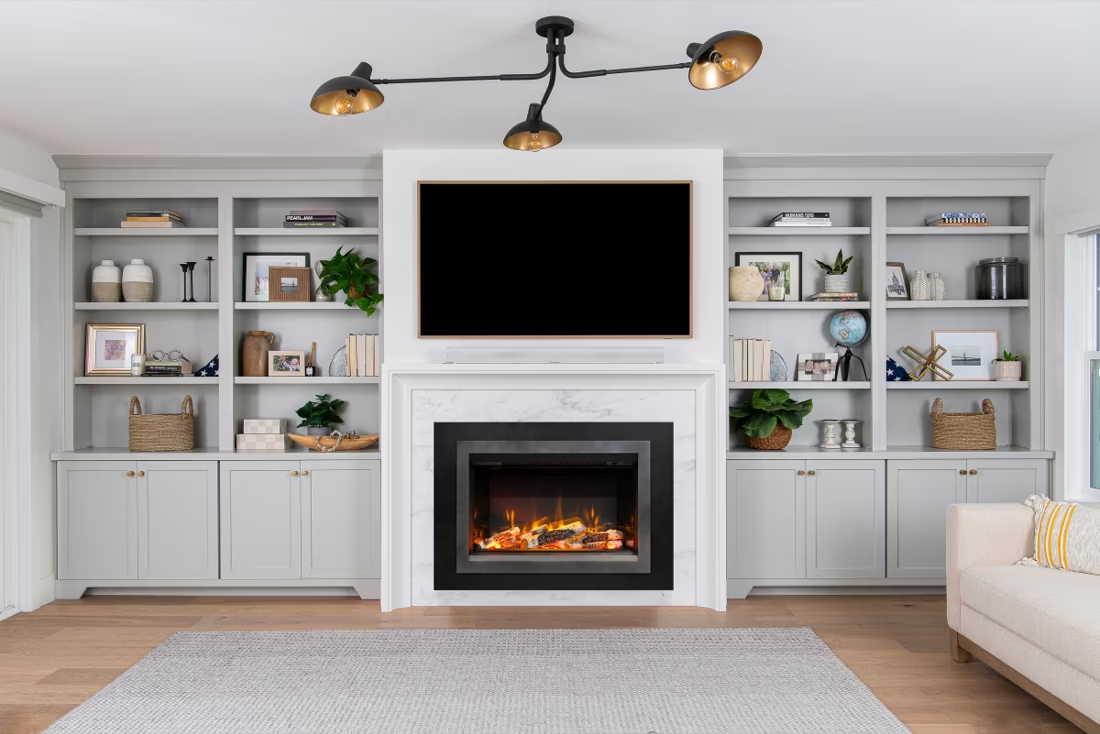
Yes—with an asterisk. Fireplaces are hot and TVs don't like heat. Either put a mantel between them to deflect rising warmth, or choose a fireplace with heat-management technology that creates a cool zone on the wall above—the wall stays around 125 degrees, barely warm, while the room still gets full heat. If you like clean lines and don't want a mantel, heat management is the answer.
Do electric fireplaces actually produce heat?
Yes—most put out around 4,800–5,000 BTUs from a standard outlet, which comfortably warms a bedroom, office, or den as a comfort-zone heater. What they won't do is carry a whole house the way wood, gas, or pellet can. Think of electric as ambiance-first with honest supplemental heat: flames on with no heat in July, flames plus warmth in January.
Nearby Dealers
Hearth shops serving St. Paul and the surrounding area. Every listing shows whether it is a WhyFire partner, a dealer we have verified as authorized for the brands we recommend, or a local business carrying hearth products. No manufacturer pays for placement. How we verify dealers →
Bob Jack’s Sheet Metal
Spark Heating & Air Conditioning
Gemco Fireplaces & Wholesale Heating Products
National Energy Equipment Inc.
Midnight Heating
McLeod Home Building Centre
Carriere Enterprises
Hayduk Lumbert Hardware Ltd
Roy’s Plumbing And Heating Ltd
Onoway Tim-Br Mart
Country Homes Inspections
Electric Service in St. Paul
An electric fireplace's heater draws about 1,500 watts—pennies per hour at local rates.
Enmax
Epcor
Atco Electric
Get your free Project Guide & Parts List for a St. Paul electric fireplace.
Tell us about your room and your panel, and we'll help you find a trusted local dealer and send a free Project Guide & Parts List with the right unit, circuit requirements, and parts for your St. Paul project.
Find Your Fireplace →