
Zero-clearance heat for Red Deer's freeze-thaw winters.
Red Deer sits at 856 metres in Central Alberta, where Chinook winds swing temperatures through freeze-thaw cycles all winter and average lows hover near -16°C. An electric fireplace adds instant, no-vent warmth to a condo, basement, or bedroom without touching a gas line. We'll help you find a trusted local dealer who knows what's actually installable in your building.
Every Project Starts From One of These Five Situations
The no-chimney option for condos, basements, and rentals.
Most Red Deer homes lean on natural gas furnaces through ATCO Gas or Apex Utilities for primary heat, and a lot of houses also carry a wood or gas fireplace for backup warmth during the kind of extended cold snaps this part of Central Alberta sees between Chinook breaks. Electric fireplaces fill a different, specific role: zone heat and ambiance in spaces where running a flue or a gas line doesn't make sense—a basement rec room, a condo unit with no chimney access, a secondary bedroom, or a rental suite where a landlord won't allow an open flame appliance.
The appeal is mostly about what electric skips. There's no CSA B365 installation code to satisfy, no WETT inspection for insurance the way wood appliances often require, and no municipal building department review for venting—most units just need a standard outlet or, for a built-in linear model, a dedicated circuit run by an electrician. Install costs reflect that simplicity, typically $500 to $1,600 versus $6,000 to $15,000 for a vented gas fireplace or $6,000 to $12,000 for a wood system here. Running one is straightforward too: with ENMAX, EPCOR, and ATCO Electric all serving the Red Deer area at roughly $0.13 per kWh, a typical 1,500-watt unit costs well under a dollar an hour to run on high.
Three steps. No salesperson until you're ready.
Tell us about your project
Your postal code, your situation, and the fuel you're leaning toward—or let the answers point you to one.
See what's actually available
The brands dealers within 100 miles genuinely carry—real options, never a catalog mirage.
Get your dealer & Project Guide
A trusted local dealer, plus the free Project Guide & Parts List that names every component of the job.
Frequently Asked Questions
How much does an electric fireplace installation cost in Red Deer?
Most jobs run $500 to $1,600 CAD. A plug-in insert or wall-mount unit that uses an existing outlet sits at the low end—it's closer to buying an appliance than a construction project. A built-in linear fireplace set into a wall or entertainment unit costs more once you factor in framing, trim work, and often a dedicated electrical circuit, which pushes toward the top of that range if your electrician needs to run new wire from the panel. Either way, it's a fraction of the $6,000-plus you'd budget for a vented gas or wood install.
Will an electric fireplace actually heat a room through a Red Deer winter?
It'll take the chill off a room, but we wouldn't count on it as your primary heat source when Central Alberta lows average around -16°C and dip colder during a hard freeze. Most electric fireplaces run a 1,500-watt heater rated for roughly 200 to 400 square feet, which works well as supplemental heat in a basement or bedroom your furnace doesn't quite reach, or as the whole-room solution in a well-insulated condo. For the main living space in an older Red Deer house, most homeowners still lean on the gas furnace or a wood or gas fireplace for the deep cold, and use electric where zone heat and no venting matter more than raw output.
Do I need a permit to install an electric fireplace in Red Deer?
Usually not in the way wood or gas installs do. There's no gas line permit and no CSA B365 wood appliance inspection to arrange. If you're installing a plug-in unit, most municipal building departments in the Red Deer area don't require a permit at all. Where it can get involved is a built-in unit that needs a new dedicated circuit—that's an electrical permit through the municipal building department, and it's worth having your dealer or electrician confirm before work starts, especially in a condo where the building may have its own rules.
Natural gas is common in Red Deer—why would I choose electric instead?
ATCO Gas and Apex Utilities both serve the city, so gas fireplaces are genuinely mainstream here, and for a primary living-room fireplace in a single-family home, gas is often still the better fit for real heat output. Electric wins in the situations gas can't easily reach: a condo or apartment with no way to vent to the exterior, a basement suite where running new gas line isn't practical, a rental where the landlord restricts open-flame appliances, or a bedroom where you just want a clean, no-maintenance heat source without touching the building's gas system.
What does it cost to run an electric fireplace in Red Deer?
With ENMAX, EPCOR, and ATCO Electric all billing residential customers around $0.13 per kWh in this area, a standard 1,500-watt electric fireplace costs roughly $0.20 an hour on its heat setting, or about $15 to $20 a month if you run it a few hours most evenings through the winter. Ambiance-only mode with the heater off costs a fraction of that, since it's just running the flame effect and light.
What type of electric fireplace makes sense for a Red Deer home?
Built-in linear inserts are popular for main living areas and accent walls—they read as a real architectural feature rather than a plug-in appliance, and they work in condos and newer builds around Red Deer's growing subdivisions where there's no chimney to work with. Wall-mount units are the practical choice for bedrooms and basement rec rooms where floor space is tight. Freestanding electric stoves are a good fit if you want the look of a wood stove in a rental or a room where WETT-inspected wood appliances aren't an option.
How does electric compare to wood heat in this area?
Wood is still a serious option in Red Deer—aspen poplar, paper birch, lodgepole pine, and white spruce are the common local species, and Alberta Forestry and Parks issues free cutting permits valid for 30 days, year-round. But the Chinook belt's freeze-thaw cycles make seasoning wood properly a real planning issue; wood that isn't fully dry burns dirty and inefficiently. Electric skips fuel storage and seasoning entirely, which is part of why it's the go-to for secondary spaces and rentals even in a region where wood heat has deep roots.
How much maintenance does an electric fireplace need?
Very little compared to wood or gas. There's no chimney to sweep, no WETT inspection to schedule for insurance, and no annual gas line and burner check. Most upkeep is wiping the glass, occasionally cleaning a dust filter on units with a blower, and replacing LED elements every several years if they dim—a local dealer can tell you which brands they carry hold up best to that kind of long-term use.
Are there rebates for installing an electric fireplace in Red Deer?
There isn't a Red Deer-specific rebate program targeting electric fireplaces the way some jurisdictions incentivize wood stove upgrades, but it's worth checking current home energy efficiency programs through ENMAX or EPCOR, since some utility efficiency initiatives periodically include electric heating appliances or smart thermostats that pair well with zone heating. A local dealer working in the area will typically know what's currently active.
How much does an electric fireplace cost to run?
With the heater on, a typical unit draws about 1,500 watts—at average electric rates that's roughly 20 cents an hour. Run the flame effect alone and it costs pennies; the flames are LED-driven and use about as much power as a light bulb. There's no pilot light, no fuel delivery, and essentially no maintenance.
What fireplace styles should I know before shopping?
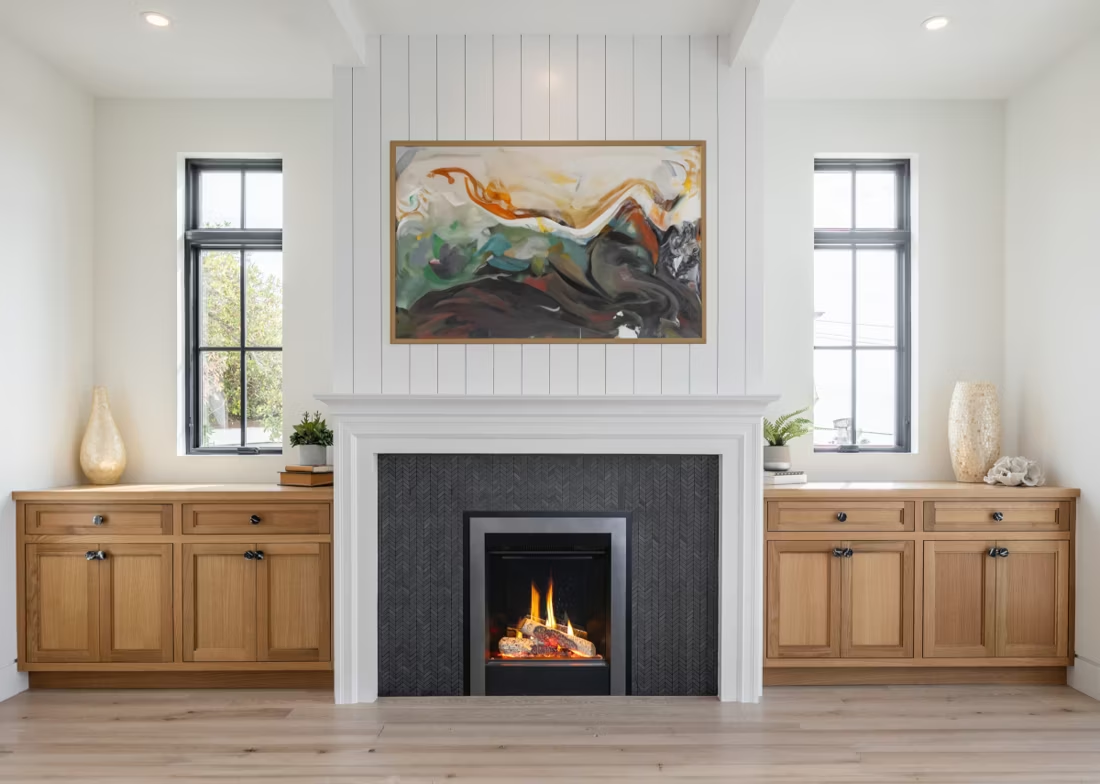
Four cover most of the market: screen-front traditional (mesh front, open feel, fits craftsman homes), traditional door set (the classic look you grew up with), modern linear (wide, low, the statement piece for entertaining), and clean face contemporary (no trim—your tile or stone runs right to the fire's edge). Walk in knowing those four terms and you're ahead of most buyers.
Do electric fireplaces actually produce heat?
Yes—most put out around 4,800–5,000 BTUs from a standard outlet, which comfortably warms a bedroom, office, or den as a comfort-zone heater. What they won't do is carry a whole house the way wood, gas, or pellet can. Think of electric as ambiance-first with honest supplemental heat: flames on with no heat in July, flames plus warmth in January.
Does an electric fireplace need a vent or chimney?
No—that's its superpower. An electric fireplace needs a wall and an outlet, period. No vent pipe, no gas line, no clearances to design around, which is why it works in bedrooms, offices, apartments, and walls where venting a gas or wood unit would be impractical or impossible. Installation is typically the simplest and least expensive of any fireplace type.
Nearby Dealers
Hearth shops serving Red Deer and the surrounding area. Every listing shows whether it is a WhyFire partner, a dealer we have verified as authorized for the brands we recommend, or a local business carrying hearth products. No manufacturer pays for placement. How we verify dealers →
Reinhart Ceramic Tile & Marble
Reinhard Ceramic Tile
Wild's Home Hardware
Battle River Landscape
Electric Service in Red Deer
An electric fireplace's heater draws about 1,500 watts—pennies per hour at local rates.
Enmax
Epcor
Atco Electric
Get your free Project Guide & Parts List for a Red Deer electric fireplace.
Tell us about your space and whether you need a plug-in unit or a built-in with a new circuit, and we'll help you find a trusted local dealer and send a free Project Guide & Parts List with the right unit and parts specified for your project.
Find Your Fireplace →