
Ambiance and zone heat for Central Alberta, without a single vent pipe.
From Red Deer to Sylvan Lake, Lacombe, and Rocky Mountain House, electric units plug into a standard outlet or a dedicated circuit and start heating a room the moment you flip the switch—no gas line, no chimney, no WETT inspection. We help Central Alberta homeowners find a trusted local dealer who knows which rooms actually call for one and which are better served by your home's primary furnace.
Every Project Starts From One of These Five Situations
A practical supplement to Central Alberta's long winters.
Central Alberta covers a lot of ground—Red Deer, Lacombe, Sylvan Lake, Rocky Mountain House, Stettler, Ponoka, and Wetaskiwin among the population base of roughly 239,000. Winters here run long, with average lows near -16°C and a cold season that stretches from October into April, not unlike Edmonton just up Highway 2. Natural gas is widely available in the region and, together with wood, remains the primary heat source in most homes. Electric fireplaces fill a different job: zone heat for a bonus room over the garage, ambiance in a basement rec room, or a no-fuss unit in a Red Deer condo or rental where running a gas line or wood chimney isn't an option.
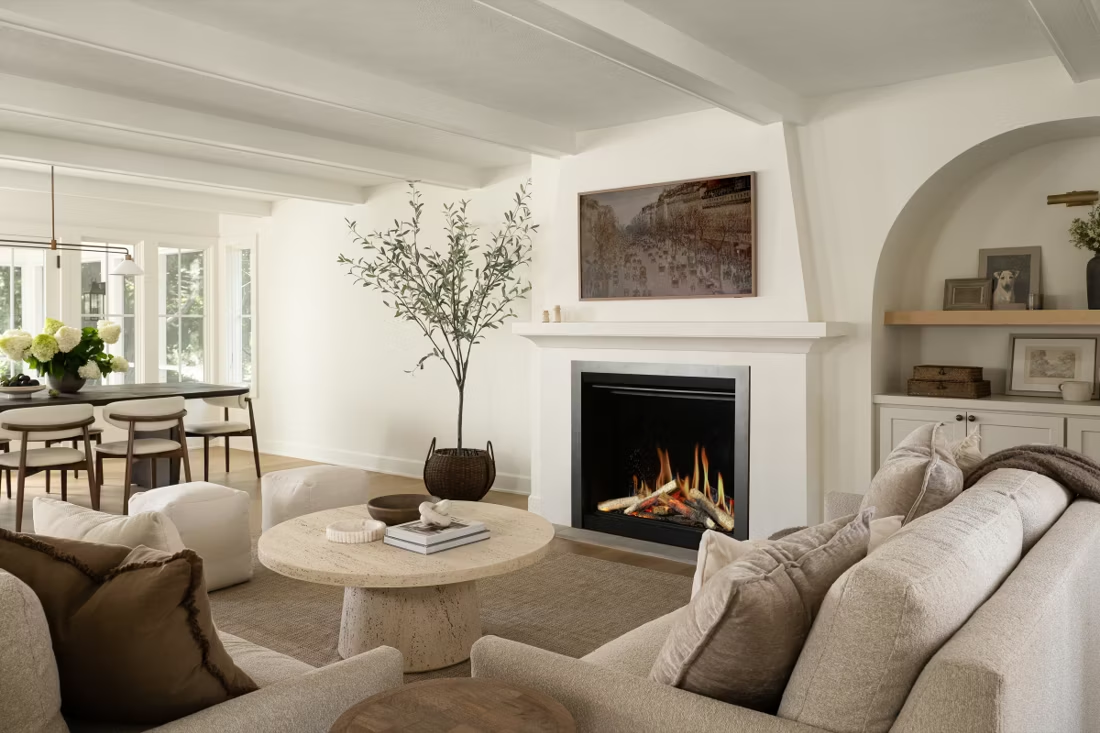
That practicality shows up in the cost, too. A typical electric fireplace or insert in Central Alberta runs $500 to $1,600 CAD, a fraction of what a wood or gas install requires here. Plug-in freestanding units generally need no permit at all. Larger built-in wall units drawing on a dedicated circuit usually call for a licensed electrician and sign-off from the municipal building department, but there's no CSA B365 wood-appliance code and no WETT inspection to schedule, since there's no combustion or chimney involved. For a rural acreage near Rocky Mountain House without gas service, or a Sylvan Lake townhouse where the condo board won't allow a vented appliance, that simplicity is the whole appeal.
Three steps. No salesperson until you're ready.
Tell us about your project
Your postal code, your situation, and the fuel you're leaning toward—or let the answers point you to one.
See what's actually available
The brands dealers within 100 miles genuinely carry—real options, never a catalog mirage.
Get your dealer & Project Guide
A trusted local dealer, plus the free Project Guide & Parts List that names every component of the job.
Frequently Asked Questions
How much does an electric fireplace installation cost in Central Alberta?
Most projects land between $500 and $1,600 CAD. A freestanding or wall-mounted plug-in unit sits at the low end since it just needs a standard 120V outlet already in the room. A larger built-in electric fireplace or a linear wall unit drawing more power typically needs a dedicated circuit, which means an electrician's time added to the cost. Recessed installs that involve framing a niche in a Red Deer or Lacombe living room remodel run toward the top of that range, though it's still well below the $6,000-plus a wood or gas project typically requires here.
Do I need a permit to install an electric fireplace in Central Alberta?
Usually not for a plug-in freestanding or wall-mounted unit—it's treated like any other appliance on an existing outlet. If you're adding a dedicated circuit for a larger built-in unit, or having a unit recessed into a wall as part of a renovation, the municipal building department in your town may require an electrical permit for that wiring work. There's no gas line permit and no WETT inspection to arrange, since electric units don't burn anything, which is one reason they're a common choice for a quick basement or bonus-room upgrade around Red Deer, Lacombe, and Stettler.
Can an electric fireplace replace my furnace as the primary heat source?
Not realistically, and we'll say that plainly. A typical electric fireplace puts out roughly 5,000 to 10,000 BTU—enough to noticeably warm a single room, but not enough to carry a Central Alberta home through a stretch of -16°C nights or colder. Homes here rely on a gas furnace, boiler, or a wood appliance as the primary system, and electric units work alongside that as zone heat: warming the room you're actually in without running the furnace harder, or adding comfort to a space the ductwork doesn't reach well, like a converted garage or a sunroom addition.
Are electric fireplaces a good fit for condos and rentals in Red Deer or Sylvan Lake?
Yes, and it's one of the most common reasons people call about electric here. Condo boards and landlords in Red Deer, Sylvan Lake, and Lacombe often won't allow a wood-burning appliance or a new gas line, since both involve venting through the building envelope and changes the strata or owner has to approve. A plug-in or wall-mounted electric unit needs neither. It's also the practical answer for a rental property, since a tenant or landlord can add real ambiance and a bit of supplemental heat without touching the building's gas or venting systems at all.
Electric vs. gas insert—which makes more sense for my Central Alberta home?
Gas remains the standard choice for a primary heat source here, since natural gas service reaches most Central Alberta municipalities and a gas insert can genuinely heat a room through a cold snap—typically $6,000 to $15,000 CAD installed. Electric is the better call when you want flame-look ambiance and light supplemental warmth without the cost, the gas line, or the venting work: a basement, a home office, a bedroom, or a rental unit. Plenty of homes here end up with both—gas as the workhorse in the main living area, electric wherever a second heat source is nice to have but a chimney or gas line isn't practical.
What does it cost to run an electric fireplace day to day?
Most units draw around 1,500 watts on the heater setting, so running one for several hours a day adds a modest, predictable amount to your power bill compared to a furnace cycle. There's no cordwood to buy or split, no seasoned-wood planning like the wood-burning households around Rocky Mountain House and Stettler have to manage, and no annual chimney sweep or WETT inspection fee. Ambiance-only mode, with the flame effect running but the heater off, uses very little power at all—handy if you just want the look on a mild fall evening without adding heat to the room.
Does an electric fireplace affect my home insurance in Central Alberta?
Generally, no—and that's part of the appeal. Insurers commonly require a WETT inspection for wood-burning appliances and want gas work signed off by a licensed gas-fitter, but electric units don't involve combustion, so they don't carry the same underwriting scrutiny. The one thing worth doing right is having a built-in unit on a dedicated circuit wired by a licensed electrician and inspected by your municipal building department, since a homeowner-wired circuit can create issues at claim time even without a specific fireplace-related exclusion.
I'm on a rural acreage near Rocky Mountain House without natural gas—does electric make sense?
It can, as a supplement rather than a replacement. Many acreages outside the gas grid around Rocky Mountain House and Ferintosh heat primarily with propane or wood, both of which carry real fuel and maintenance costs. An electric fireplace in a den or bonus room gives you extra warmth on demand without adding another fuel source to manage, using power you're already paying for through your local electric utility. It won't offset a propane bill much on its own, but it's a low-effort way to take the edge off a cold room without running a wood stove or the furnace harder.
Which rooms in my house are actually good candidates for an electric fireplace?
Because there's no venting to route, electric works in rooms that would be difficult or impossible for wood or gas—an interior basement rec room in a Lacombe bungalow, a bedroom, a home office, or a sunroom addition without an exterior wall in the right place. It's also a natural fit for converted spaces like a garage-to-living-space project or a bonus room over a garage, common in newer Red Deer subdivisions, where extending gas line or chimney isn't worth the cost for occasional use. A local dealer can walk the room and tell you honestly whether a plug-in unit covers it or whether a larger built-in with a dedicated circuit is worth the extra step.
How much does an electric fireplace cost to run?
With the heater on, a typical unit draws about 1,500 watts—at average electric rates that's roughly 20 cents an hour. Run the flame effect alone and it costs pennies; the flames are LED-driven and use about as much power as a light bulb. There's no pilot light, no fuel delivery, and essentially no maintenance.
What fireplace styles should I know before shopping?
Four cover most of the market: screen-front traditional (mesh front, open feel, fits craftsman homes), traditional door set (the classic look you grew up with), modern linear (wide, low, the statement piece for entertaining), and clean face contemporary (no trim—your tile or stone runs right to the fire's edge). Walk in knowing those four terms and you're ahead of most buyers.
Can I put a TV above my fireplace?
Yes—with an asterisk. Fireplaces are hot and TVs don't like heat. Either put a mantel between them to deflect rising warmth, or choose a fireplace with heat-management technology that creates a cool zone on the wall above—the wall stays around 125 degrees, barely warm, while the room still gets full heat. If you like clean lines and don't want a mantel, heat management is the answer.
Do electric fireplaces actually produce heat?
Yes—most put out around 4,800–5,000 BTUs from a standard outlet, which comfortably warms a bedroom, office, or den as a comfort-zone heater. What they won't do is carry a whole house the way wood, gas, or pellet can. Think of electric as ambiance-first with honest supplemental heat: flames on with no heat in July, flames plus warmth in January.
Stove and Fireplace Dealers in Central Alberta
Listings include WhyFire partner dealers, dealers we have verified as authorized for the brands we recommend, and established local businesses that carry hearth products. Every listing shows which one it is. The ones marked Preferred run on WhyFire's software, so they can show you real pricing and book your appointment right here. No manufacturer pays for placement. How we verify dealers →
Battle River Landscape
Reinhart Ceramic Tile & Marble
Reinhard Ceramic Tile
Wild's Home Hardware
Electric Service in Central Alberta
An electric fireplace's heater draws about 1,500 watts—pennies per hour at local rates.
Enmax
Epcor
Atco Electric
Get your free Central Alberta electric fireplace Project Guide & Parts List.
Tell us about the room, the wall you're considering, and whether you already have an outlet or circuit nearby, and we'll help you find a trusted local dealer and send a free Project Guide & Parts List—the right unit, the electrical requirements, and a recommended local dealer for your Central Alberta project.
Find Your Fireplace →