
Instant warmth for High Prairie nights that drop to -16.7°C.
High Prairie sits in Northern Alberta at 593 metres, where winter lows average -16.7°C and the cold settles in for months. An electric insert or built-in unit gives you real flame-look heat in an evening, no venting or gas line required. We'll help you find a trusted local dealer who knows what actually fits your circuit and your room.
Every Project Starts From One of These Five Situations
The supplemental heat source High Prairie's winters actually reward.
High Prairie's climate zone 7B rating and a winter low averaging -16.7°C mean the heating season here runs long, often from October through April. That kind of cold calls for a serious primary heat source—most homes lean on natural gas through ATCO Gas or Apex Utilities, or a wood stove burning aspen poplar, paper birch, or white spruce cut off Crown land. An electric fireplace isn't trying to replace that. It's the zone heat and ambiance layer for a den, a bedroom, or a basement that the furnace never quite reaches, and it plugs in without a chimney, a gas line, or a building inspection for combustion venting.
Power here runs through ATCO Electric's distribution lines, with ENMAX and EPCOR as the retail suppliers most High Prairie households see on their bill, at roughly $0.13 per kWh. That rate keeps a typical 1,500-watt electric insert affordable to run for a few hours most evenings, which is part of why electric units are common in homes that already burn wood or gas as their main heat source but want something instant and mess-free for the family room. Installed cost typically runs $500 to $1,600 CAD, largely depending on whether you're plugging into an existing outlet or having an electrician add a dedicated 240-volt circuit for a larger built-in linear unit.
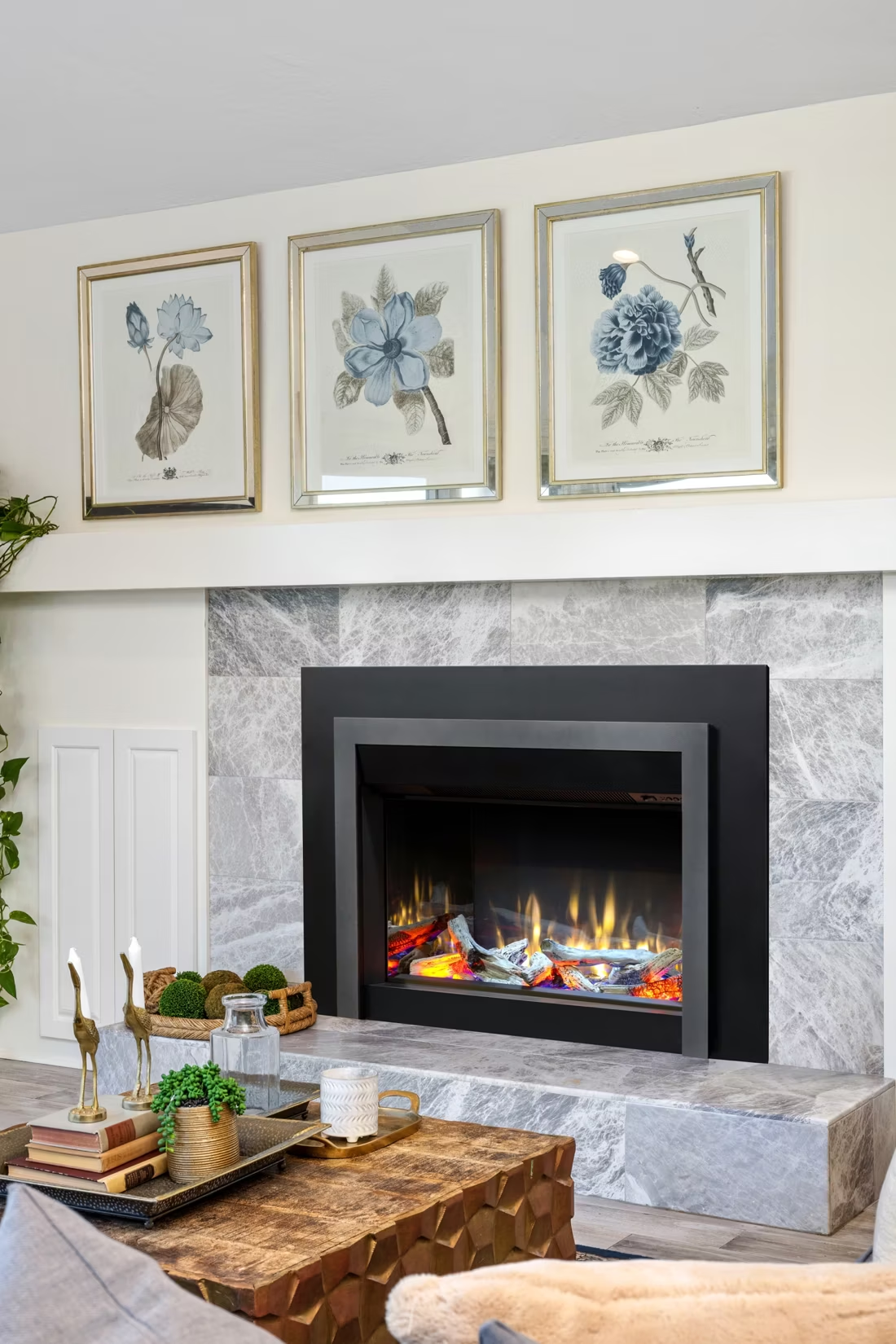
Three steps. No salesperson until you're ready.
Tell us about your project
Your postal code, your situation, and the fuel you're leaning toward—or let the answers point you to one.
See what's actually available
The brands dealers within 100 miles genuinely carry—real options, never a catalog mirage.
Get your dealer & Project Guide
A trusted local dealer, plus the free Project Guide & Parts List that names every component of the job.
Frequently Asked Questions
What does it cost to install an electric fireplace in High Prairie?
Most jobs land between $500 and $1,600 CAD. A plug-in insert or mantel unit that runs on a standard 120-volt outlet sits at the low end—no electrician needed beyond checking the circuit load. A wall-mounted linear fireplace or a built-in unit wired to its own 240-volt circuit costs more, mainly in electrician labour, and that's the version most High Prairie homeowners choose when they want the unit to double as real supplemental heat rather than just a visual feature.
Can an electric fireplace heat my whole house through a High Prairie winter?
No, and we'd be doing you a disservice to suggest otherwise. With average winter lows of -16.7°C and a heating season that stretches close to seven months, electric resistance heat from a single unit can't carry a whole home the way a furnace on ATCO Gas or Apex Utilities service can. What it does well is zone heat—taking the edge off a cold bedroom or basement rec room without running ductwork or a gas line into a space the main system barely reaches.
Do I need a permit for an electric fireplace in High Prairie?
A basic plug-in unit generally doesn't require a permit. If you're adding a dedicated circuit for a larger built-in or linear fireplace, that electrical work needs to go through your municipal building department and be done by a licensed electrician. Unlike a wood stove, there's no WETT inspection to arrange since there's no combustion or chimney involved—one reason electric units are often the simplest fireplace project in town from a paperwork standpoint.
Which utility will show up on my bill for an electric fireplace?
ATCO Electric owns and maintains the distribution lines serving High Prairie, but Alberta's deregulated market means your actual electricity charges usually come through a retailer like ENMAX or EPCOR. At the current residential rate of roughly $0.13 per kWh, running a 1,500-watt insert for three or four hours a night adds a modest, predictable amount to a monthly bill—nothing like the cost of heating the whole house electrically.
Should I get an electric fireplace or a gas insert since High Prairie has natural gas service?
If your home is already on ATCO Gas or Apex Utilities service, a gas insert is usually the better call for real heat output—gas install costs here typically run $6,000 to $15,000, well above electric's $500-$1,600, but it's a legitimate heat source, not just supplemental. Electric makes more sense for a room where running new gas line isn't practical, like a finished basement or an addition, or when you want flame-look ambiance without touching your existing gas or wood heating setup at all.
How much does it cost to run an electric fireplace each month in High Prairie?
A typical 1,500-watt insert running about three hours an evening through a cold month costs somewhere around $18 to $20 CAD at High Prairie's residential rate of roughly $0.13 per kWh. Most owners run it selectively—evenings in the living room, or whenever they want instant warmth without waiting on the furnace—rather than leaving it on all day, which keeps the added cost well below what a wood or gas system runs to operate.
What type of electric fireplace fits a High Prairie home best?
Linear wall-mounted units with a realistic ember bed and flame effect are popular locally, partly because the payoff matters more here—with genuinely dark, long winter evenings, a good flame display earns its keep as much for mood as for heat. Inserts that drop into an existing masonry or wood-stove opening are the common retrofit choice in older homes around town, while mantel-style freestanding units suit newer builds or rentals where you don't want to modify a wall.
Do High Prairie homeowners still keep wood heat as backup alongside electric?
Many do, and it's a reasonable pairing. Crown land cutting permits through Alberta Forestry and Parks are free and valid year-round for 30 days, and aspen poplar, paper birch, lodgepole pine, and white spruce are all common species split locally. Given the Chinook-belt freeze-thaw swings that can catch seasoned wood off guard, a lot of households keep a wood stove or insert as genuine outage backup—something electric heat obviously can't provide if the power itself goes down—while using an electric fireplace day-to-day for convenience.
How much maintenance does an electric fireplace actually need?
Very little compared to wood or gas. There's no chimney to sweep and no annual combustion safety check required. Most upkeep is dusting the unit, occasionally cleaning the glass front, and replacing an LED module years down the line if the flame effect dims—a fraction of the upkeep a wood stove burning through a High Prairie winter demands, and part of why electric units are popular as a low-maintenance secondary heat source in busy households.
How much does an electric fireplace cost to run?
With the heater on, a typical unit draws about 1,500 watts—at average electric rates that's roughly 20 cents an hour. Run the flame effect alone and it costs pennies; the flames are LED-driven and use about as much power as a light bulb. There's no pilot light, no fuel delivery, and essentially no maintenance.
What fireplace styles should I know before shopping?
Four cover most of the market: screen-front traditional (mesh front, open feel, fits craftsman homes), traditional door set (the classic look you grew up with), modern linear (wide, low, the statement piece for entertaining), and clean face contemporary (no trim—your tile or stone runs right to the fire's edge). Walk in knowing those four terms and you're ahead of most buyers.
Do electric fireplaces actually produce heat?
Yes—most put out around 4,800–5,000 BTUs from a standard outlet, which comfortably warms a bedroom, office, or den as a comfort-zone heater. What they won't do is carry a whole house the way wood, gas, or pellet can. Think of electric as ambiance-first with honest supplemental heat: flames on with no heat in July, flames plus warmth in January.
Does an electric fireplace need a vent or chimney?
No—that's its superpower. An electric fireplace needs a wall and an outlet, period. No vent pipe, no gas line, no clearances to design around, which is why it works in bedrooms, offices, apartments, and walls where venting a gas or wood unit would be impractical or impossible. Installation is typically the simplest and least expensive of any fireplace type.
Nearby Dealers
Hearth shops serving High Prairie and the surrounding area. Every listing shows whether it is a WhyFire partner, a dealer we have verified as authorized for the brands we recommend, or a local business carrying hearth products. No manufacturer pays for placement. How we verify dealers →
Reynolds Plumbing & Heating
Windsor Plywood
Empire Home Bldg Centre
Wilson Fans & Lighting
Electric Service in High Prairie
An electric fireplace's heater draws about 1,500 watts—pennies per hour at local rates.
Enmax
Epcor
Atco Electric
Get your free Project Guide & Parts List for a High Prairie electric fireplace.
Tell us about your room, your panel, and whether you're on ENMAX, EPCOR, or ATCO Electric service, and we'll help you find a trusted local dealer and send a free Project Guide & Parts List with the exact unit and circuit specs your project needs.
Find Your Fireplace →