
Find your fireplace across Northern Alberta.
Wood, gas, pellet, and electric fireplace resources for the whole region—from the Peace Country grain belt through the boreal forest around Slave Lake and up to High Level. Pick a fuel and find a local dealer who actually works in your town.
Every Project Starts From One of These Five Situations
Minus 19°C winters and boreal forest shape how this region heats.
Northern Alberta stretches from the Peace Country around Grande Prairie and Peace River up through Fort Vermilion and High Level, with population centres like Slave Lake and Fort McMurray anchoring the boreal interior. Average winter lows near -19°C and a heating season that regularly runs six months put this region in the same cold-climate bracket as Saskatoon—long stretches of hard, dry cold interrupted by the odd Chinook thaw that can swing temperatures 20 degrees in a day. That freeze-thaw pattern is part of daily life here, and it matters for wood heat specifically: aspen poplar, paper birch, lodgepole pine, and white spruce are the species most households burn, and getting wood properly seasoned before a cold snap—rather than scrambling mid-winter—is the difference between an easy season and a smoky one.
All four hearth fuels are genuinely mainstream across this region rather than niche choices. Natural gas service reaches most of the larger towns through ATCO Gas, which makes gas fireplaces and inserts an easy retrofit in Grande Prairie, Peace River, and similar centres. Wood stoves remain the backbone fuel in rural areas and smaller communities, installed under the CSA B365 code through your municipal building department, with a WETT inspection commonly required before an insurer will sign off. Pellet stoves have a real local supply chain too—La Crete Sawmills and Vanderwell both mill in the region, which keeps pellet costs and availability more stable here than in places relying entirely on shipped-in fuel. Electric fireplaces round things out as a low-maintenance supplemental option in basements, bedrooms, and additions. This hub rolls up hearth retailers, service technicians, and fuel suppliers across the whole region—pick your fuel below for local dealers, install costs, and unit recommendations specific to your town.
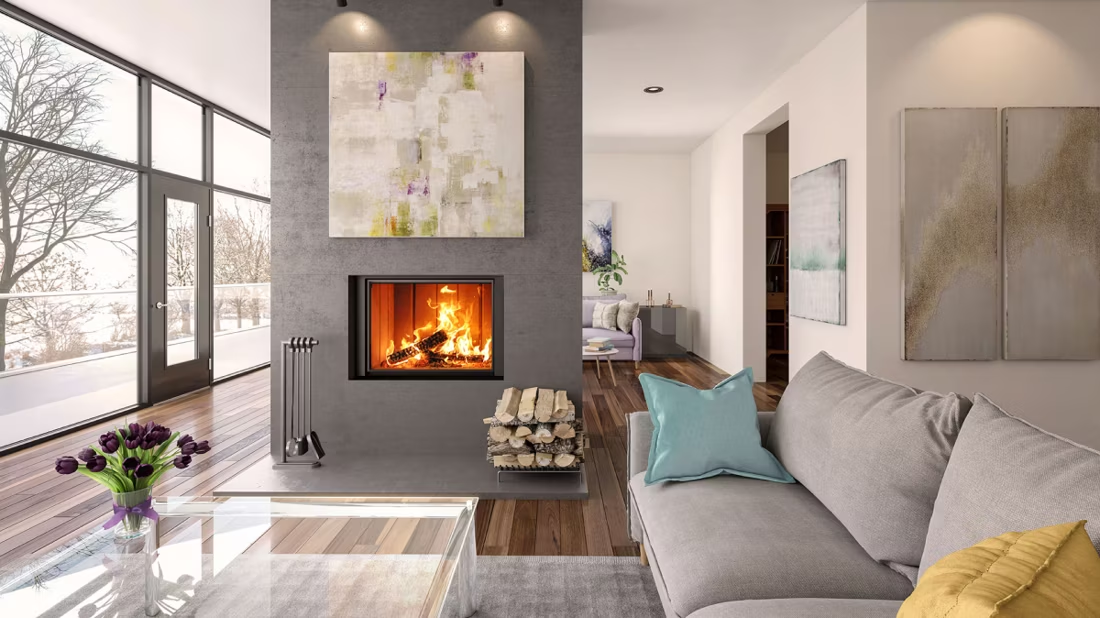
Four fuels. One honest answer for Northern Alberta.
Three steps. No salesperson until you're ready.
Tell us about your project
Your postal code, your situation, and the fuel you're leaning toward—or let the answers point you to one.
See what's actually available
The brands dealers within 100 miles genuinely carry—real options, never a catalog mirage.
Get your dealer & Project Guide
A trusted local dealer, plus the free Project Guide & Parts List that names every component of the job.
Frequently Asked Questions
Which fireplace fuel makes the most sense in Northern Alberta?
All four fuels are used here as genuine primary or supplemental heat rather than novelty—the right one usually comes down to what's already run to your house and how remote you are. Wood stoves burning aspen poplar, birch, or lodgepole pine are the standard choice in rural areas and smaller communities where natural gas service doesn't reach, and a well-loaded catalytic stove will hold a fire through a -19°C overnight without trouble. Gas fireplaces and inserts are the easy retrofit in Grande Prairie, Peace River, and other towns served by ATCO Gas—no wood handling, and a thermostat you can leave running. Pellet stoves have a stronger foothold here than in a lot of regions because La Crete Sawmills and Vanderwell both mill pellets locally, which keeps supply steady through the season. Electric fireplaces work well as supplemental heat in a basement or bedroom addition, but through a six-month heating season they're not sized to carry a whole house on their own.
Do I need a permit to install a wood stove or gas fireplace in Northern Alberta?
Yes. Installations go through your municipal building department and must meet the CSA B365 installation code, which covers clearances, venting, and hearth protection for solid-fuel appliances. Gas fireplace and insert installs need a licensed gas fitter and a separate gas permit through the same office. Most homeowners never deal with this paperwork directly—retailers we'll help you find typically pull the permit and schedule the inspection as part of the install quote, so it's baked into the project rather than an extra step for you to chase.
What is a WETT inspection and do I actually need one?
WETT stands for Wood Energy Technical Training, and it's the certification your insurer will almost certainly ask for before covering a home with a wood stove, insert, or fireplace—whether you're installing a new unit or buying a home with one already in place. A WETT-certified inspector checks that clearances, venting, and the chimney meet code and that the installation matches CSA B365. Skipping it is a common way homeowners find out at claim time that their policy doesn't actually cover a wood-heat loss. Most established hearth retailers in the region either employ a WETT-certified inspector or can point you to one, and it's worth booking the inspection at install time rather than waiting until your insurer asks.
How much wood do I need to plan for, and when should I get it?
Given the Chinook-belt freeze-thaw pattern here—stretches of hard cold broken by sudden warm spells—rural wood supply can get tight right when you need it most, so buying and stacking a season ahead is the standard move rather than the cautious one. Aspen poplar and white spruce are common and burn fine once properly seasoned, but they need a full six to twelve months under cover to dry out; paper birch and lodgepole pine season a bit faster and burn hotter, which is why a lot of local households mix species. There's no province-wide burning restriction here, so the limiting factor is really your own woodpile, not a curtailment calendar—plan for a full cord to a cord and a half over a typical heating season if wood is your primary source.
What does a fireplace installation typically cost in Northern Alberta?
Costs vary by fuel and by how much venting or gas-line work your home needs. Wood stove or insert installs generally run $4,000-$9,000 CAD once you factor in a WETT-compliant chimney system, with new-construction chimney work pushing higher. Gas fireplaces, inserts, and stoves typically land around $4,000-$10,000 CAD depending on whether an existing gas line is nearby or needs extending. Pellet stove and insert installs usually run $4,000-$7,000 CAD. Electric fireplaces are the least expensive route—often $200-$3,000 CAD for the unit plus $300-$1,000 CAD in labor unless you're hardwiring a built-in that needs a new circuit. The region and fuel pages above break these down further with local retailer pricing.
How does installation and service work if I live outside a major town?
Northern Alberta covers a lot of ground, and most hearth retailers and service technicians are based out of Grande Prairie or Peace River but travel regularly to Slave Lake, High Level, Fort Vermilion, Fort McMurray, and the smaller communities in between. Expect a trip fee for the farthest service calls, and expect booking windows to tighten once the first hard cold snap hits and everyone wants their chimney swept or gas unit checked at once. Booking your annual WETT inspection or gas service in late summer, before the season turns, is the easiest way to avoid a multi-week wait once winter sets in for good.
How many BTUs do I need in a fireplace?
Wrong question—and the industry's favorite way to confuse you. More BTUs isn't better if the fireplace cooks you out of the room you spent thousands to enjoy. Think in terms you can verify: how many square feet the unit heats, whether it's primary or backup heat, and whether you want it running overnight. Those three answers size a fireplace correctly every time.
Will we actually use a fireplace once we have one?
In my own home, the room with the fireplace has never been the same—it became the social hub. Game nights, holidays, date nights after the kids are down: the fire is where the house gathers. There's a reason people in this industry joke that we're really in the romance and entertainment business. You won't wonder whether you'll use it; you'll wonder how the room worked before.
What is an in-home preview and do I need one?
It's a visit where a hearth professional measures your space, confirms the model you picked actually works in your home, and walks the specs—framing, gas line, venting, finish work—before anything is ordered. Some details you just can't know until you see the house. Never make a down payment without one; it's the single most-skipped step that burns buyers.
What's the difference between an insert and a zero-clearance fireplace?
An insert is a fireplace that slides into a pre-existing wood-burning fireplace—if you don't have one, there's nothing to insert it into. A zero-clearance fireplace is built into a framed wall, which makes it the answer for remodels and new construction. Simple test: existing masonry fireplace means insert; blank or framed wall means zero-clearance.
Stove and Fireplace Dealers in Northern Alberta
Listings include WhyFire partner dealers, dealers we have verified as authorized for the brands we recommend, and established local businesses that carry hearth products. Every listing shows which one it is. The ones marked Preferred run on WhyFire's software, so they can show you real pricing and book your appointment right here. No manufacturer pays for placement. How we verify dealers →
Reynolds Plumbing & Heating
Empire Home Bldg Centre
Windsor Plywood
Wilson Fans & Lighting
Find a trusted dealer in Northern Alberta.
Pick your fuel below and we'll put together a free Project Guide & Parts List—the right unit, the vent kit it needs, and the local dealer we recommend for your project.
Find Your Fireplace →