
Keep Your Family Warm and Safe—No Matter What
High Level sits at 329 metres near the Northwest Territories border, where winters average a low of -25.8°C and stretch across most of the year. We'll help you find a trusted local dealer who knows what actually keeps a home warm this far north.
Every Project Starts From One of These Five Situations
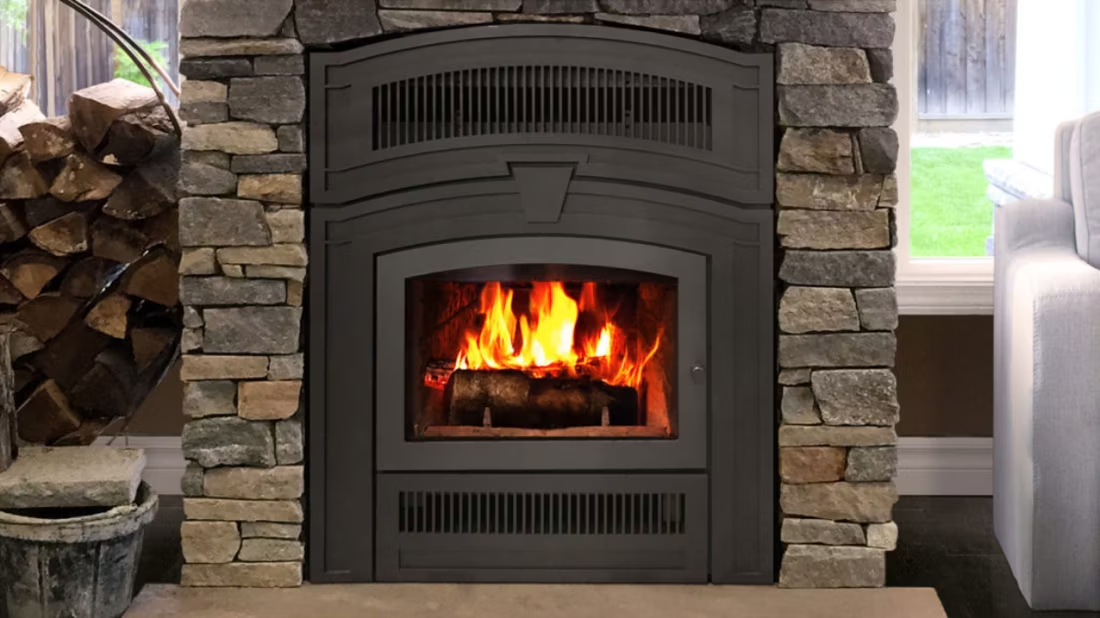
Wood heat is essential here, not a novelty.
High Level sits at 58.5° north latitude and 329 metres of elevation, deep in Northern Alberta near the Northwest Territories border. It's classified climate zone 7B, one of the coldest zones on the map, with winter lows averaging -25.8°C and a heating season that runs longer than almost anywhere else in the province—closer to what Whitehorse or Fort McMurray residents deal with than to Edmonton's milder winters. In a town this remote, a dependable primary or backup heat source isn't a lifestyle choice, it's basic planning for the season.
Aspen poplar, paper birch, lodgepole pine, and white spruce are the species most local burners split and stack, and Crown land access is generous: Alberta's Forestry and Parks branch issues free cutting permits valid for 30 days, year-round, with no permit fee at all. The catch locals manage is seasoning—Chinook-belt freeze-thaw cycles and a genuinely tight rural supply chain mean wood cut too close to burning season doesn't dry properly, so most experienced burners here are cutting and splitting a full year ahead. There's no province-wide burning restriction to work around, which keeps wood a straightforward, reliable option even as ATCO Gas and Apex Utilities extend natural gas service through town.
Firewood Cutting Permits Near High Level
Government Of Alberta, Forestry And Parks
Three steps. No salesperson until you're ready.
Tell us about your project
Your postal code, your situation, and the fuel you're leaning toward—or let the answers point you to one.
See what's actually available
The brands dealers within 100 miles genuinely carry—real options, never a catalog mirage.
Get your dealer & Project Guide
A trusted local dealer, plus the free Project Guide & Parts List that names every component of the job.
Frequently Asked Questions
How much does a wood stove installation cost in High Level?
Most installations run $6,000 to $12,000 CAD, with the range depending on whether you're inserting into an existing masonry chimney or building a full Class A chimney system through a roof. A retrofit insert into a working flue—common in older High Level homes built before natural gas reached town—sits toward the lower end. New construction or additions without existing venting run higher, especially once you factor in the municipal building department permit and the CSA B365-compliant installation most insurers now expect.
What size wood stove do I need for a High Level home?
With winter lows averaging -25.8°C and stretches well colder than that during a hard cold snap, undersizing is the real risk here, not oversizing. A stove rated for 1,500 to 2,500 square feet is typical for a main living space in this climate, and many households lean toward the larger end of that range so the stove can hold an overnight burn without a 3 a.m. reload. A local dealer will size against your actual floor plan and insulation rather than square footage alone—older homes in town often need more capacity than newer, better-sealed builds.
Do I need a permit to install a wood stove in High Level?
Yes. Installations go through the municipal building department, and the work has to meet the CSA B365 installation code, which covers clearances, venting, and hearth protection. Most insurers in the area also want a WETT inspection before they'll cover a wood-burning appliance, so it's worth booking one even if your municipality doesn't formally require it—it's the document your insurance company will actually ask for if you ever file a claim.
What's the difference between a wood stove and a wood insert for my house?
A freestanding wood stove sits on its own hearth pad and vents through new Class A pipe, which works well for newer High Level homes that never had a masonry fireplace to begin with. A wood insert slides into an existing masonry firebox and reuses the chimney that's already there, which is the more common upgrade in older homes around town. Because the chimney structure already exists, inserts usually land toward the lower end of the $6,000-$12,000 install range.
Where do I get a firewood cutting permit near High Level?
Alberta's Forestry and Parks branch issues personal-use cutting permits on Crown land surrounding High Level, and they're free—valid for 30 days from issue, with a season that runs year-round rather than a narrow summer window. Aspen poplar and paper birch are the most commonly cut species locally, with lodgepole pine and white spruce also common depending on which block you're permitted for. Because the free permit only lasts 30 days, most locals plan their cutting trips around when they actually have time to split and haul, not around a fixed calendar season.
What's the best wood stove for High Level winters?
Given how long and cold the season runs here, catalytic stoves from manufacturers like Blaze King are popular locally because they can hold a fire well past 12 hours, which matters when it's -25°C overnight and reloading at 2 a.m. isn't appealing. Non-catalytic stoves from Pacific Energy or Osburn are a solid, lower-maintenance option for households running wood as backup heat alongside natural gas from ATCO Gas or Apex Utilities. Either way, a manufacturer-authorized local dealer can tell you which models are actually stocked and serviceable this far north—not every brand has parts support in a town this remote.
How often should my chimney be swept in High Level?
A pre-season inspection in early fall, before the first real cold snap, is the standard recommendation, and it matters more here than in milder parts of the province given how many months of the year the stove actually runs. Aspen poplar and paper birch season faster than pine and spruce, but wood cut too close to burning season—a common issue given High Level's tight rural supply—burns wetter and builds creosote faster. A WETT-certified sweep can also confirm your installation still meets the standard your insurer expects, since that's often checked at renewal time.
Are there rebates for a new wood stove in High Level?
There's no dedicated province-wide rebate program for wood stoves in Alberta at the moment, so most High Level upgrades are paid out of pocket rather than subsidized. Where it pays off is on the insurance side: a WETT inspection on a new, code-compliant installation can sometimes lower your premium or make a wood-burning home easier to insure at all, which matters in a remote area where insurers already scrutinize heating setups closely. It's worth asking your installer for the inspection report as a matter of course, rebate or not.
Wood vs. pellet stove—which makes more sense in High Level?
Wood works without electricity, which is a real advantage in a town this remote where outages can run longer than in urban Alberta, and free Crown land cutting permits through Forestry and Parks keep fuel costs close to zero if you're willing to cut and split it yourself. Pellet stoves burn cleaner and are easier to load and forget, with regional brands like La Crete Sawmills and Vanderwell running $400 to $575 CAD a ton, but they need power for the auger and blower, so they go dark in the same outage a wood stove would ride through. A lot of households here keep a wood stove specifically for outage resilience and lean on gas or pellet for daily convenience.
Why do fireplace quotes vary so much?
Because a fireplace is an iceberg—there's more behind the wall than in front of it. A low quote often covers only the unit; the full scope includes vent pipe, gas line or electrical, framing, and the tile or stone that has to come off and go back on. Make every bidder price the whole job. If a dealer can't speak to the full scope with confidence, that's your signal to keep looking.
Louvered or clean face—which fireplace front is better?
Louvered fronts have grill work above and below the glass for airflow, move heat a little better with a fan, and suit traditional mantels. Clean face designs drop the louvers entirely so finish work runs to the fire's edge—they fit both modern and traditional rooms. When we did our own home we chose clean face: a big viewing area beat a little extra airflow. It depends on your room, not on a rulebook.
What does it take to replace an existing fireplace?
Fireplaces are like icebergs—bigger behind the wall than in front of it. Replacement means removing the surrounding tile or stone (the finish material laps onto the fireplace face), pulling the old unit, setting the new one in the same enclosure, and re-finishing the wall. A hearth professional can determine what's behind your wall without demolition during an in-home preview.
Can a wood stove burn all night?
The right one can. If waking up to a warm house and live coals matters to you, say exactly that when you're shopping—firebox size and burn-rate control determine overnight performance far more than any number on a spec sheet. It's a much more useful question than asking about BTUs.
Nearby Dealers
Hearth shops serving High Level and the surrounding area. Every listing shows whether it is a WhyFire partner, a dealer we have verified as authorized for the brands we recommend, or a local business carrying hearth products. No manufacturer pays for placement. How we verify dealers →
Empire Home Bldg Centre
Reynolds Plumbing & Heating
Windsor Plywood
Wilson Fans & Lighting
Get your High Level wood heat project mapped out.
Tell us about your home and we'll help you find a trusted local dealer and send a free Project Guide & Parts List—sized for winters that average -25.8°C, with the vent kit and parts specified.
Find Your Fireplace →