
Bring Warmth and Glow to Juneau's Long, Dark Winters.
Thanks to hydropower rates most of Alaska doesn't get, electric heat is an easy, no-venting way to add real warmth to a Southeast Alaska home. Find the right unit and connect with a trusted local dealer.
Every Project Starts From One of These Five Situations
Affordable heat, thanks to hydropower most of Alaska doesn't have.
Juneau sits in climate zone 7, with an average winter low of 20°F and a long, demanding heating season that puts its winter heating load closer to Fargo, ND or International Falls, MN than to the mild coastal image most people have of Southeast Alaska. What's different here is the power. Alaska Electric Light & Power Co. (AEL&P) draws most of its generation from hydroelectric dams—Snettisham, Salmon Creek, and Annex Creek—which keeps the residential rate around $0.1293/kWh, a fraction of the $0.30–$0.50/kWh diesel-generated rates common in villages elsewhere in the state that aren't tied to a hydro grid.
That combination—real cold, cheap hydro power, and a city with no road connection to the rest of North America—makes electric fireplaces a practical fit here. Most Juneau homes are still heated primarily with oil, propane, or increasingly ductless heat pumps, but an electric fireplace or insert adds instant zone heat and firelight to a living room without a chimney, a gas line, or the freight and logistics of shipping masonry or venting components in by barge or air. For a city where a chimney sweep or firewood delivery means working around ferry schedules, plug-in and hardwired electric units are refreshingly simple.
Three steps. No salesperson until you're ready.
Tell us about your project
Your zip code, your situation, and the fuel you're leaning toward—or let the answers point you to one.
See what's actually available
The brands dealers within 100 miles genuinely carry—real options, never a catalog mirage.
Get your dealer & Project Guide
A trusted local dealer, plus the free Project Guide & Parts List that names every component of the job.
Frequently Asked Questions
How much does an electric fireplace installation cost in Juneau?
Cost depends heavily on the unit type. A plug-in electric insert or freestanding unit that runs on a standard 120V outlet is the least expensive option—often $500 to $2,000 installed, since there's no venting or gas line to run. A built-in electric fireplace or a unit that needs a dedicated 240V circuit runs higher, typically $1,500 to $4,000, once a licensed electrician is factored in. Because Juneau isn't on the road system, larger built-in units and mantels sometimes carry extra freight cost from barge or air shipping—worth asking your local dealer about upfront.
How much does it cost to run an electric fireplace at AEL&P's residential rate?
At Alaska Electric Light & Power Co.'s residential rate of about $0.1293/kWh, a typical 1,500-watt electric fireplace running on high costs roughly 19 cents an hour to operate—inexpensive by Alaska standards because AEL&P's supply comes mostly from Snettisham, Salmon Creek, and Annex Creek hydro rather than diesel generation. Most owners run their unit on a lower heat setting or flame-only mode for everyday ambiance, which cuts that cost even further.
Can an electric fireplace heat my whole house in Juneau?
No—with such a long, demanding heating season and a climate zone 7 rating, Juneau's heating load is too high for electric resistance heat to serve as a home's primary source. Electric fireplaces are best used as supplemental zone heat for a living room, bedroom, or den, layered on top of a home's main heating system—typically oil or propane forced-air, in-floor hydronic heat, or the ductless heat pumps that have become increasingly common around town given Juneau's relatively mild coastal lows compared to Interior Alaska.
Do I need a permit to install an electric fireplace in Juneau?
A simple plug-in unit generally doesn't require a permit. If your installation needs a new dedicated circuit or panel work, that electrical work needs to be pulled by a licensed electrician and typically requires an electrical permit through the City and Borough of Juneau Community Development Department. There's no combustion involved, so you won't deal with the chimney or gas-line inspections that come with wood or gas installs.
What size electric fireplace do I need?
Electric fireplaces are usually sized by wattage and by the visual scale you want for the room, since—unlike wood or gas—they aren't meant to carry a whole home's heat load. A 1,500-watt unit (roughly 5,000 BTU) will comfortably supplement a single living room or bedroom in a well-insulated Juneau home. Larger open floor plans or drafty older homes near downtown may do better with two smaller units rather than one large one, since electric heat doesn't distribute the way a central system does. A local dealer can walk through your floor plan and recommend sizing.
Electric vs. wood—which makes more sense in Juneau?
Juneau has no air quality restrictions on wood burning, and birch, spruce, and cottonwood are all available locally, including personal-use cutting permits through the Tongass National Forest. Wood stoves also keep working during a power outage, which matters here—but they require chimney work, storage space, and regular hauling, none of which is trivial on the steep, forested lots common around town. Electric fireplaces skip all of that, and with AEL&P's hydro-based rate around $0.1293/kWh, running one for ambiance and supplemental heat is inexpensive compared to diesel-powered communities elsewhere in the state. Many Juneau homeowners use wood as backup heat and an electric fireplace for everyday convenience.
Will my electric fireplace work during a power outage?
No—electric fireplaces require power to run the heating element, fan, and flame effect, so they shut down the moment the grid goes down. That's worth planning around in Juneau specifically: AEL&P's hydro supply runs over transmission lines from Snettisham that have occasionally been damaged by avalanches, forcing the utility onto backup diesel generation and temporarily higher rates during past outage periods. If backup heat during an outage matters to you, pair an electric fireplace with a wood stove, propane heater, or generator rather than relying on electric heat alone.
What's the difference between an electric fireplace, insert, and stove?
An electric fireplace is typically a built-in unit set into a wall or mantel surround, often installed during a remodel. An electric insert is sized to slide into an existing masonry or wood-burning fireplace opening, letting you keep the look of your existing hearth while swapping an open wood-burning firebox for a sealed, thermostat-controlled heater. An electric stove is a freestanding unit styled like a wood or pellet stove, which some Juneau homeowners choose for the look without the venting requirements of an actual wood-burning appliance. All three plug into standard household current or a dedicated circuit—none of them need a chimney or flue.
Electric vs. propane fireplace—which should I choose for supplemental heat?
Propane fireplaces put out more real heat per unit and can be sized to take a meaningful bite out of a heating bill, but they need a gas line or tank, venting in most cases, and periodic service. Electric fireplaces install in an afternoon with no venting and, thanks to AEL&P's hydro-based rate, cost relatively little to run for ambiance or light supplemental heat—but they can't match a propane unit's output on the coldest days. For a Juneau home that already has oil or propane as the primary heat source, an electric fireplace is usually chosen for looks, convenience, and zone heat in a room the main system doesn't reach well; propane is chosen when that room needs real heat output.
Can I put a TV above my fireplace?
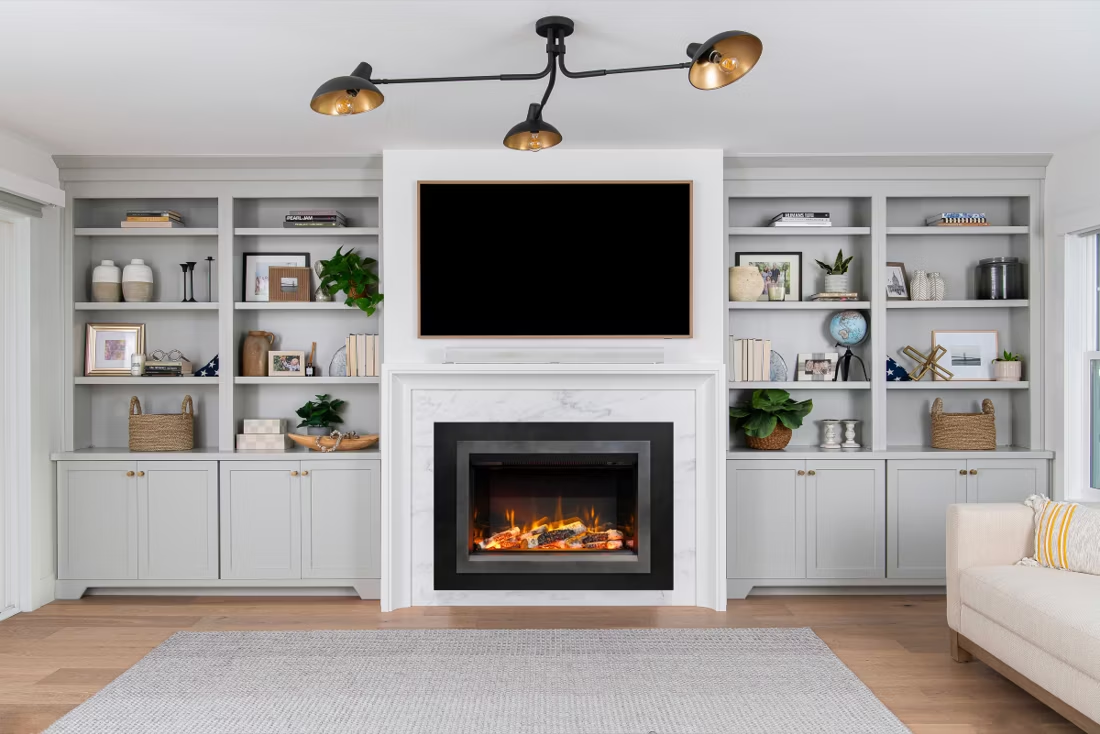
Yes—with an asterisk. Fireplaces are hot and TVs don't like heat. Either put a mantel between them to deflect rising warmth, or choose a fireplace with heat-management technology that creates a cool zone on the wall above—the wall stays around 125 degrees, barely warm, while the room still gets full heat. If you like clean lines and don't want a mantel, heat management is the answer.
Do electric fireplaces actually produce heat?
Yes—most put out around 4,800–5,000 BTUs from a standard outlet, which comfortably warms a bedroom, office, or den as a comfort-zone heater. What they won't do is carry a whole house the way wood, gas, or pellet can. Think of electric as ambiance-first with honest supplemental heat: flames on with no heat in July, flames plus warmth in January.
Does a fireplace add value to my home?
On average, a fireplace adds back to the home about the same amount you spent installing it. Add the monthly savings from heating the rooms you actually use instead of the whole house—often hundreds of dollars a year—and the value case is strong before you even count what a fire does for how your family uses the room.
Can I install a fireplace myself?
If you're putting a fire in your house on purpose, it's best to work with an expert. Unless you're genuinely experienced in framing, gas line, vent pipe, and the national code on clearances to combustibles, have a professional do it—and ideally the same company that sells you the fireplace, so warranty, service, and liability all live under one roof.
Nearby Dealers
Hearth shops serving Juneau and the surrounding area. Every listing shows whether it is a WhyFire partner, a dealer we have verified as authorized for the brands we recommend, or a local business carrying hearth products. No manufacturer pays for placement. How we verify dealers →
Area – Juneau, Ak
Nc Chimneys LLC
Electric Service in Juneau
An electric fireplace's heater draws about 1,500 watts—pennies per hour at local rates.
Alaska Electric Light & Power Co.
Find your electric fireplace in Juneau.
Tell us a bit about your home and we'll match you with the right electric fireplace, insert, or stove—plus a free Project Guide & Parts List and a trusted local Juneau dealer to install it.
Find Your Fireplace →