
Heat That Keeps Working at 40 Below.
Ester winters push past 13,900 heating degree days a year, and the power doesn't always stay on. Find the right propane fireplace or insert, and connect with a trusted local dealer who knows subarctic installs.
Every Project Starts From One of These Five Situations
In subarctic cold, heat that doesn't depend on the grid matters.
Ester sits at 1,679 feet in the Tanana Valley just west of Fairbanks, deep in climate zone 8—the coldest zone the IECC defines. Winter lows here average -15°F, and Ester logs roughly 13,922 heating degree days a year, nearly double what International Falls, Minnesota sees in a typical winter. Cold snaps of -40°F and below are a normal part of the season, not an anomaly, and they tend to arrive alongside the kind of ice fog and grid strain that knocks out power for hours at a time.
There's no piped natural gas reaching Ester, so a gas fireplace here almost always means propane, delivered by tank truck and stored in a residential tank on the property. Many homes already run on propane or fuel oil for primary heat and burn birch, spruce, or cottonwood as a supplement, but Ester also sits in a designated non-attainment area for winter air quality, which pushes some households toward cleaner-burning propane appliances instead of adding another wood stove. Golden Valley Electric Association's residential rate runs around 30.3 cents per kWh—among the higher rates in the country—which is why electric resistance heat rarely makes sense here, and why a propane fireplace with a standing pilot that doesn't need house power is such a practical backup.
Three steps. No salesperson until you're ready.
Tell us about your project
Your zip code, your situation, and the fuel you're leaning toward—or let the answers point you to one.
See what's actually available
The brands dealers within 100 miles genuinely carry—real options, never a catalog mirage.
Get your dealer & Project Guide
A trusted local dealer, plus the free Project Guide & Parts List that names every component of the job.
Frequently Asked Questions
How much does a propane fireplace installation cost in Ester?
Installation costs in Ester tend to run higher than in more temperate parts of the Lower 48, mainly because of what it takes to vent and insulate an appliance properly against -40°F cold snaps and because propane tank work—sizing, siting, and freeze-protecting the regulator—is part of nearly every job. A straightforward direct-vent propane insert into an existing masonry fireplace is on the lower end of the cost range; a new built-in unit that requires framing, a fresh propane line from an outdoor tank, and cold-climate venting through a thick, well-insulated wall runs higher. A local dealer familiar with Interior Alaska installs can give you a firm number after seeing your home, since venting length and tank placement change the math more here than almost anywhere else.
Can I convert my wood stove or fireplace to propane?
Yes, and it's a common request in Ester, where plenty of homes were originally built around a birch or spruce-burning stove. In most cases a propane insert goes into the existing masonry opening or replaces the freestanding wood stove, using a new direct-vent pipe rather than the old chimney, since chimneys sized for wood draft don't always vent gas appliances correctly. The trade-off is honest: you lose the ability to burn free or cheap firewood, but you gain an appliance that lights instantly and, with the right ignition system, keeps running through a power outage without anyone tending it.
Does Ester have natural gas service, or is everything propane?
Ester is not on a piped natural gas system—there's no utility natural gas line reaching this part of the Fairbanks North Star Borough. Every gas fireplace, insert, or stove installed here runs on propane, supplied from a tank on the property and refilled by delivery truck or picked up in cylinders for smaller units. This isn't a limitation as much as a fact of rural Interior Alaska infrastructure: propane appliances perform identically to natural gas ones once the regulator and orifices are set up correctly, and a local dealer will handle that conversion as part of the install.
Will a propane fireplace keep working if the power goes out?
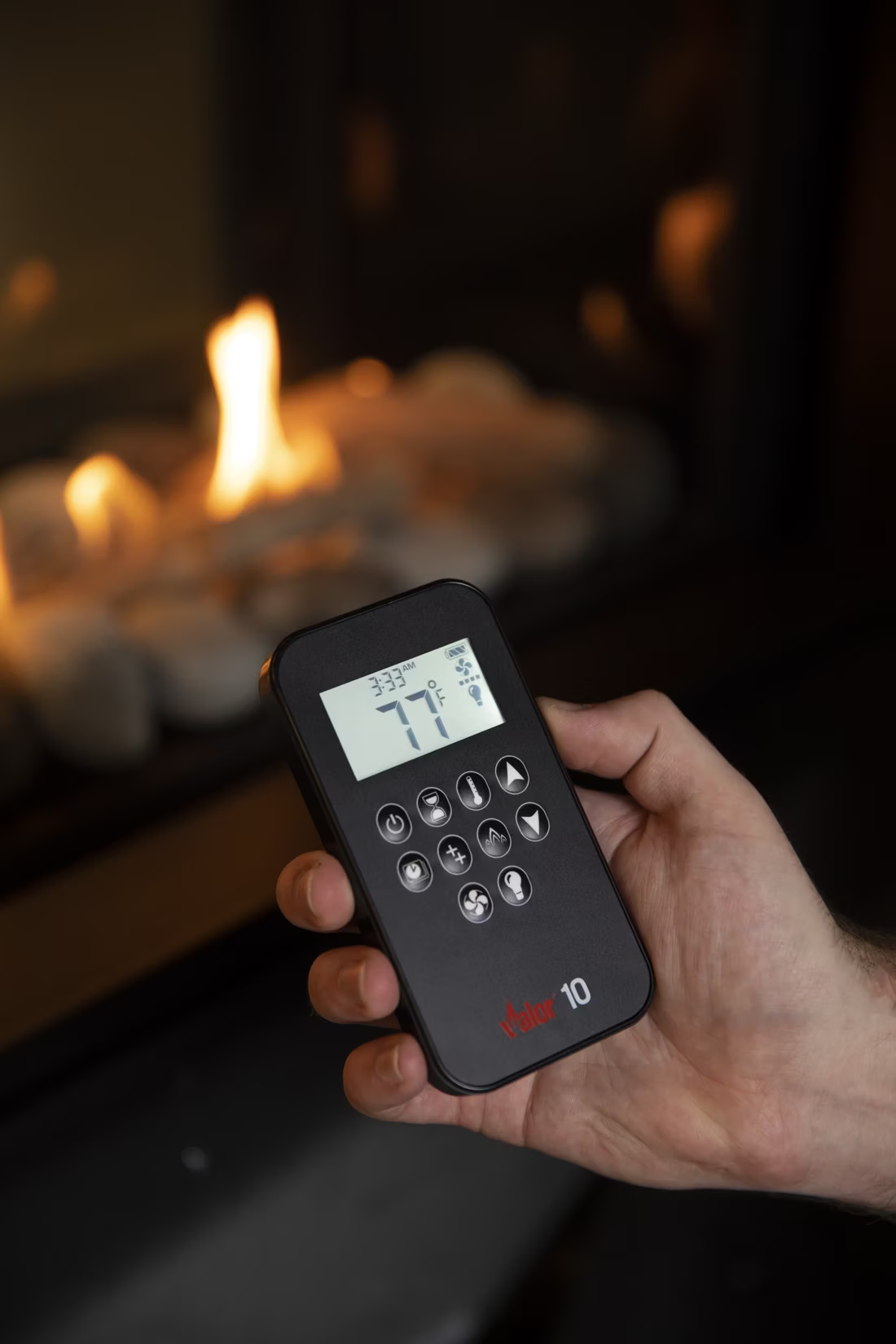
It depends on the ignition system, and in Ester that detail matters more than almost anywhere. Units with a standing pilot or millivolt ignition generate their own tiny electrical current from the pilot flame's thermocouple, so they light and run with a wall switch or remote and never need house power or batteries—a real advantage when a -40°F cold snap trips the grid for hours. Units with battery-backed IPI ignition also work off-grid, but only as long as someone remembers to keep fresh batteries in the unit. Given how routinely Golden Valley Electric's system gets stressed in extreme cold, I'd point most Ester homeowners toward a standing-pilot model as their primary or backup heat source.
What's the difference between a propane fireplace, insert, and stove?
A propane fireplace is a fully built-in unit framed into a wall—the right call for new construction or a remodel where you're not working around an existing hearth. A propane insert slides into an existing masonry fireplace opening and re-vents it, which is common in older Ester homes that started out with a wood-burning fireplace. A propane stove is a freestanding unit, similar in footprint to a wood stove, that can go almost anywhere with the right clearances and a vent run to the outside. For most retrofit projects here, an insert or freestanding stove ends up being simpler to vent through a cold-climate wall than a full built-in.
Do I need a permit to install a propane fireplace in Ester?
Ester falls under the Fairbanks North Star Borough for building permitting, and a new propane appliance typically requires both a building permit and sign-off on the gas line work from a licensed propane installer. Most local hearth dealers coordinate this as part of the job rather than leaving you to pull permits yourself. Because propane tanks and lines also have to be sited with setback and freeze-protection in mind, it's worth using an installer who already works in the borough rather than someone unfamiliar with Interior Alaska code specifics.
Should I get a vented or vent-free propane fireplace in Ester?
Vented, in almost every case. Vent-free propane units release combustion moisture directly into the room, and in a tightly sealed, heavily insulated Interior Alaska home built to handle -40°F winters, that extra moisture has nowhere to go—it tends to show up as frost and condensation on cold surfaces like window frames and closet walls. Direct-vent propane units draw combustion air from outside and exhaust it back outside through a sealed pipe, which keeps indoor humidity and air quality in check regardless of how airtight the house is. Given Ester's non-attainment air quality designation, a sealed direct-vent unit is also simply the cleaner choice.
How often should a propane fireplace be serviced in Ester?
Plan on an annual inspection, ideally in late summer or early fall before the deep cold sets in. A technician will check the burner, pilot or ignition system, the regulator, and the vent termination—which matters here because vent caps can accumulate rime ice or frost in extreme cold and restrict airflow if they're not checked. This is a lighter lift than chimney sweeping for a wood stove, but skipping it is a bad trade when a malfunctioning appliance is also your backup heat during a winter power outage.
Propane vs. wood—which makes more sense for an Ester home?
Plenty of homes here use both, and that's often the smartest answer. Wood—birch, spruce, or cottonwood cut locally—is cheap or free if you're already set up to process it, and it keeps a house warm even with zero utilities running, but it demands ongoing labor and, in a non-attainment area, adds to local winter air quality concerns. Propane costs more per BTU but requires no wood handling, starts instantly, and with a standing-pilot unit, keeps running through the exact kind of extreme-cold power outage that Ester sees most winters. Many homeowners run a fuel oil or propane furnace as primary heat, a propane fireplace for backup and daily convenience, and a wood stove for the coldest stretches or an extended outage.
Can I put a TV above my fireplace?
Yes—with an asterisk. Fireplaces are hot and TVs don't like heat. Either put a mantel between them to deflect rising warmth, or choose a fireplace with heat-management technology that creates a cool zone on the wall above—the wall stays around 125 degrees, barely warm, while the room still gets full heat. If you like clean lines and don't want a mantel, heat management is the answer.
Is my gas fireplace wasting gas?
If it was installed more than 15 years ago, probably. Older gas fireplaces keep a standing pilot light burning all the time, and that little flame can cost a couple hundred dollars a year. Newer models use pilot-on-demand ignition—the pilot lights only when you use the fireplace and goes out when you turn it off.
Can a fireplace actually lower my heating bill?
Yes—by creating a comfort zone. A furnace heats every square foot of the house just to warm the one room you're in; a gas fireplace on low burns roughly a sixth of the gas a typical furnace does. Set the furnace around 55–60 degrees as a baseline, then heat the rooms your family actually uses. Families who heat this way commonly save $20–$60 a month.
Can I install a fireplace myself?
If you're putting a fire in your house on purpose, it's best to work with an expert. Unless you're genuinely experienced in framing, gas line, vent pipe, and the national code on clearances to combustibles, have a professional do it—and ideally the same company that sells you the fireplace, so warranty, service, and liability all live under one roof.
Nearby Dealers
Hearth shops serving Ester and the surrounding area. Every listing shows whether it is a WhyFire partner, a dealer we have verified as authorized for the brands we recommend, or a local business carrying hearth products. No manufacturer pays for placement. How we verify dealers →
Total Toyo
Find your propane fireplace in Ester.
Tell us about your home and Interior Alaska's cold-climate demands, and we'll match you with a trusted local dealer and send over a free Project Guide & Parts List—the exact parts, including the vent kit, for your Ester propane fireplace project.
Find Your Fireplace →