
Built for Eielson AFB housing, built for Interior Alaska cold.
No venting, no solid fuel, no housing-policy headaches—just zone heat and ambiance for one of the coldest bases in the Air Force. Find the right unit and connect with a trusted local dealer.
Every Project Starts From One of These Five Situations
Zero-clearance heat for a place where solid fuel is off the table.
Eielson AFB sits in the Tanana Valley near North Pole, Alaska, at just 536 feet of elevation but squarely in climate zone 8—the harshest heating classification on the map. Winter lows average -18°F, and the base endures a brutally long, deep-cold heating season, more than International Falls, Minnesota, one of the standard cold-climate benchmarks in the Lower 48. The Fairbanks North Star Borough is also a federally designated non-attainment area for wintertime PM2.5: ice fog and deep temperature inversions trap smoke close to the ground for weeks at a stretch, which is a major reason wood and pellet stoves are essentially off the table for most homes here, despite birch, spruce, and cottonwood being the traditional Interior Alaska firewood species.
Privatized family housing on base generally prohibits solid-fuel appliances outright, which leaves electric fireplaces and stoves as one of the few plug-in, no-permit, no-venting options available to military families. The tradeoff is cost: Golden Valley Electric Association's residential rate runs about 30 cents per kWh, among the higher rates in the country, driven by the diesel and naphtha generation that supplements hydro during Interior winters. That makes electric resistance heat a poor fit as a whole-home primary system here, but a genuinely useful one for zone heat, supplemental warmth in a single room, and ambiance in housing where a real wood or gas hearth isn't an option.
Three steps. No salesperson until you're ready.
Tell us about your project
Your zip code, your situation, and the fuel you're leaning toward—or let the answers point you to one.
See what's actually available
The brands dealers within 100 miles genuinely carry—real options, never a catalog mirage.
Get your dealer & Project Guide
A trusted local dealer, plus the free Project Guide & Parts List that names every component of the job.
Frequently Asked Questions
How much does it cost to run an electric fireplace in Eielson AFB?
At Golden Valley Electric Association's residential rate of roughly 30 cents per kWh, a typical 1,500-watt electric fireplace running about four hours a day costs somewhere around $55 a month. That's reasonable for supplemental heat in a den or bedroom, but it's not a substitute for whole-home heat—running electric resistance heat as a primary system through a winter this long and this cold would get expensive fast. Most households here treat it as zone heat layered on top of an oil- or gas-fired furnace or boiler.
Can I install a wood stove in Eielson AFB housing instead of electric?
Generally no. Privatized family housing on base doesn't permit solid-fuel wood stoves, and the surrounding Fairbanks North Star Borough is a federally designated non-attainment area for wintertime particulate pollution—inversions trap wood smoke at ground level for extended stretches each winter. Birch and spruce are the go-to firewood species across the wider Interior, but between the housing restriction and the air-quality designation, wood isn't a realistic option for most homes at Eielson AFB. Electric sidesteps both problems.
Do electric fireplaces need venting or a chimney?
No, and that's a real advantage here. Electric fireplaces and stoves plug into a standard outlet or a dedicated circuit and vent nothing outside. There's no chimney, no exterior wall penetration to seal against -18°F average winter lows, and no combustion appliance permit required. For base housing specifically, that means installation is close to hassle-free compared with any solid-fuel or vented alternative.
Will an electric fireplace heat my whole house?
Not in this climate. Eielson AFB endures a brutally long, deep-cold heating season, more than cold-climate reference points like International Falls, Minnesota, and electric resistance heat isn't efficient—or cheap, at Golden Valley Electric's rates—enough to serve as a primary heat source here. Treat an electric fireplace or stove as zone heat: it can take the edge off a living room or bedroom and reduce furnace cycling, but your oil or gas system should stay the primary heat source for the house.
What's the difference between an electric fireplace and an electric stove?
An electric fireplace is usually built into a wall, mantel, or media console with a wide, low-profile firebox and flame display. An electric stove is a freestanding, cabinet-style unit shaped like a traditional wood stove—a popular look in Interior Alaska cabins and smaller homes that want the stove aesthetic without any venting. Both rely on the same resistance heating element and LED flame technology, so the decision usually comes down to footprint and style rather than performance.
Do I need a permit to install an electric fireplace in Eielson AFB?
A plug-in unit doesn't require a permit. If you're hardwiring a unit to a dedicated circuit or building it into a new wall or mantel surround, standard electrical work rules apply—on base, that runs through the housing facilities office rather than a civilian building department, while off base in the surrounding borough a licensed electrician typically pulls the permit.
Should I consider gas instead of electric for backup heat?
It's worth thinking about. A vented propane or natural-gas fireplace keeps producing real heat during a power outage, which matters when winter equipment failures can knock out electricity for hours at well below zero. An electric fireplace goes dark the moment the power does. Many households in the Fairbanks area end up with both: gas for genuine backup heat output, electric for a no-venting, no-permit ambiance unit in a second room.
What should I look for in an electric fireplace for this kind of climate?
Cold climate doesn't really change electric fireplace selection the way it does for a vented appliance—a unit performs the same in Eielson AFB as it would in Seattle, since nothing is exposed to the outdoors. Focus instead on a true 1,500-watt heater sized to the actual room, a thermostat rather than simple high/low settings for efficient cycling on Golden Valley Electric's rates, and, for base housing, a flush-mount or recessed model if wall depth is limited by the thicker exterior insulation typical of Alaska construction.
Why isn't wood or pellet heat a bigger option here, given how common it is elsewhere in Alaska?
Birch, spruce, and cottonwood are the traditional firewood species across the Interior, and regional pellet brands like Superior Pellet Fuels and Lignetics serve much of the broader Fairbanks area. But Eielson AFB is different from a rural cabin outside the borough: base housing policy generally prohibits solid-fuel appliances, and the Fairbanks North Star Borough's non-attainment status for wintertime particulates has tightened restrictions on wood and pellet burning during inversion events. For military families here, electric for zone heat and ambiance, paired with gas or oil for primary heat, is the practical combination—wood becomes realistic again once you're living off base outside those restrictions.
Do electric fireplaces actually produce heat?
Yes—most put out around 4,800–5,000 BTUs from a standard outlet, which comfortably warms a bedroom, office, or den as a comfort-zone heater. What they won't do is carry a whole house the way wood, gas, or pellet can. Think of electric as ambiance-first with honest supplemental heat: flames on with no heat in July, flames plus warmth in January.
Can I put a TV above my fireplace?
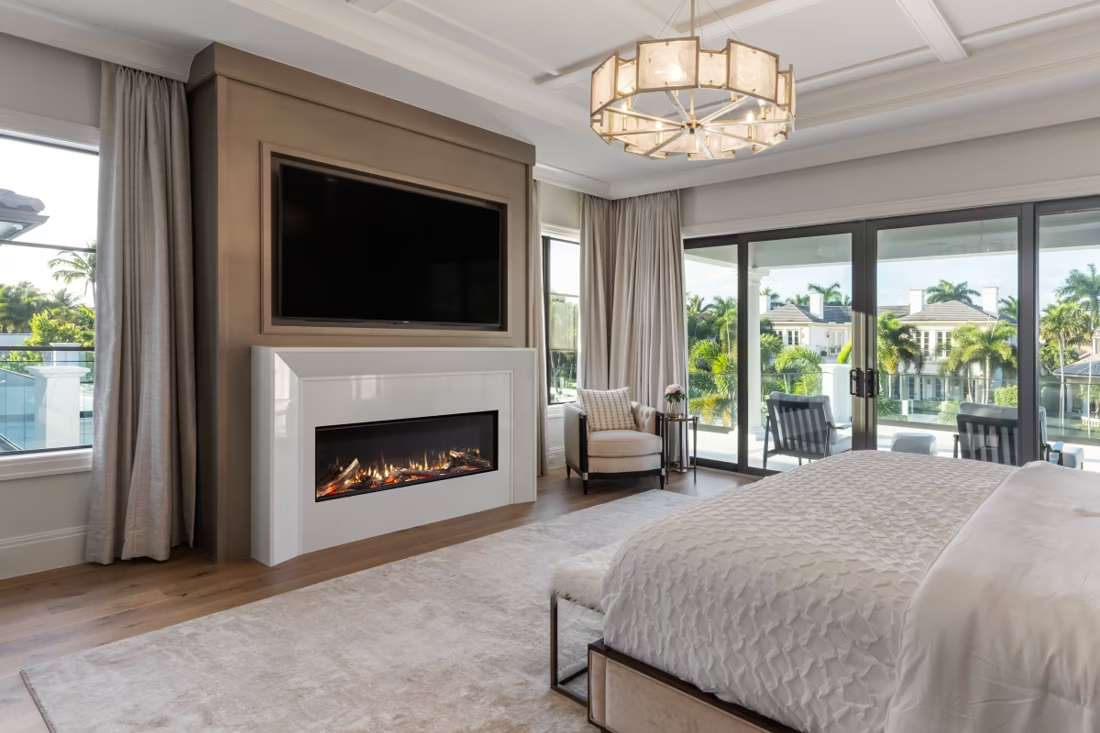
Yes—with an asterisk. Fireplaces are hot and TVs don't like heat. Either put a mantel between them to deflect rising warmth, or choose a fireplace with heat-management technology that creates a cool zone on the wall above—the wall stays around 125 degrees, barely warm, while the room still gets full heat. If you like clean lines and don't want a mantel, heat management is the answer.
Can I install a fireplace myself?
If you're putting a fire in your house on purpose, it's best to work with an expert. Unless you're genuinely experienced in framing, gas line, vent pipe, and the national code on clearances to combustibles, have a professional do it—and ideally the same company that sells you the fireplace, so warranty, service, and liability all live under one roof.
Can a fireplace actually lower my heating bill?
Yes—by creating a comfort zone. A furnace heats every square foot of the house just to warm the one room you're in; a gas fireplace on low burns roughly a sixth of the gas a typical furnace does. Set the furnace around 55–60 degrees as a baseline, then heat the rooms your family actually uses. Families who heat this way commonly save $20–$60 a month.
Nearby Dealers
Hearth shops serving Eielson AFB and the surrounding area. Every listing shows whether it is a WhyFire partner, a dealer we have verified as authorized for the brands we recommend, or a local business carrying hearth products. No manufacturer pays for placement. How we verify dealers →
Total Toyo
Electric Service in Eielson AFB
An electric fireplace's heater draws about 1,500 watts—pennies per hour at local rates.
Golden Valley Elec Assn Inc
G & K, Inc
Find your electric fireplace in Eielson AFB.
Tell us a bit about your home or housing unit and we'll put together your free Project Guide & Parts List—a plan for your electric fireplace project in Eielson AFB with the right parts and a recommended local dealer who understands base housing and Interior Alaska conditions.
Find Your Fireplace →