
Electric fireplaces in Denali Borough: ambiance, not primary heat.
In a climate zone 7 borough where winters routinely dip well below zero along the Parks Highway corridor, an electric fireplace is a nice supplemental feature—not a substitute for the wood, oil, or propane heat most Denali Borough homes actually depend on. We'll help you figure out where one fits, and match you with a local dealer who can install it correctly.
Every Project Starts From One of These Five Situations
Denali Borough's cold doesn't leave much room for electric resistance heat.
Denali Borough is sparsely populated—under 2,000 people spread across a huge stretch of Interior Alaska from Healy down to Cantwell, most of it wilderness surrounding Denali National Park. It sits in climate zone 7, among the coldest zones recognized in U.S. building code, with subzero cold snaps that can hold for days at a time. That reality has shaped how homes here are heated for generations: birch, spruce, and cottonwood cut locally for wood stoves, backed up by oil or propane furnaces, because those systems keep working when the temperature won't climb out of the negatives.
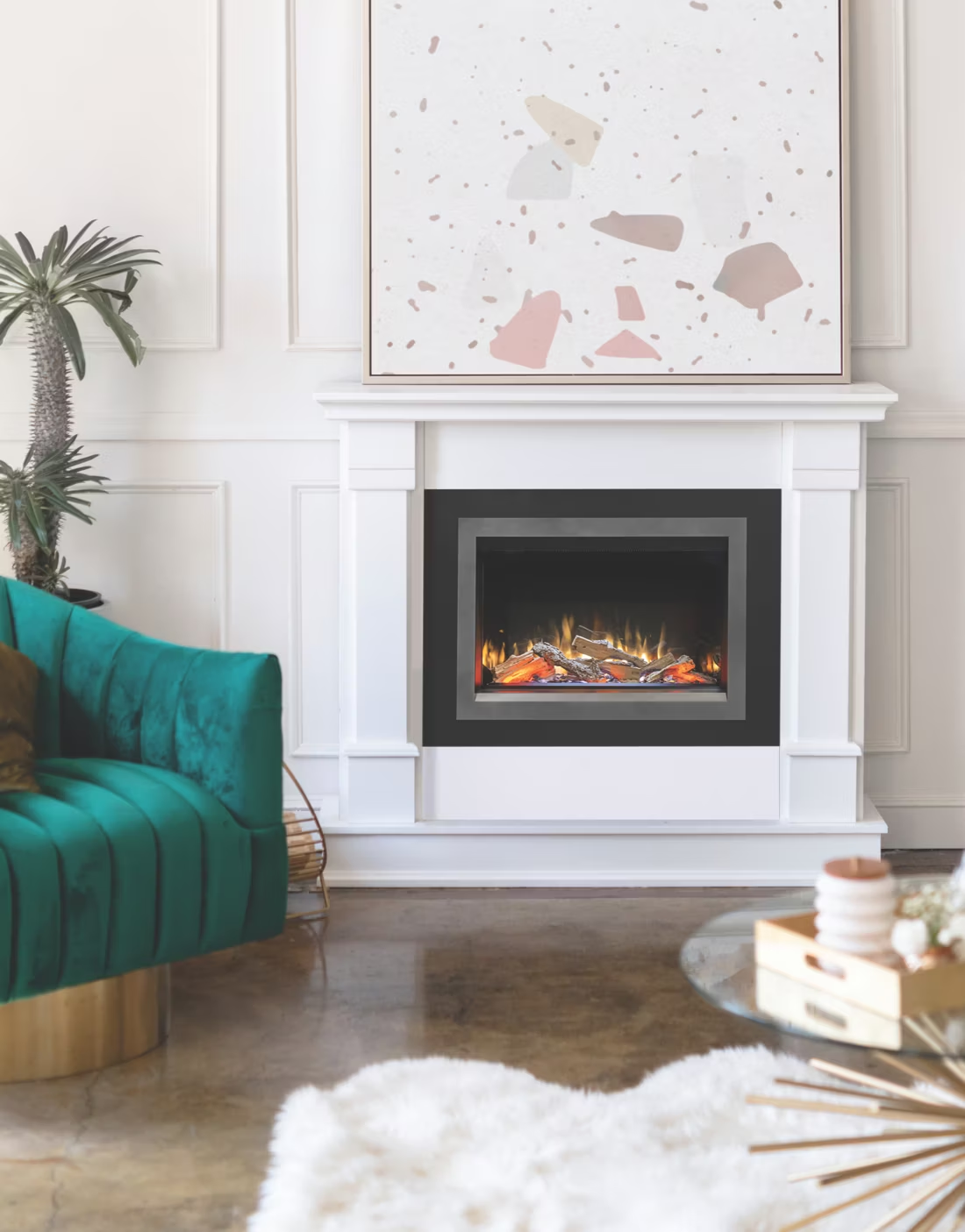
Electricity in the borough is neither cheap nor uniformly available. Golden Valley Electric Association serves the Healy corridor on grid power, while more remote stretches toward Cantwell run on smaller diesel-fed microgrids, and per-kWh rates in either case run well above what homeowners in the Lower 48 are used to paying. Running an electric fireplace as a primary heat source against a Denali Borough winter simply doesn't pencil out, which is why we classify electric as not applicable for whole-home heating here. That said, a zero-clearance electric fireplace or insert still has a place—as an ambiance feature or single-room supplement in a home that's already wood-heated or grid-connected, not as the thing standing between your family and the cold.
Three steps. No salesperson until you're ready.
Tell us about your project
Your zip code, your situation, and the fuel you're leaning toward—or let the answers point you to one.
See what's actually available
The brands dealers within 100 miles genuinely carry—real options, never a catalog mirage.
Get your dealer & Project Guide
A trusted local dealer, plus the free Project Guide & Parts List that names every component of the job.
Frequently Asked Questions
How much does it cost to install an electric fireplace in Denali Borough?
A plug-in electric fireplace or a freestanding unit typically runs $300 to $1,500 installed, since it just needs a standard outlet and no venting. A built-in electric insert or wall unit costs more once you factor in a dedicated circuit—often necessary given how loaded Denali Borough panels can already be with electric baseboard or in-floor heat—and a licensed electrician's time, which runs higher here than in more accessible parts of Alaska due to travel and remote labor rates. Either way, this is one of the least expensive hearth projects available; the honest caveat is that it's buying ambiance and supplemental warmth in one room, not a heating system for the house.
Can an electric fireplace actually heat my Denali Borough home through the winter?
Not in any meaningful way. Most electric fireplaces top out around 1,500 watts, roughly 5,000 BTU—enough to take the chill off a single room on a mild day, but nowhere near what's needed when temperatures along the Parks Highway corridor hold in the negative teens or worse for a stretch. Homes here that use electric fireplaces treat them as a supplement to an existing wood stove, oil furnace, or electric baseboard system already sized for the climate, not as a stand-alone heat source. That's the honest framing for climate zone 7—this isn't a Klamath Falls or Bozeman situation where electric can shoulder real heating load.
Why does Find My Fireplace list electric as "not applicable" for Denali Borough?
It comes down to grid reality and physics. Golden Valley Electric Association serves the Healy area, while other parts of the borough run on small diesel microgrids or off-grid systems—both push electricity costs well above what most heating budgets can absorb if you're trying to use resistance heat as a primary system. Combine that with a subarctic climate where sustained subzero cold is normal, and electric resistance heat (which an electric fireplace is) just can't keep pace the way a wood stove burning local birch or spruce can. We'd rather tell you that plainly than pretend an electric unit belongs at the center of your heating plan here.
What do most homes in Denali Borough actually use for heat?
Wood is the backbone for a lot of households—birch, spruce, and cottonwood are the species people cut locally, and many properties in the borough have enough acreage or access to standing timber that self-cutting is straightforward. Oil and propane furnaces are the other common primary systems, particularly in newer construction around Healy. Electric baseboard or in-floor heat shows up as a secondary or zone system in some homes, but rarely as the sole heat source given the cost of power. An electric fireplace, when it appears at all, is almost always layered on top of one of these systems rather than replacing it.
Where does an electric fireplace actually make sense in Denali Borough?
The best fit is a home or cabin already on reliable grid power—mostly the Healy corridor served by GVEA—where the fireplace is going into a living room, sunroom, or bonus space as an ambiance feature or mild supplemental warmth for a room that's already comfortably heated by wood or a furnace. It also works well in seasonal or vacation properties near the national park entrance where you want the look and glow of a fire without dealing with wood storage or venting for a space that's only occupied part of the year. It's a much harder sell in off-grid cabins or homes on a diesel microgrid, where every kilowatt-hour is precious and better spent elsewhere.
Do I need a permit to install an electric fireplace in Denali Borough?
A simple plug-in electric fireplace generally doesn't require a permit—it's no different than plugging in any other appliance. A built-in electric insert or wall unit that requires a new dedicated circuit typically does need an electrical permit, since that's new wiring work rather than a decorative install. A licensed electrician working in the borough can tell you which category your project falls into and pull the right permit before starting the circuit work.
What's the difference between an electric fireplace and an electric insert?
A freestanding electric fireplace is a self-contained unit you can place against a wall and plug in—no modification to the room required, and it can move with you. An electric insert is built to slide into an existing masonry fireplace opening or a framed wall cavity, giving a more built-in, finished look. In Denali Borough, where most existing fireplaces are wood-burning masonry units, an insert can repurpose that opening for a low-maintenance ambiance feature without touching the wood stove or furnace that's actually carrying the heat load.
Will my electric fireplace still work if the power goes out?
No—an electric fireplace is entirely dependent on grid or generator power, and it stops working the instant the electricity does. That matters more in Denali Borough than in most places, since outages on the smaller diesel microgrids serving parts of the borough can run longer than a typical utility outage in the Lower 48. This is another reason wood heat remains the backbone system for so many local households: a birch- or spruce-fed stove keeps working through an outage that would leave an all-electric setup, fireplace included, cold and dark.
Electric vs. wood—which is right for my Denali Borough home?
For actual heat, wood wins clearly here. Birch, spruce, and cottonwood are locally available, a wood stove keeps running through power outages that hit the borough's grid and microgrids alike, and it's the system most homes are already built around. Electric's advantage is convenience and cleanliness for a small, specific use—instant ambiance in a living room, no ash, no wood handling, nothing to feed at 2 a.m. In practice, most Denali Borough homeowners who want both end up with wood as the real heat source and an electric fireplace as a secondary feature in one room, rather than choosing one to the exclusion of the other.
Can I put a TV above my fireplace?
Yes—with an asterisk. Fireplaces are hot and TVs don't like heat. Either put a mantel between them to deflect rising warmth, or choose a fireplace with heat-management technology that creates a cool zone on the wall above—the wall stays around 125 degrees, barely warm, while the room still gets full heat. If you like clean lines and don't want a mantel, heat management is the answer.
Do electric fireplaces actually produce heat?
Yes—most put out around 4,800–5,000 BTUs from a standard outlet, which comfortably warms a bedroom, office, or den as a comfort-zone heater. What they won't do is carry a whole house the way wood, gas, or pellet can. Think of electric as ambiance-first with honest supplemental heat: flames on with no heat in July, flames plus warmth in January.
How much should I budget for a fireplace?
For an average home—covering the fireplace, the vent pipe, and basic installation—a budget between $3,900 and $5,500 gives you a lot of options across wood, gas, and pellet. By the time you add finish work, gas line, and electrical, the average complete installation lands between $5,000 and $12,000 all-in. In a remodel or new build, a good rule is to put about 2.5% of the total project cost toward the fireplace.
Does a fireplace add value to my home?
On average, a fireplace adds back to the home about the same amount you spent installing it. Add the monthly savings from heating the rooms you actually use instead of the whole house—often hundreds of dollars a year—and the value case is strong before you even count what a fire does for how your family uses the room.
Find the right electric fireplace for your Denali Borough home.
Tell us about your home and how you'd actually use an electric fireplace—ambiance, a single supplemental room, a seasonal cabin—and we'll match you with a trusted local dealer and a free Project Guide & Parts List, with the exact parts and a plan sized honestly for a Denali Borough winter. copy_cta_eyebrow_fix
Find Your Fireplace →