
Clean, Smoke-Free Heat for College's Coldest Nights.
A smoke-free way to add warmth in one of the coldest inhabited places in the country. Find the right electric fireplace or insert and connect with a trusted local dealer.
Every Project Starts From One of These Five Situations
A clean supplement to Interior Alaska's toughest winters.
College, Alaska is an unincorporated community just northwest of Fairbanks, home to the University of Alaska Fairbanks and sitting in Climate Zone 8—the coldest zone in the IECC classification system. At 482 feet elevation in the Tanana Valley, College logs an average winter low of -12°F and faces a heating load greater than the entire heating season of International Falls, Minnesota, the self-proclaimed 'Icebox of the Nation.' Interior Alaska winters run long, dark, and cold enough that heating a home is a serious planning exercise, not a seasonal afterthought.
Golden Valley Electric Association, the member-owned cooperative that serves most of College and the surrounding Fairbanks North Star Borough (with G & K, Inc. covering a small slice nearby), bills residential customers roughly 30.3 cents per kilowatt-hour—nearly double the national average. That rate makes electric resistance heat impractical as a home's sole heat source, which is why oil furnaces and wood stoves burning local birch, spruce, and cottonwood still carry most of the load in College homes. Where electric fireplaces earn their place is as clean, smoke-free zone heat: warming a bedroom, home office, or converted garage without adding to the wood smoke that regularly pushes this non-attainment area into winter air quality advisories.
Three steps. No salesperson until you're ready.
Tell us about your project
Your zip code, your situation, and the fuel you're leaning toward—or let the answers point you to one.
See what's actually available
The brands dealers within 100 miles genuinely carry—real options, never a catalog mirage.
Get your dealer & Project Guide
A trusted local dealer, plus the free Project Guide & Parts List that names every component of the job.
Frequently Asked Questions
How much does an electric fireplace installation cost in College?
Electric fireplace inserts and stoves typically install for $400 to $2,500 in College, well below wood or oil systems, since there's no chimney, gas line, or venting to run—most units plug into a standard 120V outlet, while larger built-ins may need a dedicated 240V circuit. Because there's no flue or combustion air requirement, installation is usually a single afternoon's work for a licensed electrician, and cost is driven mostly by the unit itself and any surrounding mantel or cabinetry work.
Is electric heat worth it given Golden Valley Electric Association's rates?
At GVEA's residential rate of roughly $0.30 per kWh, running a 1,500-watt electric fireplace for supplemental heat costs around 45 cents an hour—noticeable if run around the clock through a College winter, but modest compared to trying to heat an entire home electrically. Most local owners use electric units for zone heat in one room while oil or wood carries the base heating load, which keeps the electric bill manageable even at Interior Alaska's above-average rates.
What size electric fireplace do I need for a College home?
Sizing here is less about total square footage and more about intended use. A small 1,500-watt insert or wall-mount unit comfortably takes the chill off a bedroom or home office in the 150-400 sq ft range; it won't heat a whole house through a -40°F cold snap, and it isn't meant to. Treat an electric fireplace in College as zone heat or ambiance layered on top of the oil furnace or wood stove that's carrying your main heating load, not a replacement for it.
Will an electric fireplace work during a power outage?
No, and this is the honest tradeoff worth knowing before you buy. Electric fireplaces need grid power to operate, so during a Golden Valley Electric Association outage—which does happen during severe cold snaps or ice storms—an electric unit goes dark along with everything else in the house. Many College households keep a wood stove or oil stove as true backup heat for that reason, and think of the electric fireplace as an everyday-use, supplemental appliance rather than emergency heat.
Electric vs. wood—which is right for my College home?
Wood, typically birch, spruce, or cottonwood cut locally, remains the backup and, in many older College homes, a primary heat source, prized because it works without electricity and burns cheap in a region with abundant timber. Electric fireplaces can't compete on raw heat output or outage resilience, but they win on cleanliness: no ash, no smoke, and no contribution to the fine particulates that put this area in non-attainment status during winter inversions. Many households run both—wood or oil for base heat, electric for a smoke-free living room or bedroom unit on milder nights.
Do I need a permit to install an electric fireplace in College?
Most electric fireplace installations in College don't require a building permit the way a wood stove or gas insert would, since there's no chimney, gas line, or combustion venting involved. If your unit calls for a new dedicated circuit, an electrical permit through the Fairbanks North Star Borough is standard practice, and it's worth having a licensed electrician pull it—Interior Alaska's deep cold puts real demand on home wiring, and a properly permitted circuit protects against overload.
What's the difference between an electric fireplace, insert, and stove?
An electric fireplace is typically a built-in wall unit, sometimes recessed into a mantel or false chimney chase, common in newer College homes without an existing masonry fireplace. An electric insert is sized to slide into an existing wood or masonry firebox, a straightforward way to update an old fireplace that's seen less use due to wood-burning curtailment days. An electric stove mimics the look of a freestanding wood stove and can go almost anywhere near an outlet. All three rely on the same resistance-heat or infrared technology—the real difference is form factor and where it fits your home.
What features matter most for an electric fireplace in Interior Alaska?
Because Interior Alaska homes run dry heat all winter—indoor humidity often drops into the teens once the furnace or wood stove is running—look for electric fireplace models with fan-forced heat and a built-in thermostat rather than pure infrared, which can feel harsh in an already parched room. A remote and adjustable heat settings matter more here than in milder climates, since dialing in heat only when you're in the room helps manage the cost at $0.30/kWh. Flame-only modes without the heater running are popular locally for College's brief, bright summer nights when ambiance is the goal, not warmth.
Does College's air quality status affect the case for electric heat?
College and the surrounding Fairbanks North Star Borough are classified as a non-attainment area for fine particulate matter, driven largely by wintertime wood smoke trapped by temperature inversions across the Tanana Valley. On advisory days, voluntary or mandatory wood-burning curtailment can apply. An electric fireplace is one of the few heat sources unaffected by these advisories—it produces zero local emissions, making it a practical way to keep a room warm without adding to the inversion smoke that settles over the valley on the coldest, stillest nights.
Can I put a TV above my fireplace?
Yes—with an asterisk. Fireplaces are hot and TVs don't like heat. Either put a mantel between them to deflect rising warmth, or choose a fireplace with heat-management technology that creates a cool zone on the wall above—the wall stays around 125 degrees, barely warm, while the room still gets full heat. If you like clean lines and don't want a mantel, heat management is the answer.
Does an electric fireplace need a vent or chimney?
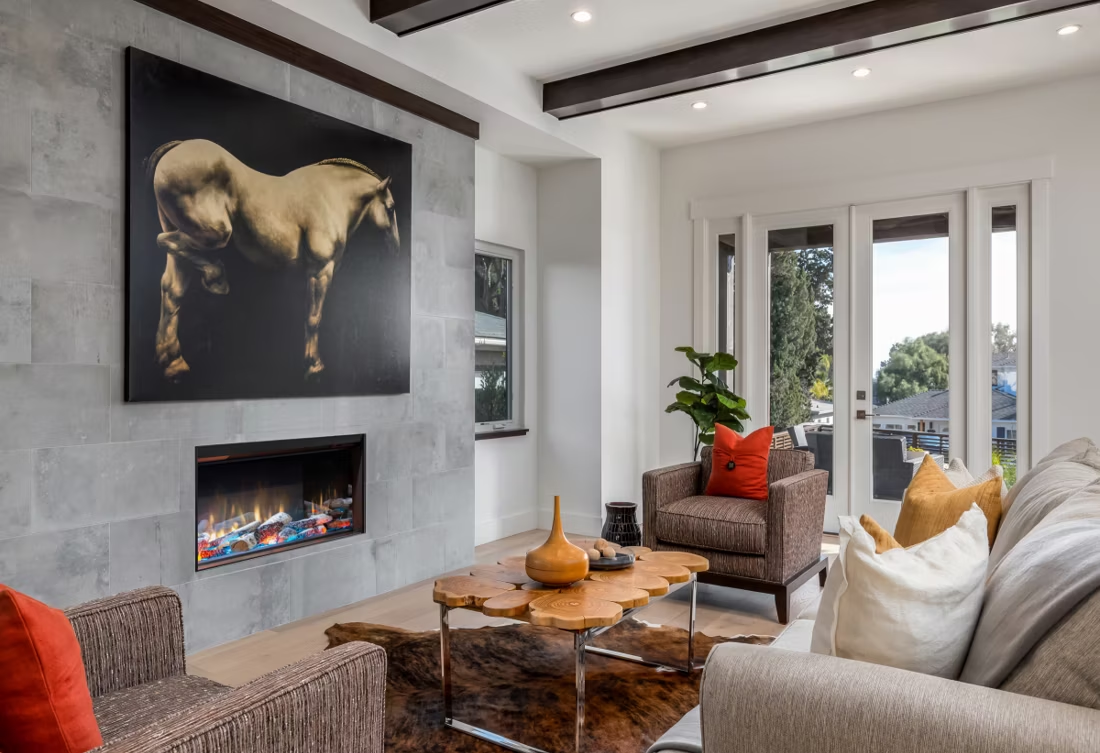
No—that's its superpower. An electric fireplace needs a wall and an outlet, period. No vent pipe, no gas line, no clearances to design around, which is why it works in bedrooms, offices, apartments, and walls where venting a gas or wood unit would be impractical or impossible. Installation is typically the simplest and least expensive of any fireplace type.
Can a fireplace actually lower my heating bill?
Yes—by creating a comfort zone. A furnace heats every square foot of the house just to warm the one room you're in; a gas fireplace on low burns roughly a sixth of the gas a typical furnace does. Set the furnace around 55–60 degrees as a baseline, then heat the rooms your family actually uses. Families who heat this way commonly save $20–$60 a month.
Does a fireplace add value to my home?
On average, a fireplace adds back to the home about the same amount you spent installing it. Add the monthly savings from heating the rooms you actually use instead of the whole house—often hundreds of dollars a year—and the value case is strong before you even count what a fire does for how your family uses the room.
Nearby Dealers
Hearth shops serving College and the surrounding area. Every listing shows whether it is a WhyFire partner, a dealer we have verified as authorized for the brands we recommend, or a local business carrying hearth products. No manufacturer pays for placement. How we verify dealers →
Total Toyo
Electric Service in College
An electric fireplace's heater draws about 1,500 watts—pennies per hour at local rates.
Golden Valley Elec Assn Inc
G & K, Inc
Find your electric fireplace in College.
Tell us about your home and we'll match you with a trusted local dealer and send along a free Project Guide & Parts List—the exact parts and a recommended installer for your electric fireplace project in College.
Find Your Fireplace →