
Steady heat for an island chain that never really warms up.
Unalaska, Akutan, Atka, Nikolski, and Adak log 8,526 heating degree days a year—heating demand on par with Fargo, ND—even though winter lows average a relatively mild 29°F. There's no gas pipeline out here; propane comes in by barge. I'll match you with a trusted local dealer who understands that logistics reality and can size a system that actually runs on these islands.
Every Project Starts From One of These Five Situations
Propane, not pipeline, keeps these islands warm.
The Aleutians West Census Area covers some of the most remote inhabited ground in North America—from the fishing port of Unalaska/Dutch Harbor west through Akutan, Atka, and Nikolski, out to Adak near the far end of the chain. This is climate zone 7, maritime subarctic: winter lows average a mild 29°F, but 8,526 heating degree days mean the cold here isn't a matter of brutal nighttime extremes so much as relentless, damp, windy chill that never fully lets up, summer included. There's no natural gas main anywhere in the census area—there's no pipeline infrastructure to connect to. Every gas appliance out here runs on propane, delivered by barge or fuel tanker alongside groceries and building supplies, on a schedule that bends to sea conditions and weather far more than any mainland delivery route.
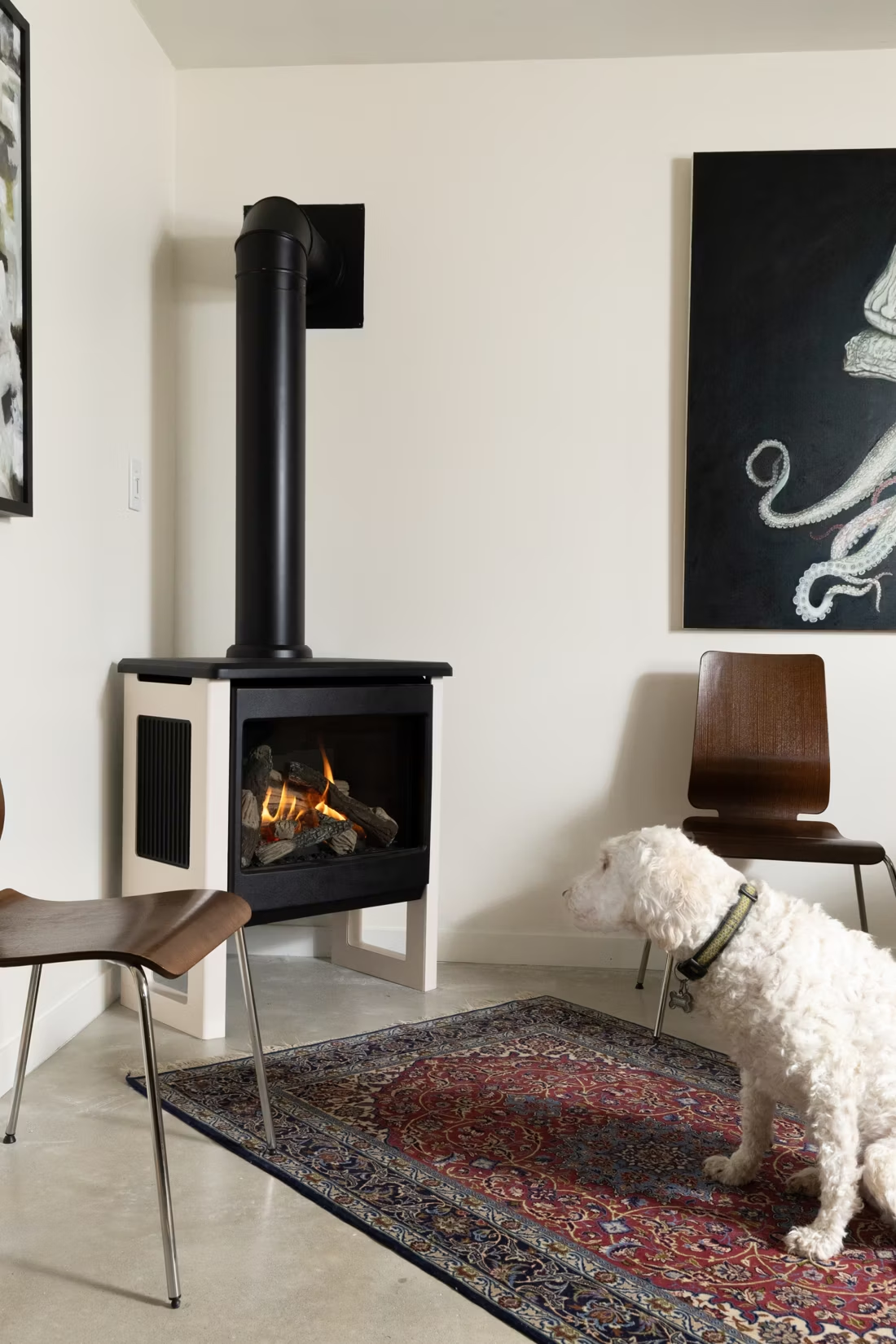
That barge dependency is also why wood and pellet heat barely register here. The islands themselves are treeless volcanic tundra—birch, spruce, and cottonwood are mainland Alaska species, not something you're cutting locally—and shipping bagged pellets from suppliers like Superior Pellet Fuels or Lignetics out to Atka or Nikolski adds enough freight cost that pellet stoves are effectively a non-starter. Propane and electricity, generated locally and largely from diesel, are the two fuels that actually work at this scale. A direct-vent propane fireplace or stove gives a household heat that doesn't depend on the municipal grid staying up through a winter storm, which matters when Unalaska's utility system is the only game in town.
Three steps. No salesperson until you're ready.
Tell us about your project
Your zip code, your situation, and the fuel you're leaning toward—or let the answers point you to one.
See what's actually available
The brands dealers within 100 miles genuinely carry—real options, never a catalog mirage.
Get your dealer & Project Guide
A trusted local dealer, plus the free Project Guide & Parts List that names every component of the job.
Frequently Asked Questions
How much does a propane fireplace installation cost in the Aleutians West?
There's no single number, because freight is the biggest cost variable out here rather than labor. A project in Unalaska, which sees regular barge and air cargo service as the region's commercial hub, will generally cost less to install than the same unit shipped onward to Akutan, Atka, Nikolski, or Adak, where freight has to make an additional leg and dealer travel adds to the bill. Expect your local dealer to quote the appliance, direct-vent kit, and any propane tank work as one package, and to build in a realistic timeline around the next barge sailing rather than a next-day delivery date.
Is there natural gas service anywhere in the Aleutians West Census Area?
No. None of the communities here—Unalaska, Akutan, Atka, Nikolski, or Adak—are connected to a natural gas pipeline, and given the distances and terrain involved, none likely ever will be. Every gas fireplace, insert, or stove installed in the region runs on propane, supplied from a tank set at the home and refilled by barge or tanker delivery rather than a utility line. If you've lived somewhere with piped gas before, plan on your dealer walking you through tank sizing and delivery scheduling instead.
Do I need a permit to install a gas fireplace here?
It depends which community you're in. Inside the City of Unalaska, new gas appliance installations go through the city's building department, and the gas/propane line work needs to be done by a qualified installer. In the smaller unincorporated communities—Akutan, Atka, Nikolski, Adak—there's often no local building official to pull a permit from, but the appliance still needs to be UL-listed and installed to code, and your propane supplier will have its own requirements for tank placement and line work. A dealer experienced in the region will tell you straight which paperwork actually applies to your community.
What size gas fireplace or stove do I need for this climate?
Aleutians West winters are less about deep-freeze nights and more about cold, wet, windy conditions that persist for most of the year—that's how the area racks up 8,526 heating degree days despite winter lows averaging only 29°F. Most homes here run a primary heating oil or diesel furnace with a direct-vent propane fireplace or stove as supplemental heat for the main living space, or as backup for when fuel oil delivery is delayed by weather. A mid-size direct-vent unit, properly sized to the room rather than the whole house, usually covers that role well.
How does propane get to a home in Atka, Nikolski, or Adak, and how much should I keep on-site?
Propane reaches these communities by barge or fuel tanker on a schedule set by sea conditions, ice, and freight logistics—not a fixed weekly route like a mainland propane truck. Because a delivery can slip by weeks if a storm rolls through the Bering Sea, households in the smaller communities typically keep a larger propane reserve on-site than you'd see in the Lower 48, and plan tank refills well ahead of when they'll actually run low. Your local propane supplier can help size a tank that gives you real margin between deliveries.
How often does a propane fireplace need maintenance in this climate?
Plan on an annual inspection, and pay attention to the marine environment when you do it. Salt-laden air off the Bering Sea and North Pacific accelerates corrosion on vent caps, exterior venting terminations, and any exposed metal fittings faster than it would inland. Ask your installer about stainless steel venting components and corrosion-resistant hardware up front—it costs a bit more but saves a barge-scheduled repair trip a few years down the road.
Why doesn't wood heat make sense out here?
The Aleutian Islands are treeless volcanic tundra—there's no standing timber to cut, which is the main reason wood stoves are essentially absent from the Aleutians West Census Area despite being common elsewhere in Alaska. Birch, spruce, and cottonwood are interior and mainland Alaska species; getting cordwood to Unalaska, Akutan, or Adak would mean shipping it in by barge at a cost that makes little sense next to propane. Historically, driftwood and coastal debris supplemented heat in some households, but that's not a basis for a modern hearth installation. Propane and electric heat are the realistic options here.
What happens to my gas fireplace if the power goes out?
It depends on the ignition system. A propane fireplace with intermittent pilot ignition (IPI) typically runs on battery backup and will keep working through a power outage, which matters in a region served by an isolated municipal diesel grid that can be knocked out by the same storms that delay barge deliveries. A unit with a standing pilot and thermocouple-generated power for the valve, like many Valor models, doesn't need batteries at all. Given how disconnected the Aleutians West grid is from any regional backup, ask your dealer specifically about the ignition system before you commit to a model.
Are there rebates or incentive programs for a gas fireplace project here?
There's no state incentive program specific to gas hearth appliances in Alaska comparable to what some Lower 48 states offer. What's worth checking is whether your household qualifies for Alaska Housing Finance Corporation weatherization or home energy assistance programs, which sometimes cover heating-system upgrades as part of a broader efficiency package—a local dealer or your community's housing office can tell you whether a specific project would qualify. Otherwise, the bigger financial win in the Aleutians West tends to be reduced heating oil consumption from adding an efficient supplemental propane unit, not a rebate check.
Can I put a TV above my fireplace?
Yes—with an asterisk. Fireplaces are hot and TVs don't like heat. Either put a mantel between them to deflect rising warmth, or choose a fireplace with heat-management technology that creates a cool zone on the wall above—the wall stays around 125 degrees, barely warm, while the room still gets full heat. If you like clean lines and don't want a mantel, heat management is the answer.
Why is my open fireplace making my house colder?
Open fireplaces suck—literally. As the fire burns, it consumes air your furnace already paid to heat and pulls it out through the chimney, so the house is actually colder after the fire goes out than before you lit it. An insert fixes this: it seals the chimney, puts fixed glass across the front, and turns that hole in your house into a real heat source.
What is an in-home preview and do I need one?
It's a visit where a hearth professional measures your space, confirms the model you picked actually works in your home, and walks the specs—framing, gas line, venting, finish work—before anything is ordered. Some details you just can't know until you see the house. Never make a down payment without one; it's the single most-skipped step that burns buyers.
How much should I budget for a fireplace?
For an average home—covering the fireplace, the vent pipe, and basic installation—a budget between $3,900 and $5,500 gives you a lot of options across wood, gas, and pellet. By the time you add finish work, gas line, and electrical, the average complete installation lands between $5,000 and $12,000 all-in. In a remodel or new build, a good rule is to put about 2.5% of the total project cost toward the fireplace.
Get your free Project Guide & Parts List for a propane fireplace in the Aleutians West.
Tell me about your home, your community, and how you plan to use the fireplace, and I'll match you with a trusted local dealer and send a free Project Guide & Parts List—the exact equipment, vent kit, and propane setup for your project, planned around real barge delivery timelines instead of guesswork.
Find Your Fireplace →