
Real warmth for Union Springs, no chimney required.
Union Springs winters rarely demand a wood stove or a gas line. Find the right electric fireplace for supplemental warmth and everyday ambiance, and connect with a trusted local dealer.
Every Project Starts From One of These Five Situations
Electric heat fits Bullock County's mild winters.
Union Springs sits at 487 feet in Bullock County's Black Belt, where the average winter low hovers around 34°F and the area has a mild, short heating season—a fraction of what a place like Fargo, ND or Duluth, MN racks up in a single cold week. That's climate zone 3A: mild enough that most homes here don't need a heating appliance built to survive single-digit nights. What they need is supplemental warmth for the handful of genuinely cold nights each winter, plus year-round ambiance the rest of the time. That's the gap an electric fireplace fills without asking for a chimney, a gas line, or a wood pile.
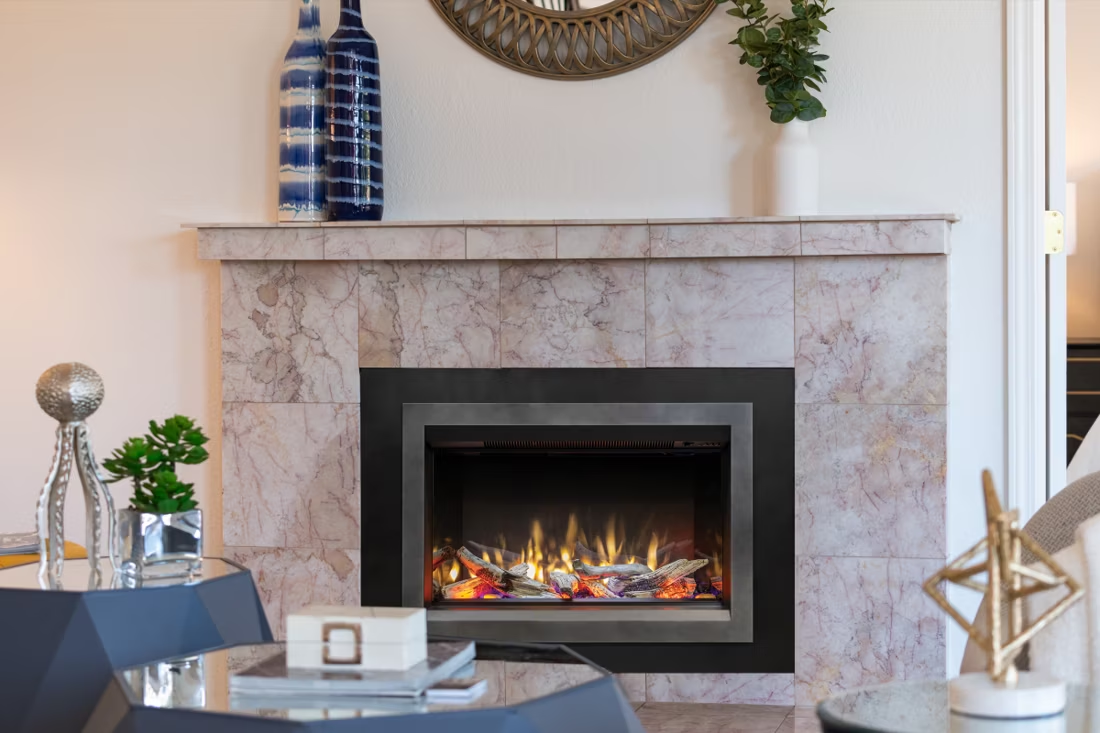
In town, Alabama Power Co serves most residential accounts; out in rural Bullock County, Dixie Electric Cooperative covers a lot of the same ground. At the local residential rate of roughly $0.1677 per kWh, an electric fireplace is cheap to run and even cheaper to install compared to wood or gas—many units plug straight into an existing outlet, and even a built-in model with a dedicated circuit rarely requires the kind of structural or venting work a masonry fireplace demands. For a lot of Union Springs homes, that combination of low upfront cost and low fuss is the whole appeal.
Three steps. No salesperson until you're ready.
Tell us about your project
Your zip code, your situation, and the fuel you're leaning toward—or let the answers point you to one.
See what's actually available
The brands dealers within 100 miles genuinely carry—real options, never a catalog mirage.
Get your dealer & Project Guide
A trusted local dealer, plus the free Project Guide & Parts List that names every component of the job.
Frequently Asked Questions
How much does an electric fireplace installation cost in Union Springs?
Most Union Springs installs fall between $500 and $2,500. A plug-in electric insert or a freestanding electric stove that uses an existing 120V outlet sits at the low end—sometimes it's just the cost of the unit plus a couple hours of labor to frame it into an existing opening. A built-in wall unit or a custom mantel package that needs a dedicated 240V circuit run by a licensed electrician lands toward the higher end. There's no chimney, no gas line, and no venting to price in, which is the main reason electric costs less than wood or gas in this market.
What size electric fireplace do I need for my home?
Electric fireplaces are rated in BTUs, and most residential units top out around 4,000-5,000 BTUs—enough to comfortably supplement a 400 to 1,000 square foot space, which covers a living room or den in most Union Springs homes. Given the area's mild, short heating season, very few homeowners here are trying to heat an entire house with an electric fireplace; it's almost always a zone-heating or ambiance decision layered on top of central heat. A local dealer can walk through your room dimensions and insulation to confirm the right unit.
Will an electric fireplace actually heat my room, or is it just for looks?
Both, depending on the model. Most electric fireplaces sold today include a built-in fan-forced heater alongside the flame effect, and you can usually run the visual flame with the heat off if you just want ambiance on a mild evening. Given Union Springs's average winter low of 34°F, an electric unit is genuinely useful supplemental heat on the coldest nights and works fine as a standalone heat source in a den or bonus room where running the central heat pump for one space doesn't make sense.
What's the difference between an electric insert, an electric stove, and a wall-mount unit?
An electric insert is built to slide into an existing fireplace opening—a common choice if you have an old masonry fireplace you're not using for wood anymore. An electric stove is a freestanding cabinet unit that sits on the floor like a wood stove, useful for rooms without an existing fireplace. A wall-mount or built-in unit is framed into a wall, often with a custom surround, and tends to be the most involved (and most expensive) of the three because of the electrical work and finish carpentry involved. Which one fits depends on whether you're converting an existing fireplace or starting from a blank wall.
Do I need a permit to install an electric fireplace in Union Springs?
A simple plug-in unit generally doesn't require a permit since it doesn't involve new wiring. If you're adding a built-in unit that needs a new dedicated circuit, that electrical work typically does require a permit through the local building department, and it needs to be pulled by a licensed electrician regardless of jurisdiction. Most hearth dealers who install built-in electric units coordinate this as part of the job, so you're not left tracking down the paperwork yourself.
Electric vs. wood—which makes more sense for a Union Springs home?
Wood is genuinely available and affordable here—oak, pine, and hickory are all common locally, and there are no air quality restrictions in the area to worry about. Wood also keeps working during a power outage, which electric can't do. But wood means chimney maintenance, ash cleanup, and buying or cutting fuel for heat you may only need a few weeks a year given the mild climate. Electric skips all of that: no venting, no permits for a plug-in unit, and instant on-off operation. For a primary heat source in a drafty older farmhouse, wood still has an edge. For ambiance and light supplemental warmth in most Union Springs living rooms, electric is simpler and cheaper.
Electric vs. gas—which is the better fit here?
Gas fireplaces in this area typically run on propane rather than natural gas, since utility gas service is limited around Union Springs—that means a propane tank, a gas line, and a higher install cost before you even get to the unit itself. Electric skips the fuel supply question entirely; you're working with wiring you likely already have or a straightforward circuit addition. For homeowners who want real flame-look heat without dealing with a propane contract, electric is usually the lower-friction choice.
Electric vs. pellet—how do they compare?
Pellet stoves burn compressed wood pellets—brands like Lignetics, Hamer Pellet Fuel, and Greenway Renewable Energy are all sold regionally—and like electric units, they need power to run the auger and blower, so neither works in an outage without a battery backup. But pellet stoves still need venting, a hopper you load by hand, and periodic ash cleanup. Electric fireplaces need none of that; you're plugging in or wiring a circuit, not managing fuel. For a low-maintenance supplemental heat source in a mild climate like Union Springs, electric is the simpler path.
How much does it cost to run an electric fireplace in Union Springs?
At the local residential rate of about $0.1677 per kWh, a typical 1,500-watt electric fireplace costs roughly 25 cents an hour to run on the heat setting, or less if you're just running the flame effect without heat. Given that Union Springs only sees a mild, short heating season in a normal winter, most households aren't running the heater function daily for months at a time—it's more of an as-needed supplement, which keeps the seasonal operating cost modest compared to a whole-house system.
Can I put a TV above my fireplace?
Yes—with an asterisk. Fireplaces are hot and TVs don't like heat. Either put a mantel between them to deflect rising warmth, or choose a fireplace with heat-management technology that creates a cool zone on the wall above—the wall stays around 125 degrees, barely warm, while the room still gets full heat. If you like clean lines and don't want a mantel, heat management is the answer.
Does an electric fireplace need a vent or chimney?
No—that's its superpower. An electric fireplace needs a wall and an outlet, period. No vent pipe, no gas line, no clearances to design around, which is why it works in bedrooms, offices, apartments, and walls where venting a gas or wood unit would be impractical or impossible. Installation is typically the simplest and least expensive of any fireplace type.
Can a fireplace actually lower my heating bill?
Yes—by creating a comfort zone. A furnace heats every square foot of the house just to warm the one room you're in; a gas fireplace on low burns roughly a sixth of the gas a typical furnace does. Set the furnace around 55–60 degrees as a baseline, then heat the rooms your family actually uses. Families who heat this way commonly save $20–$60 a month.
How much should I budget for a fireplace?
For an average home—covering the fireplace, the vent pipe, and basic installation—a budget between $3,900 and $5,500 gives you a lot of options across wood, gas, and pellet. By the time you add finish work, gas line, and electrical, the average complete installation lands between $5,000 and $12,000 all-in. In a remodel or new build, a good rule is to put about 2.5% of the total project cost toward the fireplace.
Nearby Dealers
Hearth shops serving Union Springs and the surrounding area. Every listing shows whether it is a WhyFire partner, a dealer we have verified as authorized for the brands we recommend, or a local business carrying hearth products. No manufacturer pays for placement. How we verify dealers →
Brick Acquisition Company
Blossman Gas And Appliance
Electric Service in Union Springs
An electric fireplace's heater draws about 1,500 watts—pennies per hour at local rates.
Alabama Power Co
Dixie Electric Coop
Find your electric fireplace in Union Springs.
Tell us a bit about your home and we'll match you with a trusted local dealer and send over your free Project Guide & Parts List—the right unit, the electrical requirements, and what it takes to get it installed correctly.
Find Your Fireplace →