
Electric heat built for Tallassee's short, mild winters.
No chimney, no gas line, no venting—just plug-in or hardwired warmth for the handful of chilly nights Elmore County actually gets. Find the right unit and connect with a trusted local dealer.
Every Project Starts From One of These Five Situations
The right fit for a climate that rarely gets cold.
Tallassee sits along the Tallapoosa River at just 267 feet of elevation, in climate zone 3A—mixed-humid, hot summers, and winters mild enough that the average low never drops below freezing. With a winter heating season that's just a fraction as demanding as what a place like Fargo, ND or Duluth, MN sees over a single hard winter, Tallassee needs far less heating overall. That changes the calculus on fireplace choice: homeowners here aren't trying to hold a house at 68°F through a three-day polar blast, they're looking to take the chill off a den on a 38-degree January morning.
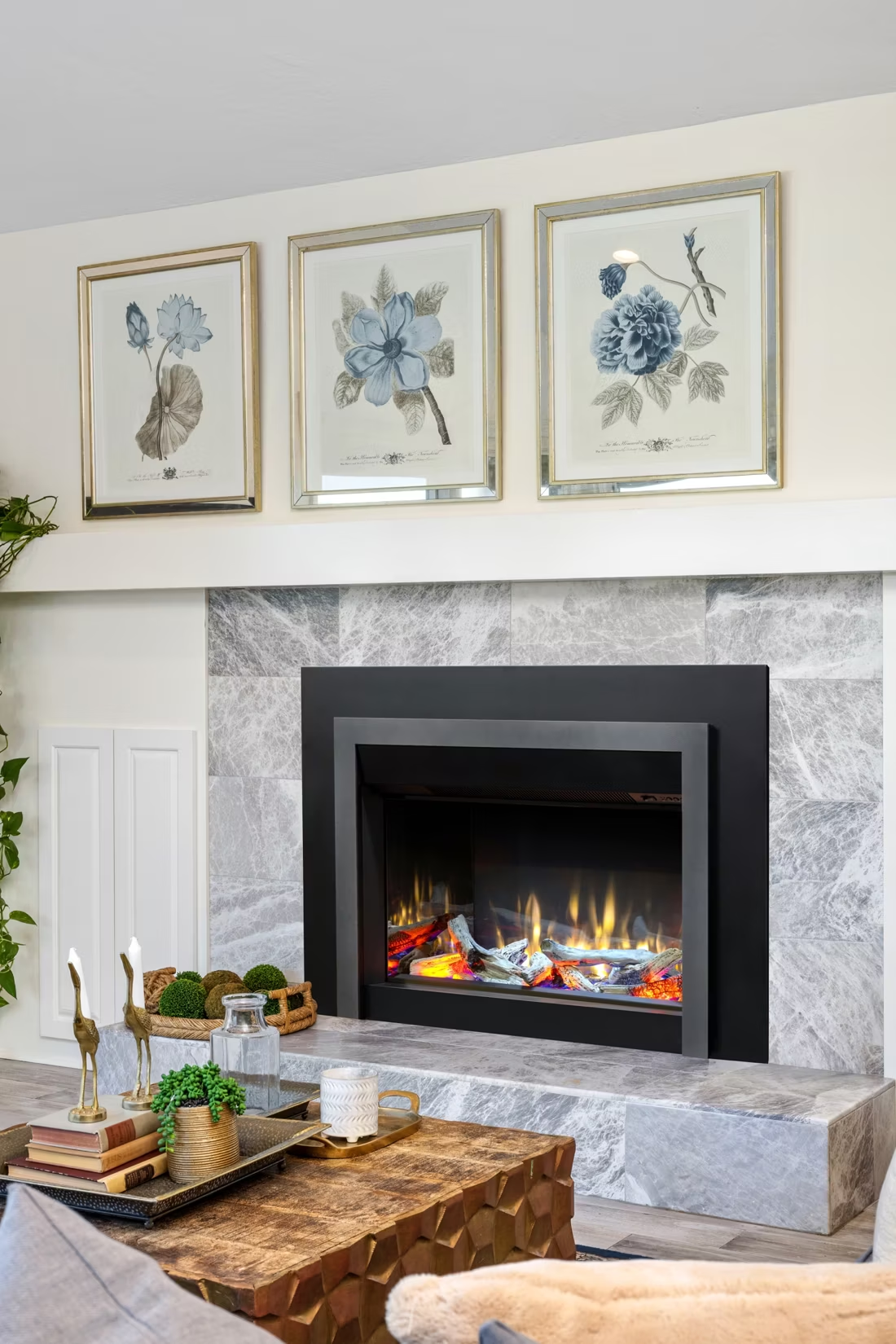
That's exactly the job an electric fireplace is built for. Whether it's an insert dropped into an old masonry firebox in one of Tallassee's historic mill-district homes, a built-in unit framed into new construction, or a freestanding mantel package, electric heat gives you real flame-look ambiance and supplemental warmth without a flue, a gas line, or a cord of wood to manage. Alabama Power Co. serves most of the city proper, while Central Alabama Electric Cooperative covers much of the surrounding rural Elmore County—both keep residential rates in the 16.6 to 16.8 cent per kWh range, which keeps the cost of running a unit for a few hours on a cold snap night genuinely low.
Three steps. No salesperson until you're ready.
Tell us about your project
Your zip code, your situation, and the fuel you're leaning toward—or let the answers point you to one.
See what's actually available
The brands dealers within 100 miles genuinely carry—real options, never a catalog mirage.
Get your dealer & Project Guide
A trusted local dealer, plus the free Project Guide & Parts List that names every component of the job.
Frequently Asked Questions
How much does it cost to install an electric fireplace in Tallassee?
Costs vary a lot by unit type. A plug-in electric insert that drops into an existing fireplace opening typically runs $150 to $600 installed, with no electrical or building permit needed in most cases since it uses a standard outlet. A built-in wall unit or a framed electric fireplace with a mantel surround—common in new construction and remodels around Tallassee—runs closer to $1,500 to $3,500 once framing, a dedicated 120V or 240V circuit, and finish trim are factored in. Local dealers can quote a firm number after seeing your space and existing wiring.
Which electric utility serves my home, and does it affect my fireplace choice?
Most addresses inside the city limits of Tallassee are served by Alabama Power Co., while homes in the surrounding unincorporated parts of Elmore County are more likely served by Central Alabama Electric Cooperative. Residential rates run close between the two—roughly 16.6 to 16.8 cents per kWh—so it doesn't meaningfully change which fireplace makes sense. What matters more is your home's electrical panel capacity: a hardwired 240V built-in unit may require your electrician to confirm you have room on the panel, which either utility's service can typically support without an upgrade.
Do I need a permit to install an electric fireplace in Tallassee?
In most cases, no. A plug-in electric insert or freestanding unit that runs off a standard household outlet doesn't require a permit. A hardwired built-in unit on a dedicated circuit, however, does require an electrical permit—for in-town addresses that goes through the City of Tallassee Building Department, and for county addresses it's the Elmore County Building Department. A licensed electrician handling the circuit work will typically pull this permit as part of the installation.
What's the best type of electric fireplace for Tallassee's climate?
Given how mild winters are here—average lows only dip to 34°F and there's rarely a stretch of hard freezing weather—most Tallassee homeowners are better served by an electric insert or built-in used for zone heating and ambiance rather than a unit sized to carry a whole house through winter. Many older homes near the historic mill district have existing but unused masonry fireboxes that are ideal candidates for an insert conversion. For newer construction, a built-in wall unit with a heater rated around 1,500 watts comfortably takes the edge off a den or living room on the coldest nights of the year.
Electric vs. gas fireplace—which makes more sense in Tallassee?
Both are practical choices here. Electric wins on simplicity and upfront cost—no gas line, no venting, and often no permit at all for plug-in units. Gas (propane, since natural gas service is limited in this part of Elmore County) delivers more real heat output and can keep running during a power outage, which matters more in areas prone to ice-related outages. For a primary living space where you want higher heat output on the rare cold snap, gas edges ahead; for supplemental warmth, easy retrofit into an old firebox, or a bedroom or sunroom that just needs ambiance, electric is usually the simpler and cheaper answer.
Why isn't wood a common heating choice in Tallassee?
Elmore County has plenty of oak, pine, and hickory, and wood heat still has a place in rural cabins and hunting camps around the area. But with such a light winter heating season and winter lows that rarely reach freezing, most Tallassee homeowners simply don't need the heat output—or the chimney maintenance, ash cleanup, and creosote risk—that a wood stove demands. Electric and gas have become the practical mainstream choice for home heating here, with wood burning reserved more for outdoor fire pits and the occasional weekend fire than for daily home heat.
How much does it cost to run an electric fireplace in Tallassee?
Most electric fireplace heaters draw around 1,500 watts on the heat setting. At Alabama Power's residential rate of about 16.77 cents per kWh, that works out to roughly 25 cents an hour to run on high heat—a bit less on Central Alabama Electric Cooperative's rate of about 16.64 cents per kWh. Since most Tallassee homes only need supplemental heat a few weeks out of the year, even daily use through the coldest stretch typically adds just a few dollars to a monthly bill.
Insert, built-in, or freestanding—what's the difference?
An electric insert is designed to slide into an existing fireplace opening, making it the natural choice if your Tallassee home already has an unused masonry or prefab firebox. A built-in unit is framed into a wall during new construction or a remodel and typically wired to a dedicated circuit for higher heat output. A freestanding or mantel-package unit needs no construction at all—it plugs in and sits against any wall, which makes it the fastest and cheapest option for renters or homeowners who want flexibility to move it later.
Will my electric fireplace work during a power outage?
No—unlike a battery-backed gas fireplace, an electric unit is entirely dependent on grid power and will shut off the moment power drops, whether you're on Alabama Power or Central Alabama Electric Cooperative. Outages in this part of Elmore County are typically short and weather-related rather than prolonged. Since most electric fireplaces here are installed for supplemental heat and ambiance rather than as a home's sole heat source, this is usually a minor tradeoff—but if backup heat during outages is a priority, a propane or wood-burning option is worth discussing with a local dealer alongside your electric choice.
Can I put a TV above my fireplace?
Yes—with an asterisk. Fireplaces are hot and TVs don't like heat. Either put a mantel between them to deflect rising warmth, or choose a fireplace with heat-management technology that creates a cool zone on the wall above—the wall stays around 125 degrees, barely warm, while the room still gets full heat. If you like clean lines and don't want a mantel, heat management is the answer.
Do electric fireplaces actually produce heat?
Yes—most put out around 4,800–5,000 BTUs from a standard outlet, which comfortably warms a bedroom, office, or den as a comfort-zone heater. What they won't do is carry a whole house the way wood, gas, or pellet can. Think of electric as ambiance-first with honest supplemental heat: flames on with no heat in July, flames plus warmth in January.
Can a fireplace actually lower my heating bill?
Yes—by creating a comfort zone. A furnace heats every square foot of the house just to warm the one room you're in; a gas fireplace on low burns roughly a sixth of the gas a typical furnace does. Set the furnace around 55–60 degrees as a baseline, then heat the rooms your family actually uses. Families who heat this way commonly save $20–$60 a month.
What is an in-home preview and do I need one?
It's a visit where a hearth professional measures your space, confirms the model you picked actually works in your home, and walks the specs—framing, gas line, venting, finish work—before anything is ordered. Some details you just can't know until you see the house. Never make a down payment without one; it's the single most-skipped step that burns buyers.
Nearby Dealers
Hearth shops serving Tallassee and the surrounding area. Every listing shows whether it is a WhyFire partner, a dealer we have verified as authorized for the brands we recommend, or a local business carrying hearth products. No manufacturer pays for placement. How we verify dealers →
Brick Acquisition Company
Blossman Gas And Appliance
Allgas, Inc. - Montgomery
Electric Service in Tallassee
An electric fireplace's heater draws about 1,500 watts—pennies per hour at local rates.
Alabama Power Co
Central Alabama Electric Coop
Find your electric fireplace in Tallassee.
Tell us a bit about your home and we'll match you with the right electric insert, built-in, or freestanding unit—and hand you a free Project Guide & Parts List with your recommended local dealer.
Find Your Fireplace →